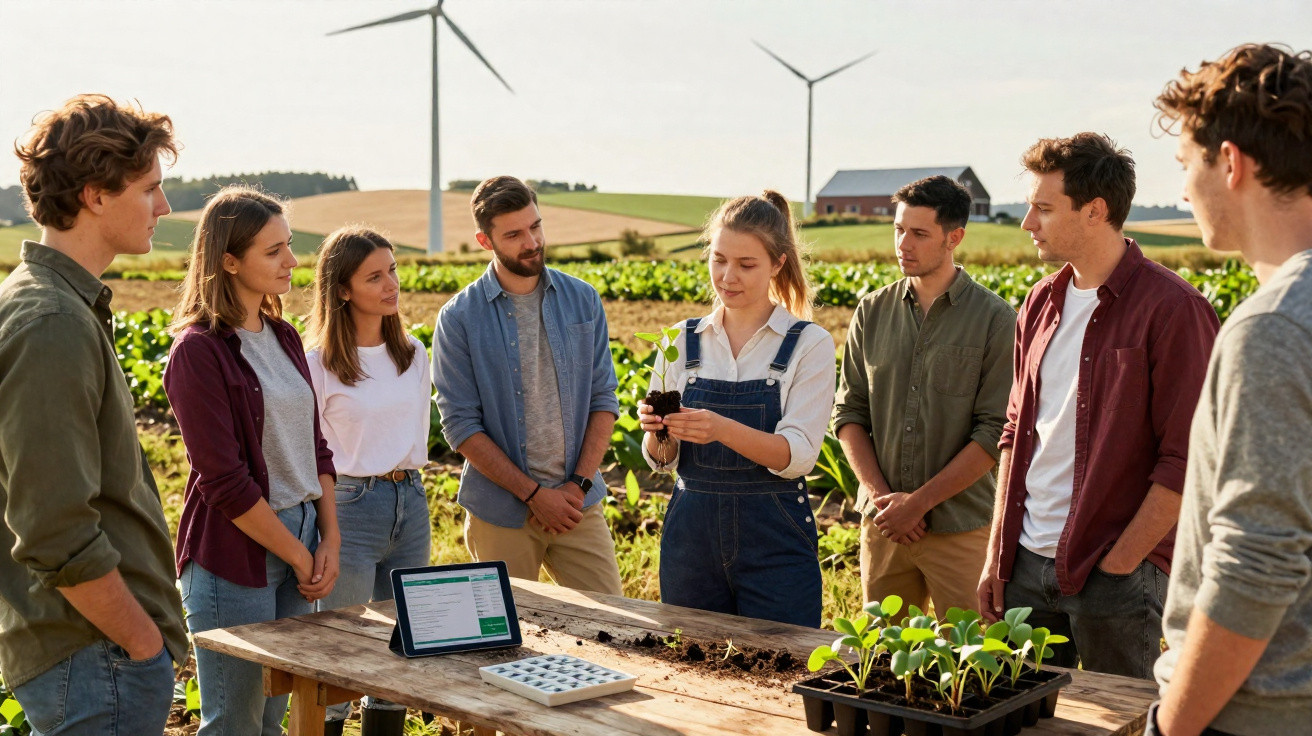
Agricultural education is under intense pressure: the climate crisis, shortages of new entrants and political divisions are forcing schools and farms to rethink their approach.
In France, as in Germany, vocational agricultural education is changing rapidly. Agricultural colleges are no longer expected simply to teach technical skills. They must teach climate-adapted farming methods, support young people who have become disengaged from school, and at the same time meet the expectations of industry bodies, politicians and rural communities. This creates tensions that reveal just how fiercely the future of rural areas is being contested.
Agricultural colleges between climate pressure and generational change
The starting point is explosive: many farm owners are over 55, successors are in short supply, and extreme weather, droughts and new environmental requirements are becoming more frequent. Agricultural colleges therefore sit at the heart of a twofold crisis: ecological and demographic.
At the same time, public debate about pesticides, animal welfare and water protection is intensifying. Farmers are often broadly suspected of spraying too much and farming too intensively. This also shapes the atmosphere in classrooms, where young people recognise that their future profession is subject to strong public judgement.
Agricultural education is now expected to secure skilled workers, protect the climate and keep young people within the education system at the same time – an almost impossible threefold task.
Against this backdrop, agricultural colleges are becoming political flashpoints. They are not merely providers serving agricultural policy; they are places where decisions are made about how rural areas will produce, live and work in future.
Agroecology: testing ground or contentious issue?
For just over a decade, France has increasingly directed public funding towards a more ecological approach to agricultural education. Similar trends can be seen in Germany at specialist colleges, vocational schools and higher-education institutions focused on organic farming.
Many agricultural and forestry colleges now operate on the following basis:
- College-owned teaching farms are used to test crop rotations without chemical inputs.
- Trials involving lower fertiliser use and more targeted crop protection run alongside “conventional” cultivation.
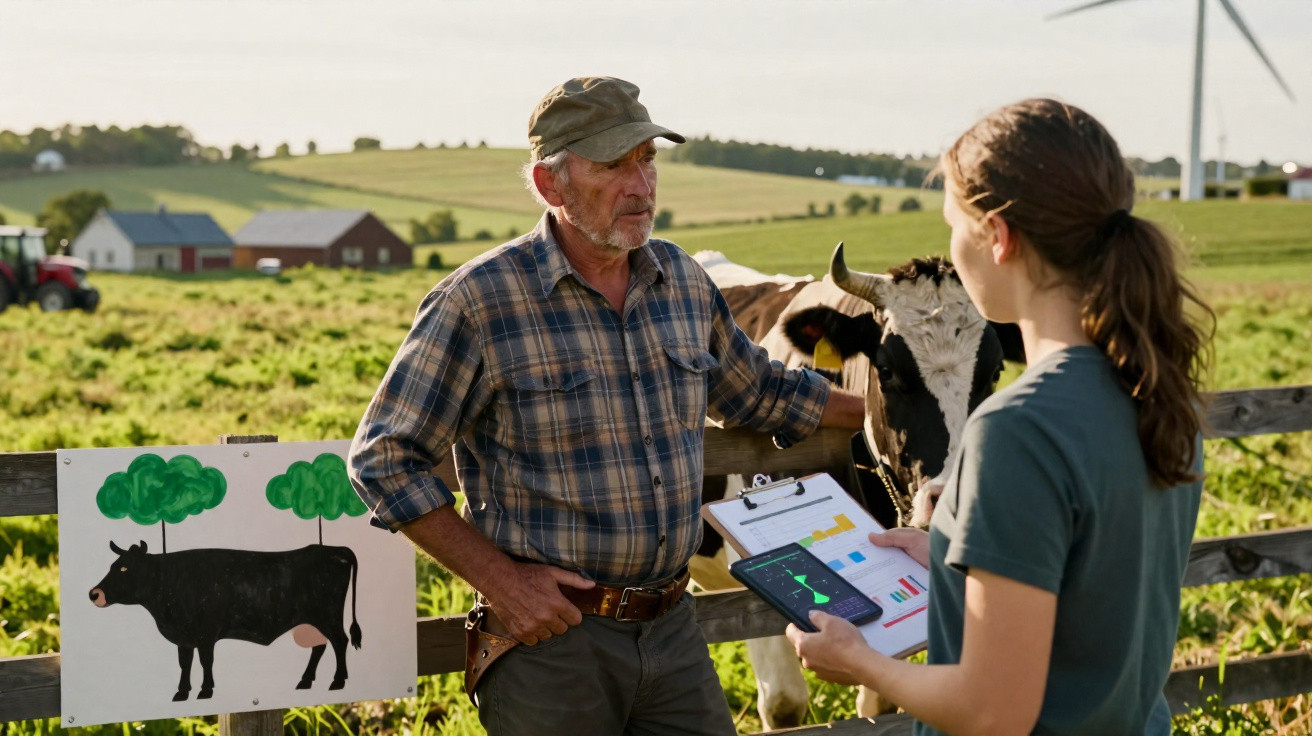
- Students are taught how livestock systems can be adapted to stricter climate and animal-welfare standards.
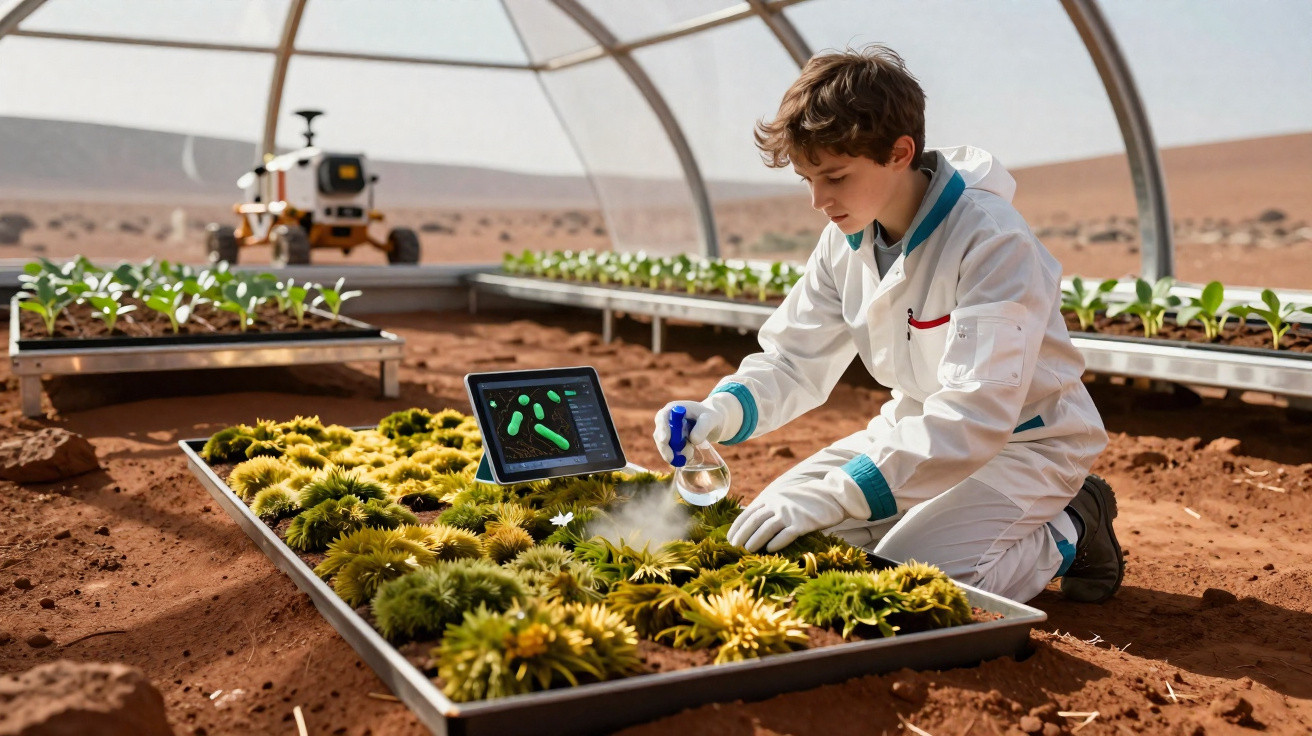
- Digital sensors and data analysis are intended to safeguard yields while reducing resource use.
Yet this shift does not meet with enthusiasm alone. It reaches deep into family traditions. Students whose families have relied on high yields and chemical inputs for decades can quickly perceive the ecological turn in lessons as a criticism of their own background.
This is precisely where conflicts emerge: between teachers seeking new approaches and students hearing different messages from their parents; between industry bodies committed to the existing model and an education ministry demanding a stronger environmental focus.
When industry bodies shape the timetable
France clearly demonstrates the extent to which professional associations can influence teaching content. In some regions, they affect school governing bodies, appointments to committees and even events held at agricultural colleges.
One example involved a forestry school that planned to screen a film about wolves followed by a discussion. The event was cancelled after pressure from a farmers’ association and its youth organisation. Teachers objected, with many feeling that their educational freedom had been severely restricted.
Such incidents show that the issue extends beyond technical questions. Behind them lie opposing ideas of what makes a “good farmer”: a pragmatic producer of raw materials, or an ecological shaper of rural areas.
Driver of progress or an extension of the agricultural industry?
It is striking how differently colleges respond to pressure for change. Some institutions become genuine pioneers. Teaching teams and school leaders use their autonomy to move decisively towards organic farming, direct sales or regional value chains.
Typical characteristics of these pioneering colleges include:
| Feature | Pioneering colleges | Conventionally oriented colleges |
|---|---|---|
| Focus | Strong emphasis on organic farming and circular economy | Focus on yield and cost efficiency |
| Use of technology | Technology as a tool for species and soil protection | Technology primarily used to raise output |
| Relationship with agricultural industry | Critical distance and support for alternative marketing routes | Close co-operation with animal-feed, fertiliser and machinery corporations |
| Role of teaching farms | Experimental spaces, including for unconventional systems | Practical replication of the dominant model |
Ecologically focused courses often attract adults wishing to change their way of life: career changers, former city residents and people who deliberately want to use fewer chemical inputs and more manual work. They are pushing for new ways of farming, from community-supported vegetable growing to on-farm energy production.
At the same time, training programmes in agricultural engineering are expanding. These place optimisation through GPS guidance, drones and sensors at their centre. Their aim is to use water and fertiliser more efficiently. However, the underlying industrial model frequently remains untouched: large fields, specialised crops and heavy machinery use.
Training fluctuates between two poles: radically rethinking farming or making the old model more efficient with high technology.
More than technical knowledge: agricultural colleges as social safety nets
One frequently overlooked point is that agricultural colleges support many young people who have not succeeded in mainstream education. Practical courses with substantial workshop or fieldwork components can offer them an opportunity to make a fresh start.
In rural areas, so-called “family-style homes” – comparable to certain residential and boarding-school models – play a particularly important role. Young people spend part of their time on a farm and the remainder at school. They quickly see tangible results: a newly planted hedge, a repaired machine or a completed fence.
Teachers report that these visible outcomes provide many pupils with their first genuine experiences of success in years. Those who have encountered only failure in classroom-based mathematics and French can suddenly flourish on a tractor, with a chainsaw or in the livestock shed.
Why practical education appeals to disengaged pupils
For these young people in particular, agricultural training offers things they have rarely experienced before:
- Specific tasks with visible outcomes.
- Outdoor work and physical activity instead of sitting for hours.
- Close collaboration with trainers and master craftspeople, often on first-name terms.
- A clear occupational goal: “I will become a farmer, gardener, mechanic.”
Many teachers deliberately build on their pupils’ interests. Those who love tractors receive additional practical time with machinery. Those who prefer working with animals take on responsibility in the livestock shed. This creates an attachment to both school and profession that would be difficult to achieve in conventional educational pathways.
Agricultural education therefore performs a quiet repair function for the gaps left by general schooling: it gives young people with disrupted learning histories a second chance while also supplying farms with urgently needed skilled workers.
Cultural education: a luxury or the key to the village’s future?
One distinctive feature of the French model, also debated in German-speaking countries, is a dedicated subject for social and cultural education. Rather than calculating fertiliser requirements, pupils undertake theatre projects, photography, local-history work, political debates or media production.
The aim is for young people to engage consciously with rural life, nature, democracy and conflict – and to become active themselves, for example in associations, parish councils or citizens’ initiatives.
This approach is coming under pressure from budget cuts. Reduced funding limits projects and lessons are being dropped. Some professional associations openly argue that colleges should concentrate on purely vocational training: less “cultural stuff”, more technology and business management.
The question of whether agricultural colleges should train only skilled workers or also informed citizens has become the central point of dispute.
Behind this lies the broader debate: will rural areas remain simply sites of production, or will they develop into diverse places to live, with culture, political participation and new forms of economic activity? Agricultural colleges are among the places where that direction is being set.
What these developments mean for Germany
Many of the conflicts described are also familiar in German-speaking countries, although with varying intensity. Skills shortages in agriculture, anger over fertiliser regulations, debates about wolves, support for organic farming and animal welfare all influence curricula and school structures.
Several key challenges are emerging for the years ahead:
- Career profiles must communicate more honestly what selling farm produce or converting to organic farming actually means in terms of work.
- Digital agriculture must not leave corporations alone with control over data.
- Courses should show more clearly how incomes can be secured through combinations – arable farming alongside direct sales, agritourism or renewable energy.
- Young people with learning difficulties will continue to need practical options; otherwise, the skills shortage will worsen.
Terms such as agroecology often sound abstract. At its heart, the concept concerns organising agriculture so that soils remain fertile in the long term, biodiversity does not continue to collapse, and farms can still survive economically. Training plays a decisive role in determining whether that balance can be achieved.
Anyone training for an agricultural career today must be able to handle not only a milking parlour, hoe or tablet. They also stand in the middle of social conflicts – between climate protection and food security, village traditions and global markets. Agricultural colleges are consequently becoming one of the most compelling laboratories for the question of how rural Europe can reinvent itself.





Comments
No comments yet. Be the first to comment!
Leave a Comment