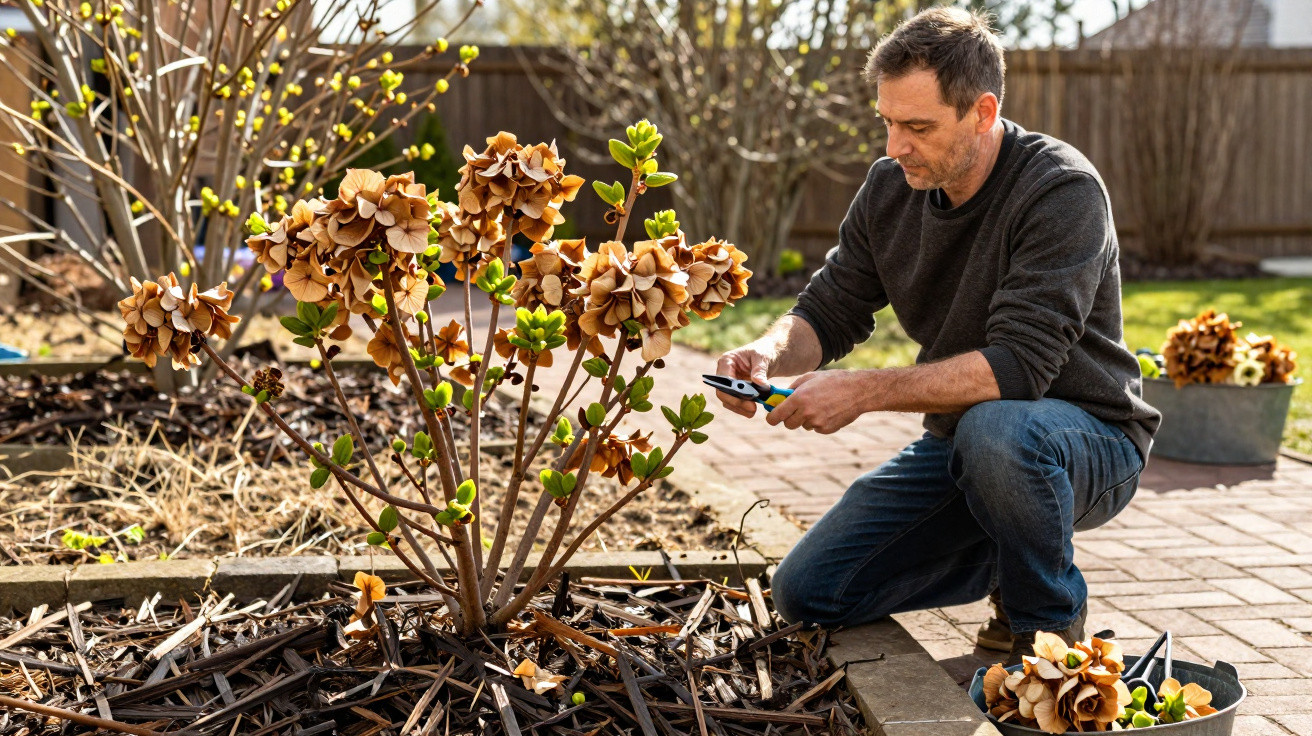
That modest change in timing and approach, combined with a generous layer of mulch, transformed bare-looking stems into shrubs so laden with flowers that neighbours began asking what I had done.
Why so many hydrangeas underperform
Hydrangeas ought to be among the most reliable stars of a British summer garden. They cope with shade, moist ground and a degree of neglect better than plenty of other shrubs. Still, many gardeners find that their plants produce fewer flowers every year, despite carrying plenty of healthy green foliage.
The cause is often two apparently straightforward practices: pruning at the wrong time and allowing the soil around the shrub to remain depleted and unprotected.
Most gardeners aren’t failing to grow hydrangeas; they’re accidentally cutting off next summer’s flowers months before they appear.
For years, Monty Don has consistently made the same point: avoid cutting too severely, do not prune too soon, and allow March to take care of part of the job.
Why March is Monty Don’s key month for hydrangeas
Many traditional cottage-garden hydrangeas, particularly mopheads (Hydrangea macrophylla), produce flowers from what gardeners refer to as old wood. In other words:
- The buds that will make this summer’s flowers developed on last year’s stems.
- These buds remain on the plant throughout winter, frequently positioned just beneath each spent bloom.
- Cutting back hard in autumn or early winter removes many of these buds.
By clearing away faded flower heads in November, gardeners can unintentionally remove the concealed buds at the same time. The shrub will live on, but its summer flowering display can be dramatically diminished.
Monty Don’s change is small but effective: keep the faded flower heads in place during the coldest part of the year, then deal with them in March, when winter is no longer at its harshest.
The old flower heads act like tiny umbrellas, shielding the delicate buds beneath from the sharpest frosts and wind.
Across much of the UK, the most severe frosts have generally passed by March. Buds will be starting to swell, making it much simpler to identify the right place to cut without sacrificing the coming flowers.
How Monty Don deadheads for more hydrangea blooms
Monty Don makes an important distinction between deadheading and pruning. Deadheading means removing old flowers, while pruning involves cutting back or reshaping the shrub. For hydrangeas that flower on old wood, March is chiefly for gentle deadheading with only minimal tidying.
The exact cut he recommends
Monty Don’s approach is easy enough to manage while holding a mug of tea:
- Wait until hard frosts are no longer likely and the buds look visibly swollen.
- Find the dry flower head at the tip of each stem.
- Trace the stem downwards to the highest pair of plump, healthy buds.
- Cut cleanly immediately above that pair of buds.
This slight alteration can make a substantial difference. It removes the faded cluster of petals and any frost-damaged stem tip, while preserving the crucial buds. Those buds then grow into fresh shoots bearing the current year’s flowers.
Think of the March cut as changing the hydrangea’s hairstyle, not chopping its head off.
Both Monty and fellow television gardener Alan Titchmarsh recommend a light touch in spring for old-wood hydrangeas. Leave more substantial reshaping or height reduction until late summer, directly after flowering, so the shrub can form fresh buds before winter arrives again.
A quick March checklist for busy gardeners
For most gardeners, the March tasks can be completed during one mild morning:
- Trim away every faded flower just above the highest pair of strong buds.
- Remove dead, damaged or especially weak stems down at the base.
- Do not cut sturdy green stems, as they may be carrying flower buds.
- Pause and assess the shrub before making further cuts; usually, less is more.
By July and August, this should produce a fuller mound of flowers without the work involved in an elaborate pruning routine.
Monty Don’s mulching trick that quietly powers the buds
Pruning is only one part of Monty’s routine. The second part takes place when many gardeners have stopped thinking about their borders altogether: in mid-winter or very early spring.
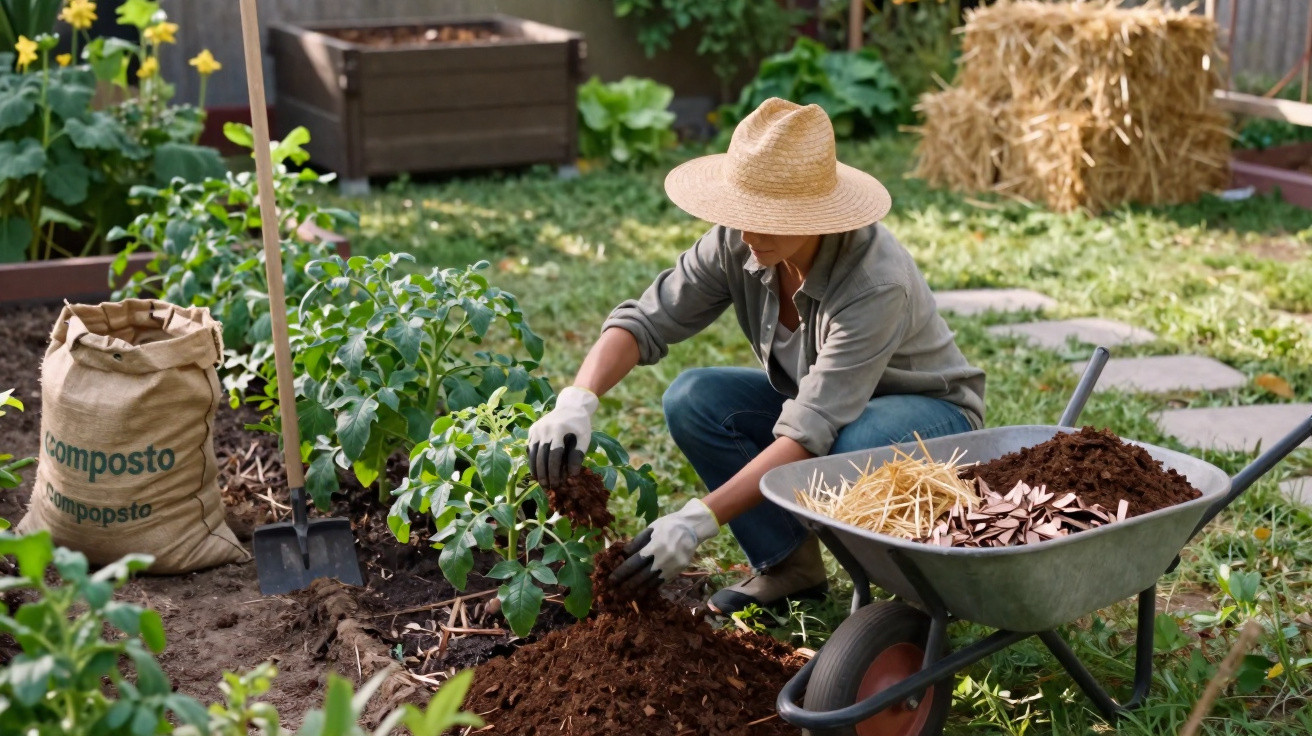
He strongly supports applying a generous winter mulch around shrubs, including roses and hydrangeas, with properly rotted organic matter.
A thick winter mulch is like a duvet for your hydrangea’s roots: warming, protective and quietly feeding the soil.
What he uses – and what many gardeners get wrong
Monty favours materials including garden compost, mushroom compost and bark chippings. Pine bark can be especially useful because it adds a slight increase in acidity, which suits many hydrangeas.
His recommendation is to apply a substantial layer:
| Material | Suggested depth | Key benefit |
|---|---|---|
| Garden compost | 5–10cm | Builds soil structure and provides slow-release nourishment |
| Mushroom compost | 5–10cm | Holds moisture and increases nutrient levels |
| Pine bark chippings | 5–10cm | Keeps roots cooler and adds mild acidity |
Placement and timing matter most. Spread the mulch on a mild day in January or early March, while the soil is cold but neither frozen nor waterlogged. Clear weeds beforehand, then keep the plant’s base, or “collar”, uncovered.
Problems can arise from heaping mulch against the stems, applying materials that have not rotted down sufficiently, or pairing heavy mulching with a severe winter pruning. Buds can rot, stems may be damaged and flowering may decline.
Common hydrangea pruning mistakes to avoid
Gardeners often make the same small collection of mistakes with hydrangeas that flower from old wood. Avoiding these errors can improve results in just one season.
- Cutting every stem back to ankle height in autumn to make the plant look tidy.
- Taking off all dead heads in December and removing their protective covering.
- Cutting back hard each spring to control size, rather than thinning only a limited number of older stems.
- Failing to distinguish between old-wood and new-wood hydrangeas, then treating every variety in the same way.
Panicle and smooth hydrangeas, including Hydrangea paniculata and Hydrangea arborescens, need a different approach. They flower on new wood and can withstand, or even benefit from, harder spring pruning. Many UK gardeners grow these alongside traditional mopheads, apply one method to all of them and achieve inconsistent results.
Small changes that make a visible difference
Monty Don’s method particularly appeals to gardeners with limited time because it treats hydrangeas as easy-going shrubs rather than demanding divas. The essentials are sharp secateurs, a barrowful of mulch and close attention to late frosts.
Leave the heads on over winter, snip lightly in March, and give the roots a thick, nourishing blanket: that’s the core of the method.
This method also improves resilience. A deep mulch helps the ground retain water in dry periods, limiting wilting and brown flower edges. It protects roots against sudden temperature changes that may damage developing buds. Over several seasons, the soil underneath becomes more fertile and easier to cultivate, allowing the hydrangea’s roots to spread and sustain stronger growth.
Extra tips for stronger colour and healthier shrubs
After establishing the March routine, a handful of further adjustments can improve the display even more:
- Water thoroughly during dry weather instead of giving frequent, light sprinklings.
- Apply a slow-release shrub fertiliser in spring, but do not use too much nitrogen, as this encourages foliage rather than flowers.
- Check the soil pH if you want blue and purple tones; slightly acidic conditions help preserve these colours.
- Cover plants in exposed positions with fleece when a sharp late frost is forecast after buds have opened.
Gardeners concerned about making a mistake can try the technique on one shrub first. Keep another hydrangea on its usual routine for a quiet comparison. By August, the difference in both the quantity and size of flowers will usually be clear.
Hydrangeas can be slow to respond initially, but they repay good care with remarkable generosity. Once Monty Don’s March trick is established - the careful deadheading and deep winter mulch - many gardeners discover that their shrubs finally perform as promised: large, reliable and generously covered with blooms year after year.














Comments
No comments yet. Be the first to comment!
Leave a Comment