“Brown tips are your spider plant whispering ‘something’s off’, not screaming ‘you drowned me’,” says almost every experienced grower, whether they put it that way or not.
The assistant behind the plant-shop counter did not even raise her eyes as she said it: “You’re probably overwatering.”
I was standing there with a spider plant whose tips were dry and brown, mentally preparing a guilty explanation involving my watering can. All around me, shoppers held monsteras and fiddle-leaf figs as though they were newly adopted pets, agreeing with the familiar verdict: overwatering, overwatering, overwatering.
When I got home, I set the plant on the kitchen table and examined it properly. Its compost was not waterlogged. The pot had drainage holes. Its leaves felt firm rather than soft. The brown tips were pointing to another issue, one that is less obvious and rarely features in an Instagram caption.
The real issue is not the most recent watering you gave it. It is how you look after the plant, day after day.
And spider plants remember everything.
Why your spider plant’s brown tips are not caused by one watering can
Most people treat crisp, brown leaf tips as evidence from the scene of a plant-related crime, blaming the last time they watered.
Spider plants are more resilient than that, though. One overly generous drink will not usually make them collapse. Browning develops gradually, much like tiredness appearing beneath someone’s eyes before they admit they are worn out.
What is usually happening is an accumulation of small, recurring problems: tap water high in minerals, overly dry air, fertiliser applied a little too strongly, or a pot that is one size too tight, with roots circling as if trapped on a miniature round treadmill.
Individually, each issue may seem insignificant. Combined, they become visible in the first place the plant can discreetly sacrifice: the leaf tips.
Treat those brown tips as the spider plant equivalent of a dashboard warning light. The rest of the plant can still appear “fine”, so it is easy to dismiss the problem, blame the watering routine and change nothing else. That is why the pattern continues. You cut away the damaged ends, feel relieved and enjoy the neater-looking plant. A few weeks later, the same dry brown outline returns.
Water was not the villain in that story. The care routine was: the overall environment and the unnoticed details of how that plant lives in your home.
When you stop fixating on the watering can and assess the full picture instead, brown tips begin to make much more sense.
Spider plant care basics: what these plants actually need
Begin by considering water quality, rather than water volume alone. Spider plants dislike hard, heavily treated tap water. Minerals and salts do not simply disappear; they build up in the compost, travel into the foliage and scorch the tips from within.
Rainwater, filtered water or even tap water that has been boiled and allowed to cool can make a bigger difference than any expensive fertiliser.
Light is the next consideration. Spider plants thrive in bright, indirect light: near enough to a window for sunlight to pass by, rather than beat directly onto the leaves.
Placed on a dim shelf, they become unhappy, producing long, pale foliage that is easily stressed and more likely to brown. Strong, direct sunshine can also scorch the tips for a different reason, rather like sunburn on a leaf, particularly from afternoon sun through glass.
The pot and compost matter too. These plants prefer a light, free-draining mix rather than dense, compacted soil. Give them a pot with a modest amount of additional room, not an enormous container where the compost remains cold and wet for days. Roots need oxygen just as much as they need moisture.
When roots are densely packed and circling, every watering becomes difficult, like trying to pour water over a tangled sponge. Once again, that strain appears in the place you already recognise: the tips.
The subtle habits that stress or save your spider plant
One straightforward adjustment helps more than any miracle product: allow the top few centimetres of compost to dry before watering, then water thoroughly.
Avoid giving it a small daily “sip”. Instead, soak the compost until water runs from the base of the pot, then leave the plant to breathe and use the moisture available. This resembles the natural pattern of rainfall, rather than a constant, anxious drizzle.
Watch for quiet signals instead of relying on a calendar. Have the leaves become slightly softer? Does the compost look and feel lighter? Is the pot noticeably lighter when you pick it up? These are the signs to follow.
Let’s be honest: nobody really does this every day, but checking once or twice a week is already a major improvement on blindly following “water every Sunday” instructions from a label.
Fertiliser is another understated troublemaker. Strong or frequent feeding accumulates in the compost, and spider plants are unusually sensitive to this. Apply a mild, balanced houseplant fertiliser at half strength once a month during spring and summer, and do not feed during winter.
In this case, less really is more, particularly when brown tips have already appeared.
The internet is full of rapid solutions, so it helps to slow down and use a short, realistic checklist whenever panic sets in:
- Water source: try rainwater, distilled water or filtered water if the tips continue to brown.
- Light: provide bright, indirect light rather than placing it against intensely sunny glass.
- Soil: keep it loose and free-draining-neither swamp nor brick.
- Feeding: keep it weak and occasional; never assume “more will help faster”.
- Repotting: do this every 1–2 years, before the roots force the plant out of its own pot.
Every minor adjustment is a step towards a healthier plant, not a penalty for past mistakes.
What your spider plant’s brown tips really tell you
Here is the quiet secret that most plant experts know: perfect spider plants are often staged, filtered or very, very new. Real plants that have been lived with commonly have a few marks of their history.
Brown tips do not always signal failure. Often, they show that the plant has endured some stress, adapted and continued growing anyway.
On a difficult day, you may scrutinise every crisp millimetre with scissors in hand, removing any evidence that you are not “good enough” at plant care. On a better day, you may spot fresh, unblemished leaves emerging from the centre.
New growth in the middle says far more about what lies ahead than brown edges ever will.
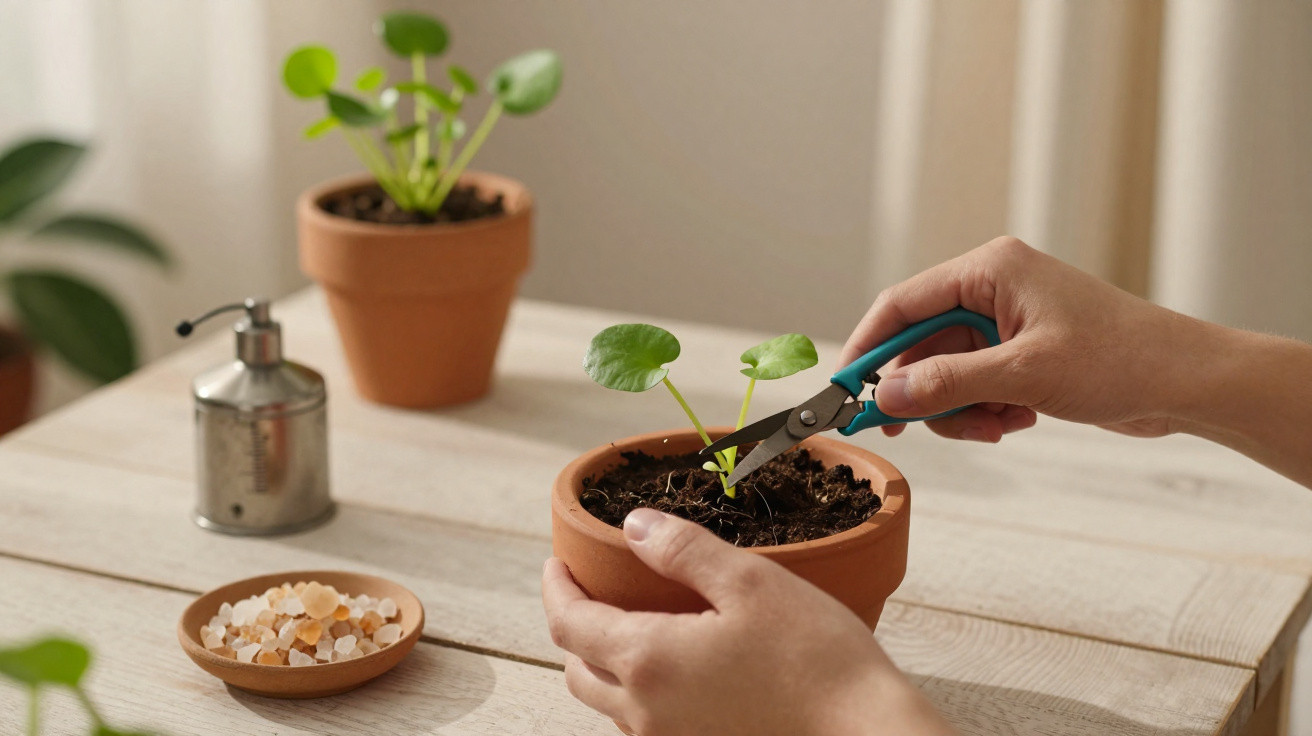
A helpful routine is to trim only when you feel calm. Remove only the browned section, following the leaf’s natural line and leaving a fine brown edge instead of cutting straight across it.
This is not about concealing the past. It is about allowing the plant to direct its energy towards fresh growth while you gradually alter the conditions that caused the damage originally.
We have all experienced the moment when a plant seems to reflect our own untidy routines: hurried mornings, the forgotten glass of water, or the “I’ll deal with it later” that turns into weeks.
Spider plants do not judge any of it. They merely record it in their foliage, line by line.
Rather than asking, “Did I overwater?”, try a different set of questions. How does the compost smell and feel today? How strong is the light for most of the day, rather than only when I pass it at noon? When did I last change the water source or repot the plant?
The answers are seldom dramatic. They are small, practical changes on a human scale that you can genuinely maintain.
Once you stop blaming every brown tip on the hand holding the watering can, you can see the full relationship between yourself and this plant.
It is not about achieving perfection. It is about noticing a little more, a little more often, and allowing the plant to respond in its own unhurried time.
| Key point | Detail | Why it matters to the reader |
|---|---|---|
| The real cause of brown tips | Often a build-up of stress-hard water, strong fertiliser, dry air or a pot that is too small-rather than one isolated episode of overwatering | Helps you stop feeling guilty and finally focus on the factors that can be changed |
| Why the water you use matters | Choose rainwater, filtered water or water left to stand to reduce the salts and minerals that scorch leaf tips | Provides a simple measure to try quickly, with visible effects |
| A more realistic care routine | Observe the compost, light and new growth instead of following a rigid timetable | Helps develop plant instinct rather than dependence on contradictory online advice |











Comments
No comments yet. Be the first to comment!
Leave a Comment