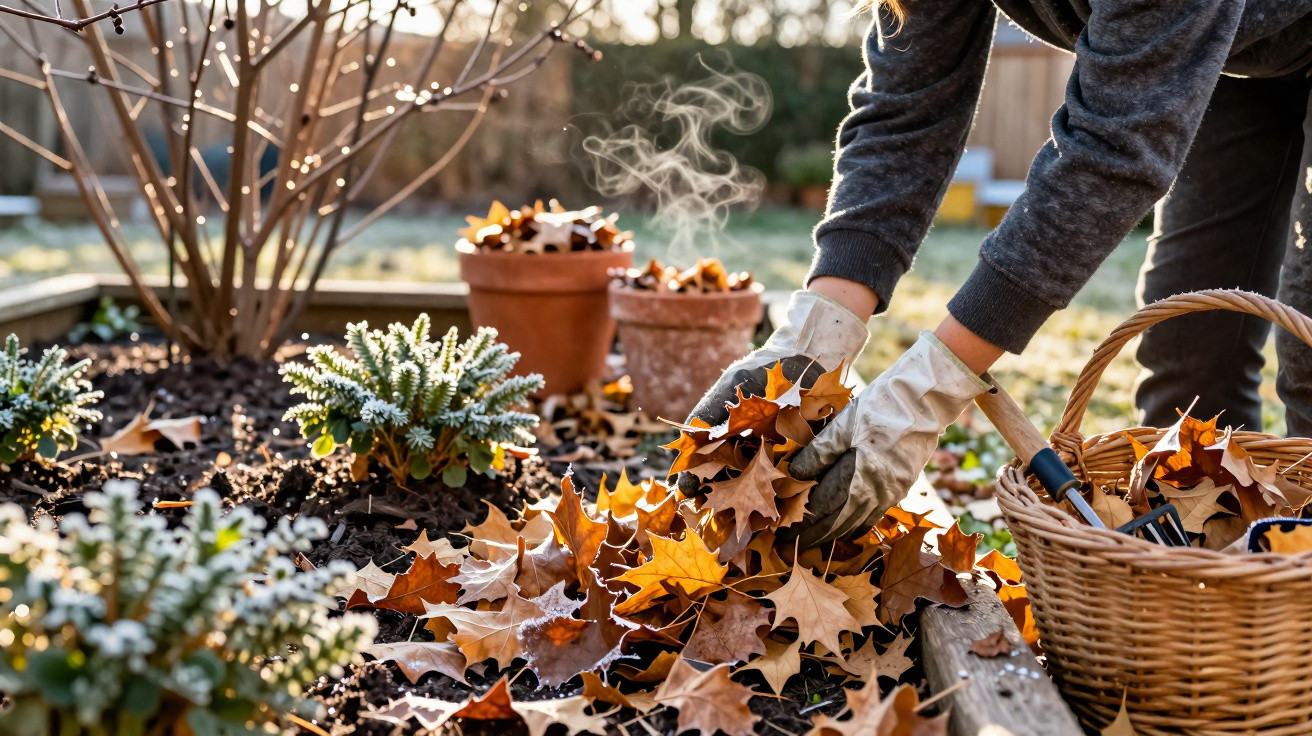
Year after year, sub-zero temperatures work their way into beds and containers – yet the best frost protection is often already lying around in your own garden, simply being handled the wrong way.
Many amateur gardeners clear away everything in autumn to make the garden look “tidy”, then wonder in January why their beds have frozen. A simple change of habit can protect roots, improve the soil and even save money – without expensive specialist products from the garden centre.
Why excessive garden tidiness weakens plants in winter
For decades, the image of the perfect garden has been the same: lawn edges cut with ruler-like precision, not a leaf on the ground and everything “tidied away”. Yet it is precisely this neatness that leaves beds surprisingly vulnerable during cold winters.
Leaves, twigs and seed heads fall in autumn. Many people pack it all into bags and take it to the recycling centre. From an ecological perspective, this makes little sense: nature has no rubbish bin. It operates in cycles.
What is commonly regarded as “green waste” is actually valuable raw material for frost protection and soil fertility.
Anyone who consistently removes this biomass from their plot deprives the soil of its organic covering, which shields it from cold, heavy rain and nutrient loss.
Bare soil: a cold shock for the root zone
Uncovered soil in January is like a person without a coat at minus five degrees. In natural ecosystems, ground is never left exposed for long: plants grow over it or it is covered by leaves, needles and other material.
When everything around roses, hydrangeas or in the vegetable garden is raked completely bare, the following happens:
- Rain washes nutrients down into deeper layers that plant roots can no longer reach.
- The soil surface becomes compacted, hard and impermeable to air.
- Cold penetrates deeply, water in the soil freezes and may destroy fine roots.
This affects more than winter hardiness; it also hampers the spring start. The soil warms up less effectively, forms a crust easily and plants struggle to get growing.
Leaves as a natural winter coat for beds and containers
Ironically, many gardeners throw away exactly what their plants need in winter: fallen leaves. Used correctly, they act like a cosy down jacket for the soil.
How a layer of leaves protects against frost
The secret lies in the trapped pockets of air. A loose layer of leaves holds air between the individual leaves, much like the filling in a winter coat or roof insulation.
In a bed, this means:
- Temperature fluctuations at the soil surface are noticeably reduced.
- Severe overnight frost is less damaging to the roots.
- Tender perennials and young plants cope better with cold snaps.
A thick blanket of leaves acts like free life insurance for frost-sensitive roots.
This protective layer is especially helpful in winters that frequently alternate between thaw and frost, as it prevents root cells from being damaged by continual expansion and contraction.
Protection from winter drying
Winter is usually associated only with cold, but icy winds can also dry out soil and plants considerably. Frozen ground prevents water uptake while leaves and needles continue to lose water through evaporation. Gardeners refer to this as “physiological drought”.
A covering of leaves slows this process significantly:
- The surface of the soil dries out more slowly.
- Moisture remains stored around the roots for longer.
- Evaporation from the surface is reduced without the soil being “smothered”.
Unlike plastic sheeting or dense fleece covers, leaves allow air and water to pass through. This lowers the risk of rot and keeps soil life active.
When the soil “sleeps”: how leaves become fertiliser
Leaves do more than provide protection; they also feed the soil. Beneath the apparently still surface, microorganisms, fungi and earthworms work unseen to create a long-term gift for the garden.
From leaf to humus: what happens in the soil during winter
Under the protective cover of leaves, tiny organisms gradually break down the material. Step by step, it becomes humus – a dark, crumbly substance with particular benefits:
- It holds water like a sponge.
- It retains nutrients and releases them gradually.
- It loosens heavy soil and gives sandy soil more stability.
Humus forms the foundation of living soil – and autumn leaves provide the raw material for it free of charge.
Anyone who applies this natural “forest principle” to flower and vegetable beds will need to intervene far less later on, because the soil stabilises itself.
Fewer purchases at the garden centre, more from your own garden
Leaving leaves where they fall, or spreading them deliberately as mulch, saves money over time. Shop-bought soil improvers, specialist composts and organic fertilisers are often costly. Leaves already contain many of the same substances:
- Potassium strengthens plant cells and frost resistance.
- Calcium supports soil structure.
- Magnesium is a building block of chlorophyll.
Trees take up these nutrients from deeper soil layers and store them in their leaves. Once the leaves fall, decompose and return to the ground, the cycle is completed – with no chemicals and no bags to carry.
Mulching correctly: turning leaves into effective frost protection
The basic principle sounds straightforward: do not dispose of leaves; leave them in place or move them elsewhere. For the best results, however, correct application matters.
How thick should the leaf layer be?
The ideal depth depends on the area:
| Area | Recommended layer of leaves |
|---|---|
| Perennial beds and shrubs | Loose layer of 5–10 cm |
| Vegetable beds at rest for winter | 15–20 cm, preferably layered coarsely |
| Young, small plants | A thin ring, leaving the root collar clear |
It is important to keep the point where the stem meets the root – known as the root collar – clear. If damp material remains against it continuously, rot and fungal disease can develop.
Keeping leaves where they are meant to protect
Many first attempts fail because the wind carries the leaves away overnight. A few simple measures can prevent this:
- Lightly dampen the leaves with a watering can after spreading them, so that they bind together.
- Shred leaves with a lawnmower before distributing them; the resulting material is less likely to blow away.
- Place light twigs, brushwood or a thin layer of compost on top to weigh the layer down.
Shredded leaves shift less, rot down more quickly and make beds look tidier.
If you want sensitive ornamental areas to look calmer, pile some of the leaves into a “leaf store” at the back of the garden and collect them as needed.
Checking leaf health: what must not go on the beds
Not every leaf is suitable for use directly as a protective layer. Diseased material can spread fungi and pathogens, worsening problems the following year.
Identifying and sorting out diseased leaves
It is best not to use the following leaves as mulch:
- Rose leaves that are heavily speckled or have extensive black patches.
- Crusted, blotchy leaves from fruit trees, such as apple and pear.
- Tomato or potato foliage with brown, wet-looking patches.
Such material should not be used on sensitive beds. If you have a compost bin, you can collect it separately and allow it to rot in “hot” compost, where high temperatures kill a large proportion of the pathogens.
Healthy leaves from maple, lime, hazel, fruit trees and most ornamental woody plants, on the other hand, are ideal raw material. Thick leaves from oak or walnut break down more slowly, so shredding is particularly worthwhile in these cases.
Practical examples: where leaf mulch delivers the greatest benefit
Certain plant groups benefit especially from a winter coat of leaves:
- Shallow-rooted perennials such as phlox, delphiniums and coneflowers.
- Root systems of young trees and shrubs that have not yet anchored themselves deeply.
- Sensitive vegetables such as celery, leeks and Brussels sprouts that partly overwinter in the bed.
Container plants can also be “planted in” to a bed and banked up with leaves. This protects not only the pot itself but also the root ball, thanks to the insulating layer around it.
Risks, limits and useful additions
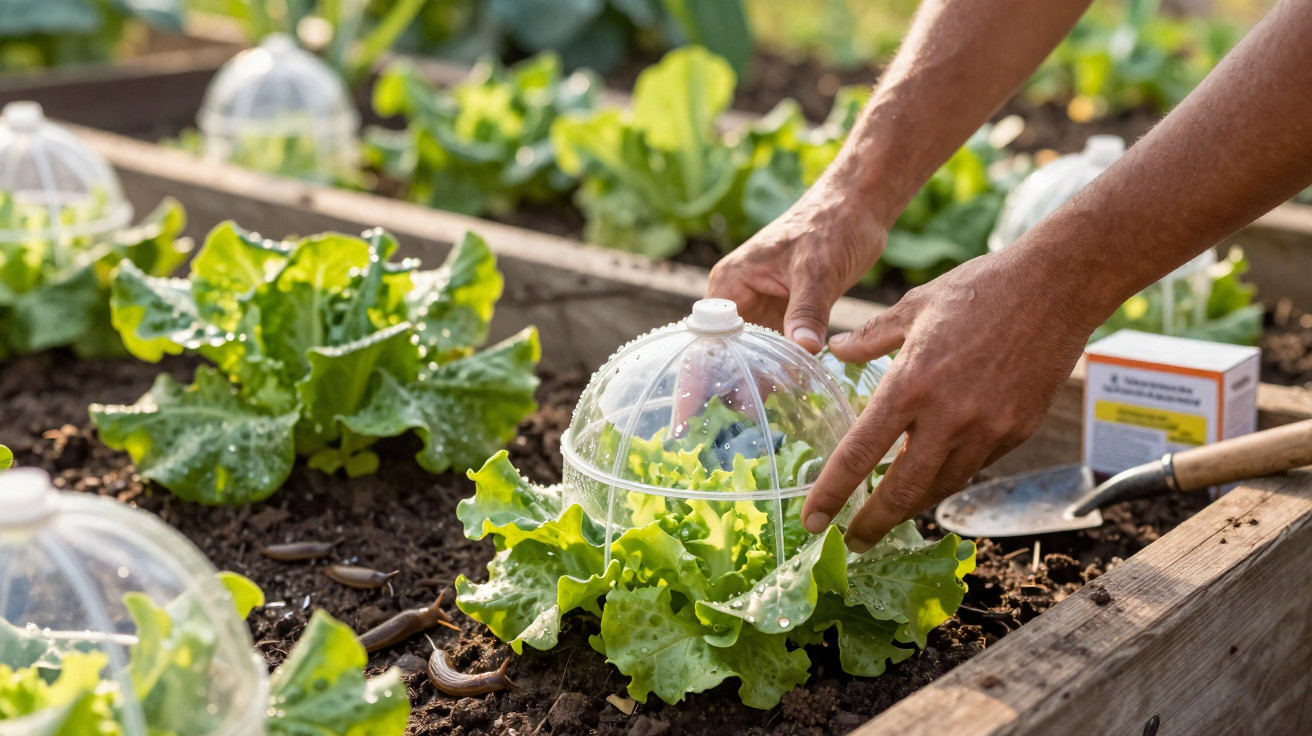
Leaves are not a miracle cure for every garden problem. Slugs readily use dense layers as shelter, especially while plenty of lush green growth remains in autumn. In this case, wait to apply the thickest layers until cold weather is genuinely forecast and most plants have died back.
During very wet winters, overly persistent moisture can remain beneath the leaf layer on heavy clay soils. If you have this type of soil, use a loose, relatively thin covering and mix in coarse material such as shredded twigs to improve aeration.
One combination has proved particularly effective: leaves as the first heat-insulating layer, followed by a thin layer of mature compost in late winter. This “double layer” improves soil structure, feeds soil organisms and prepares beds perfectly for the start of the new season.
Anyone who changes their autumn routine just once, thinking more about “covering” than “tidying”, will usually notice the difference in the very first spring: fewer losses after frost, looser soil under the hand and a markedly lower need for bought fertilisers and composts.













Comments
No comments yet. Be the first to comment!
Leave a Comment