
The crucial weeks of spring determine whether it will make it through to summer at all.
Many people buy a poinsettia for its red bracts during Advent, then reluctantly throw away what appears to be an ailing houseplant in February. Yet this plant has far greater potential. By following two or three straightforward rules in March and April, you can turn festive decoration into a resilient green plant that will brighten a balcony or living room well into summer.
Poinsettia profile at a glance
| Feature | Details |
|---|---|
| Botanical name | Euphorbia pulcherrima |
| Common name | Poinsettia |
| Size in a pot | 30–60 cm tall, 30–50 cm wide |
| Position | Plenty of light without direct sunshine; semi-shade outdoors in summer |
| Temperature | No frost; consistently above 13 °C |
| Foliage | Evergreen indoors, although stress may cause leaf drop |
“The most common reason for failure in spring is too much water combined with warm, dry air. March calls for restraint – and a cool, bright spot.”
March: respect the resting period
By late winter, the poinsettia is still dormant. Its red bracts have faded, some leaves may turn yellow, and growth has paused. This is precisely when the most serious mistake is often made: watering it as frequently as in December while keeping it warm above a radiator. That quickly leads to root rot and leaf loss.
Water less and move it somewhere cooler
- Position: Keep it in a bright place without direct sun, at 13–16 °C, away from radiator heat and draughts.
- Water: Water only once the compost has almost dried out completely – generally every few weeks at most; never leave water standing in the saucer.
- Care: Avoid hard pruning; simply remove brown foliage carefully.
- Protection: Wear gloves when tidying the plant, as its white sap can irritate the skin.
Patience at this stage pays off. The plant is building strength for renewed growth. The aim is to keep the roots on the dry side, avoid wetting the leaves unnecessarily and maintain a low temperature.
April: repot and restart with a gentle boost
When tiny fresh leaves begin to appear on the shoots, the growing season has started. This is the right time for a spring check and repotting into a container only slightly larger than the current one. Drainage holes are essential, along with a layer of expanded clay or perlite to keep the compost open and free-draining.
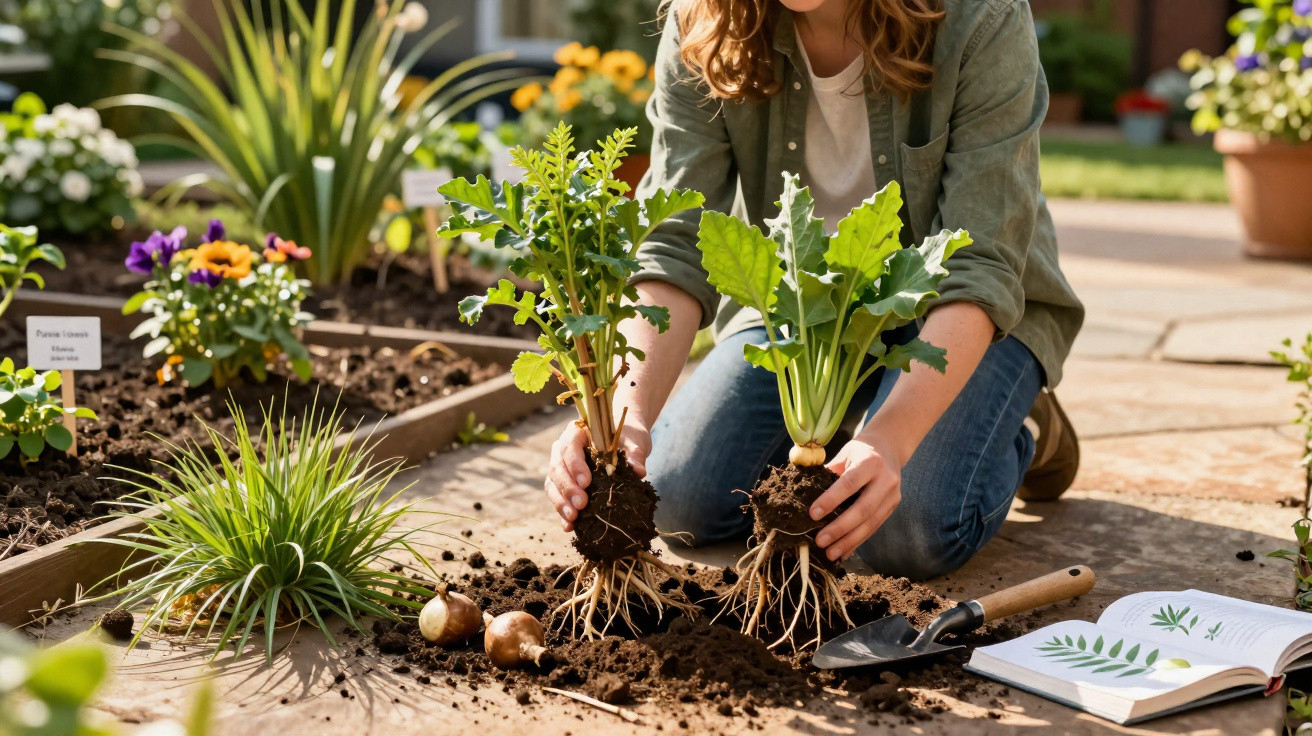
When repotting, gently loosen the root ball, shake away old compacted compost and fill around it with good-quality houseplant compost. Water moderately afterwards – only enough to settle the compost evenly around the roots.
Light, water and temperature: finding the right balance
- Light: Provide very bright conditions, but protect it from direct midday sunshine; an east- or west-facing window is ideal.
- Temperature: 18–20 °C supports new growth without causing stress.
- Watering test: Push a finger into the compost – if the upper layer feels dry, water it. If not, wait.
- Water quality: Lukewarm, low-limescale water helps prevent leaf marks and salt stress.
If desired, lightly pinch out the shoot tips after new growth has emerged. This encourages branching and creates denser, bushier growth. Avoid drastic cutting back, as it unnecessarily depletes the plant’s reserves.
From late April into summer: lush green growth in a pot
As temperatures rise, so does the poinsettia’s thirst – but never allow it to sit in water. A simple routine helps: water once the surface has dried, then remove any excess water immediately. Add a liquid fertiliser for flowering plants to the watering can every two to three weeks. This supports leaves and shoots, keeping the plant compact and richly green.
Once there is no longer any risk of frost, the pot can go outdoors. A semi-shaded place is ideal, such as a north-facing balcony that receives morning or evening light. Acclimatise the poinsettia gradually to outdoor brightness and wind: start with a few days in light shade, then slowly move it into brighter conditions.
Autumn trick for red bracts
For the decorative bracts to develop colour again towards the end of the year, the poinsettia needs long nights from autumn onwards. Around 14 hours of darkness each day for 8–10 weeks is sufficient. A box placed over the plant in the evening, or a windowless room without stray light, both work well. During the day, it should remain in bright but non-sunny conditions.
The most common mistakes – and how to avoid them
- Too much water in March: Keep it almost dry rather than watering “just in case”.
- Draughts and radiator heat: Cool, stable conditions promote resilience and reduce leaf drop.
- Direct sun through glass: This can scorch the leaves; indirect light is the better option.
- The wrong pot: Without drainage holes, water collects and can damage the roots.
- Too great an increase in pot size: Go up by only one size, so that excess compost does not become waterlogged.
Why poinsettia bracts are so striking – and what causes it
The poinsettia’s apparent “flowers” are actually coloured bracts. Its true flowers are the inconspicuous structures in the centre. The colour change is governed by day length: as a short-day plant, Euphorbia pulcherrima responds to long autumn nights by forming flower buds and colouring its bracts. Keeping it vigorous in spring gives it a much better chance of producing a strong display of colour in autumn.
Additional everyday and safety tips
The milky sap may irritate the skin. Wear gloves when cutting the plant and avoid contact with the eyes. For pets, eating larger quantities can cause stomach upset. Keep the pot out of the reach of cats and dogs.
A practical care idea is to create a watering calendar. For example, use three columns: date, moisture test passed (yes/no), and fertiliser. This helps keep care consistent without slipping back into the habit of overenthusiastic watering.
Mini plan for March to June
- March: Keep it cool, water sparingly, remove faded leaves and be patient.
- April: Use a new pot with drainage, fresh compost, a bright position and moderate watering.
- May: Water regularly but sparingly; fertilise every two to three weeks.
- June: Move it outdoors into semi-shade and gradually acclimatise it to the outside air.
There is no need for a conclusion: respecting the March resting period and restarting gently in April will set the poinsettia up for a strong summer. It also makes the route to red bracts in late autumn much shorter – without having to buy a new plant for Advent.













Comments
No comments yet. Be the first to comment!
Leave a Comment