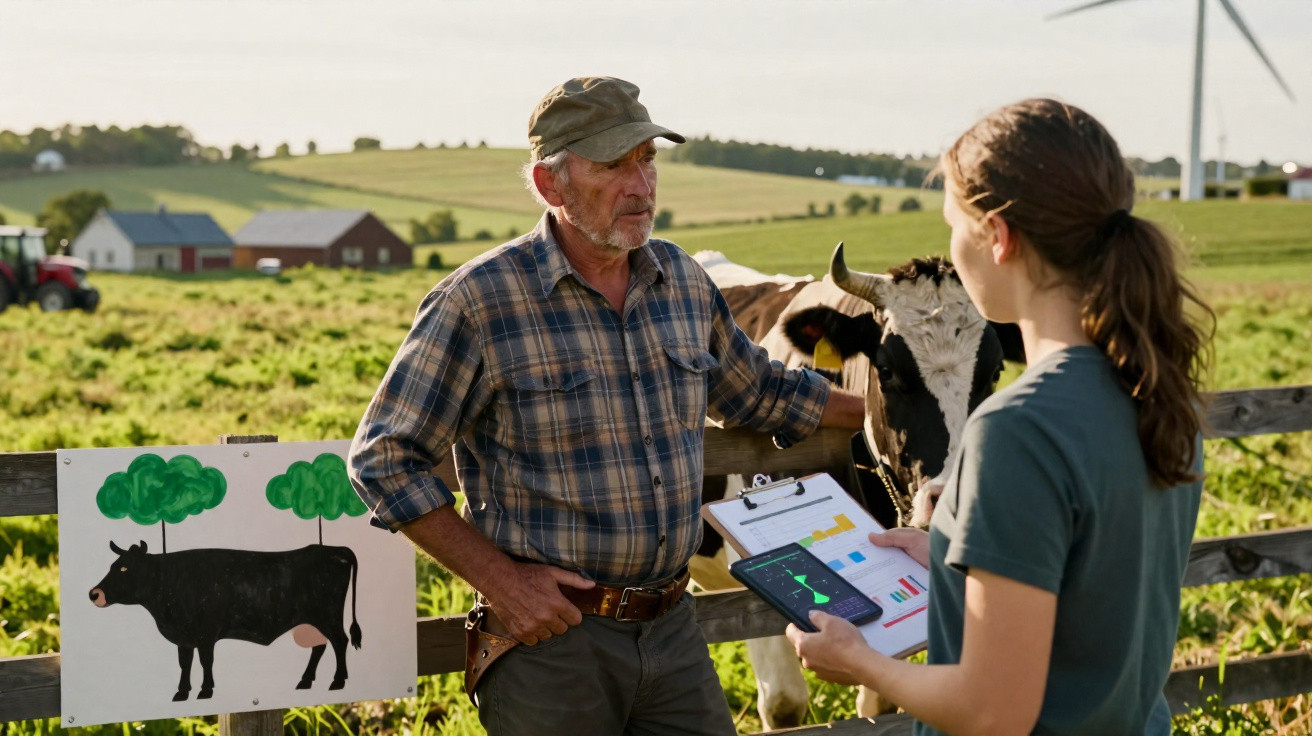
The first thing that registers is not the scent of silage or the mud clinging to your boots, but the noise: the steady, low chorus of cattle chewing, the gentle rattle of metal gates and the brittle laughter of farmers acting as though they are not angry.
On a cold morning in a rural town that seldom appears in the headlines, a hand-painted sign flutters outside the local co-op: “NO TAX ON COW BURPS.” A pensioner in a tweed cap rests on his walking stick and mutters, “They’ll tax the air we breathe next.”
Several miles away, in a city workplace fitted with recycled-wood desks and reusable coffee cups, a young climate activist scrolls through the latest news with a smile. “This,” she tells her colleagues, “is the breakthrough we’ve been waiting for.”
One country. One law. Two utterly different worlds crashing together.
Why a cow’s burp has become political dynamite
On the face of it, the proposal seems almost absurd. A government charges for methane released by cattle and sheep, and the “cow-burping tax” rapidly becomes rural politics’ most incendiary expression. For climate activists, however, it is exactly the kind of policy they have spent years demanding.
Methane remains in the atmosphere for a relatively short time, yet it retains heat far more intensely than CO₂. Reducing methane substantially can cool the planet’s fever more quickly. Campaigners do not regard a tax on cow burps as a joke; they see it as a tool: a tangible, measurable means of compelling change in a sector long protected by tradition and nostalgia.
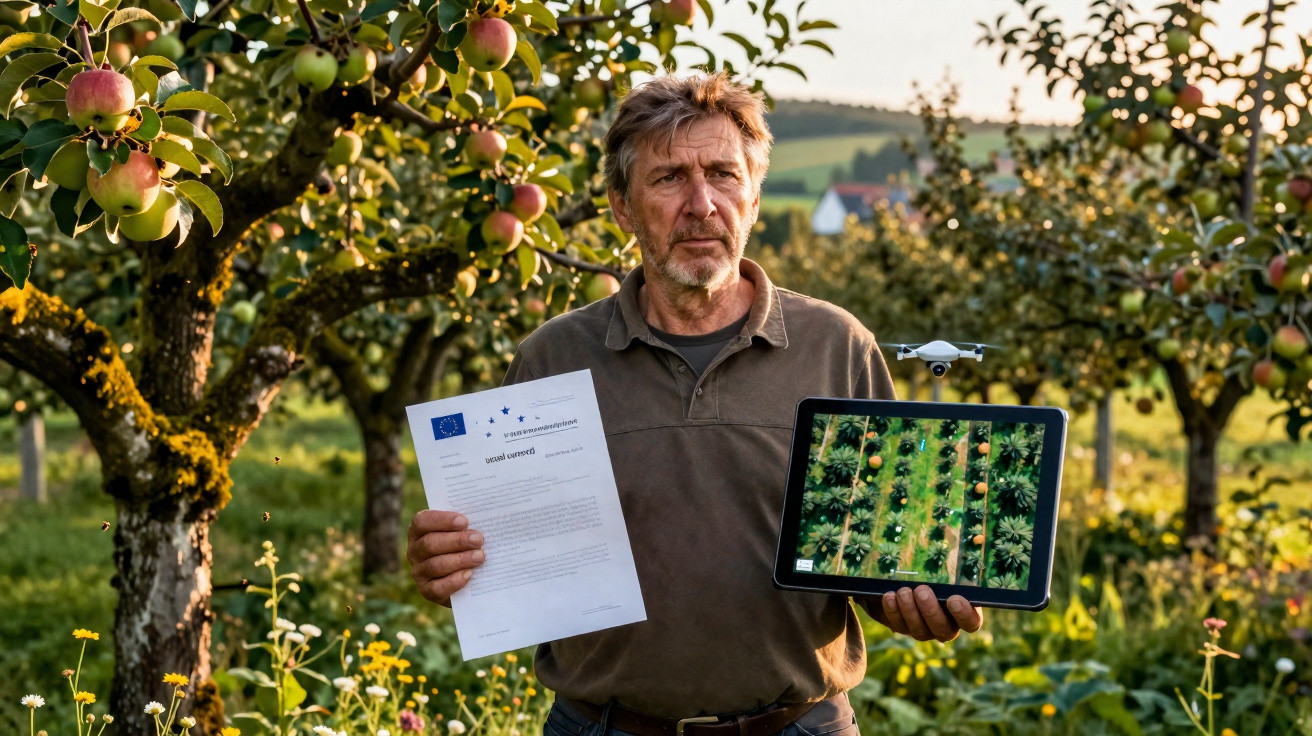
For a family farm handed down through four generations, these figures are anything but abstract. A fresh levy on livestock emissions hits like thunder in a kitchen already dealing with feed costs, fuel bills and repayments on a milking robot bought to “modernise or disappear.”
A couple in their 50s lay creased invoices across the table and work through the sums with the subdued focus of people weighing more than finances. Should they reduce the herd? Let out the land? Sell up and relocate to town? Every option hurts.
Elsewhere, a climate organisation runs a “Methane 101” webinar. Its slides chart global warming curves falling as livestock emissions decline. One presenter describes the tax as “a brave, historic move that could inspire the world.” Applause emojis and enthusiastic comments fill the chat. The two versions of reality scarcely meet.
The conflict is fundamentally about identity and timing. When farmers hear “burp tax”, they interpret it as: “your family history has no place in the planet’s future.” Activists, watching governments delay action on fossil fuels, want rapid action wherever it can be achieved.
Climate science identifies methane from livestock as a significant contributor to global warming, particularly in nations where cattle outnumber people. Policy specialists contend that, without a cost attached to those emissions, progress will remain voluntary and sluggish.
Rural communities, meanwhile, recall every promise that was not kept. They have seen subsidies disappear, supermarkets force down prices and urban voters celebrate “small farms” while choosing the cheapest cheese available. Frankly, few people study a carbon-footprint label when the cost-of-living crisis is biting.
Cow-burping tax: the changes farms may face
Beyond the headlines, the “cow-burping tax” represents more than another invoice. At farm-gate level, it creates a sequence of small and frequently difficult decisions. For certain farmers, the initial response may be straightforward bookkeeping: keep fewer animals, concentrate on higher-yielding cows and invest in feed designed to reduce methane. Some are already testing seaweed additives and alternative grazing systems.
Others are considering diversification: cheese dairies on the farm, agri-tourism cabins, or climate-related payments for restoring wetlands and planting trees beside watercourses. The tax becomes an incentive to reconsider what a “good” farm should be in 2026 rather than 1966.
The most difficult issue is that each change requires money, time and confidence that policy will not reverse within five years.
Many farmers can recount the previous “major reform” that left them in a worse position. One recalls removing hedgerows because it was then official policy, only to receive payments decades later to replant them. Another invested heavily in low-emission slurry equipment because it was politically fashionable, then saw fuel prices surge.
We have all experienced the moment when someone distant tells you to “just adapt”, as if this were a phone software update rather than your life’s work. Farmers are accustomed to weather uncertainty, livestock disease and volatile world prices. A methane tax feels unlike those risks. It is aimed at the animals themselves: the living core of their identity.
When the photograph of your grandad in the cowshed begins to feel like Exhibit A in a climate trial, resentment is easily stirred.
Within government briefings, the terminology is more measured, tidier and detached. Officials refer to “pricing externalities”, “aligning incentives” and “meeting international commitments”. They insist the purpose is not to shut farms, but to update them.
Rural representatives remain unconvinced. Some caution that schools, veterinary practices and local shops could disappear if marginal farms close. Campaigners counter that climate breakdown will damage farming most severely through drought, flooding and unpredictable seasons.
Amid all this, a veteran dairy farmer says quietly:
“We’re not climate deniers. We’re just tired of being the easiest target. You don’t see a tax on private jets called a ‘champagne-sipping tax,’ do you?”
His anger highlights a more fundamental issue: in a warming world, who should pay first-those who fly the most, those who consume the most, or those whose cows burp the most?
- Farmers want: Stability, fair prices and policies that outlast an election cycle.
- Activists want: Swift, visible emissions reductions and evidence that governments are acting seriously rather than merely talking.
- Rural towns need: Services, employment and a vision of the future that does not end with boarded-up windows.
What the argument over cow burps reveals about us
Remove the jokes about taxing flatulence and a stark modern question remains: how can we change quickly enough to safeguard the climate without tearing apart the social fabric that sustains rural life? No algorithm can provide a neat answer.
The cow-burping tax lays bare every divide: city against countryside, past against future, policy documents against muddy boots. To some, it is a far-sighted measure that finally treats methane as the climate grenade it is. To others, it is a cultural insult presented as environmentalism.
There is a quieter middle path. Improved feed technology. Payments to farmers for carbon retained in soil. Less food waste, meaning fewer animals are needed overall. Gradual dietary changes rather than finger-wagging. None of these options is as memorable as “cow-burping tax”, which is why that phrase fills the news feed.
| Key point | Detail | Value for the reader |
|---|---|---|
| Why methane from cows matters | In the short term, methane is much more powerful than CO₂, so reducing it can slow warming quickly. | Helps you understand why livestock has suddenly moved to the heart of climate debates. |
| What the tax changes on farms | Encourages farmers to keep fewer animals, use different feeds and develop income sources such as agri-tourism or ecosystem services. | Demonstrates the real-world effects behind abstract climate policy. |
| How this shapes your plate | It could bring higher meat and dairy prices, stronger demand for local produce and quicker growth in alternatives. | Allows you to anticipate how your choices and household bills could change in the years ahead. |
FAQ:
- Question 1: Is a “cow-burping tax” a real thing or simply a media nickname? It is a simplified label, but it describes genuine policies that charge for methane emissions from livestock, usually paid by farm businesses or processors.
- Question 2: Will this type of tax force small farmers out of business? Some could struggle, particularly without assistance, but exemptions, transition funding and new revenue streams can reduce the impact when they are well designed.
- Question 3: Does taxing cows genuinely help the climate in a meaningful way? Yes, reducing livestock methane can create a rapid cooling effect, especially alongside strong action on fossil fuels.
- Question 4: Are there alternatives to taxing emissions directly? Governments may subsidise low-methane feeds, pay for carbon farming, support dietary changes, or regulate herd numbers and land use.
- Question 5: What can consumers do besides arguing about it online? You can eat slightly less meat and dairy, select higher-welfare or local products, back policies that fund fair farm transitions and waste less food.








Comments
No comments yet. Be the first to comment!
Leave a Comment