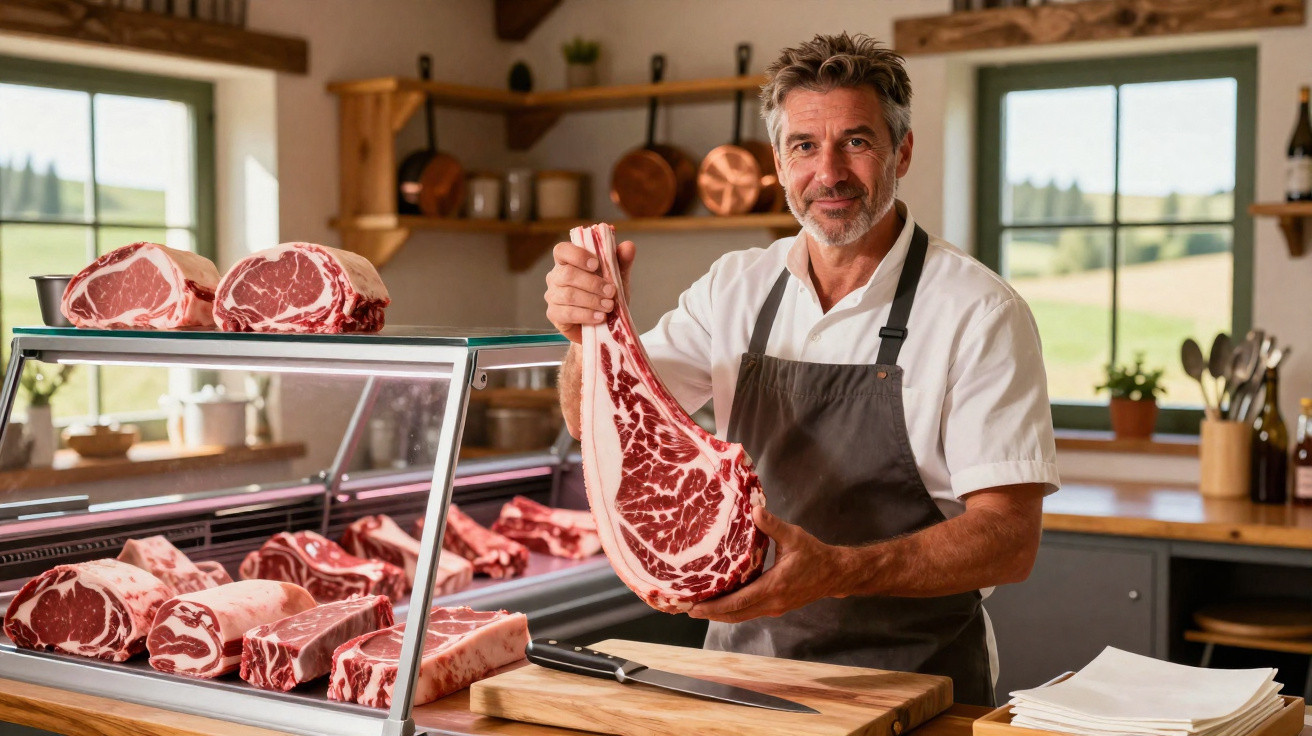
When beef prices soar, no one wants to arrive home with a chewy, disappointing steak.
A French cattle farmer believes the answer is visible on the meat itself.
While supermarket packaging trumpets “tender” and “premium”, an understated detail in the beef may be much more important. In rural Aveyron, an experienced producer says a single look can reveal whether a cut will truly melt in the mouth.
Rising prices and greater expectations at the butcher’s counter
For many households in France, the UK and the US, beef is now a luxury purchase. Families may reserve it for special occasions or modest celebratory dinners.
French consumer association UFC-Que Choisir recently highlighted a steep increase in supermarket beef prices of roughly 10% in just one year. This reflects developments across Europe and North America, where cattle numbers are falling while production expenses continue to rise.
A number of causes are cited:
- Fewer cattle farmers remain in the industry
- Dairy and beef herds are becoming smaller
- Animal disease outbreaks keep returning
- Feed and transport costs are increasing
With such pressure on the final bill, shoppers expect every steak, côte de bœuf or bavette to be worth its cost. That is where the straightforward advice of an Aveyron farmer becomes useful.
The Aveyron rule: choose “persillé” beef
Julien Gaubert, a cattle farmer from the Aveyron area of southern France, judges beef according to one essential feature: persillage, or marbling in English.
For truly tender beef, don’t just check the cut. Look for fine white streaks of fat threaded through the red flesh.
French butchers use the term “viande persillée” for this marbling. It describes small veins of intramuscular fat within the meat, rather than the heavier fat layer around its edge.
According to Gaubert, a marbled steak will nearly always be more enjoyable than an exceptionally lean one. Those fine pale lines offer two benefits: a more tender texture and fuller flavour.
Why fine white streaks make such a difference
As beef cooks, its intramuscular fat starts to melt. The resulting liquid moves through the muscle fibres, coating them and helping to stop them from drying out.
Marbling acts like built‑in basting, making each bite juicier and easier to chew.
Lean beef can still be flavoursome, particularly when prepared with care, but it loses moisture more quickly and may be firmer to cut. A steak with good marbling, on the other hand, will often remain tender even when cooked a little beyond the ideal point.
What marbling is – and what it is not
Marbling should not be confused with the thick, firm strip of fat along the outside of a ribeye or sirloin. This outer fat is easy to trim and provides little indication of tenderness.
Persillé fat is not the same. It sits inside the muscle fibres. In a raw steak, it can be seen as slender branching lines or creamy-white specks running through the red flesh.
| Type of fat | Where it is | What it tells you |
|---|---|---|
| External fat | Around the outside of the cut | Mainly influences flavour around the edges and is easy to trim |
| Marbling (persillé) | Inside the muscle | Strongly associated with tenderness and juiciness |
Gaubert explains that this marbling comes from longer rearing periods and better-quality feed. Cattle spend time on good pasture and are finished gradually, allowing fat to form within the muscle rather than simply around it.
From Aveyron to Kobe: marbling as an international benchmark
The Aveyron farmer’s recommendation matches the way beef is assessed worldwide. Japanese Kobe beef, among the world’s best-known and most expensive meats, is prized for its heavy marbling.
Japanese assessors use a detailed scale to grade intramuscular fat. At the highest level, cuts resemble red-and-white lace. The same idea, though in a less extreme form, applies whether you are choosing a French entrecôte, a British ribeye or a US strip steak.
If the meat reminds you of delicate marble stone, with pale lines weaving through dark red, you are likely holding a tender cut.
How to identify tender beef at the counter
You do not need professional expertise to use the Aveyron rule. A careful inspection lasting only a few seconds can make a real difference to your next purchase.
Quick visual checks before buying
- Colour: Choose beef that is vivid red or deep cherry rather than grey or brown.
- Fine marbling: Look for small white lines across the steak, rather than only a large piece of fat at its edge.
- Even distribution: Marbling should be reasonably well spread, not gathered in a single corner.
- Firm but not rock-hard: Where permitted, press the meat lightly; quality beef should feel springy rather than soft.
- Cut choice: Ribeye, entrecôte, faux-filet, bavette and côte de bœuf commonly have visible marbling.
Gaubert’s position is clear: when a very lean steak and a lightly marbled one cost about the same, always select the marbled cut.
Why some beef has more marbling than others
The amount of marbling in a cut is shaped by breeding, feed and age.
- Breed: Certain cattle breeds naturally develop more intramuscular fat.
- Feed: Nutritious pasture and high-energy diets encourage fat to build gradually inside the muscle.
- Age at slaughter: Cattle kept for a little longer frequently develop more marbling, although they are more costly to rear.
This additional time on the farm is one factor behind today’s higher prices. When you pay more, part of the price covers the months required to create the sought-after persillé texture.
Cooking marbled beef without losing its potential
Marbling offers a little more room for error when cooking, but careless handling can still spoil it. For many marbled cuts, intense heat over a very short period works well.
For a juicy steak, bring it to room temperature, sear it fast, then let it rest so the fat can redistribute.
For a thick côte de bœuf, cooks commonly pair a strong initial sear with a slower finish in the oven. The intention is to render the intramuscular fat gently, without scorching the outside while leaving the middle uncooked.
When less marbling may be preferable
A rich, fatty steak is not for everyone. Those monitoring their saturated fat intake may prefer moderately marbled beef or leaner choices such as rump or round.
These cuts can still be delicious when handled well: longer marinades, slower cooking and slicing carefully against the grain can help offset their lower fat level.
Terms used by butchers and farmers
To understand what a butcher means, it helps to know several French and English terms:
- Persillé / marbled: Beef with visible intramuscular fat, associated with tenderness and flavour.
- Bavette: A flank steak cut that is relatively thin, visibly fibrous and flavoursome when cooked quickly.
- Côte de bœuf: A thick bone-in rib steak, ideal for sharing or special occasions.
- Faux-filet / strip steak: A boneless loin cut that is often well marbled and straightforward to cook.
Asking specifically for persillé beef may encourage a butcher to show you the best cuts. Many reserve their finest, well-marbled steaks for customers who know to request them.
Two shopping situations to picture
Imagine two trays at the butcher’s counter. One contains very lean, evenly red steaks with scarcely any pale lines. The other has slightly smaller steaks marked by fine white streaks through their centres. The marbled tray will generally provide the more tender mouthful.
Then imagine the meal on the plate. With the lean steak, the cooking time must be exact to prevent it drying out. A persillé cut is more forgiving: its concealed fat protects the texture and can make an ordinary Tuesday supper feel closer to restaurant quality.
For an Aveyron farmer such as Julien Gaubert, this discreet visual marker – fine white marbling within the muscle – is still the most dependable guide when every gram and every euro matters.















Comments
No comments yet. Be the first to comment!
Leave a Comment