Choosing the right garden mulch
But which mulches are best for particular tasks?
Choosing the most appropriate mulch often causes confusion, according to David Stanford-Beale, a doctor of entomology at MAD (Make A Difference) Company, which creates and markets organic, sustainable, peat-free growing-media products.
“Nine times out of 10, a customer is going to choose aesthetics over nearly everything. You want something that just looks nice in your garden and the same with houseplants.
“The one gardener out of 10 cares about the ingredients, the provenance and what they are actually putting in their garden,” he says.
“When you’re looking for a mulch at your garden centre, the key is read the bag, look for an origin and, if you can, buy local.”
Different mulch types are better suited to different purposes.
Organic mulch options
Compost
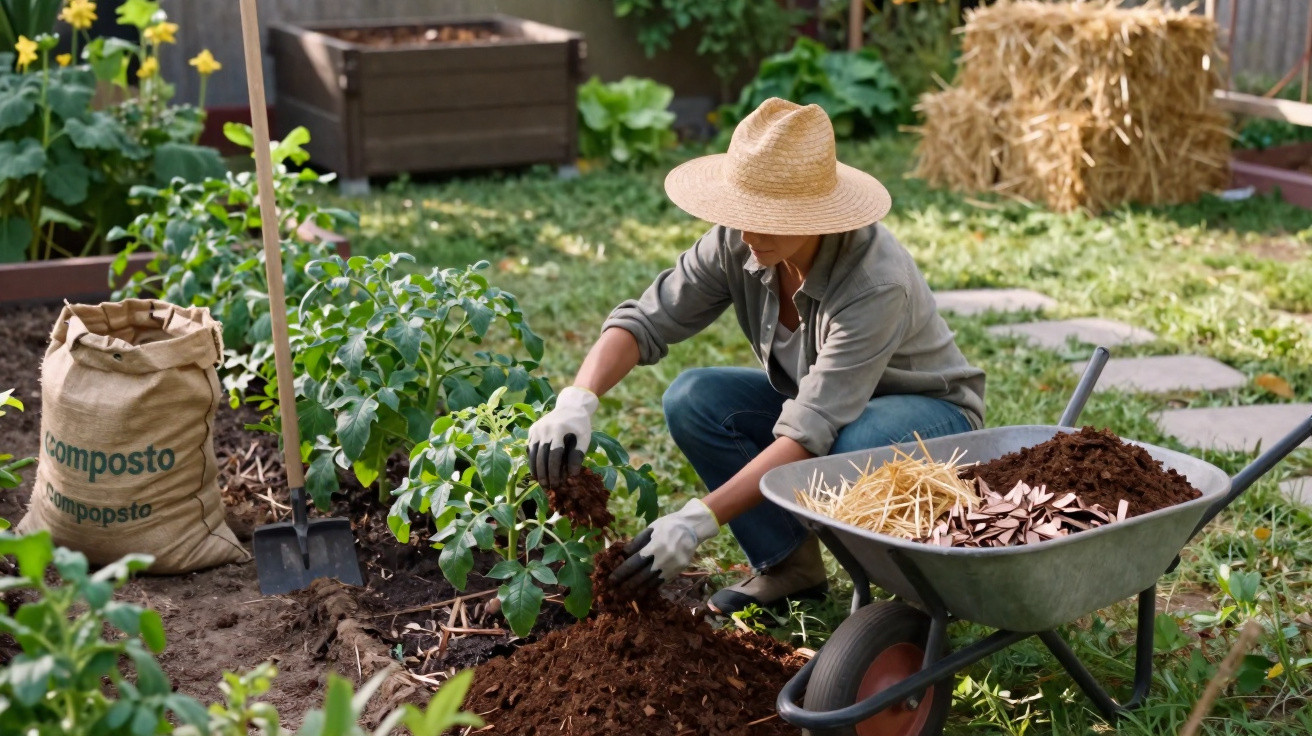
Compost, whether made at home or bought from a retailer, supplies nutrient-hungry plants such as roses and hostas with essential nourishment while also helping to keep weeds at bay.
The RHS recommends using it on every soil type, as it holds moisture and enhances soil structure. However, do not spread it around plants including lavender and salvias, which favour drier, less fertile ground.
Bear in mind, too, that certain composts can contain weed seedlings, which will need removing when they emerge.
Stanford-Beale notes that bagged compost can become a very costly mulching choice if you need to cover a substantial area and do not produce your own.
Farmyard manure
Farmyard manure is an exceptionally rich material, making it highly effective for retaining moisture and supplying abundant nutrients to soil in beds and borders. It is therefore well suited to roses, shrubs and other plants with high nutrient requirements. It also improves and enriches soil structure, and weed seedlings are unlikely to be a problem.
According to the RHS, it is crucial that manure is well rotted, otherwise it can scorch plants. If it is steaming or has a strong smell, it may need to be left for longer.
Straw
“Straw-based mulches are OK. They look and smell nice, so the customer has a great reaction. They break down really quickly and release loads of potassium in the soil,” says Stanford-Beale.
“It’s fine to use a straw mulch on a raised bed or allotment in spring, but you need to make sure that younger plants, brand new seedlings, don’t get too much potassium all at once.
“It only becomes an issue when you go year after year after year with straw mulch and it will build up, but if gardeners are sensible about what they are putting in, there shouldn’t be any problems.”
Bark and long-lasting mulch materials
Bark
Bark chippings are widely used by gardeners in borders to reduce weeds and retain moisture, but Stanford-Beale says they offer further advantages.
“If you have more moisture you end up with less air and get slightly different cycles going on in your soil, so it encourages worms and lots of burying insects to come up through that mulch and recycle it around.
“It’s like what happens in the forest and in nature, the leaves will come down, act as a big mulch and stimulate the ecosystem around it to pull that nutrition down.”
He suggests applying bark mulch around tree bases, while trying to match the bark to the tree family.
“If you have an oak tree, try to use oak bark. If you have a pine tree, use pine bark. But be careful where you are sourcing it from.”
He advises checking the packaging to establish whether the bark was sourced in the UK, and attempting to avoid mulch containing treated timber, although this is not always easy to identify.
“People are not labelling responsibly or properly and it’s making it difficult for customers to choose responsibly,” he warns, “but places like Crocus and Blue Diamond Garden Centres are starting to do that, where they make sure that their suppliers label what the product is and what it’s made of.”
Non-biodegradable materials
Slate, stone chippings, pebbles and shingle are frequently used as mulch to improve the appearance of borders. They can retain moisture and suppress weeds, as can decorative glass used in containers, although Stanford-Beale highlights the issues they can create.
“That slate and glass will go on to your grass and break your lawnmower. And for the rest of time you’re going to be finding that product in your bed. So if you use something today which you like because of aesthetics, make sure you’ll like it in 20 years, because it’s still going to be there.”
How deep should your mulch be?
“If you really want to suppress weeds and don’t want to use a weed membrane, your mulch needs to be three inches deep,” he reckons.
“But any amount helps, even if it’s just a scattering to add organic matter to your soil.”












Comments
No comments yet. Be the first to comment!
Leave a Comment