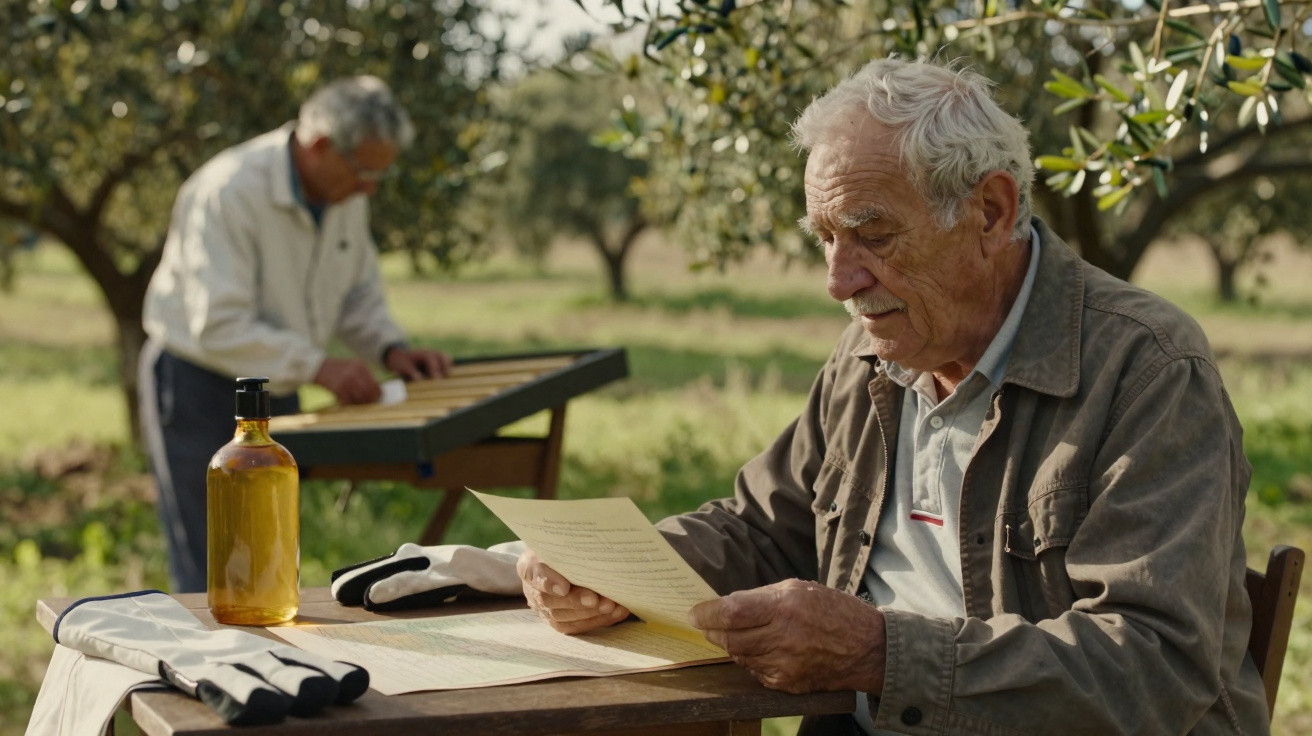
A beekeeper raises a wooden frame into the crisp morning air, and it vibrates with a low hum between his hands. Small amber bees hold fast to the hexagonal cells as the scent of wild thyme mingles with the muted thunder of their wings. A few metres away, a young woman wearing a “Go Vegan” hoodie records the moment for Instagram. She murmurs that the honey has been stolen and that the bees are being worked to death. The beekeeper lets out a breath, wipes his forehead and carefully brushes the insects back towards the hive. It is one buzzing box, two opposing worlds and an argument with no sign of fading. Is it care, or exploitation presented as ecology? As ever, the bees have no say in it.
When sweetness turns sour: why honey has become so divisive
Spend time on TikTok or vegan Reddit and the message appears repeatedly. Honey is drizzled into a glass, spooned over porridge or blended into a smoothie while a voiceover describes it as “bee slavery” or “cruelty in a jar”. Meanwhile, beekeepers upload calm, affectionate footage of hive inspections and wildflower planting, arguing that they are protecting pollinators one colony at a time. The disagreement feels surprisingly personal. It may begin at breakfast, yet it also touches on ethics, climate anxiety and the desire to believe we are “doing our part”.
A few years ago, a vegan café in London attracted headlines after removing honey from every recipe. Its regular customers were taken aback. Staff repeatedly explained that bees were “sentient exploited workers” and that agave or date syrup offered a more ethical alternative. Some people simply chose different toppings, while others left. Before long, the café’s Instagram comments became a battleground: images of commercial apiaries, with hives lined up on pallets, were set against photographs of wildflower meadows tended by hobbyist beekeepers who would never consider putting a queen under stress.
At its most basic, the vegan case is straightforward: bees are animals, and their honey is theirs rather than ours. Obtaining it requires people to interfere in their lives by breeding, moving and smoking them, as well as removing the food they need for winter. That reasoning can feel uncomfortably similar to the arguments surrounding dairy cows and laying hens. Yet ecologists also note that managed honeybees pollinate crops, while some small-scale beekeepers serve as watchful guardians of local ecosystems. Depending on whom you ask, then, a jar of honey can represent either a small ethical wrong or a modest climate solution.
Behind the hive: what happens when humans “borrow” honey
Harvesting honey with a careful beekeeper can resemble a measured ritual. The hive is opened slowly, a small amount of smoke is used to settle the colony, and only capped frames carrying excess honey are removed. The bees’ essential food stores, nearer the brood, remain in place. Some beekeepers take only a few kilograms from each hive and provide a mixture of honey and pollen patties before winter arrives. The principle is uncomplicated: honey should be treated as an extra, not an entitlement. Whether your breakfast toast comes at a cost depends greatly on how restrained the harvest has been.
However, vegans often draw attention to the industry’s other reality. Across major commercial operations in the United States and Europe, hives are placed on lorries and transported thousands of kilometres to follow flowering crops: almonds, blueberries and rapeseed. Bees may be made to pollinate vast monoculture landscapes, encounter pesticides and endure the strain of continual travel. To maintain productivity, queens can be artificially inseminated, clipped or regularly replaced. When honey has been removed from colonies already weakened by stress, they may be fed sugar syrup instead. No activism is required to see how distant this is from the idyllic picture printed on a honey label.
The vegan objection is strongest when honey begins to resemble every other industrial commodity. Once bees are treated as production units, “cruelty” no longer sounds like an overstatement. Yet reducing all beekeeping to its worst examples can obscure a less visible truth: some people maintain ten hives at a field’s edge, harvest once a year and worry through sleepless nights when winter drags on too long. Ethically, the issue is not simply “honey or no honey”, but “what conditions are we quietly accepting for the sweetness on our spoon?” That is where the real unease lies.
Should you boycott honey? Finding your way through the grey area
A useful way to cut through the noise is to approach honey as you might eggs from hens. Consider its origin, who produced it and how many animals are involved. If you continue to eat honey, seek products described as raw, local and small-batch, then speak to the beekeeper where possible. Ask how much is collected from every hive, whether colonies are transported over long distances and what they are given in winter. A simple, perhaps slightly uncomfortable, conversation with a person often reveals more than an eco-label on a jar lid.
People who choose veganism for ethical reasons can feel obliged to become “perfect” immediately. Honey can therefore turn into a symbolic boundary: consume it and you are a hypocrite; avoid it and you remain pure. That pressure can exhaust even highly committed people. In reality, hardly anyone reads an entire scientific paper on pollinators before picking up a jar in the supermarket. If you are uncertain, it is acceptable to treat honey as a “maybe later” issue in your ethical journey rather than the first cause on which you must take a stand.
Some beekeepers view themselves not primarily as honey makers but as protectors of an insect under pressure from pesticides, habitat loss and climate chaos. A French beekeeper once told me, “If I stopped taking a little honey, I’d still keep the hives. The honey just keeps the lights on.” Vegan activist Camille takes the opposite view: “Good intentions don’t erase power. We decide how bees live, where they go, how much they keep. That’s still domination, even if you plant flowers after.”
- Questions to put to a beekeeper: How many hives do you look after? Do you transport them over long distances? What do you feed them when honey supplies are low?
- Signs of intensive production: hives stacked on pallets, long-distance pollination contracts, and substantial use of sugar syrup or corn syrup.
- More gentle ways to sweeten food: dates, apple purée, maple syrup, beet sugar, or simply cutting back on how much sweetness you usually consume.
- Ways to support bees without consuming honey: grow native flowers, avoid pesticides, fund wild pollinator projects, and support campaigns for hedgerows and untamed spaces.
- An honest compromise: if you do continue eating honey, reduce the amount, choose an ultra-local source and regard it as an occasional luxury rather than an everyday squeeze-bottle staple.
Honey, ethics and the uneasy pleasure of eating
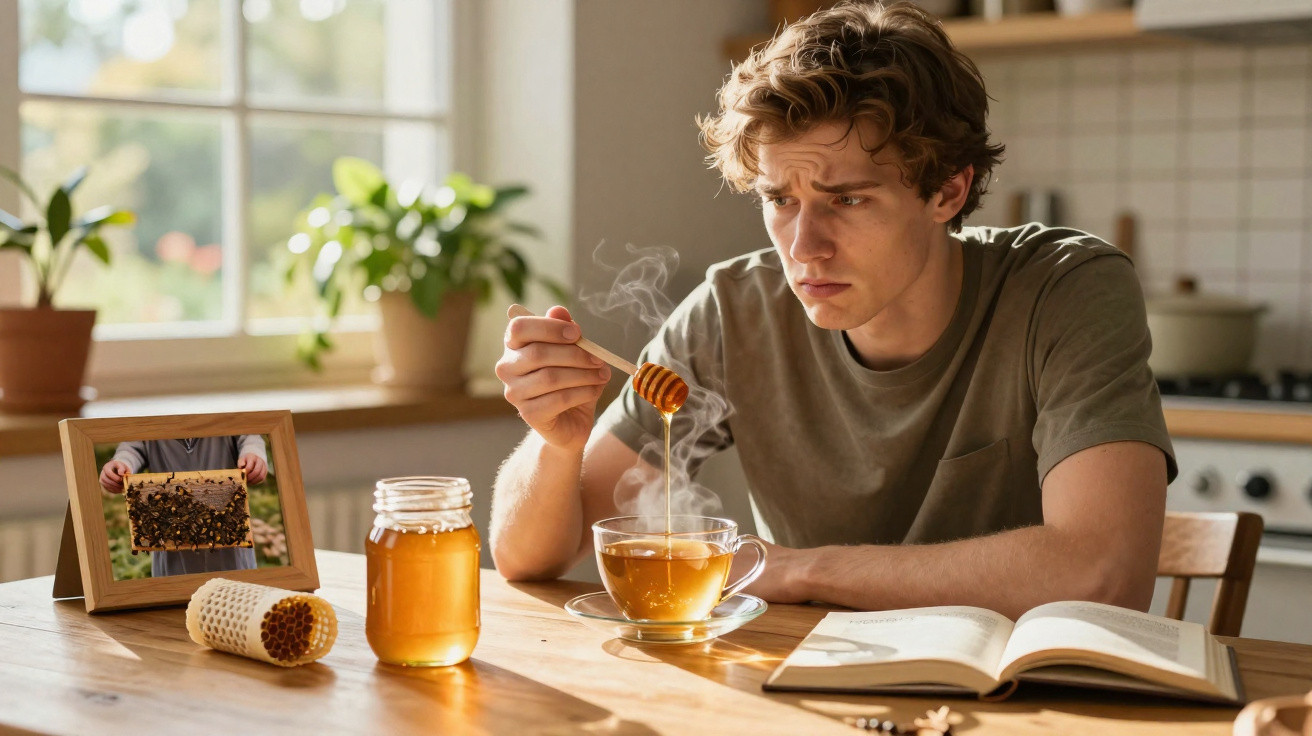
Look closely enough and honey becomes a reflection of ourselves. It shows how much we will do for comfort and how much uncertainty we can overlook when something tastes pleasant. Vegans are right that bees are used and controlled. Beekeepers are also right that healthy colonies and varied landscapes need human support at present. Everyday life takes place between those two truths. Most of us know the feeling: you pour honey into tea and are caught by an unexpected flicker of doubt.
Some people will finish this debate by giving up honey altogether. Others will become even more committed to buying from the quiet beekeeper at the Saturday market. Many will do what people often do: hesitate, compromise, reconsider and then change course again. The divide between cruelty and care is seldom as neat as a slogan printed on a hoodie. Perhaps the more ecological response is to leave room for questions on our plates instead of treating them as settled declarations.
As climate pressures intensify and pollinators continue to disappear, the dispute between vegans and beekeepers may be an awkward attempt to ask the same question: how can we live alongside other species without wearing them down? A spoonful of honey can suddenly seem remarkably weighty-not because it is sweet, but because of all it carries from hive to tongue.
| Key point | Detail | Value for the reader |
|---|---|---|
| Ethics are not black-and-white | Depending on the methods used, honey can involve both exploitation and genuine care | Helps readers move beyond guilt or denial towards informed choices |
| Practices matter more than labels | Local, small-scale beekeeping with low harvests differs significantly from industrial pollination | Provides practical criteria for accepting or rejecting honey |
| You can help bees without eating honey | Growing flowers, avoiding pesticides and supporting wild pollinator habitats | Suggests actions suitable for any ethical view of honey |






Comments
No comments yet. Be the first to comment!
Leave a Comment