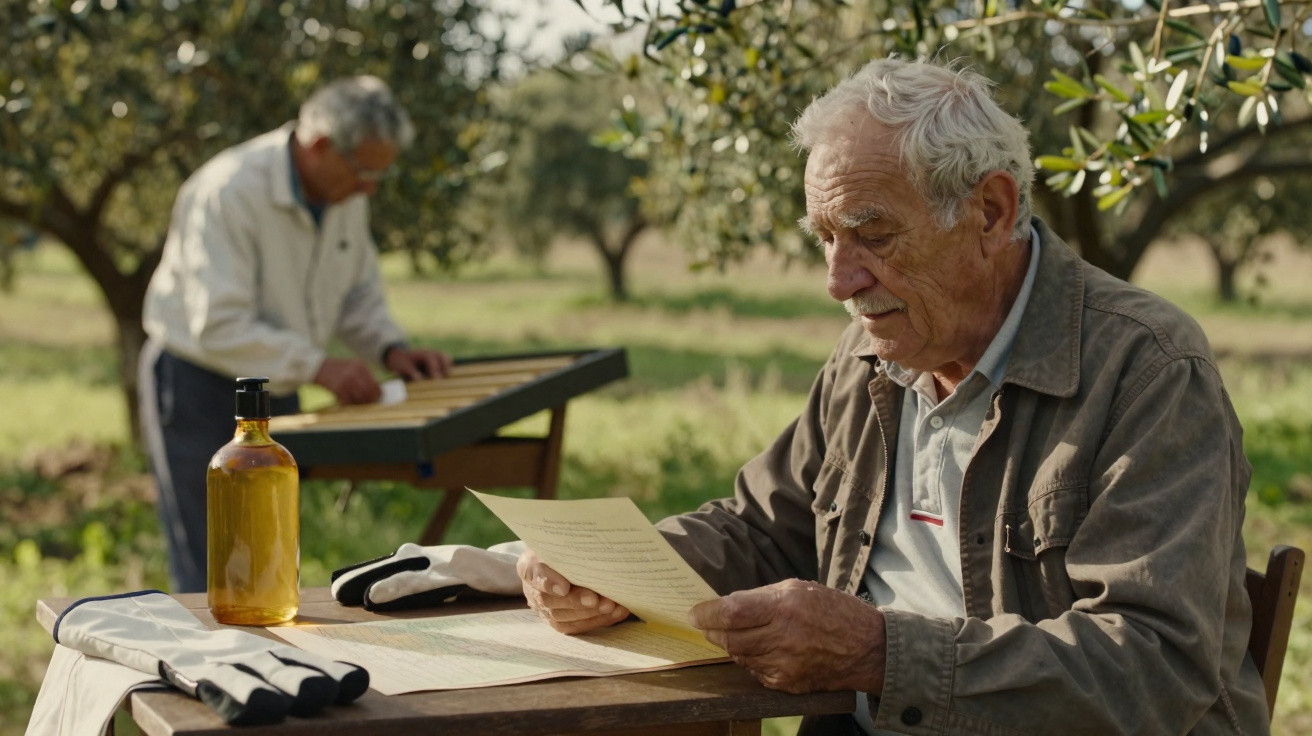
A retired man found this out after he merely tried to help a beekeeper. He lent over an unused patch of land, several hives were put in place and bees began to buzz around; at first, it appeared to suit everyone. Then the tax letter arrived. As the plot was now deemed agricultural land, it attracted a new tax. The retiree was stunned. The beekeeper maintained that he had done nothing wrong. Meanwhile, people online began arguing fiercely over who was actually to blame. It may look like a minor story, but it strikes a raw nerve: who pays when good intentions collide with the system?
It begins on a peaceful plot at the edge of a small town. Now retired and with plenty of time, the man wanders there most mornings with his hands in his pockets, largely thinking of nothing in particular. The grass is long, the birds are unconcerned, and the land is more of a memory than a project.
A beekeeper from the area then comes to his door. He needs a spot for a handful of hives, far from roads and pesticides. The retired man smiles, shrugs and agrees. It seems like the sort of simple, neighbourly arrangement that can exist without forms or formalities: a handshake and the promise of a few jars of honey. Nothing else - or so he believes.
Several months later, an envelope lands on his doormat. It has heavy paper, a grey logo and none of honey's sweetness. The tax office has decided that the land is being used for agriculture, meaning agricultural tax is due. The sum is not devastating, but it stings. The retiree feels let down by a system he scarcely understands, and perhaps a little by the beekeeper as well. The account spreads online, with images of the tax demand and increasingly angry comments. Some see it as a cautionary tale, while others dismiss it as needless fuss. A few ask one straightforward question.
Who actually got it wrong?
When a few beehives quietly change everything
At the centre of this story is not the cost but the gap between intentions and outcomes. To the retired man, offering the land was almost a sentimental gesture: a way to remain useful, help biodiversity and take part in the growing movement of people who speak about saving bees while adding sugar to their tea. Making money never entered his mind. To him, it was more like handing a friend a spare key than letting commercial property.
For the tax office, however, intention is irrelevant. Officials do not assess kindness; they see classifications of land use and codes on a screen. Unused grassland is one category. A site where somebody is visibly producing honey is another. From the kitchen table, the dividing line between doing someone a favour and accommodating agricultural activity may seem obvious, but in practice it is remarkably narrow. Small developments on private land can abruptly become part of large administrative systems.
A comparable case appeared last year in a local Facebook group from another region. A widow had allowed a young farmer to leave a small tractor and store hay bales in her field. No payment was involved; it was simply an agreement between neighbours. By the next spring, her property record identified “agricultural use”, resulting in a reassessment. She was not financially ruined, but she was deeply unsettled. The responses to her post closely resembled those in the beekeeper story: some condemned the tax office, while others lectured her that she “should have checked before”. Everyday reasoning - “I’m helping someone” - runs headlong into administrative reasoning - “this land now serves a productive purpose”.
On the internet, opinion commonly divides into two angry sides. One group criticises “the system” for penalising solidarity and argues that limited, environmentally friendly uses ought to be exempt. The other says the retiree should have known better, prepared an agreement and learnt the legal meaning of agricultural use. As if most people read zoning rules for fun on a Sunday afternoon. Reality lies harshly between those positions: the beekeeper gained from using land for free, the retired man permitted a new activity on his property, and the tax office applied a framework that rarely reflects the gentleness of ordinary life.
In legal terms, authorities may classify land that hosts beehives as agricultural or semi-agricultural, depending on national and local rules. That small shift can set off a wider chain of duties, including taxation and insurance requirements.
How to help someone use your land without alerting the tax office
If you are considering lending land to a beekeeper or farmer, the first sensible step is bluntly simple: record the arrangement in writing. It need not be a 20-page contract. A brief, clear document setting out who is doing what, where and for what purpose is enough. Specify whether the use is commercial, an unpaid favour or a temporary trial. If the tax office later raises questions, even a one-page agreement may prove useful.
Then contact your local tax office or land administration department before any hives or equipment are installed. It is inconvenient, and you may spend time waiting on hold. Yet asking, “If I keep 5 beehives on my unused plot, will that alter my tax status?” could prevent months of difficulty. Note the date and the name of the person you speak with. This is not a complete safeguard, but it demonstrates that you acted in good faith. Where you can, request a response by email: a two-line message may become extremely valuable.
Let’s be honest: hardly anybody does this as a matter of routine. Most people agree there and then, hoping for the best. Still, these stories tend to follow the same pattern. The tax office gets involved because an activity is noticed and somebody reports it or updates a record. A neighbour raises a complaint. A drone photograph reveals newly placed structures. Or the beekeeper proudly registers the hives at an official address - your address. That is how a private understanding can become a public administrative issue.
Speak frankly with the person you are assisting. Find out how they declare the activity, which address they use and whether insurance is in place. Explain clearly that you are not a formal business partner and will not take responsibility for professional risks. Such discussions can be uncomfortable when your aim is simply to be helpful, but they can be the only protection separating a modest kindness from a serious administrative problem.
Once a problem arises, accusations soon follow. Some attack the retired man: “Why didn’t you read the law?” Others target the beekeeper: “He took advantage!” Others still blame the state: “They tax solidarity now!” None of this does much for the person holding the tax demand. A more constructive response is to identify what may still be open to negotiation. In some cases, a classification can be changed where the activity is restricted, seasonal or shown to be non-commercial. In other cases, the beekeeper may be able to contribute towards the unexpected tax, even through an informal arrangement.
“Taxes don’t care about your intentions. They care about what’s actually happening on the ground,” says one rural lawyer who has handled several such disputes. “The moment land hosts productive activity, it may trigger a different category. People find out too late.”
Official letters rarely recognise the emotional consequences, although they fill every space between the lines. The retiree feels foolish, the beekeeper feels blamed, neighbours whisper and strangers online inflame the situation.
- Ask in local groups whether anyone else has dealt with a similar tax reclassification.
- Find out whether your area provides tax relief for small-scale or ecological activities.
- Put a time limit in writing, such as a one-year trial rather than an indefinite arrangement.
- Retain photographs and dates showing when the activity started in case the timeline is challenged.
- If relations deteriorate, consider mediation before going directly to court.
The wider issue behind a simple tax bill
Stories involving a retired man and a beekeeper stay with people because they expose something larger than tax rules. They prompt an uneasy question: how much room remains in modern life for informal acts of kindness that are not immediately absorbed into systems and spreadsheets? Every hive, vegetable patch and small shared venture now appears to bring a form, a classification and a risk to carry.
For people who want more bees, more local food and more communal gardens, this creates a contradiction. We praise residents who make their land available for community schemes, then quietly add fresh tax classifications, permit conditions and responsibilities to their generosity. Some will continue regardless. Others will close the gate and say “no, thanks” when the next hopeful person comes calling. In the process, a small and unseen layer of social trust becomes thinner.
There is also an awkward matter of fairness. The beekeeper receives genuine economic value from the site: honey to sell and land they do not need to rent. The retiree bears the legal and tax consequences. Many online commenters argue that anyone benefiting from the activity should share its risks as well as its rewards. This points towards clearer arrangements, even if payments are only symbolic. A small annual rent, properly declared, may sometimes define the arrangement better than a vague “favour”. It turns an uncertain understanding into one both parties can grasp and, if necessary, explain to an inspector.
Perhaps that is the direction of this debate: not removing rules altogether, but creating kinder and more adaptable categories for minor shared uses of land. Micro-agreements. Citizen-to-citizen projects. Light-touch taxation and simpler declarations when a retired man lends an overlooked corner of his land so that bees can survive. Until then, such accounts will continue to emerge: one letter, one shock and one online dispute at a time. Each of us will have to decide, privately, how much risk we are prepared to accept for a jar of honey and the satisfaction of having helped.
| Key point | Detail | Why it matters to the reader |
|---|---|---|
| Land use can quietly change your tax status | Even a few beehives can reclassify a plot as agricultural in some regions. | Helps you recognise where small “favours” may bring significant financial consequences. |
| Written agreements matter | A short, clear document can clarify who is responsible for what. | Gives you a straightforward way to protect yourself without employing a solicitor. |
| Speaking to the authorities early can prevent stress | A quick call or email before an activity starts can uncover hidden rules. | Reduces unexpected problems and helps you judge calmly whether the risk is worthwhile. |










Comments
No comments yet. Be the first to comment!
Leave a Comment