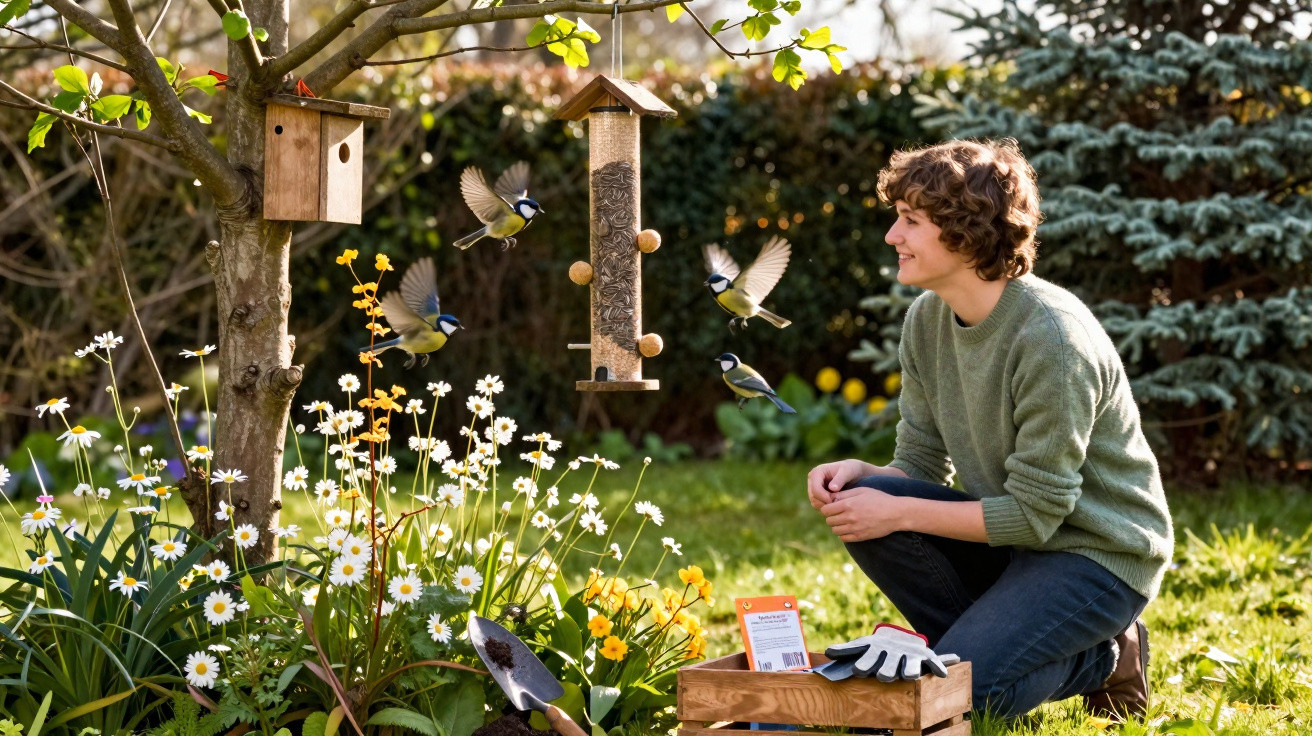
As the days grow longer and milder, tits urgently need safe places with a plentiful food supply – and that is exactly where your garden comes in.
Anyone who enjoys cheerful birdsong in their own garden can do a great deal in spring to encourage great tits and blue tits to settle there for the long term. A charming nest box on its own will not be enough. What matters is how bird-friendly the whole plot is, from dense shrubs and native plants to small hiding places in brickwork.
Why tits need a good garden right now
Spring marks the most demanding time of year for tits. They need to locate a suitable nesting site, claim a secure territory and find sufficient food for themselves and, later, their young. Cold snaps and an April that is often dry make this task even harder in many areas.
At this stage, a wildlife-friendly garden becomes a lifeline: it provides protection from cats, magpies and birds of prey, keeps the distance between food and nest short, and offers shelter during rain, wind and heat. Understanding this means planning more than an attractive outdoor space – it means creating a habitat.
Anyone hoping to attract tits needs to consider four things: a safe roosting place, food, cover and short distances.
More than a nest box: what tits genuinely need
Nest boxes: useful, but often put up incorrectly
Many amateur gardeners buy a new nest box from a garden centre in spring. The intention is good, yet it often has little effect. These boxes are frequently hung too low, in excessive sun, on unstable branches or directly above heavily used patios.
To make a nest box appealing to tits, pay attention to several details:
- Height: Around 2–3 metres above ground level is ideal.
- Direction: The entrance hole should face east or south-east where possible, rather than the intense midday sun.
- Peace and quiet: Keep it away from seating areas, play spaces and frequently used paths.
- Protection: Do not provide cats with an easily accessible climbing route immediately beside it.
- Entrance-hole size: Approximately 28–32 mm for great tits and blue tits.
Just as important is retaining natural refuges wherever possible, such as gaps in walls, old wooden posts, crevices beneath roof tiles and holes in trees. Many tit species prefer these features considerably more than artificial boxes.
Preserve natural nesting sites instead of tidying everything away
Modern homes and well-kept gardens are often too tidy. Smooth façades, sealed surfaces and no hollow trees are problematic for cavity-nesting birds. Where you can, therefore leave:
- old fruit trees with cavities in place, provided they are not at risk of collapse;
- small gaps in sheds or garage walls where birds can nest;
- sections of old walls or natural stone walls unrendered.
Every small crevice and every old tree stump can be a valuable breeding site for tits.
No insects, no young: making your garden a food source
Although tits are known as seed eaters, their young rely above all on a daily diet of insects, spiders and larvae. A garden filled with sterile ornamental plants and gravel offers very little of this.
Native plants rather than sterile cultivated varieties
Many ornamental plants sold in garden centres have been bred to flower for a long time and look attractive, but they provide hardly any pollen or seeds. They are of no value to birds. Native species, which local insects have adapted to, are much more suitable.
Particularly worthwhile choices include:
| Plant group | Examples | Benefit for tits |
|---|---|---|
| Flowering perennials | Meadow sage, yarrow, oxeye daisies | Attract insects; larvae provide a food source |
| Native shrubs | Rose hips, blackthorn, hawthorn | Provide insects, then berries and cover |
| Wild hedges | Hazel, elder, privet | Year-round habitat for many small creatures |
Avoid heavily double flowers wherever possible: while they may look lush, they offer very little pollen and are inaccessible to many insects.
No chemicals and less pressure for a perfect lawn
Spraying everywhere drives away aphids, caterpillars and beetles – the favourite food of many young tits. A few nibbled leaves on roses or fruit trees are normal in a bird-friendly garden and even desirable. They show that there is enough food available.
The perfect ornamental lawn is another obstacle. Short, uniform lawns support hardly any life. Better options include:
- a small wildflower meadow containing clover and herbs;
- edge areas that are mown less often;
- a “wild corner” with nettles, leaves and dead stems.
Dense garden structures: why hedges are worth their weight in gold for tits
Many bird species, including tits, dislike open spaces. They need to be able to dart into cover quickly. This is where hedges, dense shrubs and layered planting come into their own.
The right mix for a hedge
A good hedge consists of several native species with differing flowering and fruiting periods. It supplies food for many months and provides protection in every season. Suitable choices include:
- rowan
- common elder
- hornbeam
- privet
- blackthorn
Berry-bearing shrubs provide more than calories: as many fruits contain a high proportion of water, they also offer moisture. This helps birds when puddles and small water sources dry up.
Evergreen and dense shrubs as shelter
Evergreen species and shrubs with dense foliage offer retreat spaces throughout the year. Adding individual evergreens such as yew or holly, for example, creates safe perches where tits can hide in winter and during rainy spells.
A dense bush close to the nest box can mean the difference between life and death in an emergency.
What to consider when feeding birds in spring
Many people stop feeding birds as soon as temperatures rise. Experts increasingly advise continuing to offer seed food provided there is no heatwave. Tits readily take the extra food, particularly when they need plenty of energy for nest building.
Keep the following points in mind:
- Keep feeding stations clean and remove droppings regularly.
- Do not position them directly above seating or play areas.
- Choose sheltered locations so cats cannot easily approach.
- In high summer, reduce the quantity and maintain good hygiene to prevent disease.
Further tips for a tit-friendly garden
Those wishing to go a step further can add small features that may look insignificant at first but make an enormous difference:
- Water sources: A shallow dish or small pond, refilled daily with fresh water, provides drinking and bathing water.
- Deadwood piles: Stacked logs and branches attract insects and become a food source.
- Leaf piles: Do not clear away every leaf; leave some in a corner, where beetles, spiders and other small creatures can live.
If you are unsure which plants are appropriate or how to retain old niches in your house safely, contact local conservation groups. Many offer garden assessments, publish lists of suitable species or can help with choosing the right nest boxes.
One further factor is often underestimated: light pollution. Permanently lit gardens and harsh floodlights disrupt nocturnal insects and therefore the food chain. Motion sensors with a short illumination time are usually entirely sufficient.
In the long term, every one of these measures pays off several times over: tits keep many pests under control, eating caterpillars on fruit trees, mosquito larvae and aphids. A living garden is not only more attractive to look at, but can often make maintenance easier too – without poison and without a sterile expanse of stone.














Comments
No comments yet. Be the first to comment!
Leave a Comment