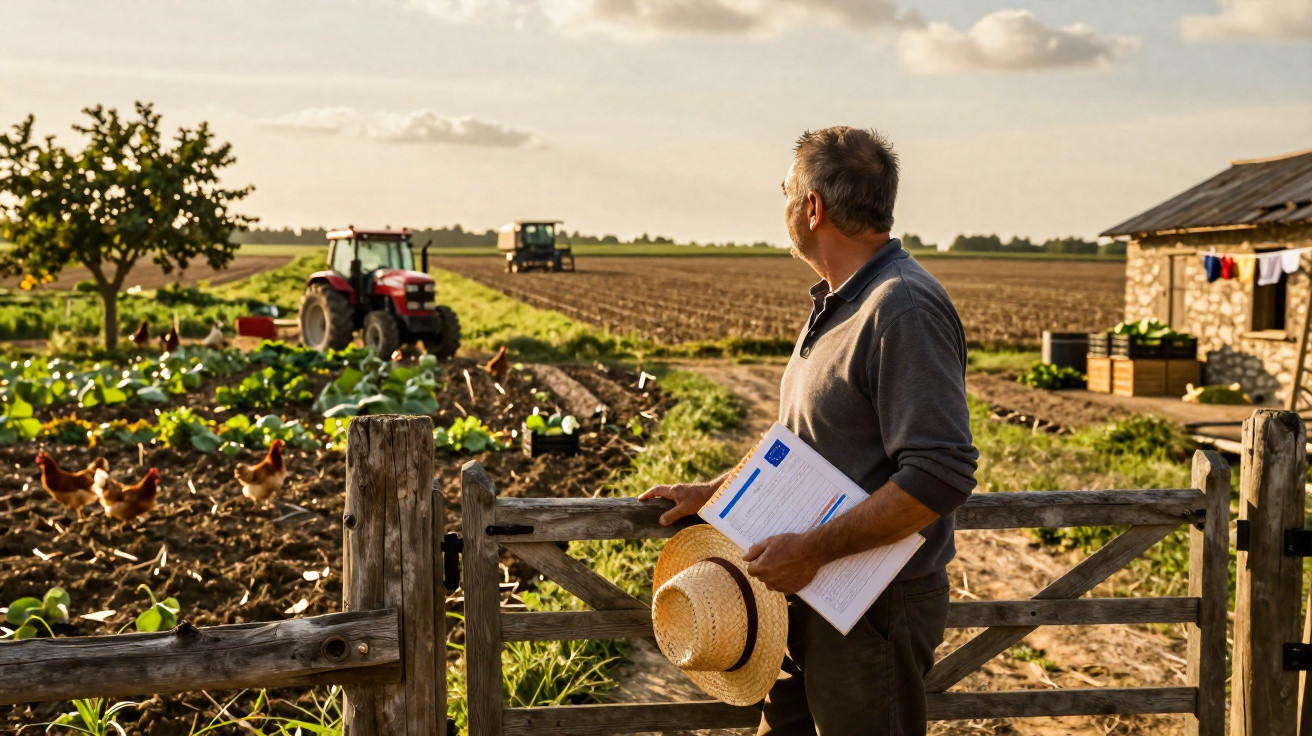
The valley’s first light catches the plastic sheeting of the polytunnels before it reaches the village. A battered old blue tractor splutters into life, seemingly held together by optimism and baling twine. In the farmhouse, a phone buzzes across the table: a fresh email, a bank alert, a message from the ministry. Costs edge upwards, subsidies become uncertain, and the supermarket contract is squeezed yet again.
Outside on the lane, a lorry packed with Spanish strawberries rumbles past the local fruit stall. They are cheaper, more polished, and neatly arranged in a discount supermarket 48 km away.
The farmer watches it disappear down the road, coffee going cold between his hands, and voices a question he never imagined asking.
What if the market wants my farm to disappear?
When the market tells small farms to “adapt or die”
In theory, the argument appears straightforward. If a farm cannot stay afloat without public funding, perhaps it should not continue at all. Economists speak of “efficiency”, “scale” and “competitiveness”, as though livestock and land were no more than spreadsheet entries.
Life on the farm tells another story. It is an unused barn after feed costs surge and a subsidy payment arrives late. It is parents calculating figures at midnight, trying to decide which child’s bedroom could become an Airbnb to cover the diesel bill.
The argument around farm subsidies is presented as a matter of ideology and statistics. In rural places, it is about whether there will still be children for the school bus to collect next year.
Take France, where farmers now block motorways with tractors each winter. Many receive support through the EU’s Common Agricultural Policy, among Europe’s largest areas of public expenditure. Yet small farms are still vanishing at a punishing rate. From 2005 to 2020, the EU lost around a third of its farms, with most of those losses affecting small family holdings.
Consider the United States too, where the popular image remains a red barn beside a family dairy. The reality is that over 75% of farm subsidies go to the largest producers. Numerous small farmers receive little more than scraps while competing with mega-farms that spread expenditure across thousands of acres and strike direct agreements with huge food processors.
This is the uncomfortable contradiction that talk shows rarely examine. Farm subsidies were meant to safeguard small farmers, yet their design often rewards scale and output. The more land you have, the more you grow, the better protected you are when weather conditions turn harsh, and the more public funding softens the risk.
Small farms operate in an entirely different reality. A single poor harvest, a failed milking robot or a supermarket switching suppliers can wipe out their margin.
The market does not merely “pick winners”. When left to itself, it usually favours whoever can produce food at the lowest immediate cost, even when that means using up soil, water and people as though they were expendable.
If small-farm subsidies ended, what would really happen?
Picture subsidies for small farms being switched off next year. Not the tidy theoretical payments described in policy documents, but the real and complicated support that reaches equally complicated real-world bank accounts. Three results would probably emerge quickly: forced sales on a large scale, a rush to expand, and a further move towards monocultures that suit spreadsheets better than ecosystems.
The first farms to fall would be those already close to the edge. Older farmers without anyone to take over. Young couples who borrowed heavily to establish small, mixed farms because they believed locally produced, sustainable food had a future. Many would sell to neighbouring farms or major investors. Some land would be left unused. Other plots could be converted into solar parks, logistics depots or second homes.
The second effect would be psychological. The change would be felt across the countryside before official figures appeared. There would be more ‘for sale’ boards beside fields, fewer pitches at local markets, and a quieter village pub where farmers once exchanged gossip and weather forecasts.
Supermarkets and large food companies would adjust with little difficulty. They already favour working with a small number of major suppliers: less administration, fewer contracts and more uniform goods. A supermarket buyer is unlikely to care whether a village loses its final dairy farmer, provided milk tankers continue arriving from somewhere, anywhere, at the required price.
One view is that the market would simply move food production towards the most “efficient” locations and operators: cheaper land in one place, milder weather in another, and heavily mechanised mega-farms elsewhere. In time, food imports would increase for countries unable to compete.
In the short term, shoppers might find slightly lower prices for certain staples. Over the longer term, however, they would pay in other ways: poorer water quality, reduced biodiversity and additional CO₂ from moving food halfway around the world.
Let us be honest: few people inspect every tomato label while considering who lost their farm to make it so cheap.
Rethinking farm subsidies: from life support to a genuine social contract
Once we accept that removing support outright would flatten small farms, the issue becomes different. How can farm aid stop being a permanent drip-feed and instead become a clear, honest agreement between farmers and society?
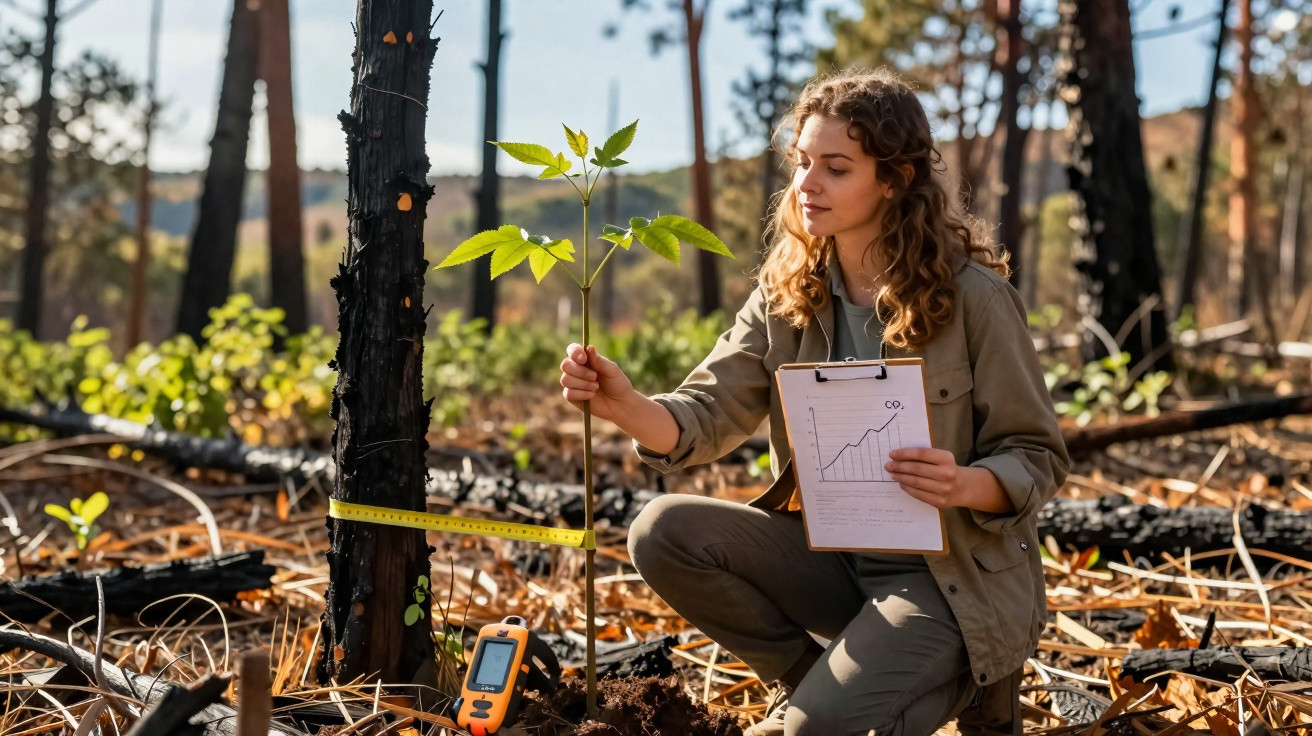
One practical approach, now being tested in some countries, is to pay less simply for hectares and more for what farms deliver for the public. This includes funding for clean rivers, bird-friendly hedgerows, carbon retained in soils and school visits that reconnect children with the origins of their food.
Rather than acting only as a lifeline that keeps a farm afloat, subsidies would become payment for services the market overlooks but from which everyone quietly benefits.
A common trap for small farmers is believing they must do everything simultaneously: organic production, direct selling, agritourism, rare breeds, on-farm processing and social-media storytelling. It is draining, and burnout has become a quiet epidemic in the countryside.
Focusing on one or two pillars may be more sensible. Some farms concentrate on high-value local products, selling cheese or vegetables directly to nearby towns. Others focus on conservation grazing and secure contracts to manage nature reserves. A small number turn part of their holding into learning spaces for schools or urban families seeking a version of rural life beyond Instagram.
Public policy can either undermine these efforts or discreetly guide them towards viability. Clear, predictable rules are more valuable than generous but disorderly schemes. Farmers need certainty about what they will be paid for in five or ten years, rather than only next spring.
“Farmers don’t want charity,” a Danish policy adviser told me. “They want a fair deal. If society wants birds, clean water and open landscapes, that has a cost. Either we pay it transparently, or we pretend the market will magically take care of it. It won’t.”
- Support aimed at small and medium farms rather than based purely on acreage
- Bonuses for methods that safeguard soil, water and biodiversity
- Local procurement rules enabling schools and hospitals to purchase food produced nearby
- Straightforward digital paperwork that does not penalise those without a consultant
- Safety nets for young and new farmers entering the sector
What sort of countryside do we really want?
Remove the ideology and an awkward but deeply human question remains. It is not “are subsidies good or bad?”, but “what kind of food system and landscape do we want around us?” The market can be allowed to decide, and it will. It will reward scale, speed and uniformity. It will favour fields visible from satellites and contracts that can be optimised by algorithms.
Alternatively, we can recognise that certain things do not sit neatly within a price tag: the scent of earth after rain, the school where half the pupils have parents still working the land, or knowing that your potatoes came from someone whose name you may actually know.
Farm subsidies face criticism because they can seem costly, outdated and, at times, associated with scandal. Remove them blindly and the countryside will change very quickly. Reform them with care and they could become something different: a means for urban and rural communities to meet each other’s gaze and say, this is what we expect, and this is what we are prepared to pay for.
The market is powerful, but it’s not a moral compass.
There is room for a new arrangement between eliminating small farmers and preserving a flawed system unchanged. The most difficult step is acknowledging that what reaches our plates is a political decision, not an accident.
| Key point | Detail | Value for the reader |
|---|---|---|
| Markets alone reshape the countryside | Removing small-farm subsidies speeds up consolidation into large industrial operations | Helps you understand that food prices and rural decline are connected, rather than separate concerns |
| Subsidies can buy public goods | Payments linked to soil health, biodiversity and local food connections generate broader gains | Demonstrates how tax funding could help deliver cleaner water, climate objectives and community life |
| Policy design matters more than slogans | Who receives support, what it is for and how simply it is delivered determine which farms survive | Offers a clearer way to assess future reforms and political promises |
FAQ:
- Question 1 Are small farms genuinely less efficient than large industrial farms? Not necessarily. Large farms often perform better on narrow cost-per-unit measures because of scale and machinery. Small and medium-sized farms may be more “efficient” once biodiversity, local employment, shorter supply chains and resilience to shocks are included, but those benefits rarely appear in market prices.
- Question 2 Do farm subsidies mainly go to small family farms? In many countries, the largest producers receive most of the funding because payments are linked to land area or output. Small farms generally receive some support, but much less in relation to their need, which helps explain why so many still struggle despite vast overall budgets.
- Question 3 If subsidies were abolished, would food become cheaper? Possibly for a short period and for some products, as production becomes concentrated in the cheapest regions and largest operations. Over time, hidden costs emerge elsewhere: damaged soils, polluted water, greater climate impacts and fewer local food choices, leaving communities more exposed to global price fluctuations.
- Question 4 Is there a way to support farmers without distorting markets too much? One compromise is to pay farmers not for the food they produce, but for “public goods” such as carbon storage, hedgerows or flood prevention. Markets would then continue setting food prices, while society pays separately for benefits that markets often ignore.
- Question 5 As a consumer, can my shopping habits really make a difference? Individual choices are not magic wands, but they do indicate demand. Purchasing from local producers, backing co-operatives or joining a community-supported agriculture scheme helps small farms remain viable. Meaningful change also requires policy reform, though everyday habits shape the political atmosphere more than most people realise.










Comments
No comments yet. Be the first to comment!
Leave a Comment