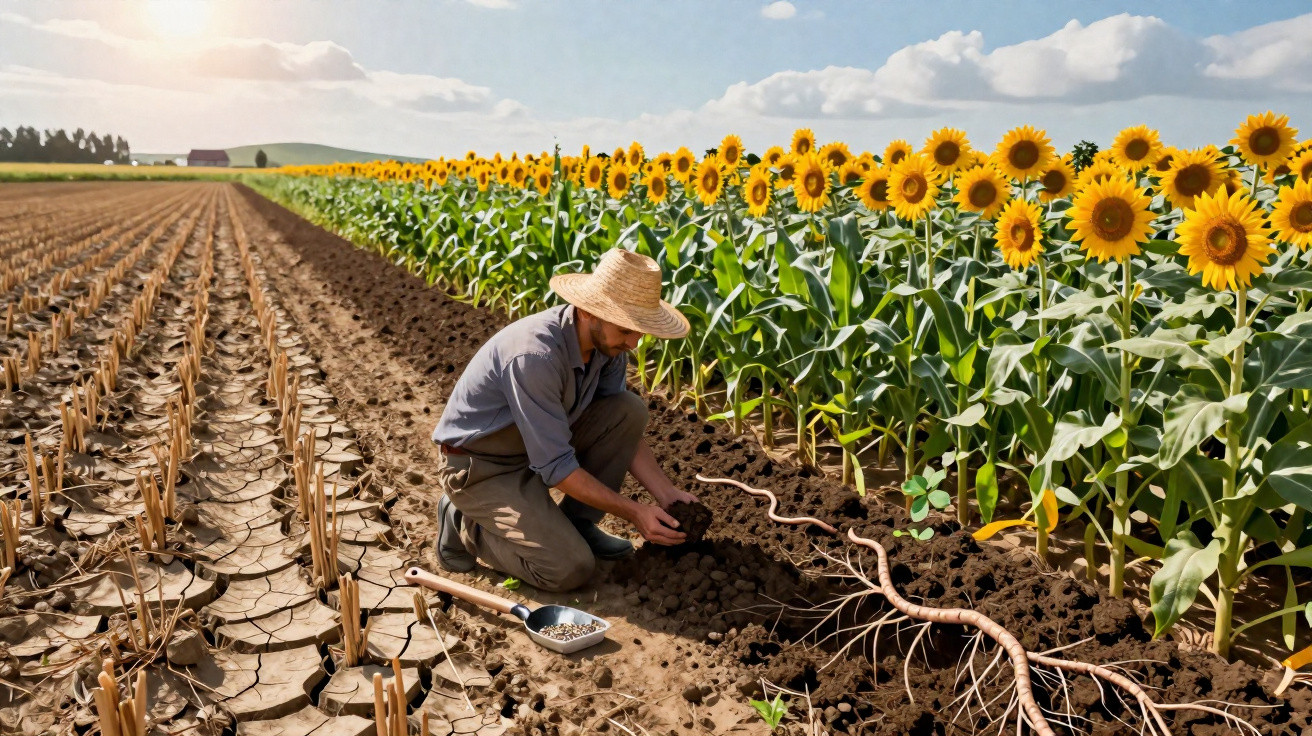
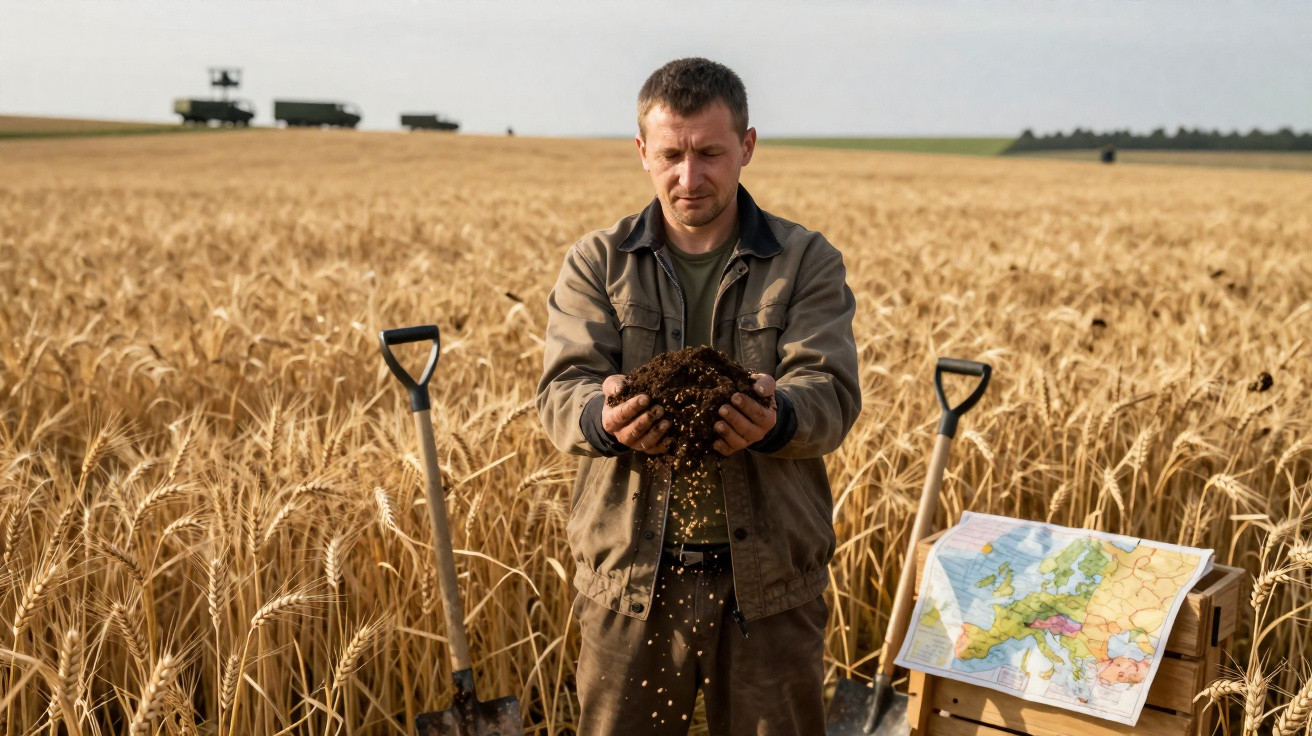
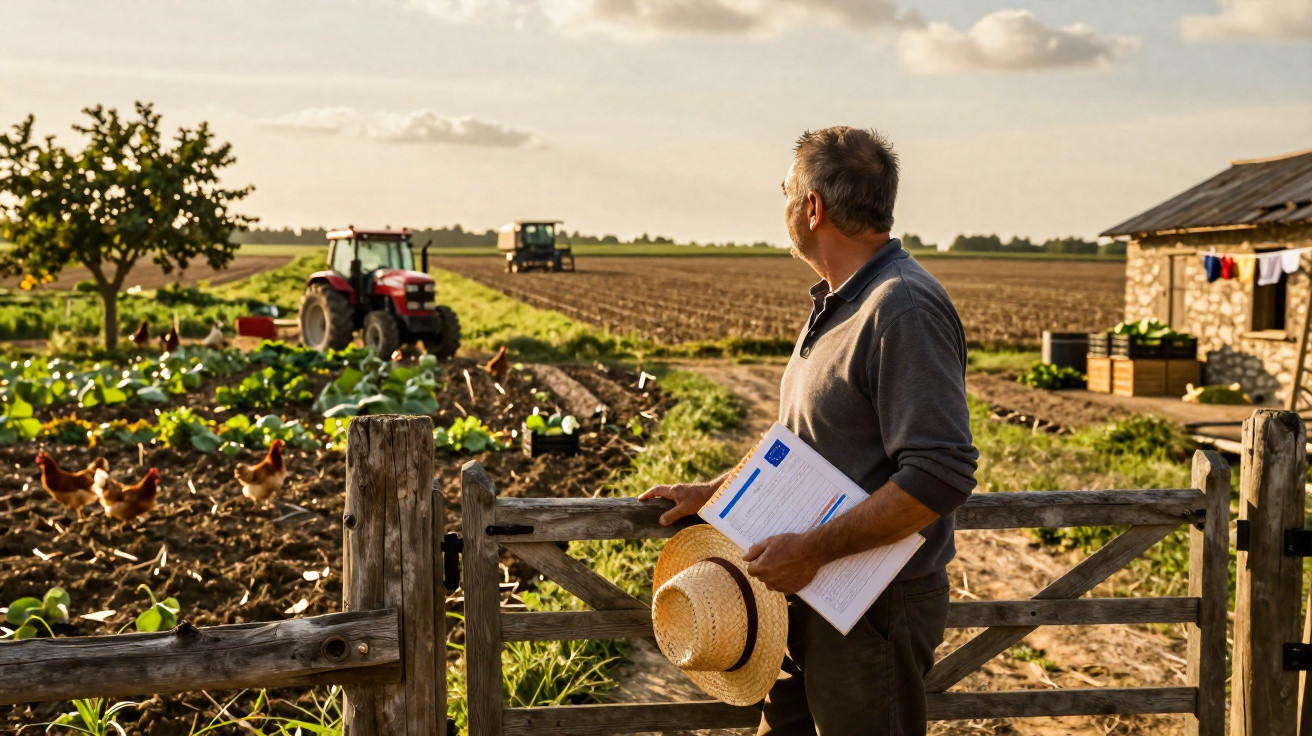
Dust coated his boots as he crossed the same field cultivated by his father and grandfather, now marked by pale, worn-out rows of wheat. The crop was still upright, but only just. Harvests had fallen again, weeds were taking over, and a thin surface crust had developed like a scab that would not mend.
He paused, lifted a handful of earth and let it fall apart between his fingers. It no longer felt like soil. It was simply… material. Dead, loose and nearly grey.
Two years later, in precisely that same place, his boots sank to the ankles into dark, friable soil carrying a faintly sweet scent after overnight rain. Clover flowered close to the ground between the maize stems. Ladybirds speckled the foliage. Life had returned to the field.
What took place during those intervening years is quietly reshaping agriculture around the world.
From lifeless dirt to living soil
The shift started with a straightforward, almost awkward realisation: growing only one or two crops year after year was gradually destroying the land. Wheat continued to grow, yet the wider system was becoming unbalanced. Pest and disease problems increased, while ever more fertiliser was required merely to maintain the same position.
When the farmer began sowing legumes among his main crops, the result initially appeared untidy. Unfamiliar colours emerged across the field. Bees arrived. Neighbours looked sceptical. The neat, consistent appearance disappeared and was replaced by a mosaic of differing forms and heights.
Below that apparent “mess”, however, a quiet and transformative process was beginning in the ground.
Consider a damaged field in southern Spain that researchers had nearly written off. Years of cereal monoculture and intensive tillage had depleted the site. Rainwater ran from the land rather than soaking through when storms arrived. During drought, the soil split open like an old plate.
Local agronomists recommended a bold change: introduce chickpeas, vetch and lupin over several seasons, while retaining crop residues on the surface. On paper, the first year seemed unsuccessful. The principal cereal yield scarcely changed. Weed pressure even appeared to increase.
In the third year, organic matter in the topsoil had increased by more than 30%. Earthworm numbers grew several times over. Yield variation narrowed - not through a miraculous bumper crop, but through reliable, reassuring consistency that was far more valuable in an extreme climate.
The improvement was not only about yield, but resilience. Varied root systems started functioning as a network, reaching different depths, breaking through compacted layers and nourishing distinct microbial communities. Legumes fixed nitrogen. Deep-rooting crops created routes for air and water. Cover crops kept the surface shaded, limiting evaporation and reducing wind erosion.
Soil that had behaved like a dead sponge began operating as a living factory of connections. Plant nutrition no longer relied entirely on bags of fertiliser. Instead, it came from continuous collaboration among plants, fungi, bacteria and tiny organisms beyond the naked eye.
How farmers are putting crop diversification into practice
In reality, crop diversification seldom begins as a dramatic revolution. It often starts with small, modest adjustments: bringing one additional species into a rotation, trialling a cover crop in one corner, or replacing bare fallow with a rye-and-clover mixture.
Some farmers grow maize alongside beans or cowpeas, while others alternate wheat with lentils or pasture grass. On more depleted land, they test cover mixes containing five, seven or even ten species. Every plant serves a purpose: one provides shade, another reaches deep into the ground, another supports pollinators, another supplies nitrogen, and another simply creates biomass.
The objective is not to make a field look more attractive. It is to restore variety to the soil’s diet.
On a small Kenyan farm, a woman called Ruth once cultivated maize alone. Whenever the rains failed, her ground became dust. Extension workers advised her to intercrop maize with pigeon pea and groundnut, then introduce a short vegetable rotation and a mucuna cover that spread over the surface like a living blanket.
The opening season seemed disorderly. Sowing took more time. Seeds became mixed together. Certain rows looked as though they had been planted by an absent-minded child. Her neighbours laughed. Nevertheless, she carried on.
After two years, her maize harvests had risen by roughly a quarter. During the driest periods, her plants remained green slightly longer than those in neighbouring fields. She began selling surplus groundnuts at the market. Beneath the mucuna, the soil stayed cooler and damper a few centimetres below the surface, providing a small heat buffer she could sense simply by pressing her hand into the ground.
No miracle fertiliser was involved. It was simply a different choreography of crops occupying the same place at the same time.
The reasoning behind these benefits is almost brutally straightforward. Different crops “ask” for and “give” different things. Monoculture resembles feeding soil an identical meal every day: certain nutrients are extracted, others remain unused, and the microbial community becomes less diverse.
With diversification, roots investigate a broader range of niches. Some release sugars that nourish specific bacteria. Others draw minerals up from deeper soil layers. Legumes release additional nitrogen into the system. Fibrous roots leave passages that the following crop can use.
On damaged land, this range of interactions helps restore soil structure. Aggregates develop - small crumbs that withstand erosion and retain water like a sponge. Organic matter begins to rise. This brings improved water infiltration, reduced runoff and fewer crusts. Rather than reacting fiercely to every storm or drought, the field starts to absorb shocks with unexpected composure.
Practical crop diversification steps any farmer can trial
Farmers who succeed with diversification rarely overhaul everything in a single move. They approach their land as a sequence of trials. One strip receives a legume within the rotation. Another is planted with a three-species cover mixture. A corner becomes a trial area for a new intercropping arrangement.
One straightforward and effective step is to disrupt the “maize–maize–maize” or “wheat–wheat–wheat” sequence. Add a year of legumes, or even a short-season crop that leaves time to establish a cover crop. Plant a root crop after a cereal, followed by a mixture of grasses and broadleaf species to allow the land to recover and rebuild.
The key is not to pursue complexity for its own sake. It is to select a small range of crops suited to the climate, market and farmer’s established practices, then arrange them in a more intelligent order.
Many people become convinced that diversification must be perfectly designed from the outset, complete with detailed diagrams and long-term schedules. Let’s be honest: nobody really does that every day. Weather shifts, prices fluctuate, and labour availability changes.
For that reason, many agronomists now advise a gradual approach. Begin with one low-risk new crop or cover species. Monitor the soil’s response. Notice where water collects or vanishes. Identify where weeds decline or surge. Then make adjustments.
There are familiar mistakes as well. Some farmers move immediately to complicated eight-species mixtures, only to be overwhelmed by the practicalities of buying seed, sowing it and handling residues. Others anticipate an instant yield increase, then feel let down when the first year appears “average” on paper.
“You’re not just changing crops,” says a Brazilian soil scientist who has watched degraded pastures turn into productive land again. “You’re changing time. You’re giving the soil a chance to breathe between demands.”
The emotional dimension of this transition is seldom discussed. In a difficult year, when bills accumulate and the weather refuses to cooperate, maintaining an untidy-looking diversified system may feel like an act of faith. In a good year, seeing earthworms return can inspire an almost childlike delight.
- Begin on a small scale: one field, one new crop, one cover mixture.
- Spend more time observing than measuring during the first seasons.
- Speak with nearby farmers who have already diversified.
- Recognise that certain trials will fail - and still provide lessons.
The quiet revolution beneath our feet
Cross a diversified field at the end of summer and the difference is noticeable even with closed eyes. Your boots sink gently rather than striking hardpan. The air just above the soil feels slightly cooler. There is a subtle presence of insects, birds and unseen life that was absent before.
On a human level, this change concerns something more profound than agronomy. We have all experienced the moment when something used every day reaches its limit - a car, a body, a relationship. For many farmers, their land had reached that point years earlier; diversification offered a way to step back from the brink.
By diversifying crops, degraded farmland did not merely recover fertility; it recovered a future.
| Key point | Detail | Benefit for the reader |
|---|---|---|
| Crop rotation with legumes | Alternating cereals with nitrogen-fixing crops restores organic matter and soil structure over several seasons. | A clear route to reduce dependence on fertiliser and stabilise yields. |
| Diverse cover crop mixes | Mixtures of grasses, legumes and broadleaf species protect soil, feed microbes and improve water retention. | A practical idea for tackling drought, erosion and extreme weather shocks. |
| Small-scale experimentation | Testing diversification on limited areas reduces risk and shows what works locally. | A practical way to begin without redesigning an entire farm at once. |







Comments
No comments yet. Be the first to comment!
Leave a Comment