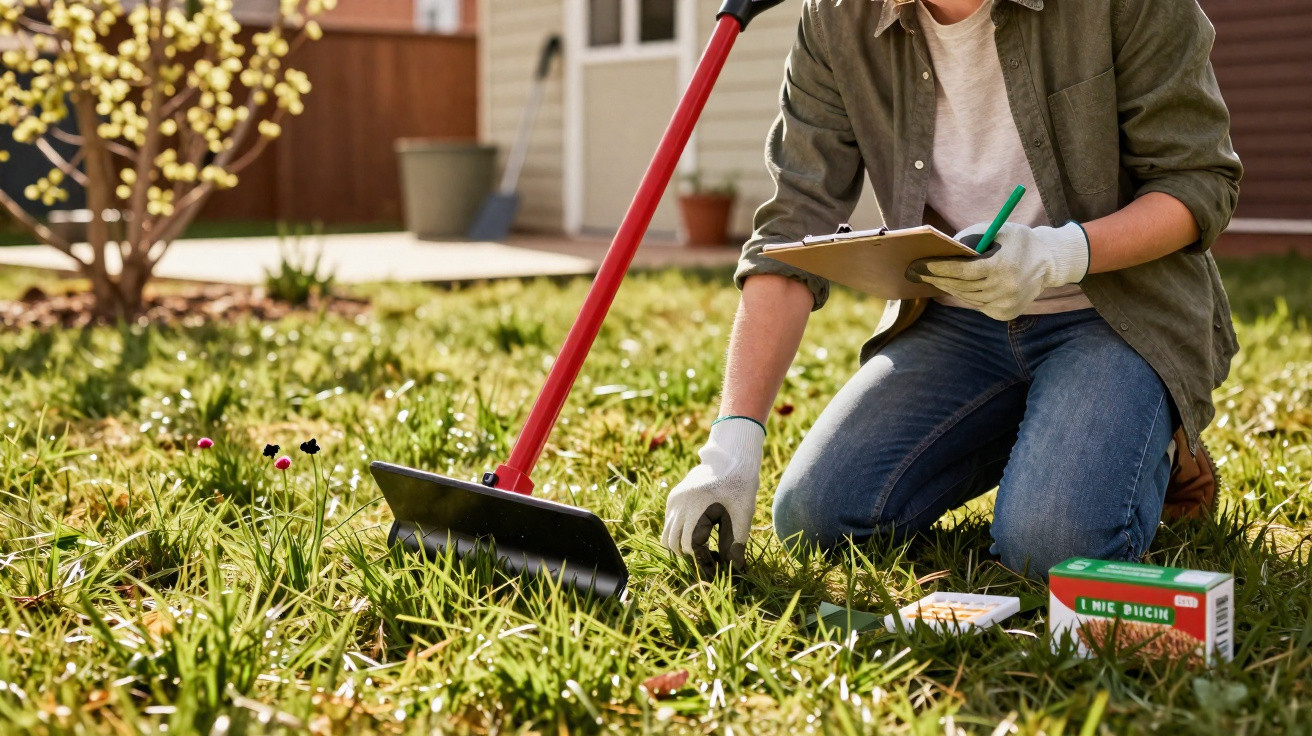
However, using a scarifier too soon can ruin your lawn.
In spring, many gardens resemble a wet sponge rather than a thick carpet of grass. Muddy ground, moss and yellowing blades make it tempting to scarify as deeply as possible straight away. That is precisely where the biggest mistake lies: using the machine at the wrong time or on the wrong setting can damage the turf so severely that the lawn deteriorates within days.
The one mistake that ruins your lawn in spring
The most damaging misconception is this: scarify as soon as there have been a few sunny days, regardless of the lawn’s condition. Many people treat the machine like a pressure washer: the more forcefully it works, the better. That approach quickly backfires.
Anyone who scarifies too early, too deeply or on waterlogged soil removes not only moss, but also the lawn’s very foundation.
The turf acts like a thin protective layer. It holds the soil together, prevents it from drying out and cushions foot traffic. If it is aggressively torn open in spring, the following can happen:
- Fine roots are torn away, leaving the grass blades without support.
- The exposed soil dries out rapidly in sunshine.
- Bare patches invite weeds and even more moss.
- The lawn may need weeks to recover – if it recovers at all.
The deceptive part is that the lawn often looks “nicely clean” immediately afterwards. The serious consequences only appear days later, as areas turn brown and only isolated clumps survive. Good spring lawn care therefore starts not with the scarifier, but with an honest assessment of the lawn.
When it is the right time to scarify – and when it is not
The checklist before scarifying for the first time
Before plugging in the machine or using a hand scarifier, check three things:
| Criterion | Suitable for scarifying? |
|---|---|
| Soil temperature | Yes, if it remains consistently above about 8–10 °C. |
| Lawn growth | Yes, once the lawn has already been mown two or three times. |
| Soil moisture | Yes, if the ground is only slightly damp rather than muddy. |
The ideal period in much of central Europe is broadly between March and May. At higher altitudes or after a long winter, this may shift towards April. Scarifying before then usually means working on cold, inactive soil. The grass is not yet growing actively enough to repair the damage.
How to tell whether scarifying is needed at all
The second major error is scarifying a lawn that does not have a substantial layer of thatch. A quick test is enough:
- Walk barefoot across the lawn: does it feel soft and spongy?
- After rain: does water remain on the surface for longer than a few minutes?
- Pull a metal rake firmly through the grass: does it collect plenty of brown blades and moss?
If none of these apply, vigorous raking, spring fertiliser and regular mowing are often sufficient. Unnecessary scarifying weakens the lawn for no reason.
The right scarifying depth: millimetres determine success or disaster
Even if the timing is perfect, the lawn can suffer when the machine is set incorrectly. Many people set the blades too deep out of impatience. It may look dramatic, but it is a shock treatment for the lawn.
The blades should score the turf, not plough it. For most domestic lawns, more than 2–3 millimetres of depth is already too much.
Proceed gradually:
- Mow the lawn to around 3–4 cm beforehand and remove the cuttings.
- Set the scarifier to a shallow depth.
- Test it over one or two metres and inspect the result.
- Adjust it only enough for the blades to lightly score the soil and lift out thatch.
Starting with an aggressive setting pulls up roots across large areas. In dry springs, this increases the risk of the lawn scorching in a short time. Young lawns are particularly sensitive. A newly laid lawn generally needs two to three years before it can tolerate intensive scarifying.
What needs to happen after scarifying
Dolomite instead of iron sulphate: calming the soil
Many amateur gardeners automatically reach for moss killers containing iron(II) sulphate. While the symptoms disappear, the underlying problem worsens: the substance makes the soil more acidic, creating ideal conditions for fresh moss growth.
Anyone who applies iron sulphate after scarifying may tackle the visible moss, but encourages the acidic soil that allows moss to thrive in the first place.
A sensible alternative is dolomite, a lime-containing soil improver. It has two benefits:
- It raises the pH slightly, making the site less favourable for moss.
- It provides magnesium, which supports chlorophyll production.
Spread dolomite lightly over the scarified area. Rain or watering carries the material into the soil. If you are unsure, a simple garden-centre soil pH test can show whether the soil has generally become acidic, at below around pH 6.
Overseeding and aftercare: this determines whether the lawn returns
Scarifying opens up the turf. Do not leave this exposed ground bare, or weeds will inevitably establish themselves. After improving the soil, follow these steps:
- Overseed every bare area with a high-quality lawn-repair seed mixture.
- Work the seed in lightly with a rake so that it makes contact with the soil.
- Apply a moderate amount of spring fertiliser to encourage growth.
- Water lightly and regularly instead of giving occasional heavy soakings.
For the first one to two weeks, children, dogs and barbecues should use other parts of the garden. Young blades can otherwise bend over easily, leaving fresh gaps behind.
Typical situations in everyday gardens
Case 1: The sponge-like lawn after record rainfall
Following a wet winter, few hours of sunshine and a small north-facing garden, the lawn may feel like a bog in April. Scarifying vigorously at this point drives the blades through mud. The result is deep grooves, torn-up islands of grass and worse waterlogging. It is better to begin by:
- Surface-raking moss and thatch with a lawn rake.
- Piercing compacted areas with a garden fork so water can drain away.
- Scarifying only once the soil has dried out and can bear weight.
Case 2: The patchy lawn after a winter holiday
Anyone who has been away for several weeks often finds a patchwork lawn in spring: moss in one area, gaps in another and dense clumps in between. In this situation, a tailored approach is worthwhile. Only heavily thatched sections need the scarifier; elsewhere, a firm cut and targeted overseeding are enough. The lawn as a whole remains more stable and recovers more quickly.
Why moss appears – and how to keep it under control long term
Moss is less an enemy than a symptom. It indicates that the growing conditions do not suit the grass. Common causes include:
- Persistent damp and waterlogging
- Acidic soil
- A mowing height that is permanently too low
- Shady areas with little air movement
- Nutrient deficiency
Scarifying every spring only treats the symptoms. Addressing the causes means less intervention is needed over time. Setting the mower slightly higher, applying lime selectively to strongly acidic soil, aerating occasionally with a fork and following an appropriate fertiliser plan can reduce the problem considerably.
Everyday explanations of practical lawn-care terms
The term thatch, or lawn thatch, refers to the layer of dead grass blades, root remnants and clippings that builds up between the soil and the green leaves. A thin layer is beneficial because it protects the soil. A thick layer blocks air, water and nutrients.
Scarifying does not mean “digging over”; it means “cutting vertically”. The blades run perpendicular to the soil surface and score only the top few millimetres, allowing thatch and moss to be lifted out. Treating it like rotavating misses the point entirely.
Is the effort worthwhile? The effects over the course of the year
Anyone who plans this spring task carefully will see the benefits for months. A properly scarified, overseeded and fed lawn grows thicker, lets less light reach the ground, shades moss and weed seeds, and withstands foot traffic more effectively. Its water requirement also falls because the soil retains a more stable structure and holds moisture better.
At the same time, every scarifying session comes at a cost: short-term stress, lost roots and exposed soil. Routinely running over a reasonably healthy lawn at the same time each year is more likely to hold it back. A critical spring inspection using a rake test achieves more than a rigid calendar entry. That keeps spring lawn care a genuine fresh start, rather than the starting signal for brown patches in record time.













Comments
No comments yet. Be the first to comment!
Leave a Comment