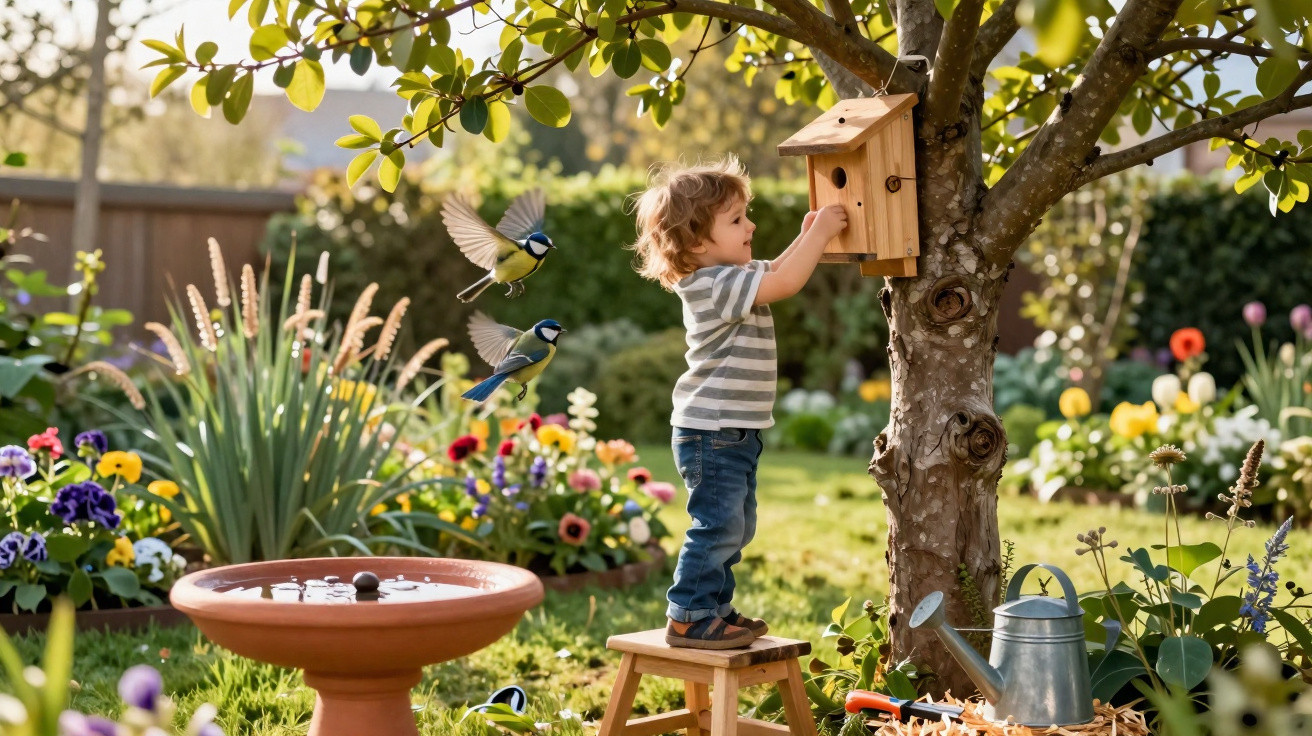
Anyone who has watched a tit up close while it feeds its young or busily hunts insects soon realises that these birds bring more than movement to a garden: they add real life. With a few well-chosen changes, an ordinary plot can become a safe haven for them – while you also gain natural pest control almost as a side benefit.
Why tits are so good for your garden
Tits are far more than attractive flashes of colour at the bird feeder. They consume large numbers of aphids, caterpillars and other harmful insects that can weaken fruit trees, roses and vegetable plants. During the breeding season, a single pair of tits can feed several hundred caterpillars to their chicks every day.
“Supporting tits automatically reduces the need for chemical treatments in the garden – and strengthens the natural balance.”
Many built-up areas lack old trees with nesting cavities. This puts tit populations under pressure, as secure breeding sites are scarce. A bird-friendly garden can act as a small refuge amid gravel gardens, pitched roofs and heavily paved surfaces.
Birds in the garden have also been shown to have a calming effect. Many people say that watching them helps them reduce stress and feel more connected to nature. Tits are fairly trusting, often venture close to the house and can be easily seen from a window or balcony – making them an ideal introduction for children and adults who want to learn more about wildlife on their doorstep.
The ideal nest box for tits
The key to attracting tits over the long term is a suitable nest box. However, not every wooden box from a DIY shop meets the necessary requirements.
Materials and construction
- Untreated timber: Sturdy woods such as larch or oak are best, left untreated and free from varnishes. This prevents harmful substances from reaching the nest.
- Sufficient wall thickness: A thickness of around 2 centimetres protects chicks from heat and cold, and insulates better than thin plywood models.
- Removable roof: A lid that can be opened makes cleaning after the breeding season much easier.
- No perch: The small perches once commonly fitted beneath the entrance hole mainly give cats and magpies something to hold on to, so they are unnecessary.
The size of the entrance hole is especially important, as it determines which birds will actually move in.
| Species | Recommended entrance-hole diameter |
|---|---|
| Blue tit and other small tit species | approx. 28 mm |
| Great tit and slightly larger species | approx. 32 mm |
This keeps larger competing species out and reduces the risk of sparrows, for example, taking over the box.
How to hang a tit nest box correctly
Even an excellent nest box is of little use if it is placed in the wrong location. Tits are highly sensitive to disturbance and danger.
- Height: At least two metres above the ground is ideal, although slightly higher is better. This gives cats and martens very little chance.
- Direction: East or south-east is considered best. The birds receive morning sun while remaining protected from the strongest midday heat and westerly winds.
- A quiet setting: Avoid constant door banging or a patio immediately beside the box. A few metres away from seating areas is often enough.
- Weather protection: A slightly overhanging roof, with a tree trunk or house wall behind it, reduces exposure to rain and draughts.
The best time to put up a nest box is from late winter to very early spring, when birds are actively looking for breeding sites. If you install it only in May, you will often miss the first brood. Leave the box in place, as many tits use the same one again in following years.
A garden where tits can truly thrive
One nest box alone is rarely enough to encourage many tits to settle permanently. The wider garden needs to provide food, cover and a varied structure.
More insects, more tits
In spring, the main food of wild tits consists largely of caterpillars, beetles and spiders. A garden kept too sterile removes the basis of their diet.
“Less perfection, more life: a slightly ‘untidy’ garden creates the best kitchen for tits.”
Practical measures that can make a difference quickly include:
- A wildflower meadow, or at least a strip of native wild plants, instead of an entirely ornamental lawn.
- No use of plant-protection products, or only very limited and targeted use.
- Piles of leaves and corners of dead wood as shelter for insects and other small creatures.
- Hedges made from native shrubs such as dog rose, elder or blackthorn.
These features provide not only food but also protection from birds of prey. Tits do not like crossing large open areas; instead, they use shrubs and trees as ‘stepping stones’ on their way to the nest box.
Water and food as useful extras
Small birds can quickly become stressed during dry summers if there are no puddles or streams nearby. A shallow dish of fresh water is a great help. It should be:
- no more than a few centimetres deep,
- placed in partial shade,
- cleaned and refilled every day.
Opinions differ on supplementary feeding. Many experts now support feeding birds throughout the year, provided the food is high quality and kept clean. Tits enjoy:
- sunflower seeds, shelled or unshelled,
- food-grade peanuts,
- fat-based energy blocks,
- traditional fat balls without nets in winter, preferably placed in holders.
Most importantly, nets can become traps if birds or hedgehogs become tangled in them. Robust metal or wooden feeders are the better option.
What can easily go wrong with tits in the garden
It is possible to make mistakes when trying to help tits, often with the best intentions. Common pitfalls include:
- A box in full midday sun: The brood can overheat, causing young birds to die in the nest.
- Constant disturbance from people and pets: Nest boxes directly above a barbecue area, by the front door or beside a trampoline often remain empty.
- Poor hygiene: If a box is left uncleaned for years, parasites and germs build up. Tits avoid such places.
- Old or sharp metal fittings: Rusty nails, protruding screws or sharp-edged entrance holes can injure wings.
After the breeding season, usually from late summer onwards, it is worth carrying out a quick check: remove old nesting material and clear away heavy dirt, but avoid harsh cleaning products. A dry brush and a little hot water are sufficient.
How children benefit from a tit-friendly garden
A garden visited regularly by tits is a small outdoor classroom. Children can see at close range how tirelessly the adult birds bring food, hear different calls and quickly learn to tell species apart.
If you wish, hang a second box with a hinged side panel slightly lower down. This makes it possible to look inside briefly in the presence of adults when the parent birds are out of sight – but only very rarely and from a considerable distance during the breeding period. Many conservation organisations provide clear guidance on this and explain the times when a glimpse inside is considered tolerable for the birds.
Further ideas for a bird-friendly outdoor space
What benefits tits will usually help other species too. A few additions can bring even more variety to the garden:
- Nesting aids for solitary bees on a sunny house wall.
- A mixed hedge border of dense shrubs, providing screening and breeding space for different bird species.
- A small, shallow pond edge with marginal plants where birds can drink safely.
- Restrained lighting: avoid permanent garden lighting, as artificial light disrupts insects and stresses birds.
Those who take things step by step will soon notice the change: first a few individual tits appear, then sparrows, robins or blackbirds follow. The combination of a nest box, a nature-friendly garden, a water source and considered feeding can turn your plot into a long-term magnet for feathered visitors – and reveal just how effective the seemingly simple measure of “a suitable box in the right place” can be.












Comments
No comments yet. Be the first to comment!
Leave a Comment