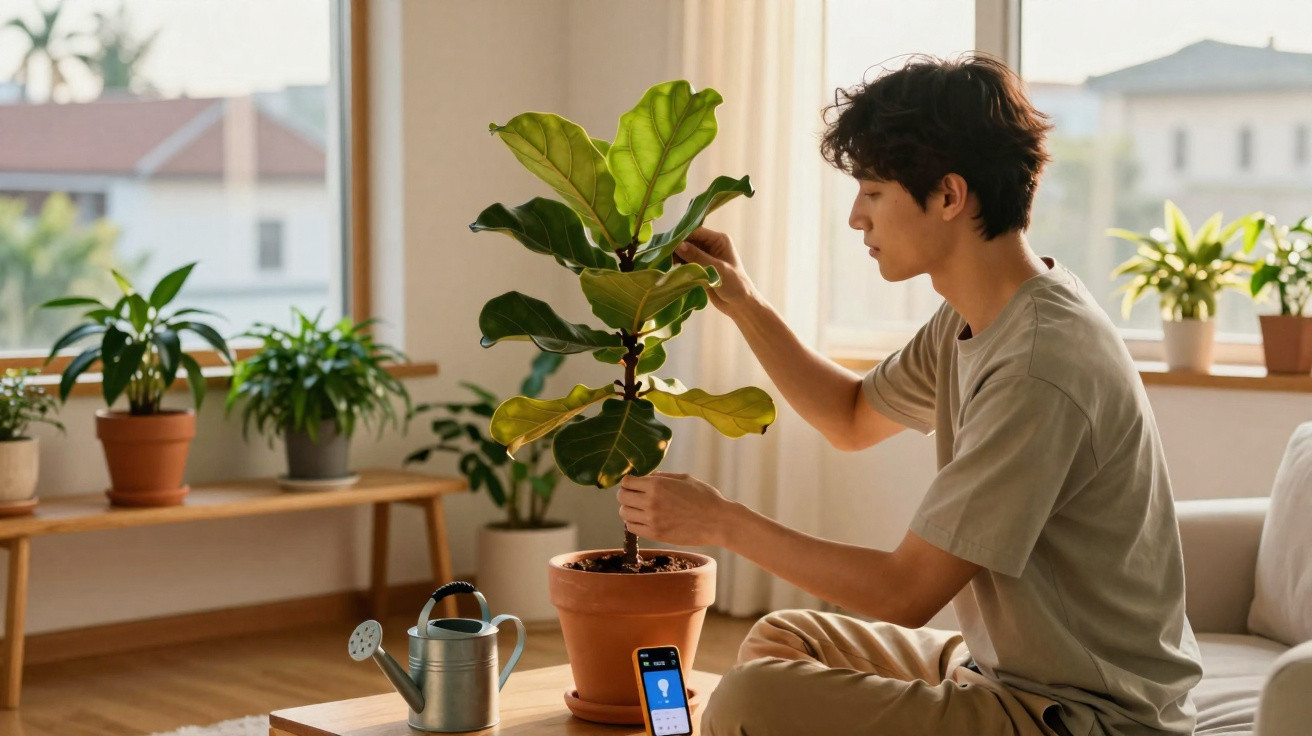
The pothos sagged in quiet surrender on the windowsill, its leaves as limp as overcooked pasta. On Instagram, every living room appeared to be a carefully styled jungle. In yours, the compost had formed a crust, the foliage was dusty, and one forlorn spider plant was holding on as though it had been through something.
You had watered it. Spoken to it. You had even searched “plant rescue” at 11:47 p.m.
Yet whenever friends visited, you caught yourself offering excuses about “poor light” and “this one is recovering”. Then, one day, you made one tiny, almost ridiculously simple adjustment… and, three weeks later, your plants looked as though they had employed a stylist.
The answer was not what you might expect.
The one change: treat light like water
Most of us fixate on watering, but the real transformation begins when light becomes the primary resource. It is not merely part of the décor. It is what your plants literally feed on.
The crucial change is not a new fertiliser or an online trend. It is recognising that proper light is non-negotiable, then organising your home to make the most of it.
The moment you pull your monstera three metres nearer to a bright window, angle the blinds and remove clutter from the sill, your plants stop merely “surviving” and begin acting like the ones in those smug Pinterest photographs. They grow more upright, produce shiny new leaves and quit dropping foliage from sheer despair.
That one decision sends a clear message: these plants live where the light actually is.
Imagine a small third-floor flat in Berlin with a north-facing aspect. A young couple bought a fiddle-leaf fig because everyone on TikTok seemed to own one.
They placed it in a corner beside the television, far from their only decent window. For months, it sulked, shed leaves and developed the brown marks that seem to say, “I regret everything.”
One Saturday, while tidying, they moved it directly beside the glass. They opened the blinds completely, turned the pot by a quarter turn and shifted a chair to a darker wall instead. Nothing else changed.
Two weeks afterwards, a fresh leaf opened like a flag in slow motion. By the fourth week, it had produced three new leaves: larger, darker green and finished with that velvety matt texture normally seen in plant shops. The same plant. The same watering. The same flat. Only real light.
Plants are ruthlessly truthful about energy. When the light is insufficient, their entire strategy changes: smaller leaves, leggy stems and no spare energy for looking beautiful.
Indoors, glass removes a great deal of brightness. A spot that appears “bright” to you may feel like a dim cellar to a plant evolved for the edge of a rainforest or an open field. Our eyesight adjusts automatically; chlorophyll does not.
That is why the “bright corner” three metres away from the window keeps killing your calathea. Its photon budget has run out long before the light reaches the pot.
Once you understand that windows are not all alike, that a south-facing sill is prime property and that the back of a room is effectively a plant desert, your layout begins to change. You stop making guesses and start positioning plants like a light strategist.
That is the one adjustment that makes you seem as though you know exactly what you are doing.
How to replace guesswork with a light strategy
Begin by walking around your home at three points in the day: morning, midday and late afternoon. No apps for now. Use your eyes, along with a little honesty.
Where does sunlight genuinely fall on the floor or walls? How long does it remain there? Does it cross a table, shelf or windowsill directly?
Then open your phone camera. Aim it towards the places where you would like to keep plants, and watch how the exposure responds. If your camera has to brighten the image dramatically, that area is darker than it appears.
Next, move your most demanding plants into those truly bright spots. Accept that the best place in your home may now belong to a fern. That modest compromise sits behind every striking indoor jungle.
This is where people unknowingly undermine themselves. They purchase a “low-light plant”, then expect it to flourish three metres from a north-facing window behind a curtain.
In plant-shop terms, “low light” commonly means “does not die at once”. It does not mean “enjoys living in a cave behind your sofa”.
Let us be realistic: nobody measures light levels every day. You are already managing work, laundry and that friend who sends ten-minute voice notes.
Use rules that suit a low-effort routine instead. Leafy, variegated and flowering plants should be placed as near to the brightest window as possible. Hardy green structural plants, such as snake plants and ZZ plants, can cope with mid-room positions. Plastic plants can dominate the darkest shelf.
When you are uncertain, shift the pot 50 cm closer to the window for a month, then simply observe the result.
One interior stylist told me, “The day I stopped decorating with plants and started decorating around my best light sources, every client thought I’d taken a secret botany course.”
- Try the best position
Put your fussier plant in the brightest safe window for 30 days before deciding it is “difficult”. - Rotate deliberately
Give the pot a quarter turn each week, so fresh growth does not lean over and fall. - Take window directions seriously
South- and west-facing windows suit sun-hungry plants. East-facing windows suit lovers of gentle light. Keep only the toughest green plants by north-facing windows. - Choose sheer curtains over distance
When sunshine is too intense, filter it with fabric rather than exile the plant to the other side of the room. - Group plants by their light requirements
Keep plants that enjoy similar brightness together, so care remains straightforward rather than feeling like running a miniature hospital.
The quiet confidence that grows with the leaves
Once you start adapting your life, even slightly, around the light, a change happens that has nothing to do with chlorophyll. Your home ceases to be a collection of decorative corners and becomes a place you understand physically.
You begin to notice that morning sunshine warms the kitchen tiles for only an hour. You see how the bedroom fills with soft brightness in spring, but not in winter. Your plants start reflecting this rhythm, growing faster in some months and resting in others.
Friends arrive and say, “Whoa, your plants look amazing, what are you doing?” You shrug and, only partly truthfully, reply, “Oh, I just gave them better spots.” Privately, you understand that it is more than that.
You made them a priority. You stopped treating light as an afterthought. And suddenly, your whole home reads as if it’s curated by someone who truly knows what they’re doing.
| Key point | Detail | Value for the reader |
|---|---|---|
| Light is the real “water” | Treat window exposure as the primary resource rather than a backdrop | Helps plants flourish with less trial and error |
| Arrange around bright areas | Map morning, midday and afternoon light, then move plants closer | An instant visual improvement without purchasing new plants |
| Match plants to window direction | Keep sun-lovers by south/west windows, gentle types by east-facing windows, and the toughest plants in north-facing or mid-room spots | Reduces plant deaths and frustration |
FAQ:
- Question 1 My flat is dark. Is there any point in having plants at all?
- Question 2 How near to a window is “close enough” for most houseplants?
- Question 3 Will strong sunshine scorch my plants if I place them right beside the glass?
- Question 4 Do grow lights genuinely work, or are they excessive?
- Question 5 How soon will I notice a difference after moving my plants into better light?










Comments
No comments yet. Be the first to comment!
Leave a Comment