Many amateur gardeners want to help birds through the winter – yet, without realising it, they may be putting those very lives at risk.
Frost settles over flowerbeds and shrubs, natural food becomes scarce, and fat balls suddenly appear in trees everywhere. People who hang them up mean well by tits, robins and sparrows. However, an inconspicuous detail on many products from DIY shops can turn well-intentioned help into a deadly trap.
Good intentions, serious danger: when fat balls become fatal traps
The common mistake made during a quick shop
As temperatures drop, many people automatically reach for the large tubs of fat balls in the shops. Ten or twenty pieces, ready-packed and fitted with a handy hanging hook – one grab from the shelf and bird food is in the garden. The packaging promises a simple solution for anyone hoping to help birds.
That convenience is precisely the problem. Hardly anyone takes a closer look at how the balls are put together. Instead, they are placed in the tree together with their wrapping. That is where the danger begins.
“The most dangerous part of a fat ball is not its contents – but the plastic covering around it.”
Why plastic nets are so dangerous
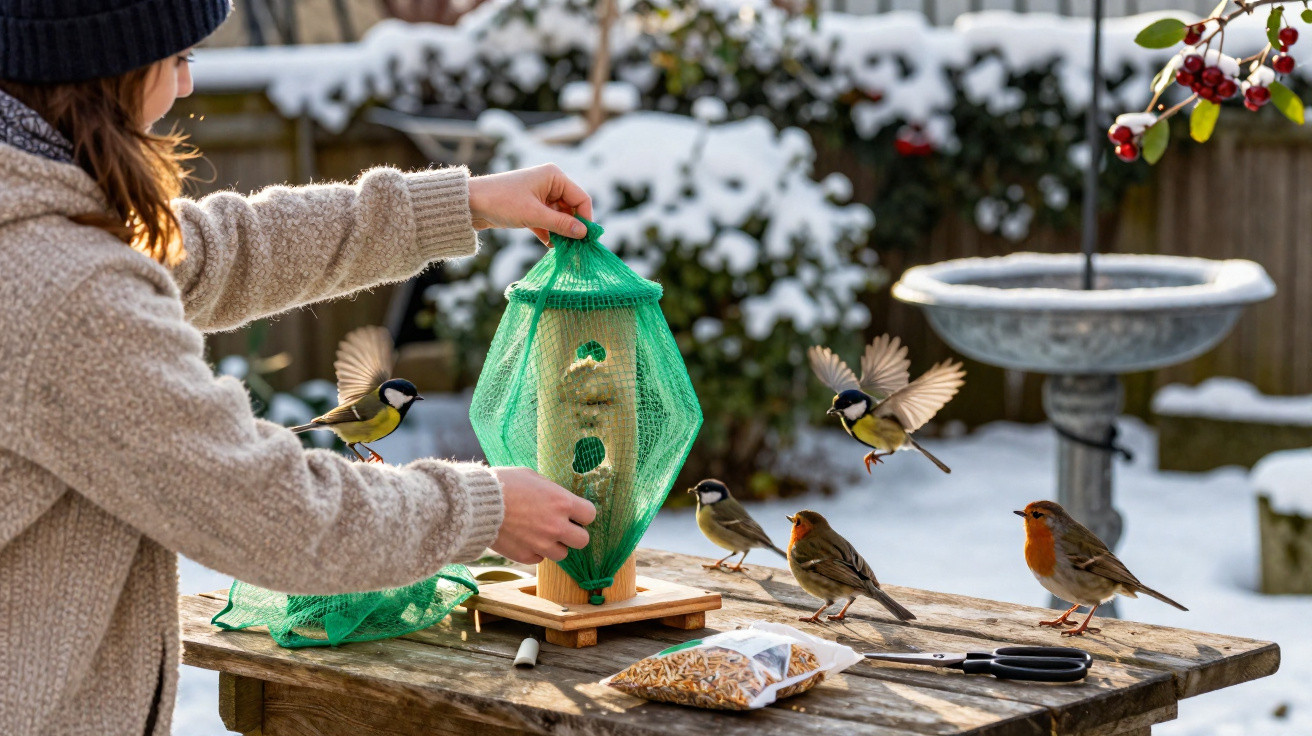
The real culprit is the fine plastic mesh, usually bright green or yellow. It keeps the fat ball together and makes it easy to hang. Convenient for people, but extremely dangerous for birds.
The usual sequence is this: a tit lands directly on the fat ball, grips the net with its thin claws and starts pecking. Its claws can easily slip into the tight mesh. When it attempts to fly away, its leg becomes completely trapped. The bird struggles, panics and pulls even harder – until it is stuck for good.
The consequences are often cruel:
- fractures to their delicate legs
- torn claws or toes
- birds left hanging upside down for hours
- death from exhaustion, cold, or attacks by cats and martens
In some cases, even a bird’s beak or tongue can become caught in frozen netting. Many animal lovers never notice; they simply see that fewer birds eventually visit.
Plastic in the garden: not only deadly, but also a waste problem
When the wind spreads the litter
Once the fat ball has been eaten, the net is often forgotten. A single gust of wind is enough for the lightweight plastic to blow away. It may get caught in bushes, end up in a stream or gradually break down in the soil – adding microplastics to the environment.
Anyone aiming to maintain a natural, insect-friendly and as environmentally sound a garden as possible is undermining their own efforts. That supposedly “small amount of plastic” can later turn up in compost, birds’ nests or the stomachs of other animals.
“Anyone who wants to protect birds must not offer their food wrapped in plastic – the rule really is that simple.”
How to feed birds safely, without traps or waste
First step: always remove the net
The most important rule for safe winter feeding is this: never hang fat balls up in their nets. Use scissors as soon as you buy them. Cut the net open, take out the ball, place the plastic in the recycling bin – only then should it go into the garden.
This one action turns a potential trap into a safe source of energy. It takes only a few seconds and demonstrably saves lives.
The best alternatives to plastic netting
Anyone wanting to make their feeding areas more professional and permanent has several options. Sturdy, reusable holders made from metal or wood are sensible choices.
| Type of feeding station | Advantages | Suitable food type |
|---|---|---|
| Metal fat-ball feeder | Robust, holds several balls at once, provides birds with a secure grip | Fat balls without nets |
| Metal spiral / metal spring | Simple to use, quick to refill, little risk of breakage | Individual fat balls or tit rings |
| Open feeding platform | Easy to clean, flexible for different food types | Crumbs, seeds, chopped nuts, oats |
| Roofed wooden bird table | Protection from rain, decorative, durable | Grains, sunflower seeds, fat food in dishes |
Those who enjoy making things can build simple solutions themselves: an old jam jar with a wooden perch, a small wooden house with a roof, or a wire basket into which fat blocks can be placed. The key point is: no nets, no sharp edges and no gaps where feet can become trapped.
The right food: energy rather than stomach fillers
What to look for when buying fat balls
Once the packaging issue has been addressed, quality matters. Not every fat ball provides energy. Some contain plenty of fillers and little nutritional value.
Good winter fat balls can be recognised by:
- a high proportion of fat or vegetable oil
- whole or coarsely chopped sunflower seeds
- nuts such as peanuts (unsalted!)
- no mineral fillers such as sand or lime
It is worth checking the ingredients list. If minerals appear near the top, you are paying a lot for little benefit. Birds need calories in winter, not product “weight optimisation”.
Which kitchen foods cause harm
Many people spontaneously throw birds leftover food. It may seem obvious, but it often does damage.
The following items should stay indoors:
- White bread and bread rolls: they swell in the stomach, make birds feel full, but provide hardly any nutrients and often contain too much salt.
- Salty snacks: crisps, salted pretzels or seasoned nuts put enormous strain on the animals’ kidneys.
- Fat from the frying pan: it contains salt, seasoning and often remnants of meat or sauce.
Traditional bird-food mixes, plain sunflower seeds, oats, hemp seeds or specialist fat-food blocks are much better choices. If preferred, fat food can also be made at home – for example, by mixing vegetable fat, oats and seeds in a saucepan, pouring the mixture into moulds and allowing it to set.
Making the garden a safe winter refuge
Clean feeding stations prevent disease
Where many birds eat in a confined space, pathogens spread easily. Droppings, food leftovers and moisture create a dangerous combination. Anyone who genuinely wants to help should not only feed birds, but also clean regularly.
A fixed routine is practical:
- sweep out or brush bird tables every one to two weeks
- wipe feeding surfaces with hot water and a little vinegar or soft soap
- dispose of wet, old food and refill with fresh supplies
If an unusually high number of dead birds suddenly appears in the garden, feeding should be paused briefly and everything cleaned thoroughly. Otherwise, infections such as salmonellosis can spread quickly.
A safe location protects against cats and birds of prey
Even the best feeding station is of no use if it is right beside the neighbouring cat’s favourite hiding place. Birds need clear approaches and escape routes. Ideal locations are:
- at least one and a half metres above the ground
- not directly inside a dense hedge, but close to shrubs
- with an unobstructed view in every direction, so predators can be spotted early
A branch from which a bird table hangs freely is often safer than a board positioned just above the ground. Where there are many cats nearby, smooth-surfaced poles can also be used, as they are difficult for cats to climb.
More support for birds: water, shrubs and “wild corners”
Water is almost as important as food in winter
Frozen puddles and snow-covered water dishes make water scarce in winter. Yet birds need to drink and clean their plumage so that the insulating layer of air between their feathers is maintained.
A shallow dish of fresh water in the garden is enormously helpful. On very cold days, lukewarm water can be added and changed several times a day. Hot water is unnecessary; lukewarm water is enough to stop the dish freezing immediately.
A natural garden is better than any feeding station
Feeding stations are only an emergency measure for difficult periods. Anyone wishing to help in the long term should design their garden to provide as much natural food as possible. This can be achieved with:
- berry-bearing shrubs such as elder, rosehip and guelder rose
- perennials with seed heads left standing until spring
- hedges of native woody plants instead of sterile rows of thuja
- a “wild corner” with piles of leaves, dead wood and minimal maintenance
This gives birds access to insects, seeds, shelter and nesting opportunities – making them less dependent on artificial food sources.
Anyone using fat balls should therefore ask themselves one question: are there still nets hanging in the garden? If so, scissors should be the first thing you reach for – and then tits and their companions can finally feed in genuine safety.












Comments
No comments yet. Be the first to comment!
Leave a Comment