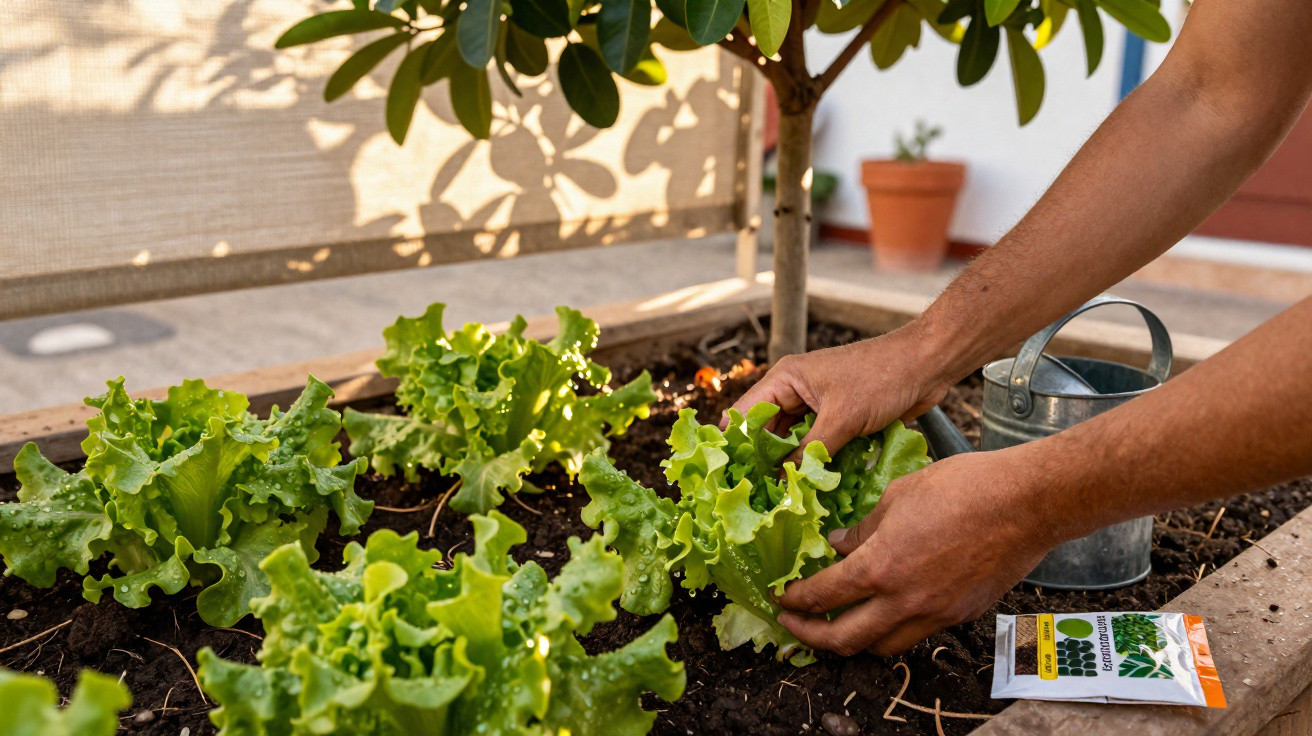
The first time I planted lettuce seedlings in the most shaded corner of my garden, it seemed counter-intuitive. The bed lies behind the lilac hedge: it catches the morning sun, then slips into shade as the light moves on. It is usually the place where forgotten pots and misplaced tools accumulate, not an obvious home for delicate salad leaves.
A few weeks later, though, I spotted a curious difference. The lettuces growing in full sun were already becoming leggy, firmer and slightly bitter around the edges. Those in partial shade were still tender and vivid green-the sort of leaves you can rip up with your hands and eat straight from the colander.
Standing in muddy shoes, I tasted a leaf and understood.
Maybe lettuce does not actually want the glare of the midday sun.
Why partial shade keeps lettuce tender and sweet
In early summer, there is often a point when lettuce abruptly becomes less appealing. One day it is soft and buttery; the next, it has a sharp, almost medicinal bitterness. Gardeners commonly blame their soil, their seeds or their own technique. In many cases, however, the problem is simply excessive sun falling on those delicate leaves at the hottest time of day.
That change happened much later in the partly shaded bed behind my lilacs. The shaded lettuce remained cooler, shorter and more compact. Its leaves took longer to turn tough, staying almost velvety with the gentle crunch that makes you automatically reach for another forkful.
One afternoon in June, I carried a bowl through the garden for a rather determined taste test. To the left was a traditional south-facing raised bed with rich soil and almost uninterrupted sunshine. The lettuces there had grown quickly, but their outer leaves were already leathery and their centres were beginning to stretch. There was also a faint bitterness at the back of the palate.
To the right, tucked between the lilac and an ageing compost bin, my “experimental” row rested in dappled shade. The heads were smaller but tighter, and the leaves still felt cool after a warm morning. I filled two bowls, marked them “sun” and “shade”, and set them in front of my family. Nobody knew which was which, yet everyone picked the shaded lettuce. It was not even close.
When you look closely, the reason is fairly clear. Lettuce is a cool-season crop with shallow roots. In hot, direct sunshine, it hurries through its growth cycle and directs energy towards survival and producing seed. That rush results in tougher leaves and bitterness.
In partial shade-particularly when the soil remains lightly moist-the plant takes its time. Temperatures are a few degrees cooler, evaporation is less harsh and the leaves experience less stress. Lower stress means fewer bitter compounds and a longer period of ideal tenderness. Shade does not hold lettuce back; it preserves the plant at its best.
How to use shade to grow better lettuce without overthinking it
The easiest approach I have found is to use “borrowed shade”. Rather than making complicated structures, grow lettuce where something already naturally diffuses the light. Morning sun followed by afternoon shade is ideal: beside the eastern side of a fence, beneath the open canopy of young fruit trees, or behind tall beans and peas that soften the strongest rays.
I begin by observing the garden casually for one day. Where does the sun reach at 9 a.m., at midday and at 4 p.m.? I make a mental note of spaces that are bright early on, then gradually become shaded around lunchtime. Those are the places where I sow lettuce seed in short rows, repeating the sowing every two weeks. It is not especially scientific; it is simply paying attention.
The main mistake is assuming lettuce needs all-day sun to be “productive”. That belief encourages people to put it beside tomatoes or peppers in the hottest beds, then wonder why it bolts almost immediately. We have all had that experience of stepping outside to find every lettuce has somehow grown a strange tower overnight.
A little understanding for the plant makes a real difference. Lettuce dislikes being scorched, dried out and blasted from overhead. The more we force it into exposed positions, the more likely we are to get tough outside leaves and a brief harvesting period. Honestly, hardly anyone wants to adjust shade cloth every day during a heatwave. Growing lettuce in partial shade from the outset is simply a more relaxed and forgiving way to garden.
Sometimes the smartest gardening move is simply to stop fighting the sun and move the plant instead.
- Position lettuce where it receives direct light mostly during the morning.
- Use taller crops, such as corn, beans and tomatoes, as natural shade companions.
- Select loose-leaf or butterhead varieties, as they cope particularly well with shade.
- Keep soil lightly moist rather than waterlogged to prevent stress and bitterness.
- Harvest frequently by removing the outer leaves, so the plant is less inclined to bolt quickly.
Rethinking “perfect sun” for better lettuce salads
This modest discovery about lettuce and partial shade can quietly alter how you view the whole garden. The corner you dismissed as “too dark” can become a hidden salad bar. The space beneath a balcony, beside the shed or in the strip behind the roses-these easily overlooked areas can all provide softer, longer-lasting greens.
It also takes away some of the guilt. You do not need a perfect south-facing plot to grow salads at home. Work with the space you have: a balcony with a few hours of morning sunshine, a corner of a rented garden, or even a large pot tucked behind a railing. Growing lettuce in partial shade feels less like farming and more like a quiet collaboration with the weather.
If you give it a go, you may find, as I did, that your sense of timing shifts. You are no longer rushing to beat the first major heatwave or angrily throwing bitter heads onto the compost heap. Instead, on a warm evening, you can wander outside, brush a hand over the cool leaves and snip only what you need. The lettuce lasts longer, and so does your time outside. That small choice-to allow some softness and ease off the relentless sun-has a habit of carrying into other parts of life too.
| Key point | Detail | Value for the reader |
|---|---|---|
| Use partial shade | Morning sun, afternoon shade, or dappled light | Extends tenderness and delays bitterness |
| Borrow natural shade | Plant near fences, trees, or taller crops | Reduces need for structures or shade cloth |
| Harvest little and often | Pick outer leaves regularly | Longer harvest window and fresher salads |






Comments
No comments yet. Be the first to comment!
Leave a Comment