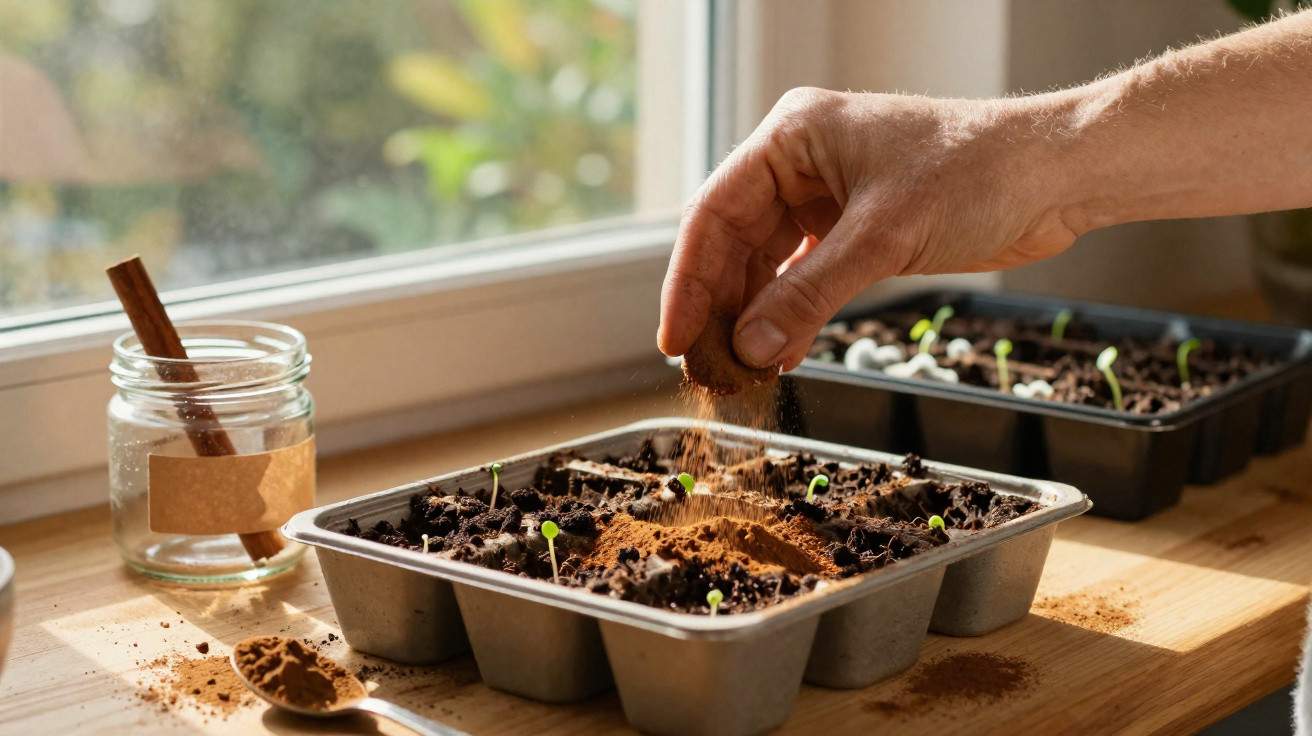
That pale fuzz is a warning of a quiet threat to young plants: mould and damping-off disease. Increasingly, gardeners are turning to an unexpected helper from the kitchen cupboard.
Why mould thrives in seed trays
The typical conditions for starting seeds are almost designed to invite mould. Warmth, continual moisture and densely packed compost cells create a miniature rainforest that fungi love. Many newcomers regard the fluffy coating as simply “part of the process”, only to find a whole tray lost overnight.
The pattern is usually straightforward. A seemingly harmless white or grey layer develops on the compost surface or around stem bases. Within hours, delicate seedlings keel over at soil level, as though cut by invisible scissors. This is known as damping-off, and it is difficult to save seedlings once it takes hold.
Mold on seedling soil is not just cosmetic; it signals conditions that can kill entire trays in a single night.
Conventional guidance recommends sterile compost, controlled watering and good air circulation. These measures help, certainly, but can prove insufficient in compact indoor growing spaces. This is where a teaspoon of brown powder has quietly built a following.
How cinnamon became a seed-starting “hack”
Cinnamon has long appeared in gardening forums and social media groups as a traditional remedy. This season, however, more growers-from balcony gardeners to small nurseries-have reported consistent results, sharing images of previously fuzzy compost becoming clear overnight.
The method could hardly be easier: lightly sprinkle ground cinnamon over the seedling compost. There is no need to mix it in, prepare a complex solution or buy a specialist treatment. It is simply the same spice used on porridge.
The science behind a kitchen spice
Cinnamon offers more than a comforting aroma. It contains compounds including cinnamaldehyde and eugenol, which are recognised in plant science and food research for antifungal and antibacterial properties. These substances interfere with the cell membranes of some fungi, making damp surfaces more difficult for them to colonise.
For a seed tray, this means fewer fungal spores can establish themselves in the upper compost layer, where their spread commonly begins. Cinnamon is not like a strong chemical fungicide. Instead, it works as a gentle barrier that shifts the balance in favour of seedlings rather than mould.
By changing the soil surface from “ideal fungus real estate” to a mildly hostile zone, cinnamon can halt mold before it spreads.
How to use cinnamon on seedling soil
Gardeners who get good results with cinnamon generally use much the same approach, even without agreeing on a set method. Moderation and good timing are what matter.
Step-by-step application
- Wait for the first appearance of fuzzy mould or a questionable white film on the compost surface.
- Let the surface dry a little by withholding water for several hours and improving ventilation where possible.
- Put ground cinnamon into a teaspoon or small sieve; ordinary baking cinnamon is suitable.
- Hold it a few centimetres above the tray and tap gently, creating a fine, even coating over the compost.
- Apply a light veil of powder rather than a heavy layer that could smother the stems.
- Return to watering from below only, so the cinnamon is not washed away.
Most growers see a noticeable difference within a night. Dense fuzz dries out and recedes, while the compost surface becomes cleaner and less shiny. Healthy seedlings generally tolerate the treatment without difficulty and keep growing. Very weak stems or those already affected may still collapse, but the disease often stops spreading.
| Action | When to do it | What to expect |
|---|---|---|
| First cinnamon dusting | At first sign of surface mold | Mold dries and shrinks within 12–24 hours |
| Second light dusting | 3–5 days later, if conditions stay very damp | Further suppression of fungal growth |
| Airflow adjustment | As soon as seeds germinate | Less condensation, slower mold development |
| Watering change | After first mold incident | Drier soil surface, stronger root growth |
What cinnamon can and cannot do
No household ingredient is a miracle cure, and cinnamon has clear limitations. It is most effective within a broader seed-starting routine, rather than serving as the sole defence.
Strengths of the cinnamon dusting method
- It can be spread over trays of any size in seconds.
- It is inexpensive and already found in most kitchens.
- It is gentler than synthetic fungicides, which appeals to organic growers.
- It can provide valuable time when mould threatens seedlings after one episode of overwatering.
Where cinnamon falls short
- It cannot bring back seedlings that damping-off has already killed.
- It will not resolve persistently waterlogged compost or inadequate drainage.
- In dusty rooms, excessive use may irritate highly sensitive skin or lungs.
- It chiefly works at the surface; fungal issues around deeper roots require improved hygiene and airflow.
Cinnamon works best as a quick surface intervention, not as a substitute for healthy watering habits and clean equipment.
Building a mould-resistant seed-starting routine
The rising interest in cinnamon reflects a wider change in home gardening: growers want affordable, low-toxicity options suited to small indoor areas. Rather than filling a shelf with specialist products, many gardeners are combining several basic practices.
Four habits that matter more than any spice
- Use fresh, sterile seed-starting mix. Reused potting compost can contain spores from the previous season.
- Water from below. Add water to the tray’s outer reservoir, allow the cells to draw it up, then pour away any remaining water.
- Provide airflow. A small fan on a low setting, directed away from the trays, limits condensation on covers and foliage.
- Remove humidity domes early. After seeds germinate, gradually raise or prop open plastic covers instead of keeping them sealed.
Cinnamon fits easily into this approach as a preventative dusting soon after germination, particularly for plants susceptible to damping-off, including brassicas, basil and certain ornamentals.
Beyond cinnamon: other low-tech antifungal tricks
For gardeners who like to experiment, cinnamon often forms part of a modest set of gentle antifungal measures. These should not be used indiscriminately, but they offer alternatives when growing conditions become humid.
Common companions to the cinnamon method
- Cooled chamomile tea, applied as a light foliar mist to young seedlings.
- High-quality compost that drains freely, stopping water from collecting in the corners of cells.
- Thin sowing, using fewer seeds in each cell to allow air to circulate between stems.
- A brief daily airing of propagators and mini-greenhouses to release trapped moisture.
Some growers also carry out informal tests each spring, treating one half of a tray with cinnamon while leaving the other half untreated. Results differ according to home, climate and compost, yet many report visibly cleaner compost on the treated side, particularly during cool, damp early springs.
Risks, edge cases and when to skip the dusting
As with any gardening trend, it is possible to overuse cinnamon. Applying too much can create a dry crust in small cells, which makes even watering more difficult. In exceptionally dry homes, additional surface dryness may place shallow-rooted seedlings under stress.
Anyone with asthma or a strong sensitivity to spices may wish to use cinnamon cautiously, wearing a simple mask or applying it through a small sieve instead of shaking it straight from the jar. Keep pets that chew seed trays away, as concentrated spices do not agree with every animal.
When basic conditions are badly wrong-soggy compost, no drainage holes, permanent condensation-no amount of cinnamon will rescue the situation.
Under these circumstances, the realistic solution is often to begin again with clean tools, fresh trays and gentler watering. Cinnamon can then be retained as mild insurance rather than relied upon as the primary remedy.
Why this tiny trick resonates with modern gardeners
The appeal of cinnamon dusting reveals something about the direction of gardening today. Many growers tend trays of lettuce and tomatoes on windowsills crowded with laptops and charging cables. They are looking for techniques that are accessible, low-risk and connected to everyday domestic life.
Most kitchens already contain a jar of cinnamon. Applying it to seedlings turns a familiar spice into a small act of care, linking household routines with plant care. It also invites a wider question: what other ordinary materials might have overlooked uses in sustainable gardening?
For beginners, this modest intervention may be the difference between abandoning the hobby after a tray of seedlings collapses and trying once more with greater confidence. For experienced gardeners, it is one tool among many, used sparingly during difficult, damp periods when the weather will not cooperate.
The broader lesson extends beyond seed trays. Once gardeners understand why cinnamon can help-moisture control, airflow and microbial activity-they begin to view every pot, bed and border as a living system rather than merely a vessel of compost. That move from quick fixes towards system thinking may influence future harvests far more than any individual spice ever could.







Comments
No comments yet. Be the first to comment!
Leave a Comment