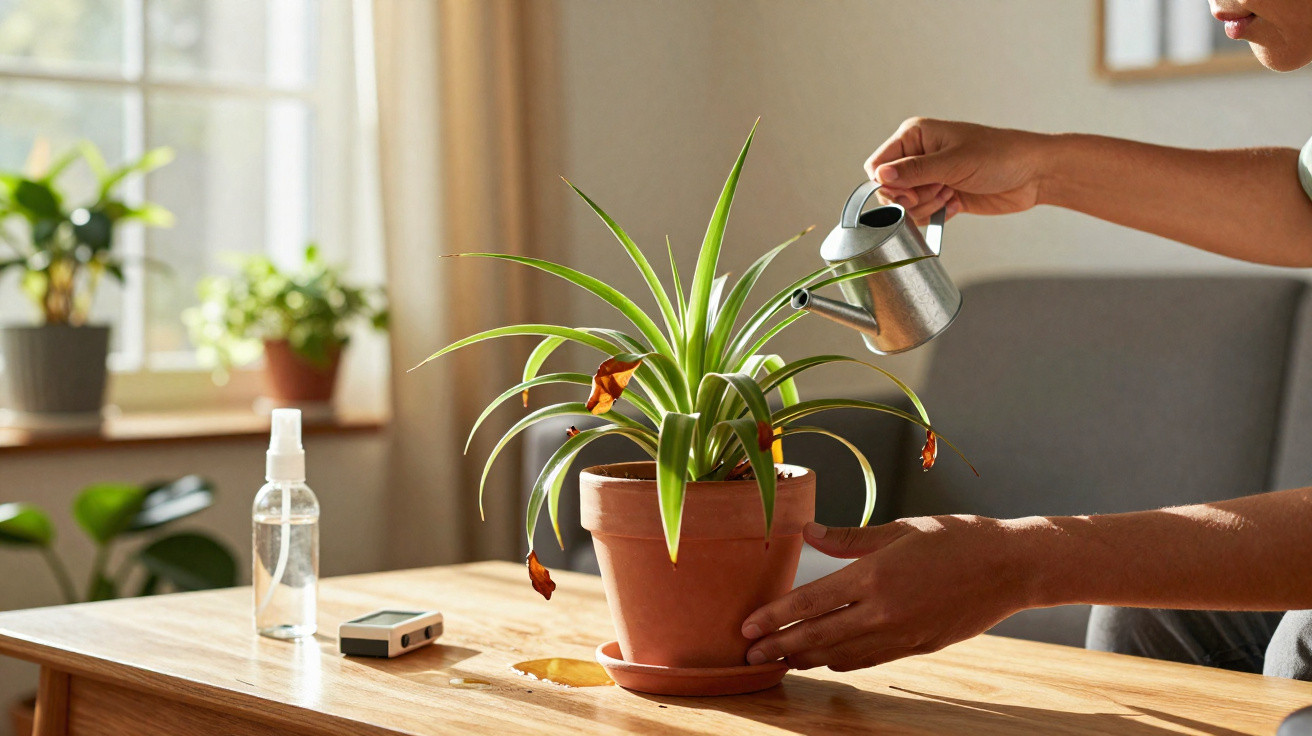
On a peaceful Sunday morning, you water your spider plant and feel unexpectedly pleased with yourself. Its sweeping green leaves, the miniature “spiders” hanging down like fairy lights, and the way it livens up that dreary living-room corner all seem to prove that you are getting adulthood right.
You chat to it. You wipe the dust from its leaves. You move it nearer the window so it “gets more sun”. A few weeks on, though, the leaf tips begin to turn brown. The compost has a faintly sour smell. One leaf flops, followed by another. You blame the retailer, the pot or the phase of the moon - anything except your well-meant care.
But an awkward realisation starts to emerge.
What if your love is the problem?
When caring turns into smothering
Spider plants are often described as impossible to kill. In a way, that reputation is unfair, because it encourages beginners to see them as green superheroes instead of living plants with limits. You bring one home, put it on a shelf and immediately feel reassured: “This one can handle my mistakes.”
Then comes the overdoing it. A little more water here, some extra direct sunshine there, perhaps a larger pot “so it has room to grow”. It seems kind. It seems nurturing. On Instagram, that spider plant looks immaculate in an enormous ceramic pot beside a mister and a moisture meter. So you follow suit.
Meanwhile, the plant is quietly becoming stressed in waterlogged compost and fierce sunlight.
Imagine a young couple in a compact flat, with three spider plants arranged along a sunny kitchen windowsill. They water each plant every other day, “because the kitchen is hot” and “plants drink a lot, right?”. The pots sit inside decorative covers without drainage holes because they looked nicer.
At first, the plants look full and healthy. Soon, brown tips appear like scorched paper. One begins to sag while another develops yellow areas. They search “Why is my spider plant dying?” and disappear down a rabbit hole of conflicting advice. Once they understand that the roots have been sitting in boggy compost, the harm has already been done.
Versions of this happen in thousands of homes. The pattern is always identical: too much affection, given in the wrong form.
Spider plants may be resilient, but resilience is not the same as invincibility. In their natural environment, they experience brief periods of moisture followed by loose soil that can dry and breathe. Indoors, they often face the reverse: permanently damp compost, stagnant air and intense midday sun reflecting through glass.
Their plump roots and substantial centre store water like reservoirs. If you continually refill those stores, the roots cannot breathe. Rot can set in without warning. Brown tips and floppy stems are the leaves’ attempt to communicate, yet many people interpret them as “thirsty” and supply even more water.
That is how a supposedly “beginner-proof” plant slowly drowns on a windowsill.
How to love a spider plant without suffocating it
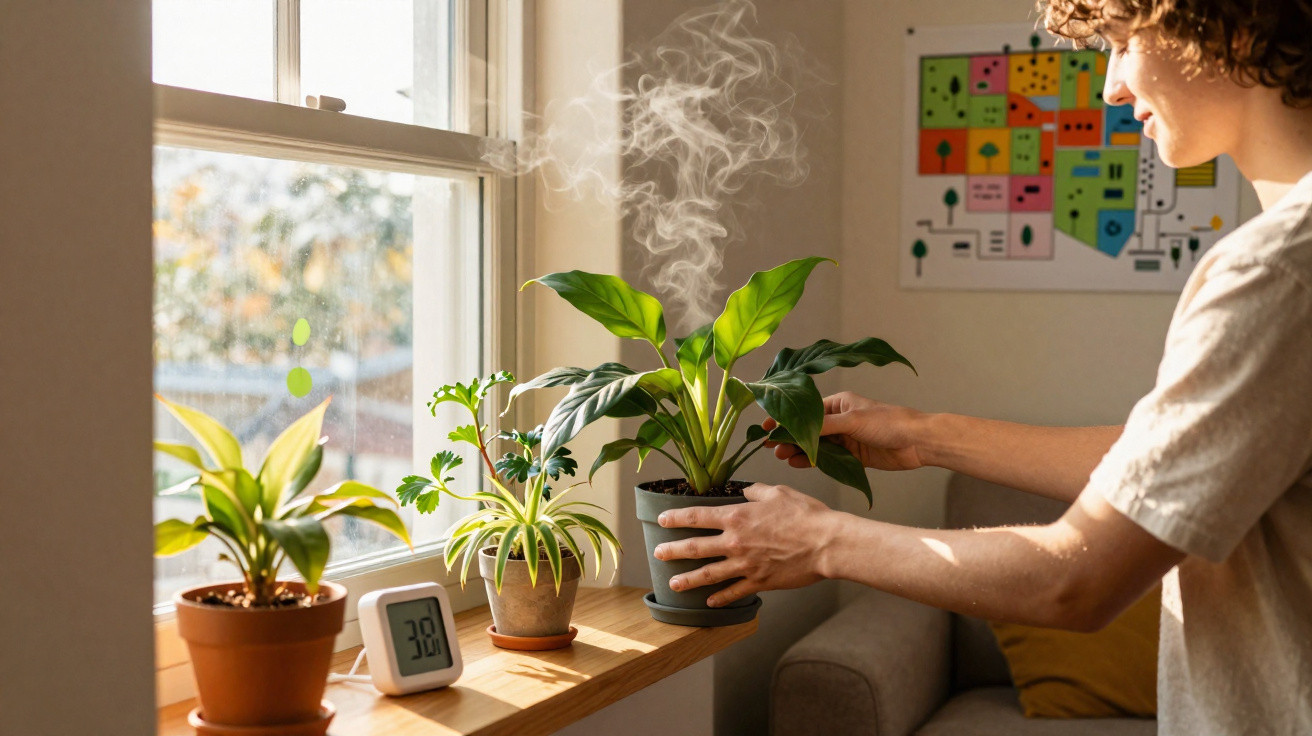
The first step towards genuine care is almost brutally straightforward: allow the compost to dry. Not until it is dusty, but until the upper few centimetres are dry to the touch and the pot feels a little lighter when lifted. Then water thoroughly once, and leave it alone.
This pattern - rather like a slow in-breath and out-breath - works much better for spider plants than constant little drinks. Choose a pot with an actual drainage hole rather than simply using an attractive outer sleeve. Allow surplus water to drain freely, and do not leave the pot standing in a saucer of water for days.
Try to be less of a helicopter parent and more like an unhurried neighbour who checks in when necessary.
Light is another quiet danger. Spider plants thrive in bright, indirect light. A place close to a window, softened by a sheer curtain or set slightly back from the glass, is ideal. Strong midday sun, particularly through double glazing, can burn the pale variegated stripes.
When pale or drooping leaves appear, many plant owners panic and shift the plant nearer the window, or place it on a blazing sill. That rapid solution frequently makes matters worse. Brown, crisp patches do not always signal “thirst”; they are often sun scorch on foliage that is already under strain.
Let’s be honest: nobody checks light levels with a meter every day. However, if you place your hand between the plant and the window and it casts a crisp, dark shadow, the light is probably too strong.
Sometimes the kindest thing you can do for a spider plant is to do a little less, a little more slowly.
- Watering
Allow the top 3–4 cm of compost to dry, then water generously and let it drain. Avoid daily small amounts. - Pot and soil
Choose a pot with a drainage hole and use a loose, airy mix. Dense, compact compost is the enemy. - Light
Provide bright, indirect light. Soften strong sunlight with a curtain or move the plant a little to one side. - Humidity and air
Average household humidity is suitable. Mild air circulation is preferable to continual misting. - Feeding
A light liquid feed every few weeks in spring and summer is sufficient. Do not “power feed” a plant that is struggling.
The quiet routine beats the dramatic rescue every time.
The fine line between care and control
There is a peculiar vulnerability in watching a £6 supermarket plant decline while it is in your care. It is not only about the cost. It is the persistent thought: “If I can’t keep a spider plant alive, what does that say about me?”.
So we compensate too much. We research excessively. We purchase gadgets, specialist sprays and expensive pots in pursuit of being the “perfect plant parent”. All the while, the plant would likely favour a little harmless neglect and an ordinary terracotta pot.
We all know that point when the desire to care turns into a need to control.
Spider plants gently remind us that life does not grow more quickly simply because we force it. Their baby offshoots arrive only when the mother plant feels secure rather than overwhelmed. Brown tips do not mean you have failed; in most cases, they mean it is time for an adjustment, not panic.
Some plants recover after their roots are trimmed and they are repotted in fresh, airy compost. Others do not. That is part of living with living things. Every plant online appears glossy and perfect. On your own shelf, a few marks and crisp edges are entirely normal.
The simple reality is that genuine care is often quieter and less glamorous than the internet makes it appear.
What you choose to do with this understanding is where things become interesting. Perhaps you water slightly less this week and observe more closely. Perhaps you place the pot ten centimetres farther from that bright window and resist fussing over it for several days.
Perhaps you discuss it. Post before-and-after photographs, ask candid questions and admit that your “unkillable” spider plant is making its third attempt at a comeback. Those exchanges support everyone reading along, quietly tending their own drooping plants and feelings of guilt.
Your spider plant will not thank you aloud. Yet if fresh, clean leaves begin to unfurl and those tiny spider babies return, you will know that something subtle has changed - both in the pot and in you.
| Key point | Detail | Value for the reader |
|---|---|---|
| Let compost dry between waterings | Water deeply, then wait until the top layer is dry and the pot feels lighter | Lowers the risk of root rot and prevents gradual “drowning by love” |
| Bright, indirect light beats harsh sun | Position it near a window, rather than directly against scorching glass | Avoids leaf scorch and supports full, even growth |
| Simple setup over fancy gadgets | A drainage hole, airy compost and modest feeding during the growing season | Reduces expense and stress, while making long-term success more likely |
FAQ:
- Question 1 Why are the tips of my spider plant leaves turning brown?
- Question 2 How often should I water a spider plant indoors?
- Question 3 Can a spider plant get too much light near a window?
- Question 4 Is repotting into a bigger pot always good for spider plants?
- Question 5 How do I know if my spider plant is actually dying or just stressed?






Comments
No comments yet. Be the first to comment!
Leave a Comment