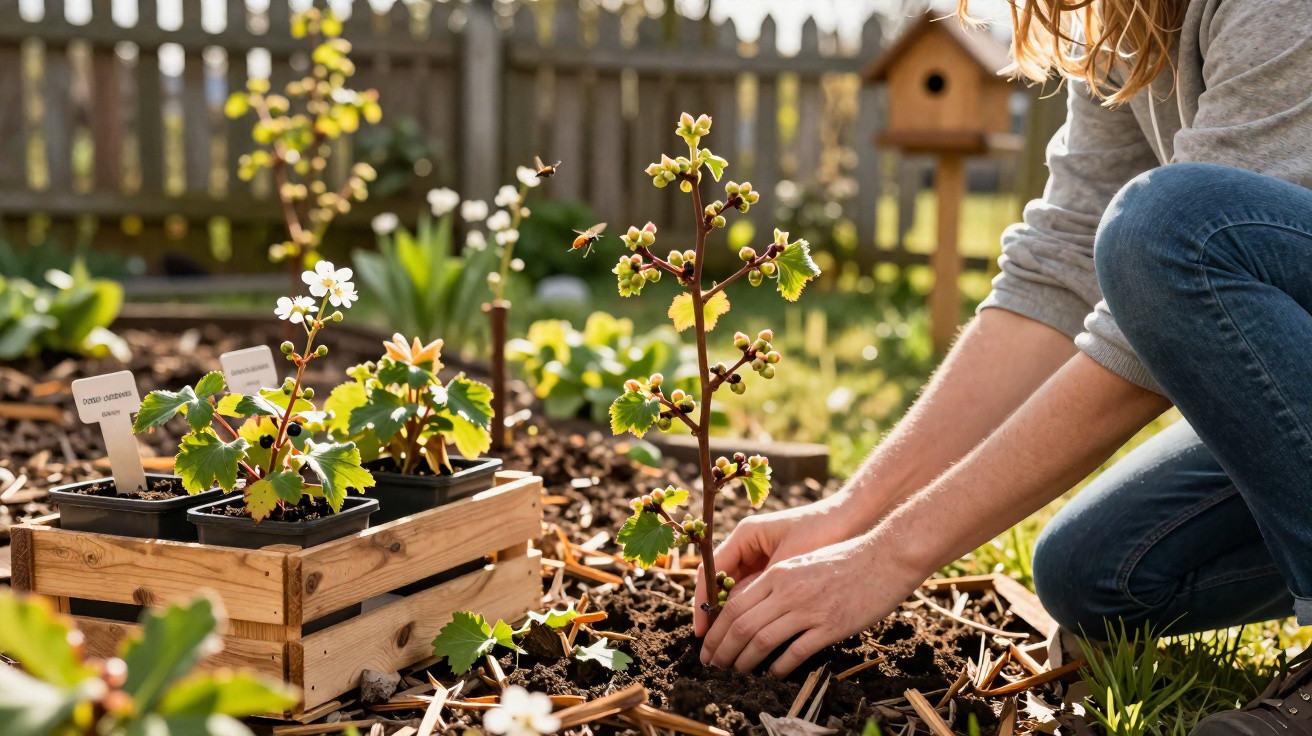
Cold light, yielding soil and subdued birdsong: early spring can seem oddly still just as gardens begin to stir.
Throughout much of Europe and North America, March delivers longer daylight hours, gentler temperatures and the unmistakable feeling that winter is starting to release its hold. Still, many gardeners sense an absence: fewer birds, fewer insects and less activity. This lull is precisely the time when a straightforward project can turn an unremarkable fence boundary into a thriving edible hedge, providing food for both your household and the wildlife around it.
Why early spring is the ideal time to reconsider garden boundaries
Garden timing matters enormously. In late winter and the earliest part of spring, soil is generally no longer frozen while retaining plenty of moisture. Plant roots can establish without contending with intense sunshine or prolonged dry spells. Wildlife is also entering an urgent period of preparation.
Birds are looking over territories, assessing possible nest locations and seeking dependable sources of food. A perch alone is not enough: they need a framework of branches, shelter and somewhere insects and fruit will be available once their young emerge.
Planting a diverse, berry-rich hedge in early spring sends a clear signal to wildlife: food and shelter will be here when you need them.
If you delay until late April or May, the earliest breeding birds may already have chosen another site. Shrubs planted sooner have an opportunity to establish roots, produce leaves and begin drawing insects as the first broods arrive.
Turning a bare fence into an edible corridor for birds and people
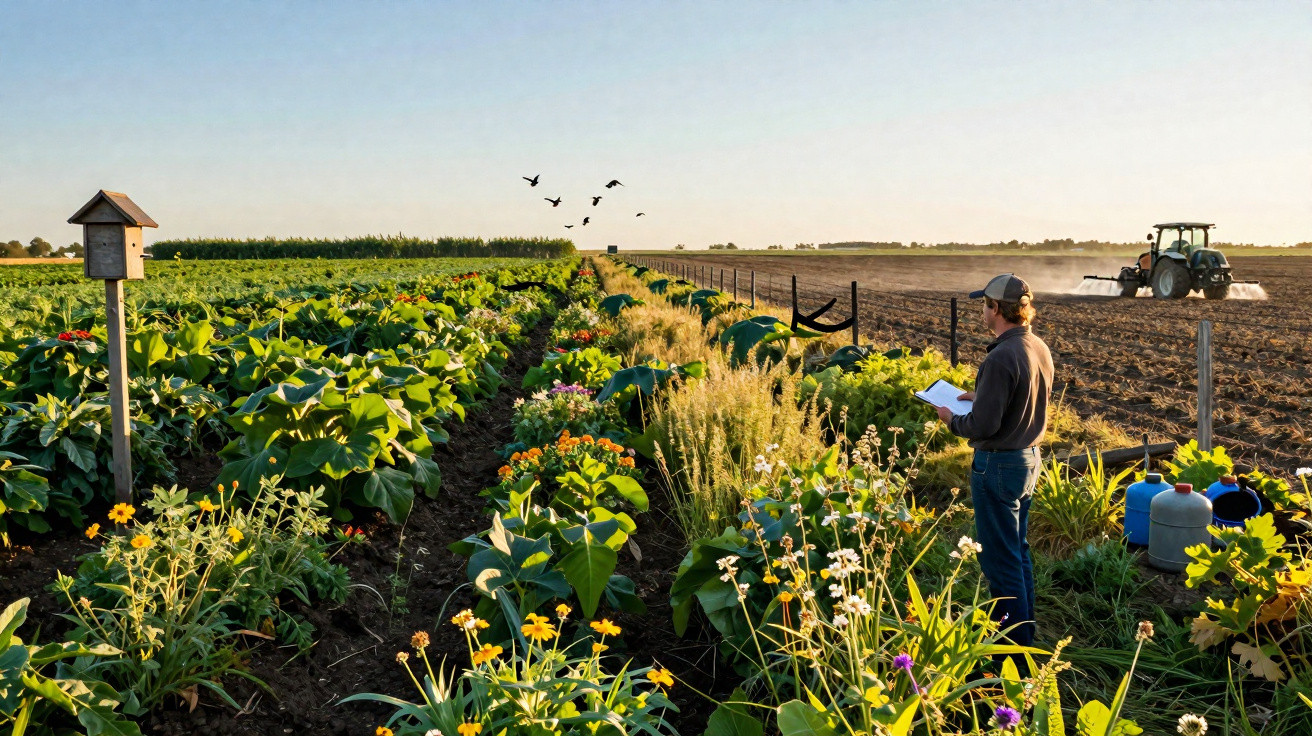
A great many suburban and countryside gardens are edged by a hedge made from one species alone, or, less favourably, exposed fences and walls. While these create privacy, they give wildlife virtually nothing. An edible hedge changes that equation. It continues to enclose the garden and define its edge, while also:
- Supplying nectar for pollinators early in the year
- Providing thick shelter and nesting places for small birds
- Growing fruit for both you and wildlife
- Creating a ground-level microhabitat through mulch and fallen leaves
The principle is straightforward: form a living boundary that works as both a buffet and a secure hostel, instead of an inert barrier.
The fruiting trio that makes an edible hedge a wildlife magnet
A hedge can be designed using numerous species, but a modest combination of blackcurrant, gooseberry and serviceberry can achieve striking results on its own. All three remain fairly compact, cope well with cooler conditions and offer ample flowers and fruit.
Blackcurrant: thick growth and an insect factory
Blackcurrant (Ribes nigrum) develops into a dense, bushy shrub over a few growing seasons. It prefers cool, damp ground, while its foliage releases an aromatic scent if crushed. Its understated spring flowers emerge as pollinating insects begin flying.
Those plain little flowers become a critical protein source: they draw in early insects, which in turn feed nesting birds and their chicks.
For gardeners, blackcurrants provide sharp berries high in vitamin C, well suited to cordials and jams. Wildlife benefits from a place to forage, protection from wind and predators, and dense cover.
Gooseberry: living barbed wire for nesting birds
Gooseberries tend to be overlooked. Their thorny stems can make cutting them back an uncomfortable task, yet those same spines create a natural stronghold for wildlife. For a blackbird or robin coping with domestic cats and magpies, nesting within a gooseberry bush is a sensible choice.
Fruit appears from early to mid-summer. By picking part of the crop and leaving some berries to ripen and soften on the plant, you can share the harvest with birds as they feed hungry fledglings.
Serviceberry: early flowers and much-loved fruit
Serviceberry, commonly Amelanchier canadensis or a related species, remains unfamiliar to many home gardeners, particularly those with smaller gardens in the UK or US. Its popularity is increasing rapidly, with good reason.
It bears masses of white flowers exceptionally early, occasionally when neighbouring shrubs still appear dormant. These blooms attract bees and hoverflies in large numbers. Afterwards, it produces small dark fruits with a flavour somewhere between blueberry and almond.
Serviceberry is one of those rare shrubs that looks ornamental, tastes superb and feeds blackbirds, thrushes and waxwings in a single season.
Designing a productive hedge that genuinely supports wildlife
Selecting suitable shrubs is only one part of the process. Where you place them and how you care for the ground determine whether the hedge merely survives or becomes full of activity.
Orientation: the benefit of a north–south hedge line
Where the shape of your garden permits, position the hedge approximately north to south. With this arrangement, each side receives some direct sunlight as the sun crosses the sky. More evenly shared light promotes consistent fruiting and thick leaf growth across the hedge.
Thick foliage is important because many small birds are reluctant to nest in thin, open shrubs where predators can easily see through the branches. A hedge receiving adequate light generally becomes fuller and provides more effective hiding spaces.
Spacing shrubs to prevent competition in the hedge
For a compact domestic hedge, arrange the three species in a mixed line. One practical layout is shown below:
| Shrub | Approx. spacing | Main benefits |
|---|---|---|
| Blackcurrant | 1.2–1.5 m apart | Dense cover, early insects, vitamin-rich fruit |
| Gooseberry | 1–1.2 m apart | Spiny protection, mid-summer fruit |
| Serviceberry | 1.5–2 m apart | Early blossom, ornamental value, bird-favourite berries |
Place the shrubs with a slight offset rather than in one perfectly straight row. This gives the planting greater visual appeal and produces more layers of cover.
Mulch: the understated force beneath an edible hedge
After planting your shrubs, avoid leaving the earth below them uncovered. Bare soil loses moisture quickly, overheats in summer sunshine and sustains fewer soil-dwelling organisms. A substantial layer of mulch makes a major difference.
Choose materials that are readily available locally, such as wood chips, straw, shredded cuttings or a deep layer of autumn leaves. Apply it to a depth of 5–10 cm around each shrub, leaving a small clear space around the stems to prevent rot.
A living hedge starts underground: mulch keeps moisture in, feeds soil life and turns the base of your hedge into an open-air restaurant for birds.
Earthworms, beetles and other invertebrates flourish in mulch that stays cool and moist. Robins, blackbirds and thrushes soon discover that they can rummage through it for food. Meanwhile, watering needs are reduced, soil structure becomes better and plant roots grow further down.
Synthetic chemicals have no place in this setting. Where a hedge is intended to provide food for wildlife as well as your kitchen, herbicides and insecticides are difficult to justify. Birds may still eat a poisoned aphid or slug, so the danger of contaminating those predators remains genuine, including when products are described as “low dose”.
What to expect by late spring and summer
In its first year, a newly planted hedge will not resemble a well-established thicket, but wildlife can respond with surprising speed. Within a few weeks of planting, you may notice:
- Bees and hoverflies visiting serviceberry and blackcurrant blossom
- Lacewings and ladybirds preying on aphids among fresh shoots
- Wrens and robins inspecting the mulch for insects
- Tits and sparrows foraging through the branches
By summer, blackcurrants and gooseberries will usually be yielding their first small harvests. Serviceberry often fruits in early summer and can attract starlings and blackbirds. The hedge begins functioning as a corridor linking your garden with nearby trees, hedges and untidy patches.
A simple line of three shrub species can restore part of the local food chain, especially in gardens surrounded by lawns and hard surfaces.
Practical advice, minor compromises and simple next steps
As with any garden project, an edible hedge involves some compromise. Birds will eat a proportion of “your” fruit. Usually, this amounts to several pecked berries or the final overripe fruits high on the shrub.
To retain a worthwhile share of the crop, you can:
- Plant an additional shrub of every species as an allocation for the birds
- Cover part of the hedge with netting at the height of ripening, taking it down promptly after harvesting
- Pick fruit earlier for cooking and leave completely ripe berries for wildlife
Conversely, reducing lawn space and using fewer chemical products brings lower maintenance requirements over time. After establishment, a mixed hedge commonly needs only gentle pruning and a fresh mulch layer every year or two.
For those new to gardening, two terms are particularly relevant here. “Biodiversity” means the range of living things: varied plants, insects, fungi, birds and mammals occupying the same place. A biodiversity-supporting hedge accommodates a greater variety of creatures, rather than simply more of a single species. “Microfauna” describes tiny animals living in mulch and soil, including springtails, mites and microscopic worms, which break down dead material and keep nutrients circulating.
If the project inspires you to do more, build on it. Add native hazel or hawthorn at either end to provide additional nuts and blossom. Allow a wild rose to weave through the hedge for winter hips. Plant wild garlic or comfrey beneath it to establish a second foraging layer. Every added layer strengthens the living fabric of the garden boundary.
Imagine a chilly March weekend with bare-root shrubs lined up beside a heap of wood chips, a spade and a flask of tea. When that weekend comes around again the following year, the same modest work may have changed a silent, empty fence edge into a busy band of life - fluttering, buzzing and quietly nourishing you and local wildlife alike.





Comments
No comments yet. Be the first to comment!
Leave a Comment