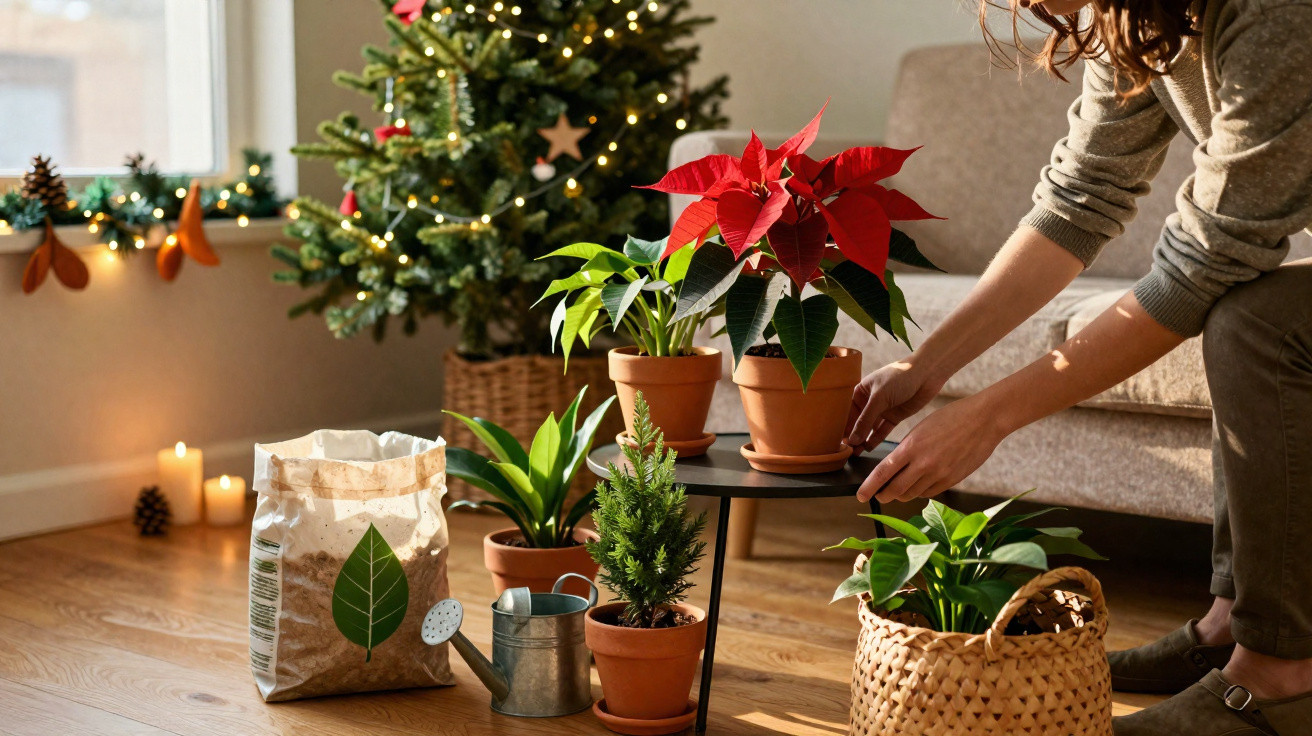
Behind the red sparkle lies an uncomfortable reality.
The traditional Christmas poinsettia may appear to be a harmless festive essential, but many plants die within days while carrying a substantial environmental cost. Increasing numbers of florists are now suggesting that shoppers leave it out this year.
Why poinsettias keep dying in our homes
Poinsettias, or Euphorbia pulcherrima, originate in Central America, where they grow as shrubs in reliably warm conditions. A comfortable sitting room in London or Chicago may look similar on Instagram, but the plant experiences it very differently. Dry air from central heating, chilly draughts and inconsistent watering all cause problems.
Florists that no longer sell poinsettias report a familiar cycle: enormous numbers are bought in December, followed by equally vast numbers being thrown away in January.
Industry estimates suggest that the vast majority of poinsettias sold in winter won’t survive their first month indoors.
A combination of issues works against the plant:
- Large-scale nursery production that prioritises speed and quantity rather than hardiness.
- Exposure to cold while travelling from grower to wholesaler and then to the retailer.
- Poor care at home, including overwatering, water left standing in pots, and positions in overheated or draughty rooms.
By the time many supermarket poinsettias are purchased, they are already close to their limit. An unprotected walk home in cold weather can provide the final shock. Within days, foliage turns yellow and then brown before the plant sheds its leaves in what resembles a slow-motion collapse.
The long journey from warm fields to cold living rooms
In their natural habitat, poinsettias grow from north-western Mexico down to southern Guatemala. Major growers now also produce them on large farms in Africa and other warm regions. Their route to a European or US windowsill can be unexpectedly complicated.
Cuttings commonly begin in vast fields or greenhouses in warm countries. They can then be flown to growers in Europe or the US, where they are rooted, made to develop colour and readied for Christmas retail in glasshouses.
To trigger those famous red “flowers”, growers shorten day length artificially, controlling light and darkness with strict precision.
To produce their colourful bracts, poinsettias require bright days and long nights. Winter daylight at northern latitudes is nearly suitable, but not sufficiently precise for commercial timetables. Growers therefore create “artificial nights”, blacking out glasshouses and controlling illumination as carefully as a theatre production.
The finished plant may look flawless in the shop, yet climate control, heating, artificial light and refrigerated transport all use energy. When plastic sleeves, pots, peat-based growing medium and production at such huge scale are included, the Christmas plant becomes part of a seasonal waste stream.
Why many florists now think twice
Some independent florists, particularly in cities with environmentally conscious customers, are openly challenging the poinsettia rush. They question the sense in flying or lorrying millions of delicate plants worldwide when their lives often end before New Year’s Day.
They also recognise the emotional impact. Customers can feel mildly guilty when a “Christmas flower” wilts and dies, even where they have done nothing plainly wrong. The plant can appear to penalise everyday conditions: a small draught from an opened window or one overly generous watering after it has dried out.
Environmental considerations are equally significant. If almost every plant in a seasonal crop is destined for the bin after only a few weeks, the resources involved seem poorly balanced. Water, fertiliser, packaging, transport and energy are invested in a plant that acts as a disposable decoration in many homes.
For critics, the poinsettia has become a symbol of throwaway decor: pretty, cheap, and quietly wasteful.
The “death sentence” on the way home
Even buyers choosing a better-quality, locally grown poinsettia may lose it fast. The journey from shop to flat can be punishing for a plant bred for the stable, protected environment of a glasshouse.
Several frequent errors sharply reduce its likelihood of survival:
- Taking it through cold, windy streets without covering it.
- Leaving it in a car while doing other errands in almost freezing weather.
- Putting it beside a regularly opened front door or a draughty window at home.
- Watering it heavily on arrival and allowing water to remain in the outer pot.
Cold stress and “wet feet” both make poinsettias shed leaves. Once leaves begin dropping in large quantities, recovery is unusual. Although the plant may not truly be dead, bare stems put off most owners, who discard it rather than care for it over the following months.
How to care for a poinsettia if you still buy one
Anyone who loves the classic appearance and still chooses a poinsettia can improve its chances with more careful treatment. It needs greater attention than many casual shoppers anticipate.
| Care aspect | What the plant needs |
|---|---|
| Temperature | Ideally 18–22°C, never below 15°C; avoid sudden changes and cold draughts. |
| Light | A very bright spot, without intense direct midday sunshine on the leaves. |
| Watering | Allow the soil surface to dry a little; water well, then let surplus water drain away. |
| Transport | Wrap it securely in paper or a bag; minimise time outdoors and in cold cars. |
| Placement | Keep it away from radiators, door draughts and windows that are opened constantly. |
With enough patience, some enthusiasts can even encourage the plant to colour up again for the following Christmas by meeting its need for long nights from early autumn. This requires keeping evening light away from the room where it is placed, or covering it for 13–14 hours each night. Most people stop well before reaching that stage.
Long-lived alternatives that still feel festive
Florists who have moved away from poinsettias do not generally expect customers to abandon winter greenery. Instead, they direct them towards plants that tolerate shelf life more successfully and offer enjoyment for years rather than weeks.
Plants that handle indoor life better
- Christmas cactus (Schlumbergera): Flowers during winter in vivid pink, red or white, and may remain with the same family for decades.
- Aglaonema: Valued for its rich foliage, including varieties with pink or silver patterning, these plants cope with indoor light much better than poinsettias.
- Amaryllis (Hippeastrum): Its bulbs produce dramatic stems of deep red or white blooms, and can be kept to flower again the next year.
- Norfolk Island pine: A compact tree with soft needles, often decorated as a miniature Christmas tree before being kept as a houseplant.
Switching from disposable seasonal plants to robust houseplants turns Christmas decor into a long-term part of the home rather than a one-month accessory.
These options still bring colour and a festive atmosphere, while fitting more readily into ordinary care habits. They do not require glasshouse-like conditions and are more forgiving of an occasional missed watering or a somewhat darker corner.
Rethinking Christmas decor as waste piles grow
The discussion about poinsettias forms part of a wider debate around festive waste. December brings a rise in single-use goods, including plastic decorations, novelty textiles, extensively packaged presents and short-lived ornaments. Plants can seem like the season’s environmentally friendly option, but mass-produced specimens with short lives may tell another story.
For households seeking to reduce waste, a straightforward review can help: which decorations are binned by January, and which are brought out again each year? If poinsettias fall into the first group, choosing living plants that last may better support those aims.
From tradition to experiment: trying a “low-waste Christmas corner”
A practical option is to designate a small part of the home as a trial area. Rather than purchasing a new poinsettia and bundles of disposable tinsel, select:
- One or two durable plants that offer winter interest.
- Reusable lights with a timer.
- Wood, fabric or paper decorations that are stored carefully.
Across several seasons, this “low-waste corner” can gradually grow. Children often like watching the same plants and decorations return each year, like familiar friends. That sense of emotional continuity can feel every bit as Christmassy as a brilliant red poinsettia that has wilted by Boxing Day.
Poinsettias are unlikely to disappear from shops soon. However, the concerns voiced by florists and environmentally aware customers create room for different habits: fewer impulse purchases, greater consideration for plant welfare, and a move towards greenery that genuinely wants to live in our homes for longer than a fortnight.





Comments
No comments yet. Be the first to comment!
Leave a Comment