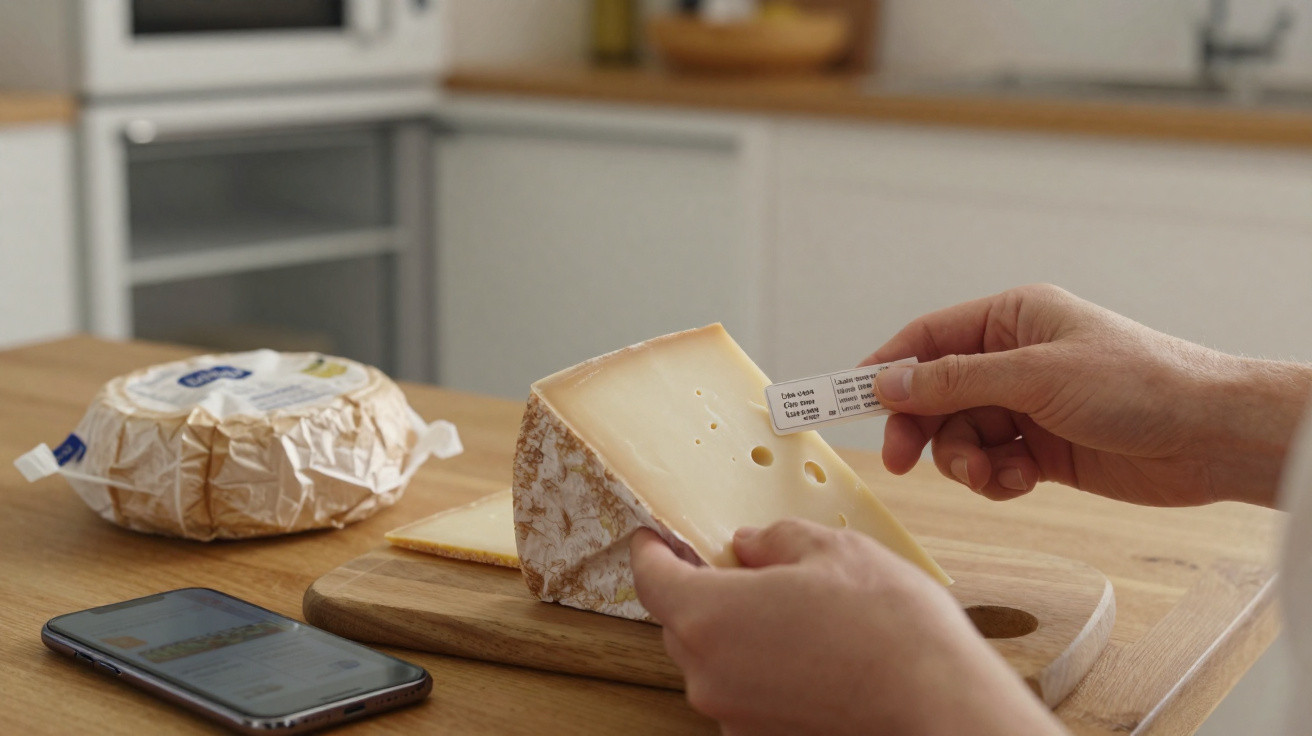
The warning relates to a soft goat’s cheese sold throughout France via specialist retailers and delicatessens. Health authorities caution that consuming it may lead to serious illness for certain people.
Which product has been recalled throughout France?
The recall involves a small goat’s cheese known as a “tommette de chèvre”, produced under the La Ferme de Liègue brand and sold as “Bêêle des prés”.
This goat cheese was sold nationwide in France between 5 December 2025 and 26 January 2026 and is now subject to an official recall due to bacterial contamination.
Rather than being supplied through major supermarket groups, the cheese was distributed through numerous independent retailers and intermediaries. The official alert, published on the French Government’s Rappel Conso platform, states that the affected lots were supplied to:
- Aumand
- Ouest Frais
- La boucherie du coin
- SAS du Bignon
- La Fée Cochette
- Olivier Jouteau
It is a small tomme-style goat’s cheese sold in wrapping bearing the “La Ferme de Liègue” brand and “Bêêle des prés” name. People who frequently buy food from French butchers, cheesemongers or high-end caterers may be particularly likely to have bought it.
How to recognise the recalled goat’s cheese
French officials have issued precise identification information for shoppers to check against products in their fridge. The recall covers goat’s cheese carrying these batch numbers:
- CTB031125
- CTB041125
- CTB051125
- CTB291025
- CTB121125
- CTB191125
- CTB261125
- CTB281125
- CTB291125
The product can also be identified by GTIN barcode 3770026529294 and has a use-by date of 11 March 2026.
Anyone in France who has bought La Ferme de Liègue’s “Bêêle des prés” tommette with a use-by date of 11 March 2026 should treat it as potentially unsafe.
What health risk prompted the recall?
Testing of several tommette batches found microbiological contamination with Listeria monocytogenes. Officials state that the level of contamination means the cheese must not be eaten.
Listeria monocytogenes causes listeriosis, a foodborne illness that may produce mild flu-like symptoms but can also result in life-threatening complications.
Symptoms to look out for after eating the cheese
French health authorities describe the usual initial symptoms of listeriosis as:
- A sudden fever
- Muscle and body aches
- Headaches, which can be severe
- Sometimes digestive symptoms, including nausea or diarrhoea
Symptoms may develop within days of eating contaminated food. However, listeriosis can, unusually, take several weeks to appear. This extended incubation period is one reason Listeria is treated so seriously by authorities.
Anyone experiencing fever, aches, or headaches after eating this goat cheese is urged to seek medical advice quickly and mention the recall.
Who faces the greatest risk from Listeria?
In many otherwise healthy adults, listeriosis may seem like a short-lived viral infection. The greatest danger is for vulnerable groups, in whom complications may be severe.
People at increased risk include:
- Pregnant women
- Newborn babies
- Elderly people
- Anyone with a weakened immune system, for example because of cancer treatment, HIV or certain chronic diseases
During pregnancy, Listeria may pass through the placenta, causing miscarriage, premature birth or a serious infection in the baby. In frail or immunocompromised adults, the bacteria can enter the bloodstream or central nervous system and may cause sepsis or meningitis.
What should consumers do if they have the cheese?
Anyone who still has this product at home must not eat it in any circumstances. French authorities advise consumers to:
- Stop eating the cheese straight away
- Retain the label or packaging where possible to verify the batch number
- Take the product back to the shop where it was purchased before Thursday 26 March 2026
- Ask for a refund, which the retailer should provide
For further information or clarification, consumers can call the recall’s dedicated telephone number, 06 21 00 34 42, during French business hours.
Do not taste the cheese “just to check” – even a small amount can be enough to cause infection in those at risk.
Why soft cheeses are often linked to Listeria alerts
France is internationally renowned for its cheese culture, with raw-milk and lightly processed cheeses playing a central part in that reputation. Goat’s cheeses, particularly small artisan wheels and tommettes, are widely valued for their flavour and digestibility.
However, soft and semi-soft cheeses can offer conditions in which Listeria survives and may sometimes multiply. The bacteria tolerate cold temperatures unusually well, so refrigeration alone does not remove the danger. Where contamination occurs at the dairy or during maturation, it can remain present until the cheese reaches the customer.
| Product type | Typical Listeria risk |
|---|---|
| Hard cooked cheeses (e.g. Comté) | Lower risk due to low moisture and high cooking temperature |
| Soft, rind-ripened cheeses (e.g. brie, some goat cheeses) | Higher risk, especially if made with raw milk |
| Fresh cheeses (e.g. spreadable goat cheese) | Variable risk, depends on hygiene and storage |
This does not mean that people need to avoid soft cheese completely. Instead, public health bodies advise pregnant women, elderly people and immunocompromised patients to choose carefully, examine labels closely and remain alert to recalls.
How food recalls such as this operate in France
Since 2021, France has brought consumer safety alerts together on the Rappel Conso platform. If contaminated food is identified, manufacturers and authorities publish a formal notice setting out:
- The product’s name, brand and format
- Batch numbers and barcodes
- Best-before or use-by dates
- The identified risk, in this case Listeria monocytogenes
- The action consumers should take and the date until which a refund is available
Retailers are expected to withdraw the product from sale immediately and put up notices at the point of purchase. While a recall can be financially damaging for smaller producers, it is an important means of protecting confidence in the wider food system.
Practical food safety advice for cheese lovers
For readers outside France, this incident is a useful reminder that “natural” and “traditional” foods are not inherently free from risk. A few straightforward precautions can lower the likelihood of illness from cheese and other chilled foods:
- Keep the fridge at or below 4°C
- Follow use-by dates for soft and fresh cheeses
- Do not leave cheese at room temperature for hours during warm weather
- If you are vulnerable, choose hard or pasteurised cheeses unless a doctor advises differently
- Check recall alerts issued by national food safety agencies
Listeria is often confused with more familiar pathogens such as salmonella or E. coli. A major distinction is that Listeria infection can occur long after the food has been eaten. A person may no longer have the cheese at home but could still become ill weeks afterwards. This delay makes it more difficult to connect symptoms to a particular food, making clear public communication about recalls especially important.
For fans of artisan goat’s cheese, this incident is not the end of the cheese board. It does, however, demonstrate how rapidly a small-batch product can be distributed around a country, and how careful traceability through batch numbers, dates and barcodes enables authorities to identify it and warn the public before a treat becomes a hospital visit.













Comments
No comments yet. Be the first to comment!
Leave a Comment