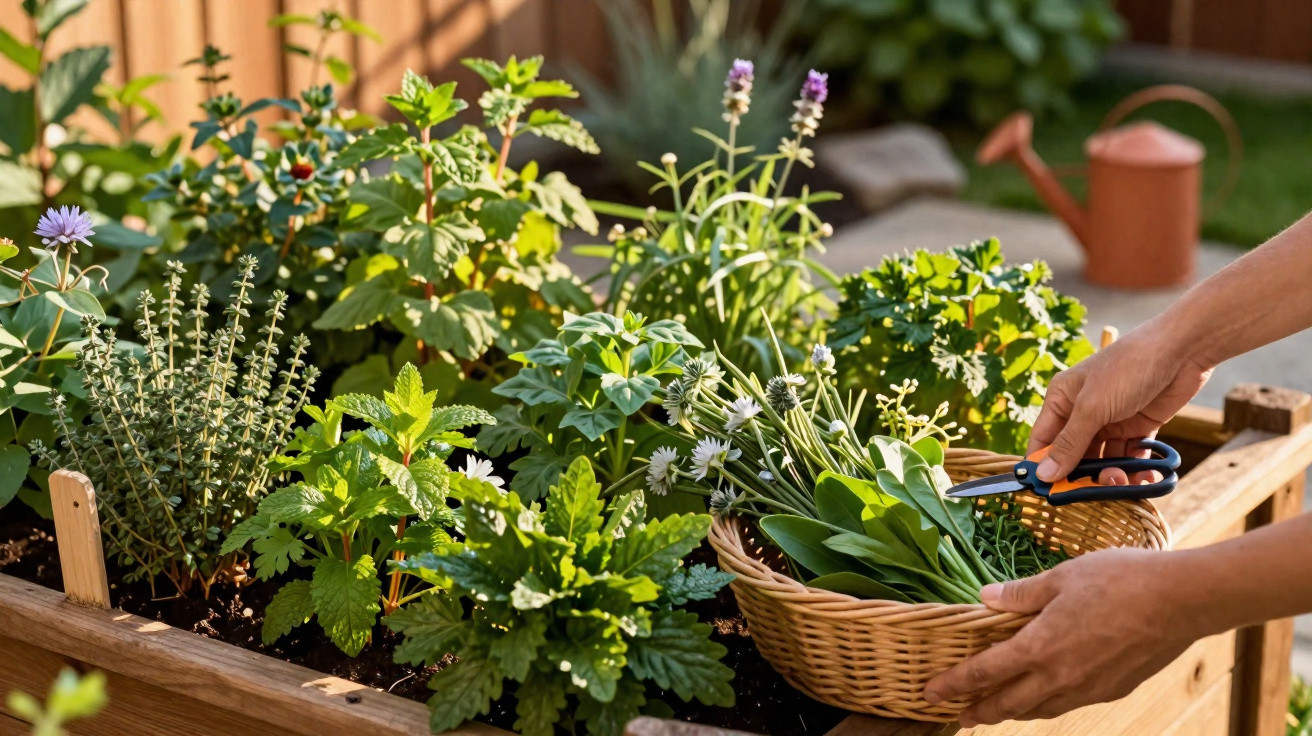
Even while winter has a firm grip, next season’s herb harvest is waiting below the surface, poised to save both time and money.
A flourishing kitchen garden is often assumed to require a complete restart each year. Yet several hardy, cold-tolerant herbs can sit dormant through winter before bursting into life well ahead of tomato seedlings. Plant them once, look after them reasonably well, and they can provide food for years.
Why planting long-lasting herbs now makes sense
Windowsill seed trays, compost scattered across the floor and seedlings failing in poor light: most gardeners recognise the routine. Perennial and biennial herbs offer a more relaxed approach. Rather than sowing again each spring, you make a one-off investment in plants that return year after year.
Perennial herbs turn a few hours of work in late winter into years of reliable, almost free harvests.
These herbs develop robust root systems that reach far down into the ground. This allows them to access moisture beyond the reach of annual seedlings and withstand brief cold spells. With the soil left largely undisturbed, worms, fungi and helpful microbes remain where they are, improving the condition of the entire growing area.
That matters greatly in a small garden or on a balcony. A small selection of evergreen or early-spring herbs lets you add flavour to meals weeks before most vegetables are available. They also reduce gardening costs, removing the need for repeated seed purchases or a constant supply of plug plants from the garden centre.
The early risers: chives, sorrel and parsley
Chives: indestructible onion flavour
Chives can appear rather sorry for themselves over winter. Their leaves droop, turn brown and disappear, but compact green shoots emerge almost overnight once the light improves. In many climates, they can be cut for omelettes while much of the garden is still only half awake.
Grow chives in the ground or in a container, somewhere sunny or lightly shaded. After they have established, the clump becomes fuller every year. Divide it every few seasons to create several new plants and enlarge your herb area at no cost.
Sorrel: the forgotten lemony leaf
Sorrel has fallen from favour, despite being remarkably useful. This perennial leaf appears very early, producing tender green blades with a distinctly sharp, lemony taste.
- Add young sorrel leaves to salads for a citrusy lift
- Stir it into potato soup for a bright, tangy note
- Serve it with fish or chicken in place of a squeeze of lemon
Provide reasonable soil and a little compost annually, and it will return the favour with a generous mound of leaves even while the nights remain cold.
Parsley: the “almost perennial” workhorse
In botanical terms, parsley is a biennial: it spends its first year putting on growth, then produces flower stems in its second. In mild climates, or where it self-seeds, however, it can seem almost permanent.
Before purchasing more parsley, inspect any plants that were already growing last year. When protected from severe frost, many continue producing all winter before growing strongly again in early spring. Remove flower stalks as they develop to extend the picking period, or allow a few plants to set seed and produce new seedlings naturally.
Mediterranean stalwarts: thyme and oregano
Thyme: tiny leaves, huge payoff
Thyme originates in hot, dry areas, although it is unexpectedly resilient in colder gardens. It may look dull and woody during winter, but it is simply dormant. As daylight hours increase, new aromatic tips form along its stems.
Established thyme asks for very little attention. It favours free-draining ground and does not tolerate waterlogged compost. In exchange, it supplies flavour throughout the year for roasts, stews and marinades, often surviving for many seasons.
Oregano: pizza’s best friend that keeps giving
Oregano grows in much the same fashion. It makes low, spreading clumps that die back a little over winter, then send up fresh shoots once temperatures rise. Its scent becomes stronger as it matures, so each picking becomes more worthwhile.
Thyme and oregano are classic “set and forget” herbs: one planting, years of kitchen use.
Both plants also smother weeds by covering the soil. The result is less weeding and a tidier bed, with almost no extra effort required.
The generous invaders: mint and tarragon
Mint: unstoppable, if you let it
Mint is well known for its habit of spreading everywhere. Frost may destroy every leaf above ground, while beneath the soil it prepares to return through a web of creeping stems known as rhizomes.
Fresh shoots emerge wherever those rhizomes extend by spring. This is excellent for mojitos, iced tea and tabbouleh, but less welcome in the rest of the borders. The straightforward solution is to grow mint in a pot, or sink a bottomless container into the ground to contain it.
Tarragon: subtle anise that hides, then explodes
French tarragon is more reserved in winter and often vanishes entirely above ground. Its roots remain alive, though, and slender green stems emerge once the soil warms, carrying a delicate aniseed fragrance.
As tarragon dislikes both severe cold and waterlogged ground, give it a protected position with good drainage. Under those conditions, one plant will yield armfuls of leaves for chicken dishes, vinegars and sauces over several years.
One pruning session for a year of herbs
These herbs do not demand complex maintenance, but a brief tidy-up at the correct time improves both their flavour and productivity.
| Herb | Late-winter task | Benefit |
|---|---|---|
| Thyme & oregano | Remove dead, woody stems | Allows in light and promotes new growth |
| Chives & mint | Cut back old, dry foliage completely | Makes room for soft new shoots |
| Sorrel & tarragon | Divide overcrowded clumps | Revives plants and creates free extras |
Use clean, sharp secateurs, ideally from late January to early March depending on your climate. The task is minimal: only a few minutes per plant once each year. Its effect on the quality of the harvest is substantial.
A short pruning session in late winter can turn a tired patch of herbs into a dense, productive mini-plantation.
Planning a low-effort, high-flavour herb corner
Together, these seven herbs can form a compact “perennial flavour bed” that largely looks after itself. Consider it a living larder immediately outside the back door.
A straightforward arrangement for a small raised bed is:
- Back row: thyme and oregano, allowing them to spread into a low hedge
- Middle: sorrel and parsley for dependable leafy greens
- Front: chives as edging, with one corner set aside for a pot of mint
- Side: tarragon in a more sheltered, drier position
This combination suits a broad range of cooking styles: Mediterranean roasts, French sauces, Middle Eastern salads, Asian-style broths and quick weekday omelettes. Instead of visiting the supermarket whenever you cook, you can simply take scissors outside.
Things new herb growers often overlook
Two gardening terms are useful for understanding these plants: “perennial” describes a plant that survives for several years, while “biennial” refers to one that generally lives for two. In reality, there is some overlap. Parsley, for example, is biennial but can often persist longer through mild winters and self-seeding.
There are compromises too. Perennial herbs seldom provide the dramatic single-season crop delivered by annuals such as basil. Their advantage is dependability combined with exceptionally little work. During a busy week, when seed trays are the last thing you want to consider, a bed of established herbs will still quietly supply flavour.
For compact urban gardens, planting in late winter or very early spring is sensible. Garden centres have stock, the soil is beginning to warm and you gain a full extra growing season. Spend one afternoon planting now, and on a cold March evening your future self can step outdoors, cut a handful of herbs and make an ordinary dinner taste purposeful.












Comments
No comments yet. Be the first to comment!
Leave a Comment