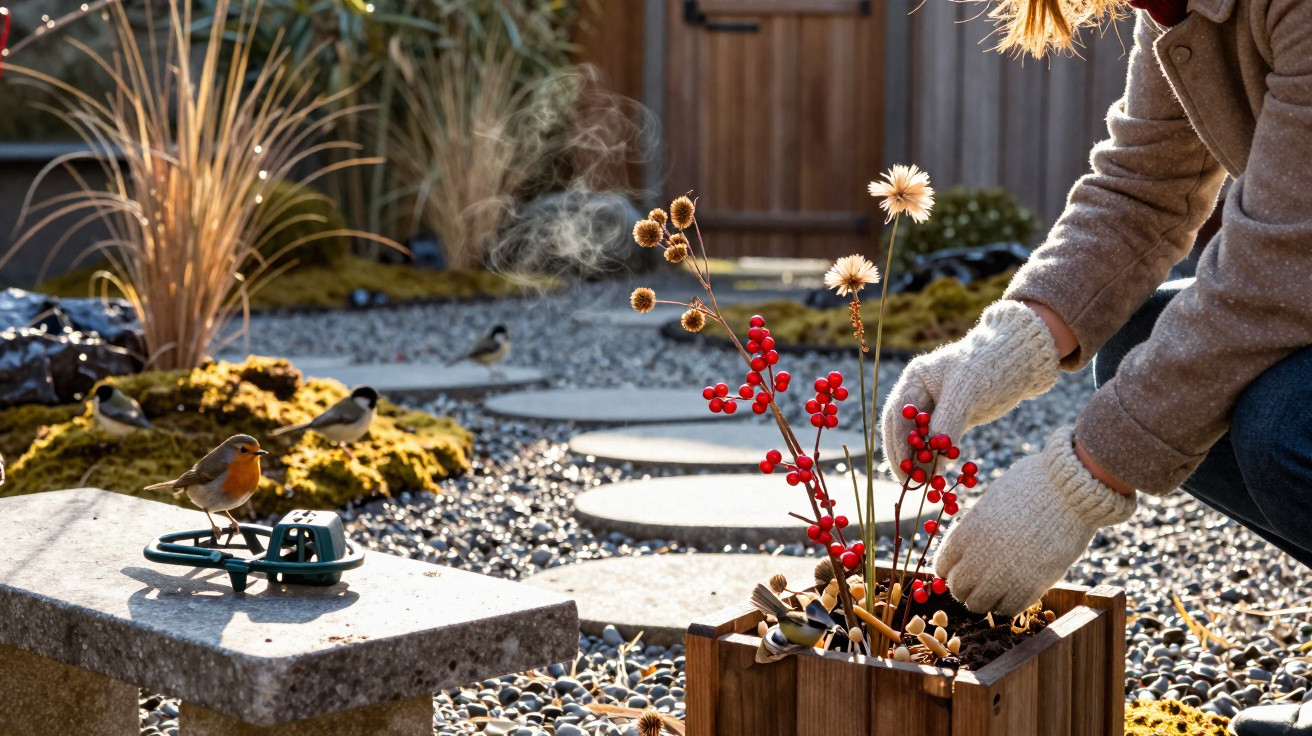
Many garden owners turn to bird feeders in winter – a Japanese method radically challenges this habit and favours a different approach.
When frost takes hold outside and the garden appears lifeless, many people instinctively want to “help” birds by buying bags of seed and fat balls. Japan takes a very different approach: feeding is regarded there as an intervention that can do more harm than good. Although this may initially sound harsh, it follows a clear rationale and offers thought-provoking lessons for gardens closer to home.
Why our gardens become winter fast-food outlets for birds
Across Europe, the winter routine has looked much the same for years: as soon as temperatures fall below zero, DIY store shelves fill with sunflower seeds, fat balls and high-tech feeder tubes. Anyone with a garden puts something out, often setting up several feeding points.
The assumption is that tits, robins and finches would starve miserably without human support. It reassures our conscience while also creating lovely photo opportunities from the kitchen window.
It is precisely this well-intentioned gesture that can quickly turn a garden into an artificial food oasis – with side effects that few people consider.
Birds suddenly find highly concentrated food in one part of the garden, often rich in fat and not always of good quality. Many commercially available mixes contain cheap fillers or fats chosen more for their appeal to buyers than for the animals’ health.
As a result, rather than searching their surroundings methodically, birds come to rely on the feeder as a “safe bet”. It may look charming at first, but over time it can alter their natural behaviour.
The Japanese perspective: helping by not feeding
A different attitude has become established in Japan. There, feeding wild birds during winter is largely avoided. The reasoning is that an animal accustomed to food from people loses part of its independence, and therefore some of its ability to survive.
This outlook is closely linked to a philosophy that can broadly be described as “respectful non-intervention”. Wild animals are seen as having their own dignity, so they should be given space rather than conditioned to depend on support schemes.
Anyone who feeds birds regularly unknowingly sends a clear message: “You no longer need to search; I will take care of it for you.” In the long run, this is exactly what weakens their hunting and foraging instinct. A bird that knows food will be waiting every morning has less need to be inventive, adaptable or persistent.
The Japanese logic is this: genuine care means preserving animals’ ability to adapt – not reducing it through comfort.
Rather than topping up bird feeders every day, many Japanese gardeners focus on creating habitats in which birds can find enough food independently.
When feeding stations spread disease and curb migration
Beyond philosophical considerations, there are compelling ecological arguments against excessive bird feeding. One key concern is that disease can spread very rapidly at feeding sites.
Birds perch shoulder to shoulder, peck from the same tray and defecate nearby. These conditions are ideal for bacteria, fungi and parasites. In the open countryside, many of these birds would never gather in such close proximity.
- Feeder tubes and dishes are seldom cleaned thoroughly.
- Damp food can become mouldy and damage the digestive system.
- Weakened birds can quickly infect others at these “hotspots”.
There is another consequence too: altered migratory and movement patterns. Species that would normally travel onwards remain wherever life is easy. Why fly several hundred kilometres when the patio provides an all-day buffet?
This may seem convenient, but it can be life-threatening for birds. If feeding suddenly stops because the garden owner is away, ill or simply no longer interested, birds that have become dependent may be left in freezing conditions without experience or well-practised foraging behaviour.
Even with the best intentions, a garden can become a trap when birds depend on a food source that can disappear at any time.
The Japanese alternative: plants rather than plastic feeders
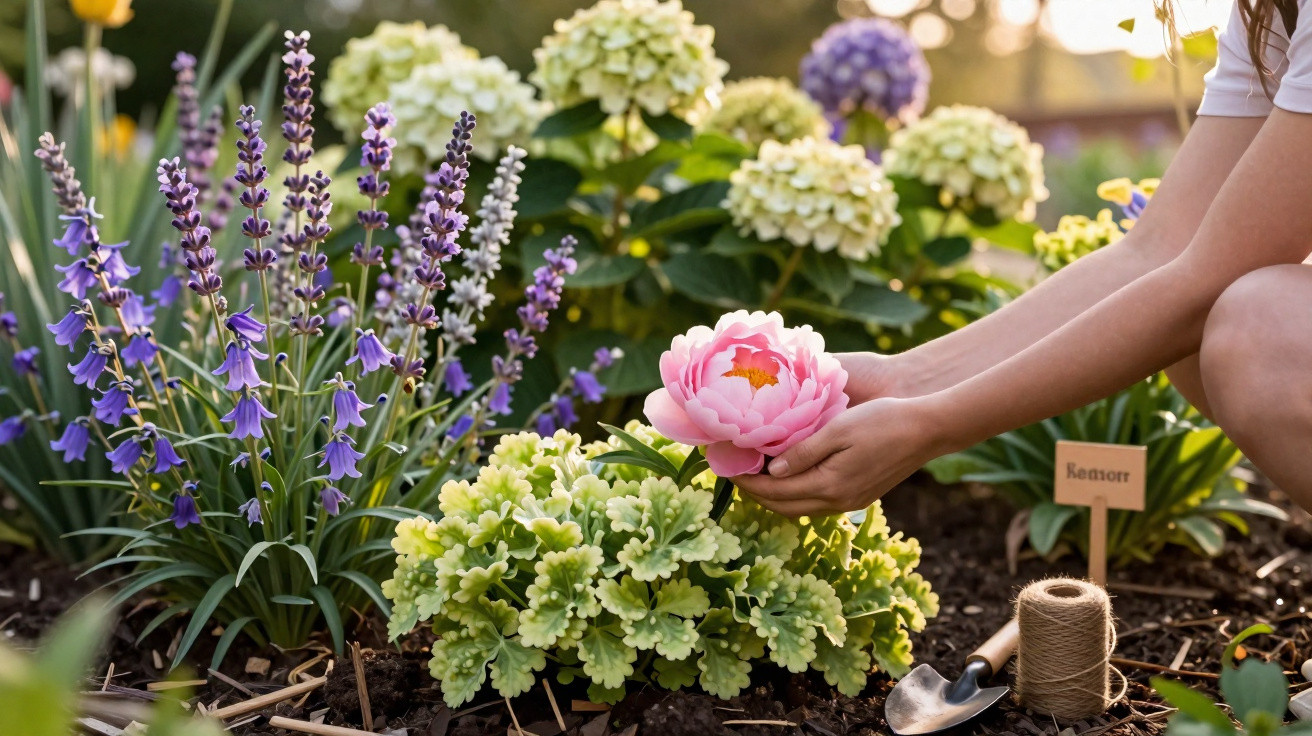
The good news is that nobody needs to turn their garden into a sterile expanse of stone. The Japanese-inspired solution does not depend on buckets of bird food, but on plants that provide food naturally, year after year.
Turning the garden into a natural food store
The key is to ensure that something can be found in the garden for as much of the year as possible: berries, seeds and insects. Just a few targeted measures are often enough:
- Plant shrubs with winter berries: Varieties such as holly, firethorn, cotoneaster or naturally growing ivy produce berries when other plants have long since become bare.
- Leave fruit on the trees: A few apples or pears can be allowed to rot where they hang. For blackbirds, thrushes and starlings, they are valuable stores of energy.
- Leave perennials standing: Spent sunflowers, thistles or echinacea provide seeds well into late winter – without a bag from the DIY shop.
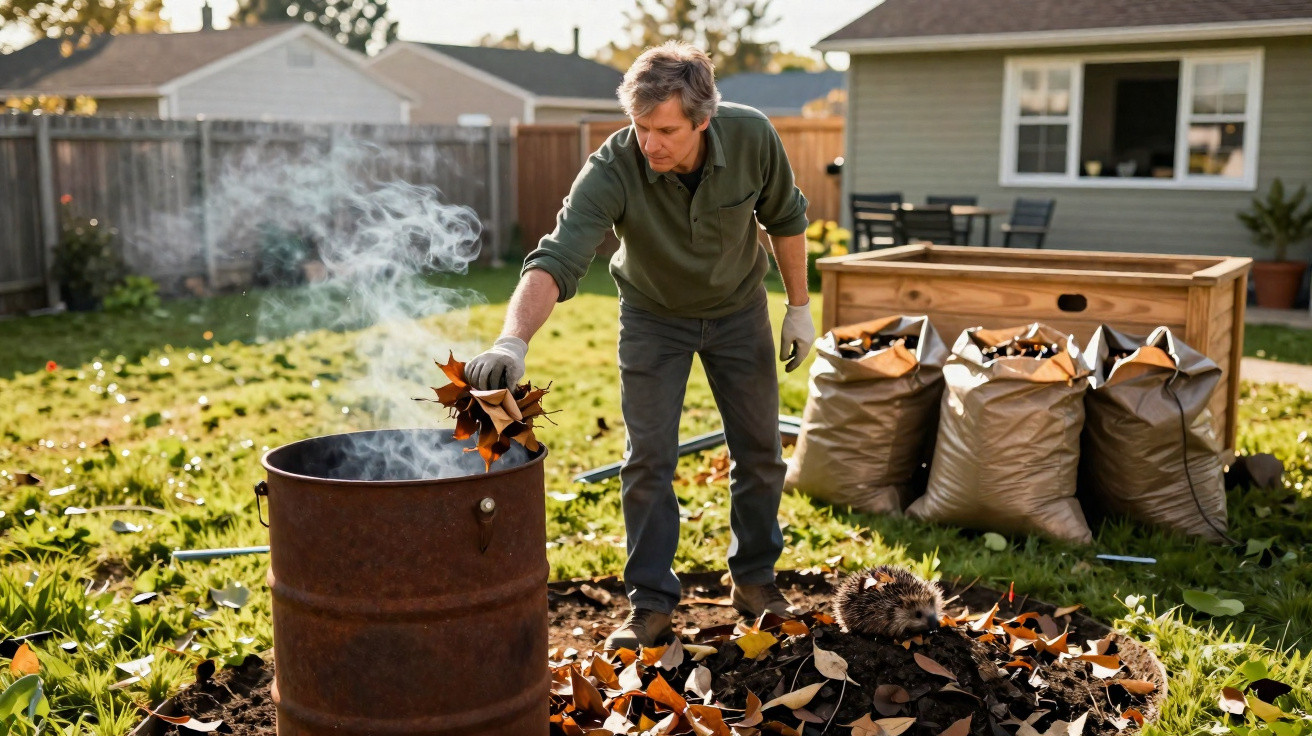
At the same time, supposedly “untidy” corners play a crucial role. Piles of leaves, dead wood, coarse pieces of bark and brown perennial stems all provide valuable shelter for insects, spiders and larvae, making them a natural source of protein for birds.
Anyone who truly wants to strengthen birds should encourage abundant insects – not simply put out fat balls.
Less intervention, more observation
Many people find the change difficult because they enjoy the direct contact: the bustle around the bird feeder and selfies with robins in the background. The Japanese approach requires a shift in perspective.
Instead of acting as a “provider”, the garden owner becomes a “habitat manager”. They create structures, observe what happens and intervene as little as possible. There may be fewer birds at the kitchen window, but their resilience in the wider landscape increases.
Those who embrace this soon notice that the animals behave more naturally. A tit searching the bark of an old apple tree for larvae is displaying its real skill. A chaffinch rummaging through leaf litter beneath a hedge reveals how expertly it can find food when nobody assists it.
When feeding is still justifiable – and when it is not
The debate is not entirely black and white. Many ornithologists consider occasional feeding during extreme weather, or in heavily built-up cities, an emergency measure, particularly where natural features are scarce. Anyone who chooses to do this should follow a few basic rules:
- Use only high-quality food that is as natural as possible.
- Clean feeding stations regularly with hot water and remove mouldy material immediately.
- Feed consistently throughout the entire freezing period – not one day yes, the next day no.
- At the same time, plant native shrubs, trees and perennials so that this help becomes unnecessary in the long term.
The central point remains: the better a garden functions as a habitat in its own right, the less birds need human assistance. Feeding is then more of a crutch than a solution.
Practical ideas for a “Japanese-inspired” garden
Anyone wishing to adopt the approach from Japan can make changes step by step rather than transforming everything at once. One possible plan for a year is:
- In spring, designate one area that can remain “wilder”, perhaps behind the shed.
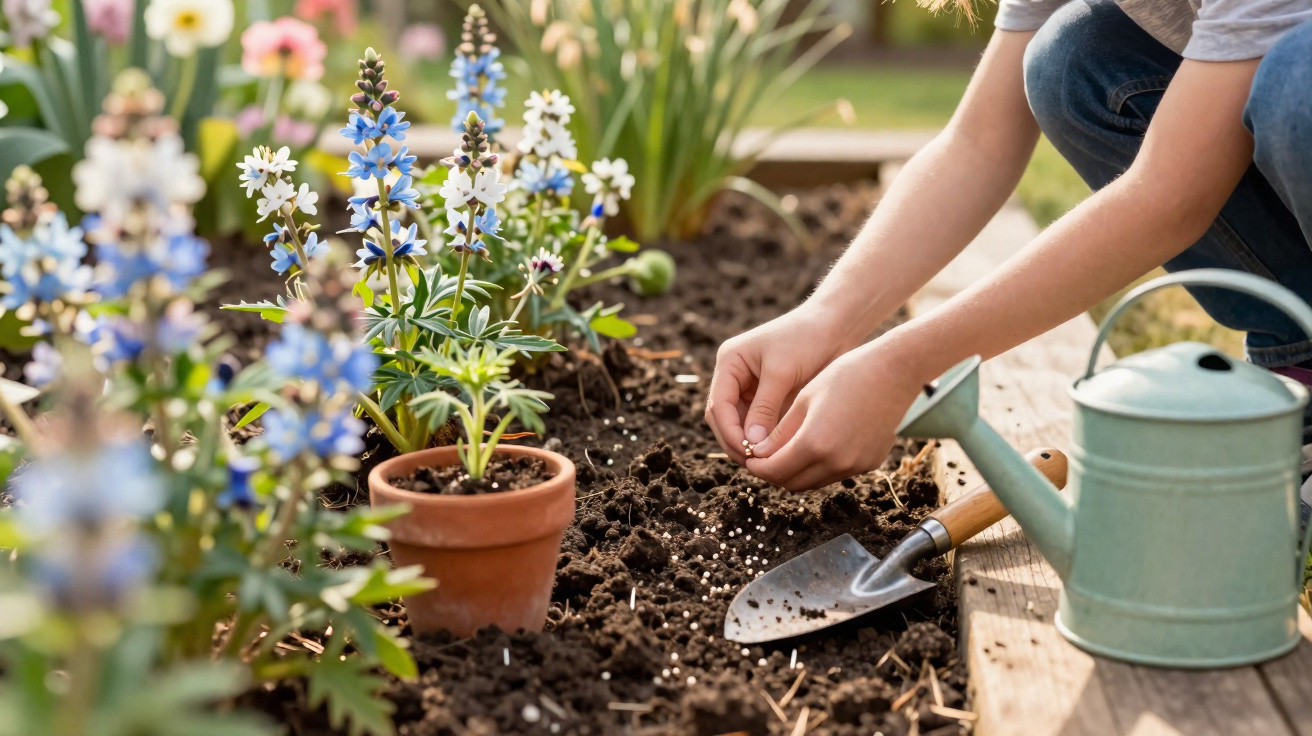
- In summer, plant two or three berry-bearing shrubs, ideally native species.
- In autumn, cut back perennials only partially and deliberately leave some seed heads in place.
- In winter, avoid putting up new feeding stations and observe which bird species still appear.
Those who wish can keep a small notebook or use an app to list the species they see. Over time, it becomes clear how quickly the garden responds to a more natural food supply.
Why this approach benefits people too
There is an interesting side effect: a garden shaped by shrubs, dead wood and perennials rather than plastic bird feeders feels calmer and more harmonious. It requires fewer shop-bought products and can be maintained with a manageable amount of effort.
This type of design also supports many other species, including insects, hedgehogs and amphibians. Planting for birds automatically creates habitat for an entire network of living creatures. That makes gardens more resilient to hot summers, pests and extreme weather.
Ultimately, there is a slightly uncomfortable but honest thought: not every full bird feeder is a blessing. Sometimes genuine love of animals means keeping our hands away from the feed container and choosing a spade and plants instead.












Comments
No comments yet. Be the first to comment!
Leave a Comment