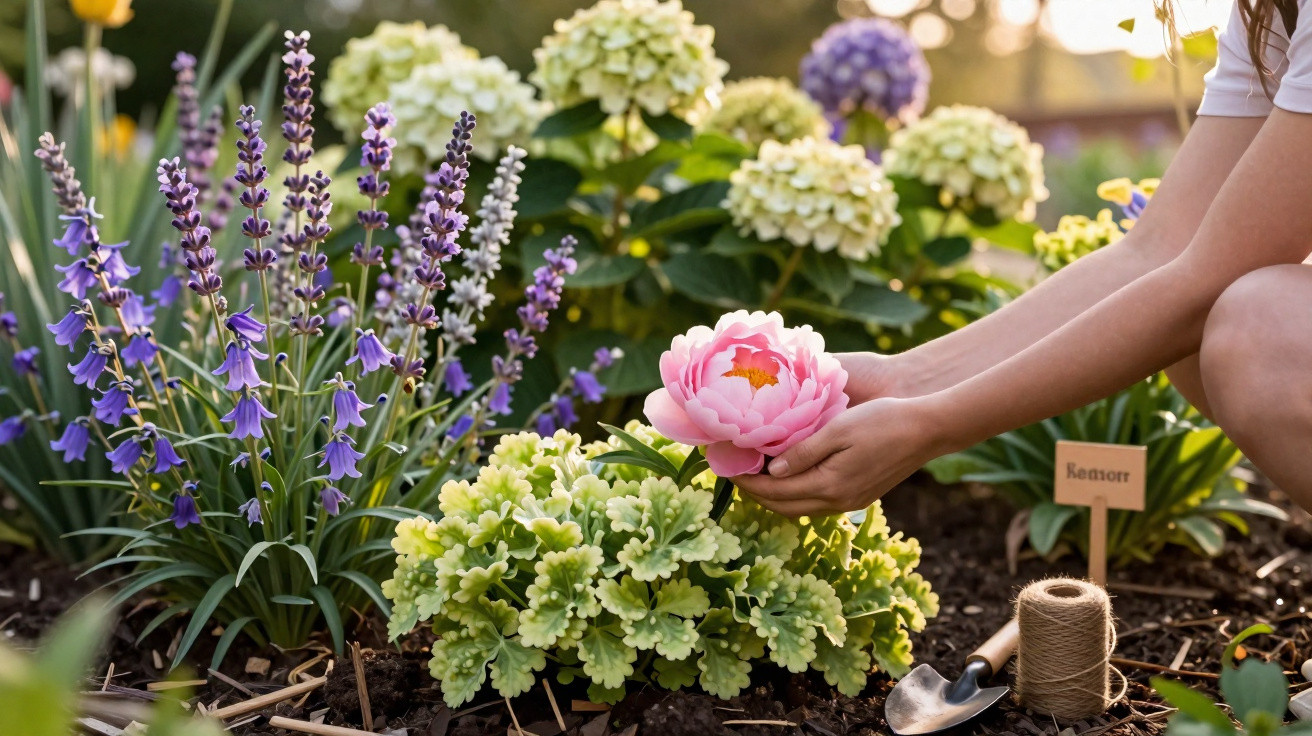
Many garden owners simply put peonies anywhere in a border, then wonder why the result is less impressive than a palace garden. The secret is rarely the cultivar; it is almost always the neighbouring plants. Understanding what these perennials need and selecting compatible companions gets far more from every plant, both visually and in terms of plant health.
What peonies need before they get neighbours
Peonies are among the most enduring perennials for the garden. They can remain in one position for decades, but will only flower abundantly when their basic needs are met. Their position determines whether they produce a spectacular display every year or merely a few lacklustre buds.
- Plenty of sun: at least six hours of direct light each day is ideal.
- Deep, fertile soil with good drainage.
- No winter waterlogging, as this causes the roots to rot.
- Sufficient space between plants so foliage dries quickly.
When perennials are planted too close together, moisture remains on the leaves for longer. Fungal diseases such as grey mould can then spread quickly, damaging buds and foliage. A crowded border may look pleasantly full in its first year, but later leads to unhealthy, struggling perennials.
“There should be a clearly open ring around every peony so that air and light can reach every stem.”
Competition below ground matters too. Vigorous roots from immediately neighbouring plants deprive peonies of water and nutrients. When planning a border, it is therefore worth looking closely at the eventual vigour of each companion plant.
The best peony companions: gentle contrast rather than competition
Lady’s mantle: green clouds that make peonies glow
Alchemilla, commonly known as lady’s mantle, is considered one of the finest companions for peonies. This perennial forms dense, low cushions of soft foliage topped with delicate clouds of yellow-green flowers. That particular shade makes pastel and pink peonies shine, both in the border and in a vase.
- It stays low enough not to deprive peonies of light.
- It spreads at a moderate pace, leaving room for neighbouring roots.
- It fills foreground gaps without crowding the peony clump.
For anyone who enjoys cutting flowers, the pairing of lady’s mantle and peonies is an almost unbeatable classic. The sprays of flowers frame the large blooms and give a bouquet more structure.
Bellflowers and other perennials with nodding blooms
Bellflowers have a delicate, romantic quality that works beautifully with the full, rounded flower heads of peonies. Many varieties remain relatively compact and do not grow up into the peonies’ height. This creates a balanced composition in which the peony remains the centre of attention.
One point needs a little consideration: some bellflower species are more susceptible to pests. This is not a problem around peonies provided aromatic plants such as lavender or ornamental alliums are also included in the border. Their scent disrupts many insects, acting rather like small protective shields.
Hydrangeas as a strong backdrop
Hydrangeas are excellent for closing off the rear of a peony border. Their large flowerheads echo the rounded form of peony blooms and extend the flowering interest into late summer.
“Planted with a little distance, hydrangeas provide a calm flowering backdrop without shading the peonies.”
Spacing is crucial. If they are too close, hydrangeas take light and draw too much water from the soil. Positioned slightly further back, however, they create light shade during the hottest weeks, easing the pressure on the perennials without forming a canopy over them.
Staggering colour: keeping the border in flower from spring to summer
Peonies have a relatively short but exceptionally intense flowering period. Thoughtful planting can frame this season, ensuring there are barely any empty spaces in the border.
| Season | Plant | Role in the border |
|---|---|---|
| Spring | Bearded iris | Flowers shortly before peonies, introducing the main display. |
| Late spring / early summer | Peonies | The peak moment, with large and striking flowers. |
| Early summer | Ornamental allium (Allium) | Adds vertical accents among the perennials. |
| Summer | Daylilies | Continue the colour once peonies have finished flowering. |
Bearded irises generally flower shortly before peonies. Their upright stems introduce the first sense of height to the border. Once their flowers fade, the peonies take over. Ornamental alliums stand among them like small upright brushes, drawing the eye upwards with spherical blooms held on slender stems.
As peonies lose their final flowers, daylilies come into their own. Their trumpet-shaped blooms open afresh day after day, providing colour for several weeks, often in the same colour range as the peonies. The border therefore appears to continue seamlessly.
Lavender and ornamental alliums: scented protection for healthy peonies
For many people, lavender is the symbol of the south. In a peony border, it performs several roles at once. Like peonies, it thrives in sunny, free-draining positions. It forms compact lines or mounds, and its powerful fragrance keeps numerous pests at bay.
- It repels mosquitoes, flies, certain aphid species and even browsing by wild animals.
- Its blue-grey foliage visually softens the edge of the border.
- It complements pink and white peonies with a cool contrasting note.
Planted as a border edging, lavender acts as a natural barrier. The area around the peonies remains calmer, is less likely to be browsed and is often less affected by fungal disease because air can circulate well and foliage dries quickly.
Ornamental alliums combine decoration with protection. In addition to their architectural globe-shaped flowers, these bulbs give off a slightly sulphurous scent that many insects avoid. Planted among peonies, lady’s mantle and daylilies, they create interesting variations in height without any plant taking light from another.
Plants that are less suitable for peonies
Although many combinations look harmonious, some plants are simply not good partners for peonies. Tall, vigorous grasses and species that prefer permanently wet ground are especially troublesome.
“Anything that keeps the soil persistently heavy and wet, or spreads with great vigour, is rarely suitable for peonies.”
Tall, spreading ornamental grasses form dense root systems that take water and nutrients from peonies. They quickly overhang the border, cast shade and trap moisture within the clumps. That is often exactly where fungal infection begins.
Plants that prefer pond margins or very heavy clay soils also make life difficult for peonies. They draw more water, keep the ground wet for longer and therefore encourage rot and fungal problems in the perennials. Anyone who loves peonies is better off giving such species their own area of the garden.
Practical tips for an impressive peony border
Anyone planting from scratch or redesigning an existing border can make life easier for peonies with a few straightforward measures:
- Do not plant peonies too deeply: the buds should sit only a few centimetres beneath the soil surface.
- Allow at least 60–80 centimetres between a peony and the next larger perennial.
- Do not allow dense ground cover to grow directly against the stems.
- Remove spent flowers promptly, so wet flower remnants do not remain on the plant.
A border designed with colour in mind will almost automatically look well maintained. One proven arrangement for a home garden is white or pale pink peonies in the middle section, with lady’s mantle and lavender in front, and hydrangeas or lower shrubs behind. Add several ornamental allium globes and individual daylilies between them, and the result already recalls a professionally designed display garden.
Going a step further: soil preparation and care
Peonies reward every effort invested in preparing the soil. Before planting, it is worthwhile to loosen the ground deeply and work in plenty of well-rotted compost. In heavy soils, coarse sand or fine gravel helps water drain away more quickly. This can considerably reduce later problems with rot.
In spring, the perennials benefit from a moderate feed, such as an organic general fertiliser or compost. Too much nitrogen, however, mainly encourages leafy growth and makes plants softer and more vulnerable. A restrained but regular application every one to two years is the better approach.
When combined with the right neighbours, peonies need surprisingly little attention as the years pass. Cutting back foliage in autumn, adding some compost in spring and occasionally thinning the immediate surroundings are usually all a well-planned peony border requires. The reward is dense clumps with impressive flowers, set within a plant community that stages the display anew every year.













Comments
No comments yet. Be the first to comment!
Leave a Comment