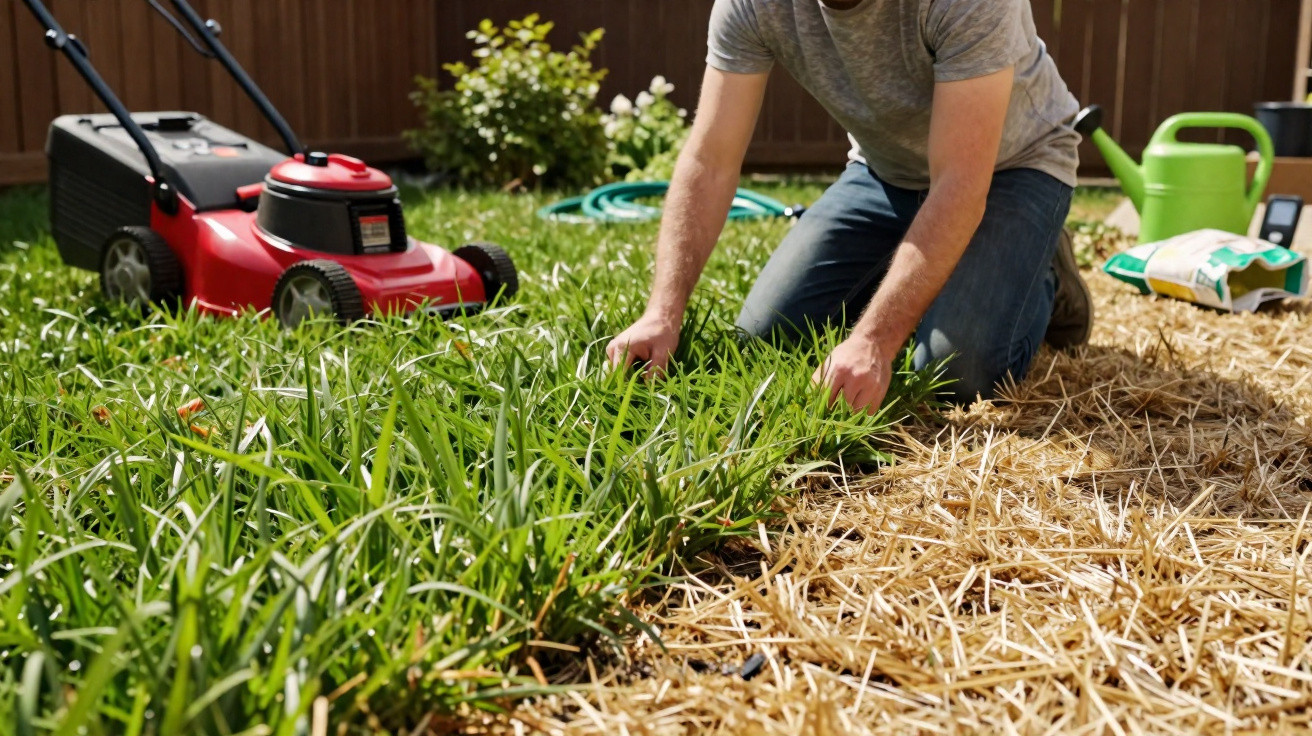
Most people then reach for fertiliser, water more often or buy expensive grass seed. Yet the real game-changer is frequently overlooked: choosing the right cutting-height setting on the lawn mower. Consistently matching the cutting height to the lawn type and season protects the soil, reinforces the roots and produces a hard-wearing, richly green carpet rather than a patchy, scorched surface.
Why cutting height determines the health of your lawn
Every blade needs enough leaf area to create energy for its roots through photosynthesis. Cutting too low removes these “solar panels”. The grass weakens, the soil heats up, and weeds and moss take advantage of the gaps.
The rule of thumb: never remove more than one third of the current grass length in a single cut – the well-known one-third rule.
Going lower effectively shaves the lawn. Gardeners call this “scalping”: growing points are damaged, the grass retreats and bare patches develop. Such areas dry out more quickly and provide ideal starting points for dandelions, clover and similar plants.
Mowing frequency is directly linked to this. The faster the lawn grows, the more often the mower needs to come out. During the main growing period, intervals of 4 to 7 days are normal; in spring, when growth is particularly vigorous, mowing twice a week may even be necessary. However, each cut should remain moderate rather than extremely short.
Never mow wet grass: an underestimated mistake
Wet grass bends over, sticks together and is more likely to be torn than cleanly cut by the blades. The grass tips become ragged, cut edges dry brown, and fungal diseases can take hold easily.
- Mow only when the lawn is dry, where possible.
- If there is no alternative, raise the cutting height slightly and use the grass collector.
- Do not walk wet grass flat before mowing, or visible flattened stripes will remain.
- Switch off the mulching function in wet conditions to prevent clumps and rot.
Sharp blades are just as important. Blunt blades batter the grass down like a wooden club, leaving shredded tips and a greyish-brown haze across the lawn, even where it has technically been cut at the correct height.
The ideal cutting height for different lawn types
A durable family lawn needs different settings from an ornamental lawn outside a villa or a partly shaded area beneath trees. This overview provides a useful guide:
| Lawn type / use | Recommended cutting height |
|---|---|
| Family lawn / play area | 3–5 cm |
| Ornamental lawn (rarely walked on) | 2–3 cm, closer to 5 cm in hot weather |
| Shade lawn | 5–6 cm throughout the year |
| Large, lightly maintained meadow areas | 5–8 cm |
The more heavily an area is used, the more important some grass length becomes as a “shock absorber”. An ultra-short ornamental lawn tolerates very little foot traffic and requires intensive maintenance and nutrient supply.
If you know the grass species
Many domestic gardens contain mixtures of different grasses. If you can identify the dominant species, you can set the mower even more precisely:
- Cool-season grasses such as Poa (meadow grass) generally thrive at 6 to 9 cm.
- Fescue types (Fescue / Schwingel) prefer 7.5 to 10 cm and react badly to being cut too low.
- Perennial ryegrass (Raygrass) performs well at 5 to 7.5 cm.
- Warm-season varieties such as Bermuda grass or Zoysia grass tolerate 1.5 to 5 cm, but require professional care and plenty of sunshine.
If you do not know the seed mix, the 3 to 5 cm range for a traditional hard-wearing domestic lawn is a safe choice. This range combines an attractive appearance with sufficient resilience to stress.
Seasonal lawn mowing: adjust the cutting height through the year
A lawn faces entirely different conditions in spring, summer, autumn and winter. Keeping the same cutting height throughout wastes considerable potential.
Spring: a denser lawn through shorter mowing
In spring, it is worth selecting the lower end of the recommended range without breaking the one-third rule. Cutting a little shorter encourages tillering: several new side shoots grow from a single shoot. The lawn visibly thickens and gaps begin to close.
Summer: raise the height to prevent scorching
As soon as extended periods of heat or drought are expected, the mower should be set noticeably higher – at least 5 to 6 cm. Longer grass blades shade the soil, reduce evaporation and keep the root zone cooler.
Anyone cutting down to 2 cm in high summer as though preparing a football pitch risks scorched, straw-like patches – even with watering.
The interval between cuts can increase slightly in summer because the lawn grows more slowly. The key point remains the same: never cut a lush, tall lawn back to extremely short grass in one go.
Autumn and winter: reduce height carefully
During autumn, the cutting height can gradually be lowered again. It should not be cut too short at the end of the season, otherwise the lawn enters the colder months weakened. In winter, a handful of high cuts is enough – and only when the ground is neither frozen nor waterlogged.
Young or stressed lawns: a special approach for problem areas
Newly seeded lawns and areas recovering from damage are particularly sensitive. The first mow usually takes place once the grass reaches 8 to 10 cm. It should then be cut back only to 5 to 6 cm, so very cautiously.
When overseeding, a two-stage approach can be used: first cut from around 8 cm to 5 cm, then, once the young plants are firmly established, reduce from 5 cm to about 3 cm if the lawn type permits it. This prevents the blade from snapping the still delicate shoots.
Returned from holiday to find the lawn knee-high? In that situation, the one-third rule acts as a safeguard. It is better to mow two or three times a few days apart, removing no more than one third each time, than to brutally cut everything back to hard-wearing lawn height in one pass. At growth heights of around 15 to 20 cm, it is worth using a strimmer or brush cutter first, before bringing the ordinary mower back into use.
How to set the cutting height in practice
The scales on many mowers are imprecise or vary between models. For certainty, measure the actual result.
- Place a piece of card or cardboard on the lawn.
- Mow a short strip using the selected height.
- Check the real grass length with a ruler.
- Readjust the height lever until the required setting is achieved.
It is also worth adopting a maintenance routine: sharpen or replace the blades after 20 to 25 operating hours. Before making any adjustments, switch the mower off and secure it against accidental starting, whether it is battery-powered, electric or petrol-driven.
Many “miracle cures” for lawns are unnecessary when the blades are sharp, the cutting height is suitable and the soil is reasonably dry.
How fertiliser, watering and mowing height work together
Cutting height never works in isolation. A very short lawn needs more nutrients and water because it has less leaf area available to build up reserves. A slightly taller lawn tolerates breaks between watering more readily and often manages with moderate fertilising.
Mowing too short while fertilising heavily encourages soft, disease-prone grass blades. Combined with dampness, this practically invites fungal diseases such as dollar spot or snow mould. A healthy, medium cutting height strengthens the lawn’s natural competitive advantage over moss and weeds – entirely without chemicals.
Terms and everyday examples for the garden
When specialists refer to tillering, they mean the formation of new side shoots from one grass shoot. The more often a lawn is mown moderately, the more it branches, becoming denser, more resistant to foot traffic and visually more even. In contrast, a blade subjected to a drastic close cut is more likely to retreat than form fresh side shoots.
A clear example illustrates this: two identical gardens. In the first, the owner consistently sets the mower to 5 cm and mows every five to seven days. In the second, the neighbour stubbornly uses the lowest setting and starts the mower only once every two weeks. After one summer, the first garden has an even, slightly springy carpet of grass. The second has yellow patches, bare areas and thick cushions of moss along the shaded edges, despite both gardens receiving the same fertiliser.
Anyone wishing to improve their lawn over the long term does not need to scarify, overseed or install an automatic irrigation system straight away. An honest look at the cutting height and blade condition often brings visible changes within a few weeks. The mower then becomes more than a source of noise: it is the garden’s most important maintenance tool, and when correctly adjusted, it makes the difference between a “lawn disaster” and a green summer sofa.
















Comments
No comments yet. Be the first to comment!
Leave a Comment