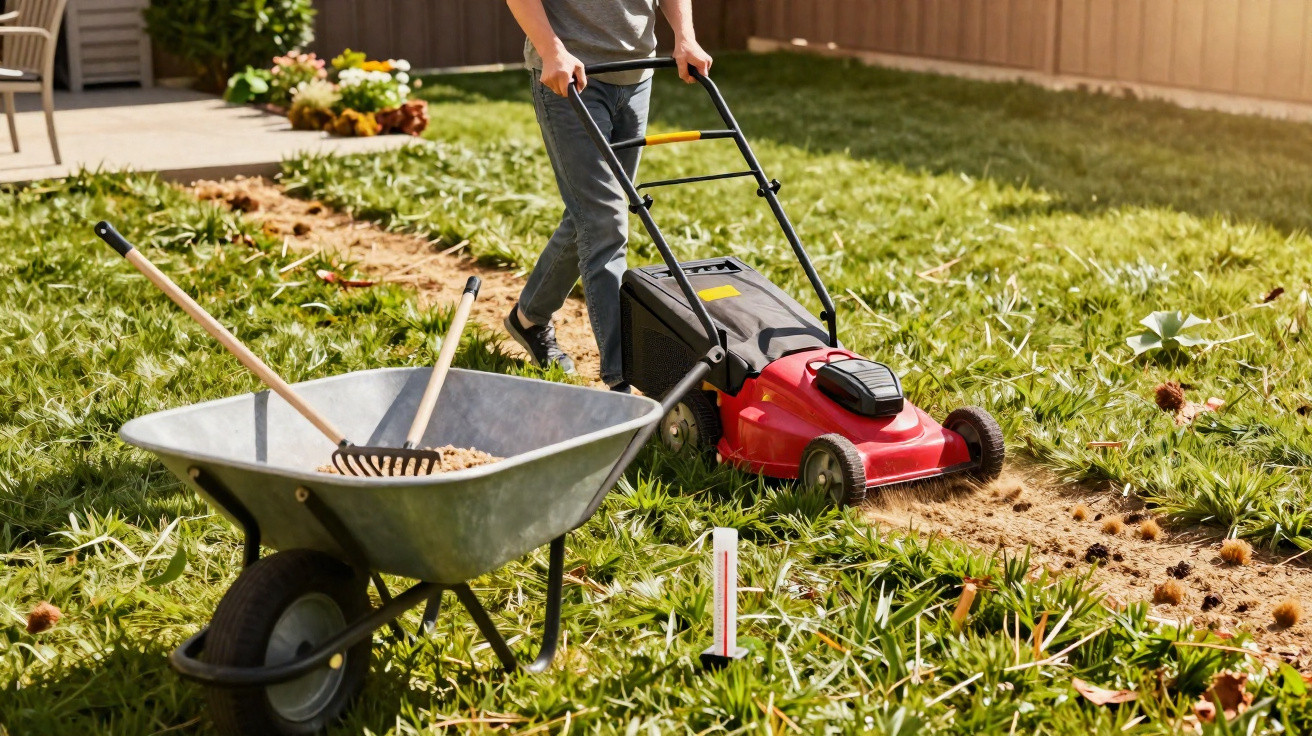
If you look enviously at your neighbour’s lush green lawn in July, you may be overlooking the fact that the real race was usually decided in March. Beneath the apparently harmless yellowish layer of grass lies a problem that prevents rainwater and nutrients from getting through – and that is exactly what causes your lawn to collapse in hot weather. The good news is that targeted action by the end of March can give your garden an advantage for the entire summer.
Why your lawn suddenly turns brown in summer
As winter draws to a close, something happens in the lawn that many gardeners do not notice – although they certainly feel its effects in summer. A layer of moss, dead roots and fine plant debris builds up between the blades of grass.
“This 1 to 2 centimetre layer of thatch acts like a lid: water, air and nutrients remain on the surface, while the roots stay too shallow and are the first to dry out.”
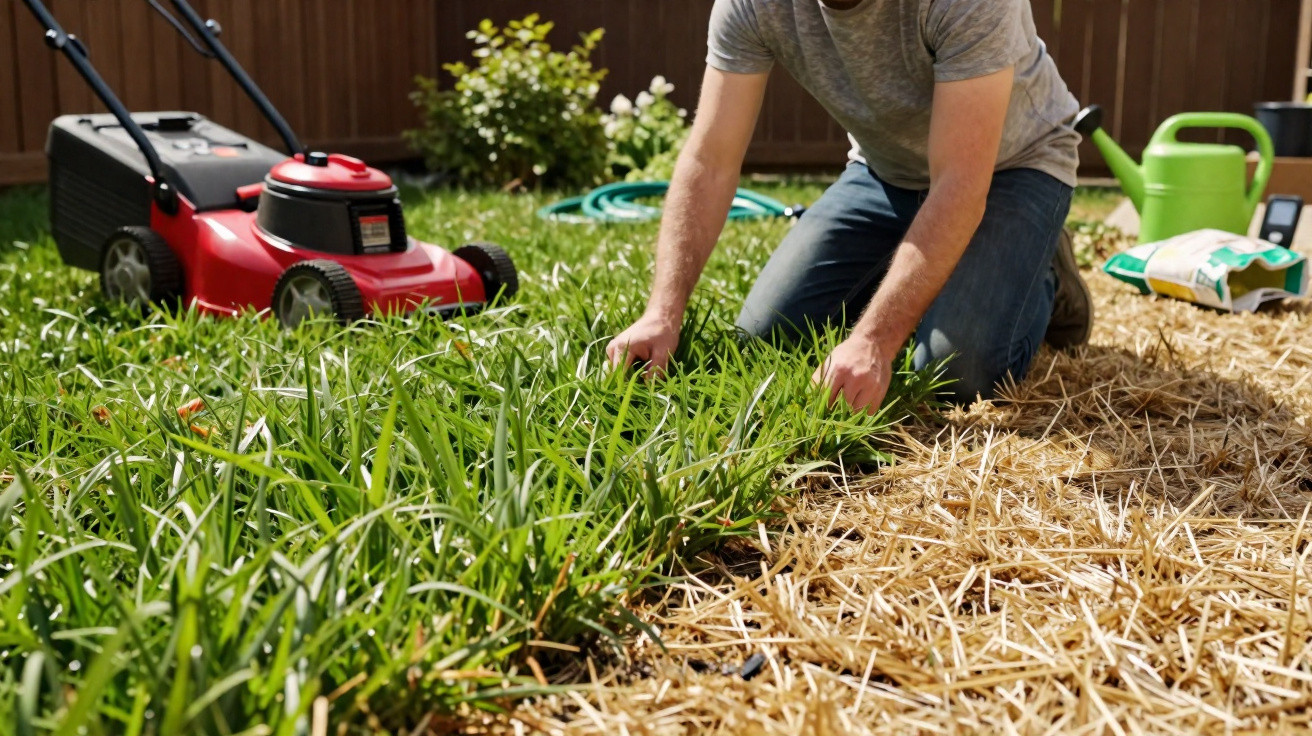
As a result, grass roots remain close to the surface because this is where they can still find some moisture. However, this zone is also the quickest to dry out once the first warm days arrive. Even a brief burst of heat can be enough: the lawn starts turning yellow and may even take on a straw-like appearance in places.
This is where the crucial measure comes in: the “lid” must be removed before hot weather arrives. The period up to 31 March – or, depending on the region, early April – is ideal for doing so.
The right time: what the thermometer has to do with your lawn
The calendar date is not the only deciding factor; soil temperature matters above all. Grass only starts growing vigorously again once the ground consistently reaches around 10 to 12 °C, and it can then tolerate treatment much better.
- Soil temperature consistently at 10–12 °C
- No night frosts forecast
- Soil slightly damp, but not waterlogged
- Ideally overcast conditions or gentle sunshine
Depending on your location, this window may open in early to mid-March, while cooler areas may not be ready until the end of the month or early April. Waiting too long risks leaving young roots stressed by the first warm days in May.
Step by step: how to prepare the lawn
1. Mow it short – but do not cut it drastically
Before taking more intensive action, use the lawn mower. Set it to a cutting height of around 2 to 3 centimetres. It may look harsh at first, but it serves a clear purpose: exposing the thatch and moss so that the following step works far more effectively.
Important: the soil should be only lightly moist. Following prolonged rain, it is sensible to allow a day for it to dry, otherwise too many roots may be torn out.
2. The crucial treatment: scarifying the lawn
The technical term sounds more complicated than the job itself. Scarifying uses narrow blades to score the turf and pull out moss and thatch.
“Set the scarifier so that its blades penetrate only 2 to 4 millimetres into the soil – they should score it, not mill it.”
Proceed as follows:
- Treat the entire area in one direction first, for example lengthways.
- Then make a second pass at right angles to the first.
- Work at a slower pace so the blades can do their job cleanly.
Once you have finished, the lawn may look alarmingly battered – that is perfectly normal. Its real recovery starts only now.
3. Clear everything away: remove all thatch and moss
The biggest mistake after scarifying is simply leaving the debris where it is. It will immediately smother the newly opened soil again.
Remove everything brought up by the scarifier thoroughly, using a leaf rake, garden rake or the mower’s collection box. Put the material on the compost heap, provided it is not entirely moss, or dispose of it in the garden-waste bin.
Preparing the soil: compost, topsoil and sand
After scarifying, the ground is open like a sponge. This is the right moment for focused care that will later retain water and give the roots room to develop.
Apply a fine layer: known as topdressing
Spread a layer of roughly 1 centimetre of a loose mixture across the lawn:
- mature compost, or
- specialist lawn topsoil, or
- a mix of garden soil and sand
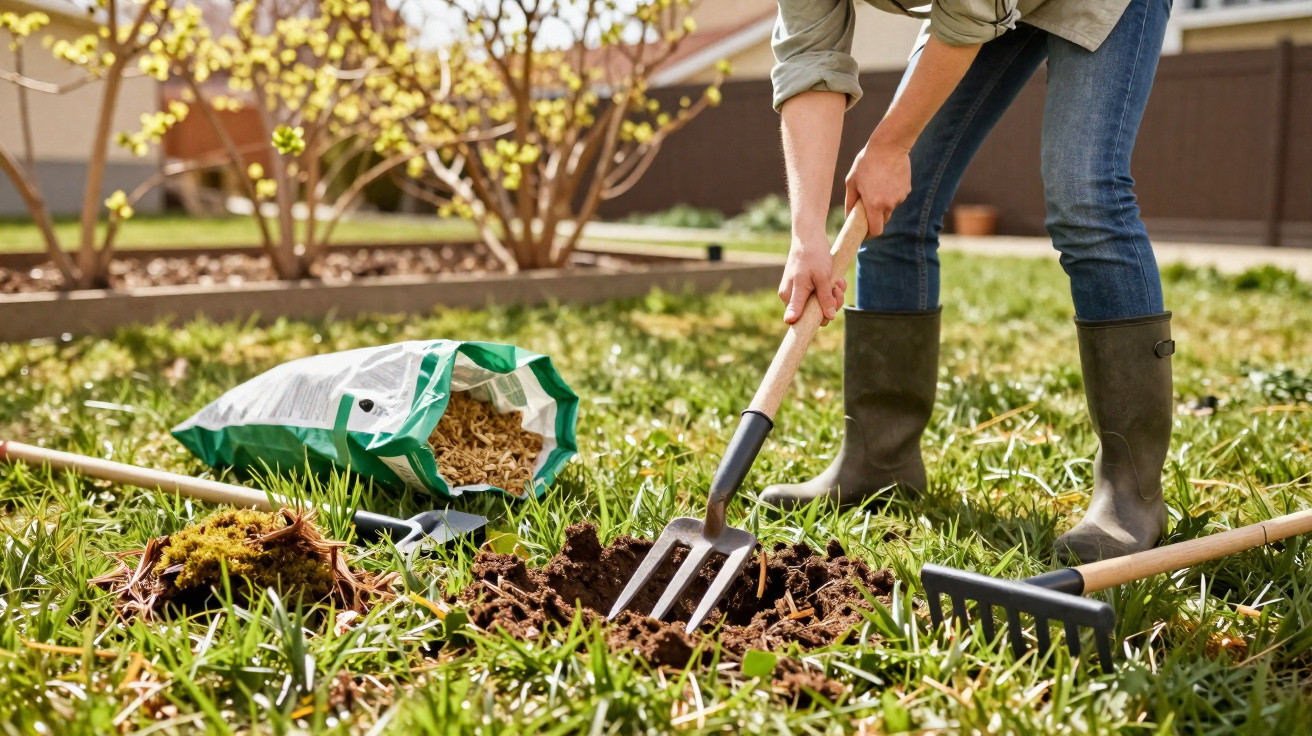
This thin covering improves soil structure, adds nutrients and helps rainwater soak deeper into the ground. It can be spread evenly with the back of a rake or a stiff outdoor brush.
Clay soil? Sand helps prevent waterlogging and compaction
If your garden has heavy, clay-rich soil, you can also apply coarse sand. Especially after scarifying, the sand settles into the small slits and helps stop the soil from becoming hard and compact again so quickly.
Typical signs that the soil is too heavy include:
- Water remains in puddles for a long time after rain
- The soil feels sticky and clings to shoes
- Moss spreads extensively
Why this work pays off in high summer
This whole process has one clear aim: encouraging the roots to grow deeper. Only then can they still reach moisture in lower soil layers on hot days.
“A lawn with a deep root system withstands heat for longer, makes better use of rain and needs considerably less watering.”
Without scarifying, many summer thunderstorms literally bounce off the lawn: water runs away across the surface, and the upper centimetres then dry out even more quickly. Remove the thatch in March and the soil will absorb water like a sponge, storing spring rainfall.
Aerating your lawn properly: maintaining the effect
To prevent all that effort from fading after just a few months, it is worth aerating the lawn regularly from spring through to autumn. This can be done in several ways:
- Pierce small holes with a garden fork
- Roll a nail or spike roller over the area
- Use powered aerators for large gardens
A light pass every 4 to 6 weeks is usually enough. The holes give oxygen and water better access to the roots, relieve compaction and help the turf remain more resilient over the long term.
There is another important consideration in summer: mowing height. Cutting the lawn too short in hot conditions places it under additional stress. Slightly longer blades shade the soil and slow down drying out.
Started too late? You can still save the lawn
Many people only realise in April that something is wrong with their lawn. There is no need to panic, but the approach needs to change slightly.
If the soil is still around 10 to 12 °C and no heatwave is expected, gentle scarifying can often still be carried out. In that case:
- Use a shallower setting, closer to 2 millimetres than 4
- Avoid sensitive patches or work on them carefully
- Overseed bare areas with lawn seed immediately afterwards
It is important not to plan this work immediately before a prolonged dry spell. The newly disturbed turf needs several weeks to recover and close over.
Problem areas: shady lawns and damp corners
Areas that receive a lot of shade or remain permanently damp are particularly difficult. Moss thrives in these conditions. The soil is often too acidic, too compacted or simply receives too little air and light.
Useful measures for these areas include:
- Lightly thinning tree canopies so more sunshine reaches the ground
- Using gentle scarifying passes instead of aggressive treatment
- Aerating regularly with a fork
- Overseeding with specialist shade-tolerant lawn seed that copes with lower light levels
After treating heavily moss-covered areas, water them with a fine spray rather than soaking them. Young seedlings cope much better with gentle spray than with heavy watering.
What many people underestimate: pH, care mistakes and watering habits
One factor is easily overlooked in day-to-day garden care: the soil pH. Grass generally thrives when the value is roughly between 6 and 7. If the soil is significantly more acidic, moss spreads more readily. A simple test from a garden centre will provide clarity. For strongly acidic soil, a targeted application of lime can help raise the level again – ideally in late autumn or early spring.
Summer watering habits are another consideration. Frequent, brief sprinkling trains roots to rely on water in the top few centimetres of soil. Less frequent but more thorough watering is far more beneficial: it gives roots a reason to grow deeper into the ground.
Preparing a scarified lawn properly in March lays the foundation for this. The lawn responds more reliably to weather extremes, heavy rainfall reaches the places where it is needed, and the surface often stays green for much longer while unprepared lawns may already look scorched a quarter of the year earlier.













Comments
No comments yet. Be the first to comment!
Leave a Comment