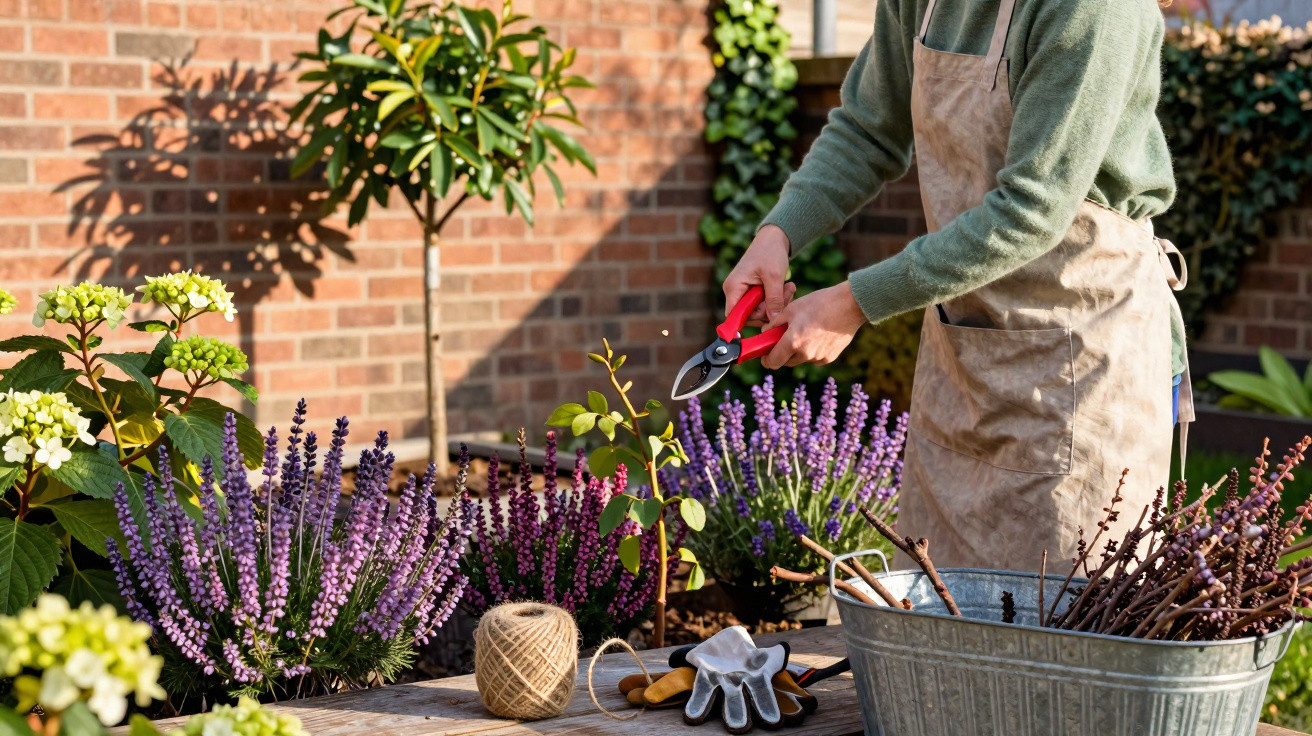
Pruning wisely in March rewards you with an explosion of flowers and fragrance in summer.
The weeks between the first mild days and the final night frosts are among the most important of the year for amateur gardeners. March determines whether roses, hydrangeas, lavender and more will be bursting with vigour in a few months' time – or look rather sparse. With some know-how and sharp secateurs, you can get considerably more from your garden.
Why March pruning is so important for the garden
By March, many woody plants have nearly emerged from winter dormancy but have not yet produced soft new shoots. This is the perfect time to remove old wood and shape plants. Cuts heal quickly, while the fresh buds grow strongly afterwards.
“Pruning correctly in March determines the growth habit, abundance of flowers and health of your plants for the entire season.”
There are pitfalls too: pruning too early can leave plants vulnerable to late frost, while cutting too hard can remove an entire season's flowers from certain species. The plants below are especially well suited to March pruning – provided you follow the right approach.
Shaping specimen plants and espalier trees
Whether positioned by the patio or used as a living privacy screen, espalier limes, plane trees and evergreen cherry laurel trees need a neat shaping prune in March.
Tying in young espalier trees correctly
For newly planted and still-young trees, the priority is training rather than shortening growth:
- Remove only shoots that are excessively long or growing across others.
- Secure the remaining branches firmly to the support frame with tying material, such as soft tree ties.
- Do not cut back the structural shoots intended to fill the future crown area.
Pruning too severely at this stage will later leave you with a patchy framework rather than an evenly green screen.
Two pruning options for established espalier trees
For trees that have been trained on their frame for several years, there are two possible methods:
- Cutting back to old wood: Reduce all young shoots to the older side branches. This produces a clear structure with fewer, but stronger, new shoots.
- Block hedge trimming: Particularly suitable for espalier plane trees or evergreen cherry laurel: trim as you would a hedge, bringing all projecting shoots into an even rectangular shape.
The block form is particularly useful where an espalier tree is serving as a green privacy screen.
Roses: hard pruning for abundant flowers
Roses may appear delicate, but they cope well with a firm March prune – and repay it with substantially more blooms.
Cutting back bed roses and standard roses
Remove all old, brown and exhausted shoots. Leave only a small number of strong main branches. These should be:
- cut back to a few buds above ground level,
- ideally pruned to an outward-facing bud,
- cut on a slight angle so water can run off.
The bush may look almost meagre afterwards, but that is precisely what produces vigorous, freshly grown roses with plenty of buds in summer.
Climbing roses: train rather than cut back hard
Climbing roses should not receive the same drastic treatment. Instead:
- select three to four robust main shoots,
- tie them horizontally or in a fan shape to supports,
- shorten side shoots above the second bud,
- remove dead or dried-out shoots entirely.
Shoots trained horizontally will flower from almost every bud, covering the whole wall with blooms rather than producing only a few flowers at the very top.
Lavender and heather: compact cushions instead of woody bushes
Cut lavender back firmly every year
To prevent lavender becoming bare at the base over time, give it a decisive prune in March. A useful guideline is:
“Cut lavender back to around 15 centimetres above the ground every year – but do not cut into completely old, bare wood.”
This applies to both common lavender and French lavender. Without pruning, it develops long, thin shoots, few flowers and an increasingly bare, woody base.
Tell heather species apart
Heather is easy to care for, but it remains dense and free-flowering only when it is pruned regularly. The distinction matters:
| Heather type | Pruning time | Pruning height |
|---|---|---|
| Summer heather (Calluna) | March | 8–12 cm above the ground |
| Winter heather (Erica) | Summer | likewise just above the old wood |
Always make the cut just above the woody section. If only old, bare shoots are left, the plant will struggle to grow back well.
Hydrangeas: pruning without sacrificing flowers
With hydrangeas, the appropriate pruning method depends greatly on the variety. Cutting back every shoot indiscriminately can result in a season with few flowers.
Mophead and lacecap hydrangeas
These varieties produce flowers from buds formed in the previous year. In March, it is therefore enough to:
- remove only some of the old, thick stems – around one fifth – close to the ground,
- cut off faded flower heads just above the first strong pair of buds,
- avoid cutting lower down, or future flowers will be lost.
This gradually rejuvenates the plant while still ensuring a plentiful display of blooms.
Panicle and smooth hydrangeas
Popular panicle hydrangeas form their buds on new wood, so they can be treated more firmly:
- cut panicle hydrangeas back to around 40 centimetres,
- shorten the smooth variety ‘Annabelle’ to around 10 centimetres.
Strong new shoots with large flower heads will grow from these short stubs in summer.
Special varieties: oakleaf hydrangea and climbing hydrangea
Oakleaf hydrangeas can be lightly shortened around the lower section, roughly 10 to 20 centimetres above ground level. When grown as a specimen, simply thinning out a few older stems is often sufficient.
The climbing hydrangea is a special case: it sets its buds early and flowers from spring into early summer. Prune it only after flowering, otherwise you will remove every bud at once.
Butterfly bush: more pruning means more flowers
The butterfly bush, also known as Buddleja, tolerates an extremely hard cut-back. Left unpruned, it becomes woody and produces plenty of stems but few flowers.
“Large varieties of butterfly bush can be cut back to 30 to 50 centimetres in March, while dwarf varieties can be shortened to around 15 centimetres.”
Make cuts directly above small buds or side shoots. These will produce the new, flower-rich canes in spring.
Keeping climbers and shrubs under control
Keep ivy contained with regular pruning
Ivy grows for almost the whole year; although slower in autumn and winter, it continues steadily. March is a good time to bring its growth under control:
- cut away all loose, trailing shoots,
- remove growth entering gutters, timber cladding or gaps,
- shorten ground runners – ivy can spread by well over one metre a year.
Pruning ivy consistently prevents damage to façades and keeps the area cleanly defined.
Keep St John’s wort compact
St John’s wort shrubs, meaning ornamental forms with yellow flowers, grow densely and quickly. Without pruning, they tend to become bare in the centre. Cutting them back to around 20 centimetres above the ground in March encourages dense, bushy regrowth.
Mediterranean plants: caring for olive trees and oleander correctly
Shape an olive tree in March
Olive trees are found in many front gardens and patio containers, yet they are often pruned too cautiously. March is the time to establish the basic framework:
- remove every dead branch and those growing inwards,
- lightly thin the crown so light reaches the centre,
- shorten overly long shoots until the desired outline is achieved.
Olive trees regrow well. A slightly bolder prune creates a well-defined shape and healthy, sturdy branches.
Oleander: cut back hard, but carefully
Oleander is tougher than many people assume and can tolerate a March cut of up to half the shoot length. Remove frost damage, brown tips and thin, weak shoots completely.
“Important: all parts of oleander are poisonous – wear gloves when pruning and keep plant sap away from children and pets.”
After pruning, place the container somewhere bright and warm, and water it adequately. A sunny position and regular watering encourage new growth and abundant flowering.
Practical advice for safe, clean pruning
A few basic rules will prevent March pruning from becoming a shock for your plants:
- Sharp tools: Blunt secateurs crush shoots, and open wounds are more likely to rot.
- Clean blades: Disinfect them briefly before pruning, particularly after working on diseased plants.
- Never prune in severe frost: Frost-free, dry days are ideal.
- Use the right cutting angle: Always cut slightly diagonally, a few millimetres above a bud.
- Start with old and diseased growth: Dead, damaged or fungus-affected shoots should always be removed completely.
For larger shrubs, it is worth making an annual plan: prune the species listed here in March, then deal with varieties that flower on old wood in summer. That keeps the garden tidy all year without having to wonder each time where to use the secateurs.
Anyone who completes these March jobs consistently will see a very real difference in summer: denser hedges, abundant roses, full hydrangea flower heads and Mediterranean container plants that do more than survive – they shine. Garden pruning takes a few hours, but the reward lasts all season.














Comments
No comments yet. Be the first to comment!
Leave a Comment