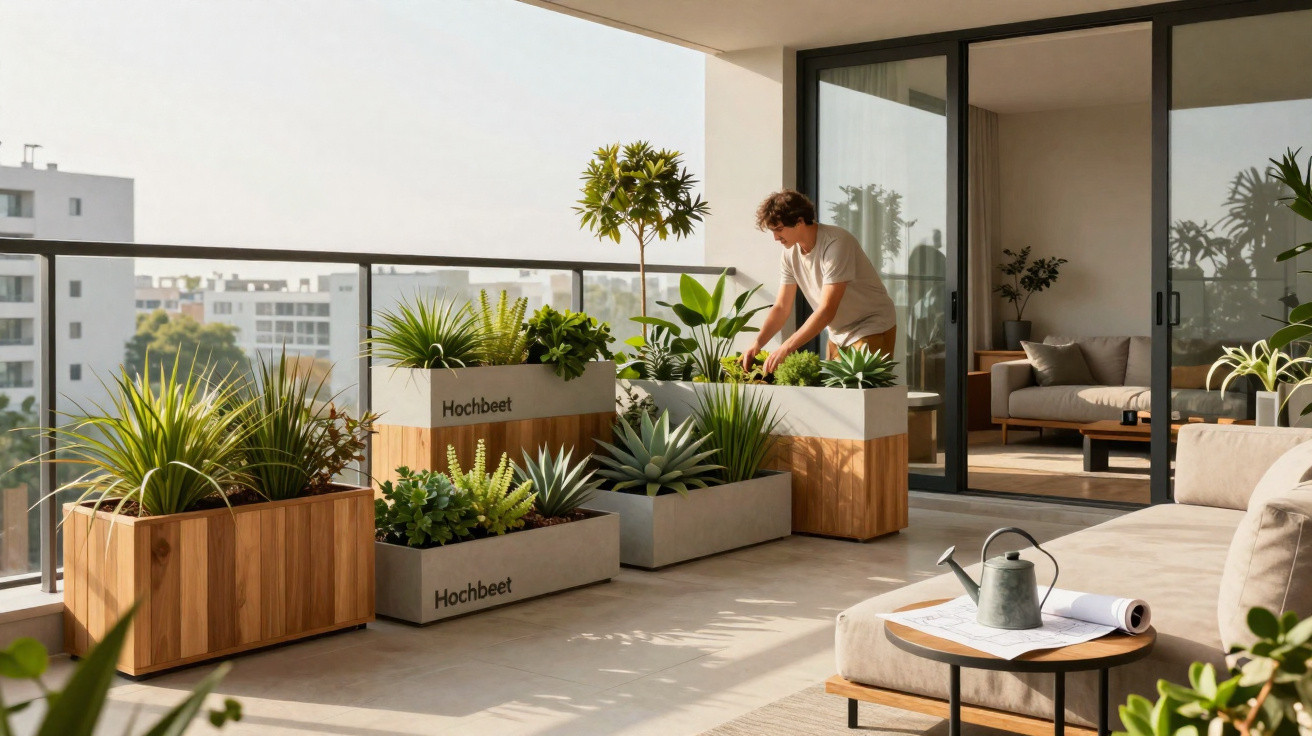
A home trend is arriving that is set to transform even the tiniest balconies completely.
In spring, many city dwellers look at their balcony and see three pots, an unsteady chair and very little ambience. That scene is rapidly disappearing. Outdoor spaces are now being designed like an extra room, with clean lines, structured greenery and a considered interplay of heights and shapes. One approach in particular is gaining ground and is likely to be everywhere in 2026.
From a collection of pots to a designed green space
In the past, people would place a few round pots along the railing, perhaps adding a tub plant in the corner, and consider the balcony finished. A new generation of urban residents sees things differently: outdoor areas should appear as carefully curated as a living room, but with more air and light. Plants are no longer positioned at random; they are deliberately showcased.
The 2026 trend clears the floor and brings greenery up to eye level – structured, minimalist and homely.
At its heart is a clear plant architecture: rather than lots of small pots, elongated planters, shelving systems and modular pieces take centre stage. This creates order and gives even narrow spaces a surprisingly professional look.
Raised beds for balconies: why the floor stays clear
Raised planters as the new standard piece of furniture
The most noticeable change is that planters no longer sit directly on the floor, but on metal or wooden stands. Slim, rectangular containers create long lines that follow the railing or wall. This elevated position offers several benefits.
- More room to move: most of the floor remains free.
- A better overview: plants sit at eye level rather than ankle height.
- Easier care: there is no need to keep bending down for watering or pruning.
- A tidier appearance: fewer scattered pots and a clearer structure.
The result is immediate: the balcony looks larger and more organised. Where pots once got in the way, there is now space for a table, lounge chair or small bench.
A minimalist look that suits the living room
Visually, a combination of black metal and warm wood is dominant. Delicate black frames support simple planters, accompanied by timber decking or wooden trellis panels. This works perfectly with modern sofas, understated garden tables and Scandinavian-inspired textiles.
Plants themselves become a styling tool: grasses, climbing plants and compact shrubs create calm, defined lines. Rather than a colourful “explosion of flowers”, 2026 is more likely to bring tone-on-tone planting schemes with a small number of well-matched species. It has something of interior design about it – just with soil.
Better flow in the outdoor living room
Elevating planters creates a visible layout: a green line here, a seating area there, and a clear space between them for moving around. Instead of navigating around pots, people can move through the balcony as they would in a small room with clearly defined zones.
This effect is especially noticeable on narrow city balconies. A straight, raised strip of planting along one side brings clarity and makes the space seem longer, rather than breaking it up into lots of small islands.
Playing with height: making even a mini balcony feel bigger
More depth through layered planting levels
A key part of the trend is the deliberate use of different heights. Rather than arranging every plant on one level, the result is a kind of “green stage”:
- trailing plants suspended from the ceiling or railing,
- raised planters on stands,
- perhaps one large floor-standing pot as an accent.
This layering adds depth. The eye naturally travels from top to bottom and from back to front. As a result, even a very small balcony can feel remarkably lively and spacious, because the view does not stop at a single row of pots.
Anyone who plays with height can turn a few square metres into a small, living panorama rather than a parade of pots.
Plants as soft room dividers
New balcony layouts also use greenery to separate areas. A row of raised planters can visually divide a dining spot from a lounge corner without creating a solid wall. Plants offer privacy, interrupt neighbours' sightlines and still keep the space open.
This creates several usable zones within just a few square metres: coffee at a small table in the morning, reading on a lounger in the afternoon, and a drink with friends in the evening – each with a subtly different atmosphere influenced solely by the placement of planting sections.
The balcony becomes a fully fledged living space
From storage spot to outdoor lounge
The move towards structured planting forms part of a wider development: many people no longer want an “outdoor storage area”, but a genuine extra room. Whether used as an outdoor home office, yoga corner or reading nook, the balcony should feel like a real living area.
That takes more than plants alone: weatherproof rugs, cushions in muted colours, indirect lighting from LED fairy lights or solar lamps, and a clear style that connects indoors and out. Cleverly incorporated into designed elements, the plants form the green setting for this open-air living room.
Structured greenery as a design element
The crucial detail is that plants are treated like furniture. The question is no longer, “Where is there room for another pot?”, but, “Which green form suits my concept?” A line of grasses can replace the back of a sofa, a tall planter at the railing can form a natural privacy screen, and a small herb tower beside the table can function like a living sideboard.
| Old balcony style | Trend 2026 |
|---|---|
| Many individual pots in different shapes | A small number of elongated planters with clean lines |
| Plants placed directly on the floor | Raised boxes, shelves and hanging elements |
| A colourful mix with no concept | Coordinated colours and a calm choice of plants |
| Balcony used for storage | Balcony as a living and relaxation zone |
Practical tips: how to achieve the trend on your balcony
Start with small steps
Nobody needs to replace their entire outdoor area. One possible way to begin is:
- Review old, isolated pots critically and remove those that do not fit.
- Buy one or two elongated planters on stands.
- Choose one consistent colour palette for containers, such as black or grey.
- Arrange plants by height: tall grasses at the back and lower plants at the front.
Those with limited space can also use hanging pots on the wall or shelves with narrow planting troughs. This creates the desired play of levels without blocking valuable floor space.
Suitable plants for the new balcony design
For the structure to work, choose plants that bring shape and volume. Popular options include:
- ornamental grasses such as fountain grass or feather grass,
- compact miniature shrubs, such as small-growing hydrangeas,
- climbing plants such as clematis or climbing hydrangea on trellises,
- aromatic herbs in elongated planters along the railing.
Anyone who likes colour should add it selectively rather than planting every container differently. One or two shades are enough to make a balcony feel lively without becoming restless.
What matters for planning, care and safety
For all the appeal of this new look, practical considerations are important. Raised planters add weight, so the balcony must be able to support the load. This is particularly worth checking in older buildings, either by consulting the documentation or asking the property manager.
For tenants, the question is often whether drilling into walls or railings is worthwhile. Many manufacturers now offer systems that can be hooked on or clamped in place, then removed without leaving a trace when moving out. This makes the trend appealing to people who do not own their home, too.
The new structure also pays off when watering: because plants are positioned more compactly, irrigation systems with hoses or water-retaining inserts are easier to incorporate. Anyone short on time can combine raised planters with integrated reservoirs – then one thorough watering per week is often sufficient.
The end result is a balcony that no longer feels like an afterthought, but like a carefully designed space, with clean lines, structured greenery and an atmosphere previously found only in interior design magazines. This combination is exactly what makes the 2026 trend so appealing to anyone looking to get the most out of a few square metres.














Comments
No comments yet. Be the first to comment!
Leave a Comment