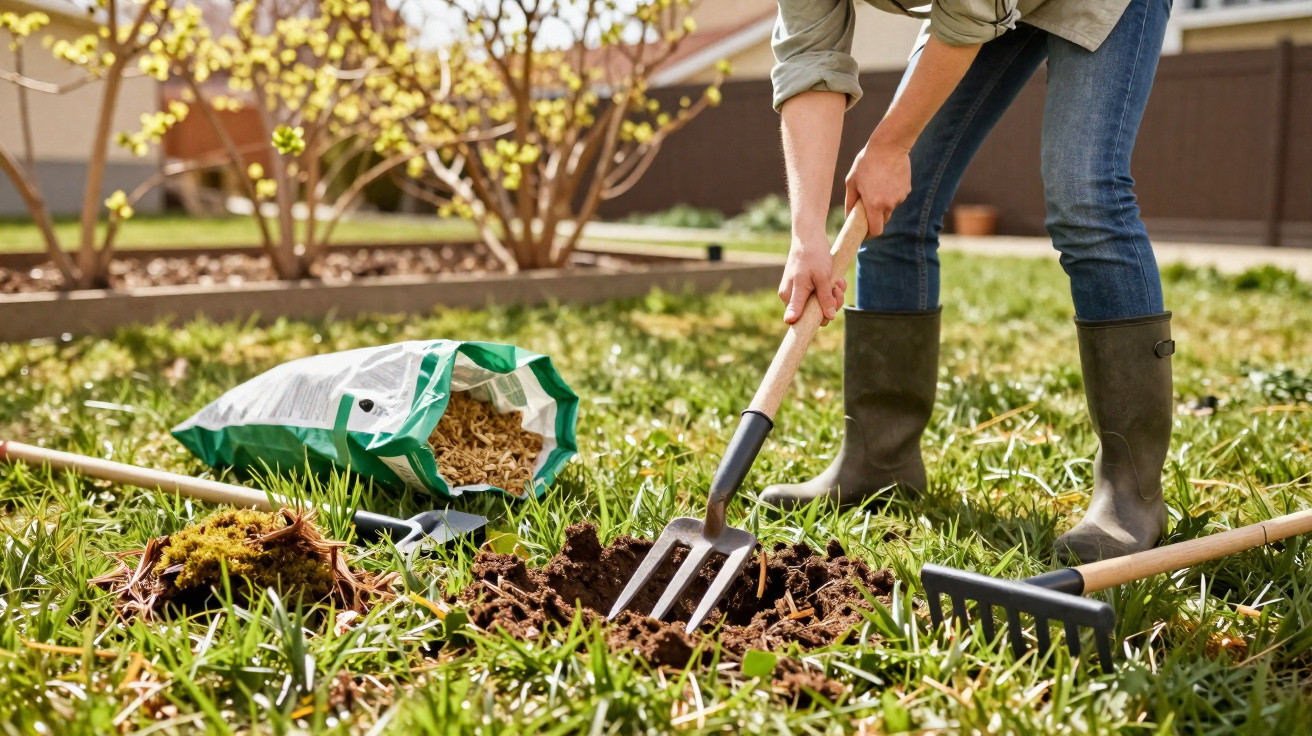
Reaching straight for chemicals in spring means overlooking huge potential. In March, gardening professionals rely on three straightforward tasks that strengthen the soil, reduce moss and encourage the lawn to grow back much thicker. The entire job can be done on a dry afternoon, without specialist equipment or costly products from the DIY shop.
Why lawns are full of moss after winter
After weeks of rain, snow and limited daylight, the soil beneath the lawn changes dramatically. It becomes compacted, wet and heavy – perfect conditions for moss, but poor ones for grass.
In this situation, moss is less an enemy than a warning sign. It will usually indicate that:
- the soil is poorly aerated
- water is pooling rather than draining away
- too little light reaches the area, perhaps because of shade trees
- the lawn has had heavy use, which has compressed the ground
Moss in the lawn is essentially shouting: “The soil is tired and needs air.” Anyone who simply applies moss killer is treating the symptom, not the cause.
This is exactly where the simple March routine comes in: the ground is opened up and improved, then the lawn is cleared of accumulated debris. In response, the grass produces fresh, denser growth.
First task: aerate the lawn properly with a garden fork
Aeration is the most important step. For smaller areas, an ordinary garden fork is sufficient. Dedicated lawn aerators can be useful, but they are not essential.
How to aerate step by step
- Wait for a dry day when the soil is no longer muddy but is not rock hard either.
- Push the tines of the garden fork around 8 to 10 centimetres into the ground.
- Lever the handle gently backwards, so that the soil cracks open slightly rather than being completely turned over.
- Pull out the fork, move forwards by around 15 centimetres and repeat.
Pay particular attention to places where puddles form after rain or where the ground sounds “hard” when tapped with the sole of your foot. These areas are heavily compacted and benefit especially from lots of holes.
The many small holes act like air shafts in the soil. Water can drain downwards and oxygen reaches the roots – exactly what a healthy lawn needs.
Second task: top-dress the soil and fill the holes
Aeration is followed by the real transformation: a thin layer of material that improves structure and supplies nutrients. Gardeners call this “topdressing”; it is often referred to as a soil or lawn-sand dressing.
Suitable mixes for topdressing
A loose, slightly sandy blend is ideal. If possible, combine equal quantities of:
- screened garden soil or topsoil
- coarse sand, such as play sand or washed river sand
- mature, screened compost or well-rotted leaf mould
If one ingredient is unavailable, coarse sand on its own can also work, especially on very heavy clay soils. What matters is that the material stays loose and allows water to pass through freely.
How to spread the mixture correctly
- Scatter the material generously across the aerated lawn.
- Use a stiff outdoor broom or a sturdy rake.
- Brush or rake the mixture in until the holes are filled and only a fine coating remains over the grass surface.
The lawn must not disappear beneath a thick layer. The aim is to fill the cavities and create a light organic “covering” over the soil.
This thin soil dressing improves structure over the long term, supports drainage and acts like a gentle starter feed for the coming spring growth.
Third task: rake out moss and thatch vigorously
Before the lawn enters its first mowing season, it needs one final but crucial treatment: a thorough raking.
Removing moss and lawn thatch
A traditional wire rake or scarifying rake will usually be entirely adequate in a domestic garden. The important thing is being prepared to work with real force.
- Wait until the lawn surface has dried.
- Hold the rake at an angle and pull it across the turf with pressure.
- Work over the area once lengthways and once crossways.
- Collect the moss, dead grass and thatch, then add it to the compost heap.
The result may look alarming at first. Gaps appear between the blades and the lawn can look patchy. This is exactly the intended outcome: light and air can now reach the soil, while young shoots have room to spread.
First lawn cuts: mow higher and be patient
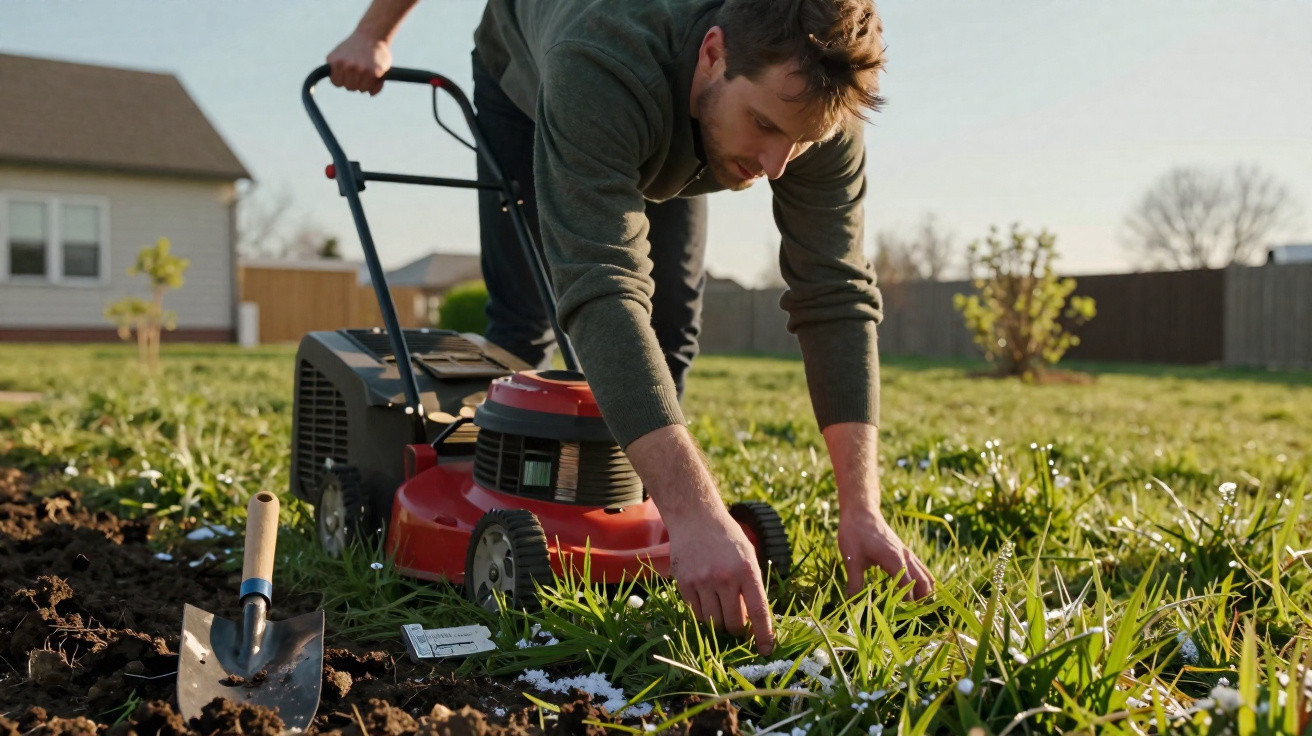
Once aerating, topdressing and raking are complete, it is time for the first cut of the year. This is where many mistakes happen, because the grass is cut too short.
- set the mower to a relatively high setting for the first cut, at around 4–5 centimetres
- wait until later in the year to mow shorter, once the lawn is growing strongly
- if the lawn is very weakened, leave the clippings as a thin layer after the first cut, provided they are not too long
After this first, still cautious cut, the lawn may look rather bare for a week. Those who persevere instead of immediately overseeding or scarifying again are often surprised: the blades send out strong new growth and the area fills in by itself.
A few days of a “bald lawn” in March often produce a visibly denser carpet in April and May.
The right time: late February to mid-March
In mild locations with little frost, this lawn routine can begin as early as late February. In cooler regions, it is worth waiting until the first half of March. The condition of the soil matters more than the date.
Suitable conditions include:
- no prolonged frost, with the soil slightly warmed
- no longer soaking wet, but still easy to penetrate with a spade
- a dry afternoon with no rain
Working on frozen or completely waterlogged ground is more likely to worsen compaction. In those conditions, the garden fork simply presses the soil together more firmly instead of loosening it.
How shade, soil type and use affect the lawn
The three March lawn tips work very well for most areas, but gardens respond differently. Three factors play a key role:
| Factor | Effect on the lawn | Sensible response |
|---|---|---|
| Heavy shade | Grass is weaker, moss is stronger | Consider selectively thinning trees to let in more light; use a shade-tolerant lawn seed mix |
| Heavy clay soil | Water collects and the soil compacts quickly | Aerate regularly and use a higher proportion of sand in the topdressing |
| Intensive use | Foot traffic, compaction and bare patches | Aerate annually, choose hard-wearing sports-lawn mixes and overseed specific spots |
When overseeding is worthwhile – and when it is not
After the March treatment, it soon becomes clear whether the lawn will close over naturally or needs seed. Bare areas larger than the palm of a hand generally benefit from targeted overseeding.
Method:
- lightly rake the soil and remove thatch
- scatter lawn seed thinly, choosing a mix suited to its use: ornamental lawn, family lawn or sports lawn
- cover the seeds with a fine layer of soil or sand
- keep the area evenly moist for two to three weeks
A healthy, well-nourished lawn will often close small gaps itself when it receives enough light, air and nutrients. The three March tasks create ideal starting conditions for this.
Common spring mistakes – and how to avoid them
Many amateur gardeners face the same problems every year, even though they are easy to avoid:
- mowing too early: weakened grass blades lose vigour if they are cut back drastically
- scarifying too deeply: roots are damaged instead of merely removing thatch
- relying only on fertiliser and moss killer: the soil remains compacted and moss soon returns
- working on wet soil: every footstep compacts the ground further
Following the March order of aerating – topdressing – raking – a high first cut automatically avoids most of these pitfalls.
Long-term result: a more resilient lawn system
The three March jobs may seem simple at first glance, but they have a profound effect on the lawn’s small ecosystem. Roots receive more oxygen, soil organisms find better conditions and organic matter turns into humus. All of this means the lawn copes much better with heat, dry spells and periods of rain.
Anyone who repeats this routine every year, alongside moderate feeding, an appropriate mowing height and occasional overseeding, will need radical action or chemicals far less often – and can enjoy a dense, largely moss-free lawn carpet from spring through to autumn.















Comments
No comments yet. Be the first to comment!
Leave a Comment