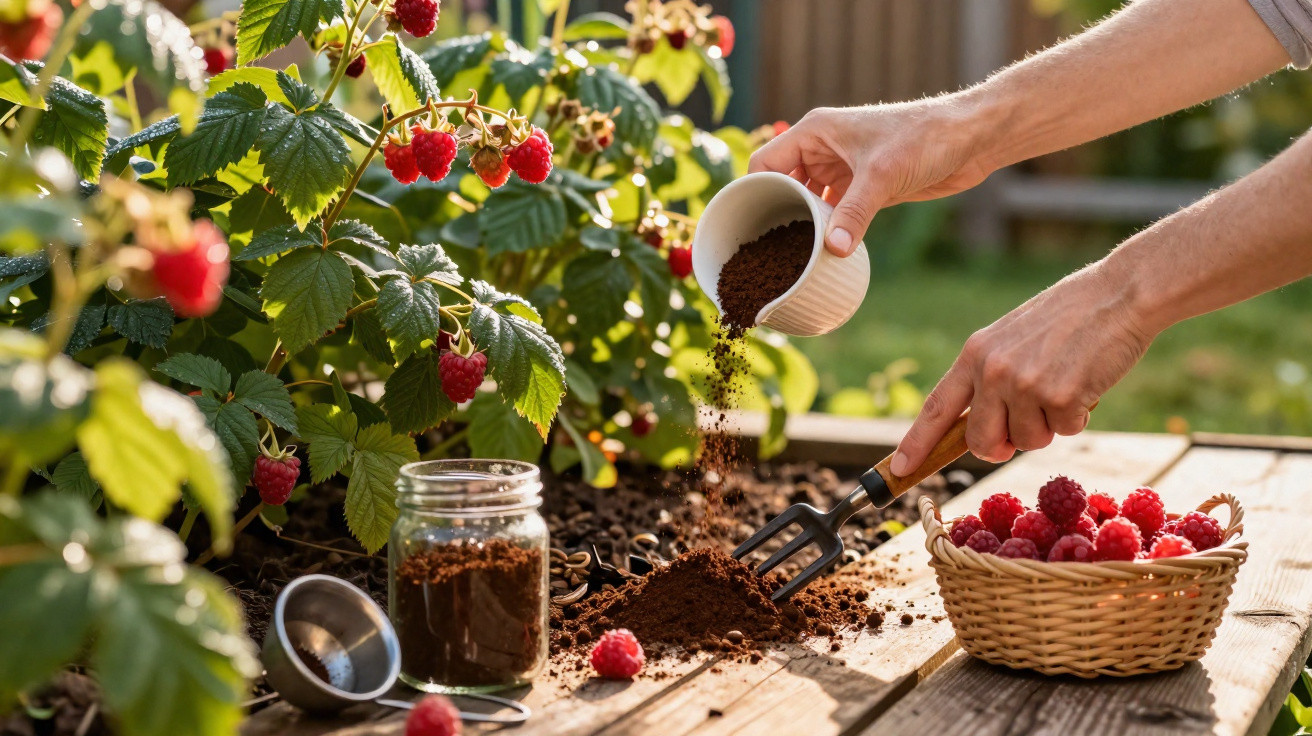
Many people dream in spring of picking plump, deep-red raspberries straight from their own garden or balcony. What is often overlooked is that, without the right technique, the bowl may remain only half full. Something as simple as using a cup of coffee grounds can make a difference – and noticeably increase the harvest.
Why raspberries are particularly sensitive
Raspberries may appear easy to care for: one bush, a few canes, job done. In reality, they are rather demanding plants. They thrive with:
- slightly acidic, humus-rich soil
- good air circulation and loose soil
- roots that stay evenly moist but never waterlogged
- regular nutrient feeds – particularly in spring
Simply planting them and hoping for the best can soon lead to disappointment: spindly shoots, small fruit and only a few berries. This is precisely where the coffee-grounds cup trick comes in.
“When used correctly, the contents of a coffee cup act like a natural boost for raspberry growth and fruit set.”
The “cup method”: how the coffee grounds trick works
The principle is straightforward: instead of going in the bin, one cup of dried coffee grounds is used around the base of raspberry bushes. The timing, quantity and preparation are what matter.
Step 1: Collecting and preparing coffee grounds properly
Fresh, damp coffee grounds clump together, quickly develop mould and may effectively “seal” the soil surface. Use this approach instead:
- Allow the coffee grounds to cool after brewing.
- Spread them in a thin layer on a baking tray or plate.
- Leave them to air-dry for one to two days.
- Store the dry grounds in a jar or bucket.
This keeps them neutral-smelling, easy to distribute and prevents unwanted rot in the beds.
Step 2: The right amount for each bush
For an established raspberry bush, the following is a useful general guide:
- in spring: around one cup (approximately 50–80 g) per plant
- for large, densely planted rows: roughly one handful per linear metre
In this case, less is often more. Applying layers that are too thick can disrupt the nutrient balance and cause the surface to become compacted.
Step 3: Work them in rather than leaving them on top
Coffee grounds should not simply be spread over the soil like mulch; they need to be lightly incorporated:
- Make a shallow, loose groove around the bush, approximately 3–5 cm deep.
- Spread the coffee grounds evenly.
- Cover them with existing soil or mulch, such as bark chippings, leaves or grass.
- Water thoroughly afterwards.
This allows nutrients to reach the area where the roots can absorb them, while ensuring the coffee grounds remain breathable.
What coffee grounds actually do in a raspberry bed
Coffee grounds are far more than kitchen waste. They can offer raspberries several benefits:
| Effect | Benefit for raspberries |
|---|---|
| Nitrogen | Encourages vigorous, dense foliage and healthy shoots. |
| Potassium and trace elements | Supports flower formation, fruit set and resilience. |
| Improved soil structure | Keeps soil looser and improves water retention without making it waterlogged. |
| Slight acidification | Creates conditions that raspberries enjoy. |
| Repellent effect | Helps to keep some slugs and ants at a slight distance. |
“In a raspberry bed, coffee grounds work like a gentle organic fertiliser: they do not overwhelm plants, but make them more robust over the long term.”
The right time: when to use the cup
The cup trick has its strongest effect in spring, as raspberries begin producing new growth. At this stage, fresh canes emerge from the ground and the plant needs nutrients.
One possible plan for the season is:
- Early spring: Loosen the soil, remove old or diseased canes, then work in the first cup of coffee grounds.
- Before flowering: After 4–6 weeks, add a smaller amount mixed with compost.
- Summer: On very light soil, use no more than a small, thin application; otherwise, pause feeding.
Gardeners who nourish their bushes this way each year will usually see a clear result by the second year at the latest: more strong canes, more flowers and more berries.
Common mistakes when using coffee grounds in the garden
Because this trick sounds so easy, it is often overdone. A few pitfalls are simple to avoid:
- Using too much at once: Thick layers can compact the soil and lead to waterlogging.
- Always applying them wet: Damp coffee grounds often go mouldy and develop a musty smell.
- Only scattering them on the surface: They can dry into a hard crust that causes water to run off.
- Using them for only one plant type: Raspberries respond well, but other berry bushes can benefit too.
A restrained dose and mixing coffee grounds with other organic material is a much safer approach.
Combining coffee grounds cleverly: compost, mulch and balcony planters
The cup method can be adapted in several ways. Combining materials is especially worthwhile in small gardens or on balconies.
Coffee grounds in compost
Coffee grounds are excellent for the compost heap. They provide nitrogen and moisture, helping to stimulate decomposition. When added in moderation – ideally mixed with dry materials such as leaves or cardboard – they produce balanced humus that raspberries appreciate.
Feeding raspberries in pots or containers
More and more people grow raspberries on balconies. Nutrient reserves are limited in a container, making the cup of coffee grounds particularly useful:
- Use only very small amounts, with 1–2 tablespoons per application.
- Mix the grounds with fresh soil or compost.
- Water well on a regular basis so that no salt concentration builds up.
Every feed has a stronger effect in pots. Extra care with dosage is essential here.
Risks and limits of the cup trick
As useful as coffee grounds can be, they are not a miracle cure. Anyone dealing with completely exhausted soil, or keeping raspberries in permanent shade, will not achieve a record harvest through coffee grounds alone.
A few factors should be considered:
- Very chalky soils often show only a weak response because the slight acidic effect is buffered.
- In heavily weedy beds, thorough weeding and loosening must come first to gain the full benefit.
- Soil tests can be worthwhile if plants continue to struggle despite good care.
Coffee grounds are a worthwhile addition, but they cannot replace a well-planned site with enough light, suitable soil and regular pruning.
Why the trick is especially popular with home gardeners
One reason is obvious: this “fertiliser” costs nothing, is produced daily in many households anyway and reduces waste. At the same time, it suits the growing preference for natural gardens without relying on harsh chemicals.
Linking a daily coffee routine with a short trip to the bed creates a nutrient cycle almost effortlessly: from the filter to the cup, from the cup to the soil – and, eventually, the extra-sweet raspberries return to the kitchen as a dessert, jam or simply eaten straight from the hand.
Beginners should start small: treat one or two bushes specifically with the cup trick and compare them with untreated plants. After one season, many home gardeners report visibly stronger canes and noticeably fuller bowls at harvest time.












Comments
No comments yet. Be the first to comment!
Leave a Comment