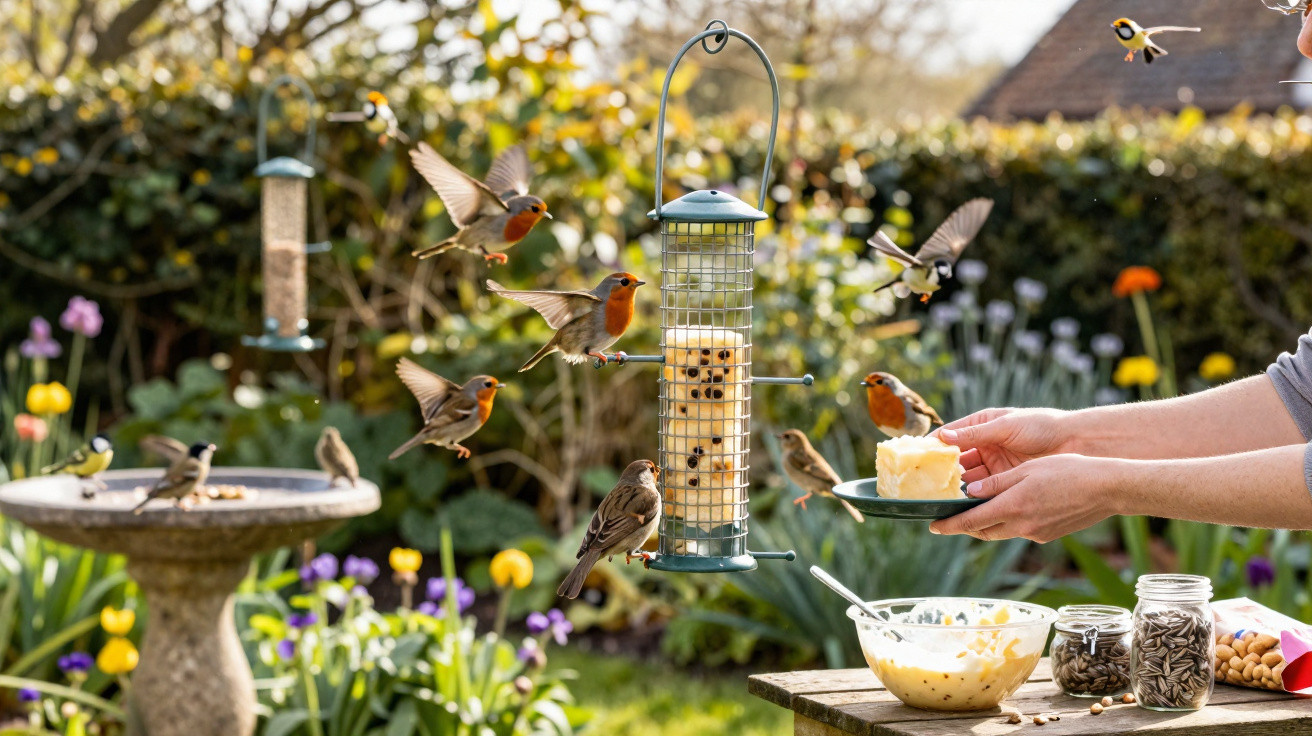
Across the Channel, amateur gardeners take bird feeding remarkably seriously and approach it in a systematic way. Rather than treating it as a pleasant extra, they see it as an essential means of helping birds through severe winters – with visible results. What is already routine there could turn any suburban garden here into a lively bird habitat.
English gardens as bird magnets: what do they do differently?
The key difference is one of attitude. In many parts of England, regular bird feeding is an established part of the gardening calendar. It is planned, adjusted and maintained, rather than involving the occasional scattering of bread scraps when snow falls.
Bird feeding there is less about romantic moments at the kitchen window and more about providing wild birds with targeted energy.
The approach rests on one straightforward fact: winter is a relentless energy race for birds. Every night depletes their reserves, many natural food sources disappear, and insects are almost entirely absent. Survival depends on finding highly calorific food – promptly and every day.
British gardeners respond with three core principles:
- energy-rich food rather than cheap fillers
- clearly organised feeding stations instead of scraps scattered at random
- consistent hygiene to prevent disease
As a result, birds can depend on good-quality food, come to regard the garden as a safe place and stay there instead of appearing only now and then.
Bird-feeding tips from England: fat and protein rather than bread and maize
What is still commonplace in many German gardens – stale bread, cheap supermarket seed mixes and salted peanuts left over from a party – offers birds little value and, in extreme cases, may even harm them.
English gardens instead rely on a small selection of particularly effective foods:
The stars of the bird feeder
- Shelled sunflower hearts: exceptionally rich in oil, easy to eat and suitable for many species. They are ideal if you want to buy just one type of food.
- Fat blocks or fat cakes with insects: these provide fat and animal protein, both of which are scarce in winter.
- Unroasted, unsalted peanuts: concentrated energy for tits, nuthatches and similar birds. Offer them roughly chopped or in dedicated peanut feeders.
- Nyjer seed: tiny seeds with a very high oil content. Goldfinches are particularly fond of them.
The rule of thumb is: the more fat and protein, the better for winter – cheap grain mixes mainly provide bulk rather than energy.
Foods to leave out altogether include:
- Bread of any kind – it has little nutritional value, quickly becomes soggy and may cause digestive problems.
- Low-cost mixes containing lots of wheat or maize – birds reject much of it, while leftovers attract rats and pigeons.
- Salted or seasoned snacks – the salt puts strain on birds’ bodies.
A recipe from British gardens: make your own fat blocks
Rather than purchasing costly ready-made products, many English amateur gardeners simply mix their own fat blocks. It saves money and lets you know exactly what they contain.
Simple method for around 8–10 blocks
- 200 g unsalted vegetable fat (such as coconut fat)
- 150 g shelled sunflower hearts
- 50 g porridge oats
- 50 g unsalted peanuts, roughly chopped
Method:
- Melt the fat slowly over a low heat; do not allow it to boil.
- Remove the pan from the heat and thoroughly stir in the seeds and oats.
- Spoon the mixture into small moulds, such as muffin tins, empty yoghurt pots or silicone moulds.
- Leave it to set for at least two hours in the fridge or outdoors in freezing conditions.
- Hang the blocks using string or secure them in fat-block holders.
You can adapt the mixture according to the species you wish to attract: use more peanuts for tits, add a few chopped raisins for blackbirds, or include extra porridge oats for sparrows.
How English gardeners set up feeding stations
The positioning and presentation of food matters at least as much as the food itself. In England, feed is rarely scattered without thought; it is placed with a clear purpose.
Several levels, less stress
- Hanging feeders for tits, nuthatches and sparrows – ideally positioned 2 to 3 metres high, with a clear view of nearby shrubs for escape cover.
- Ground trays for robins, blackbirds and thrushes – set slightly above ground level so cats cannot creep up unnoticed.
- Roofed bird tables for mixes affected by wet weather – this keeps seed dry for longer.
- Space between feeding areas so dominant species cannot monopolise everything.
Several smaller feeding stations reduce stress and aggression – and allow you to see more species in the garden.
Portion control is another typically British feature: it is better to offer smaller quantities each day than one enormous load at the weekend. During cold spells, amounts commonly range from 50 to 150 grams per feeder per day. Anything barely touched after two or three hours should be reduced the following day.
Water is another highly effective detail that many people overlook. A simple saucer, kept ice-free during prolonged frost with a heated plate or by frequent thawing with hot water, makes your garden twice as appealing to birds.
Hygiene: the overlooked lesson from England
While bird feeders here are often left untouched for months, many English gardeners use a brush regularly. The reason is simple: wherever large numbers of birds gather closely together, germs spread quickly.
- Clean feeders every one to two weeks with hot water and a splash of vinegar.
- Remove old food and wet seed promptly, before mould develops.
- Regularly sweep away leaves, droppings and discarded husks beneath feeding stations.
Anyone who feeds birds for several consecutive years can benefit from stable populations – but only if disease does not spread. This shows why the British combination of plentiful food and strict cleanliness works so well in the long term.
The right time: when feeding is especially worthwhile
In England, serious supplementary feeding generally begins in late autumn and continues into spring. The most critical period runs from January to March, when many birds’ reserves have been exhausted but insects have not yet returned.
February in particular can be important: although the days are getting longer, nights remain cold. Energy-rich feeding stations can help birds enter the breeding season in good physical condition. Providing high-fat food consistently at this point supports birds during a period when just a few weeks can determine whether breeding populations are strong or weakened.
How to use British bird-feeding tips in your own garden
There is no need to redesign your entire garden. Even three small changes can have noticeable effects:
- Replace bread and cheap seed mixes with one high-quality type of sunflower heart.
- Create one or two feeding stations at different heights instead of putting everything on a single hook.
- Put a fixed “cleaning date” in your calendar, such as every second Sunday.
Many German gardens are also surprisingly tidy: there are no leaves, no leftover berries and hardly any dead wood. Leaving one area wilder, keeping perennials standing through winter and not cutting back faded seed heads immediately provides additional natural food and shelter. This is the perfect complement to feeding.
Risks to keep in mind
Intensive feeding affects the natural balance. This can be beneficial, but it also carries certain risks:
- Excessively large piles of food attract rats.
- A heavy concentration of birds at one location increases the risk of disease.
- Unsuitable food can provide poor nutrition for young birds in spring if parents rely solely on the feeder.
A moderate approach therefore makes sense: high-quality food, spread between several places and combined with natural garden features. In late spring, food quantities can gradually be reduced as insects become plentiful again.
Practical additions: small extras with a major effect
Anyone wishing to go a step further can combine English feeding strategies with other measures:
- plant native berry-bearing shrubs, such as rowan or dogwood
- put up nest boxes in different sizes
- leave a small “wild area” where leaves, branches and seeds can remain
Over time, this creates a stable mini-ecosystem that is less vulnerable to individual harsh winters. The feeding station then becomes not an artificial crutch, but an important element of a diverse, living garden – much like in many parts of England, where birdsong in winter has long been an established sound of the garden.












Comments
No comments yet. Be the first to comment!
Leave a Comment