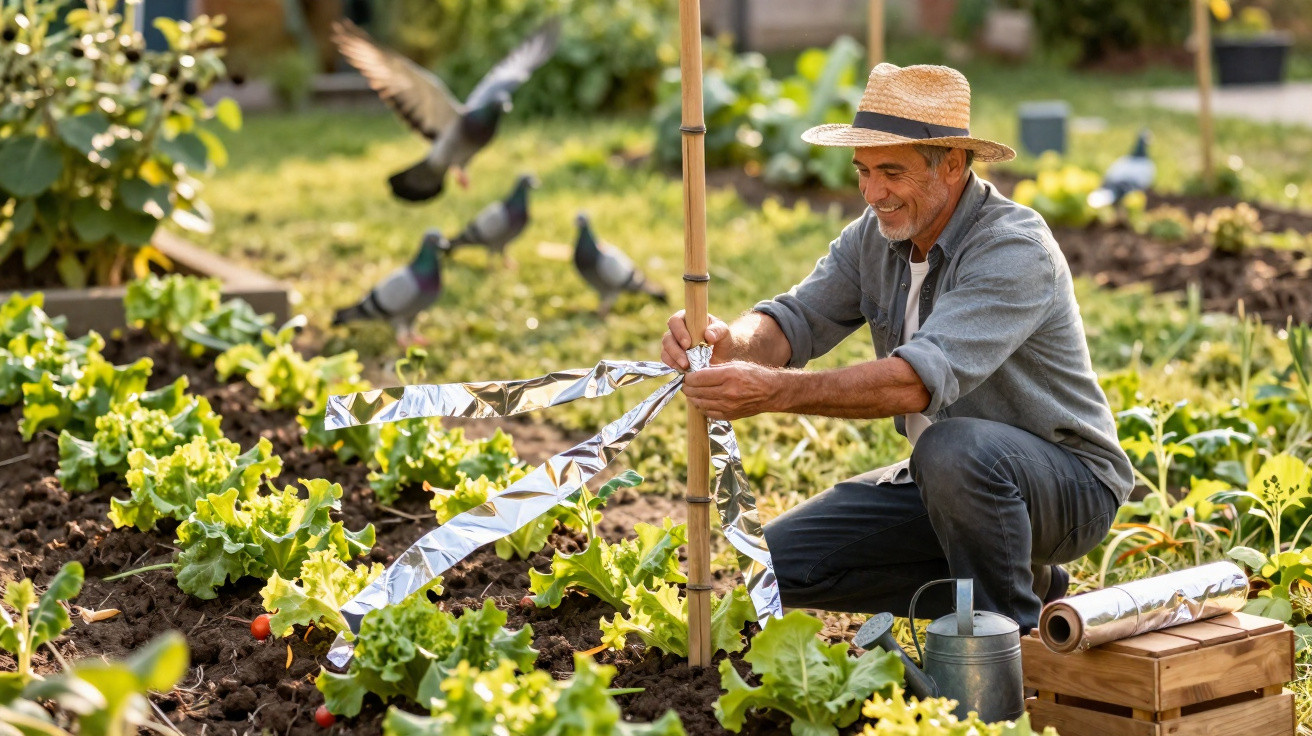
Anyone preparing beds, planting lettuce or cleaning the patio in spring soon notices that pigeons are particularly fond of this time of year. They look for food, land on every available surface and leave behind traces that are not only unpleasant but can also cause damage. A gardening expert now recommends a straightforward kitchen item that deters pigeons without harming them: ordinary aluminium foil.
Why pigeons suddenly appear everywhere in the garden during spring
The arrival of the first mild days substantially increases pigeons’ need for food. They are in their breeding period, fly more often, use up more energy and constantly search for grain, young leaves and sources of water. Gardens with newly sown areas are therefore much like a buffet to them.
Typical attractions include:
- freshly loosened beds in the vegetable garden
- lettuce plants and young seedlings
- kerbs, wall ledges and window sills
- railings on balconies and patios
- garden benches, pergolas and canopies
Pigeons are creatures of habit. Once they find a place where they can feed or rest undisturbed, they return to it repeatedly. That can quickly become an issue in the garden.
The underestimated risks of pigeon droppings
The obvious damage – pecked lettuce, trampled seedlings and patio boards covered in droppings – tells only half the story. Experts also warn about the chemical effects of pigeon droppings.
“Pigeon droppings are highly acidic. They attack paint, metal and concrete and can cause visible damage over time.”
Rust can develop much faster on metal parts of garden furniture, railings or plant supports. Wooden surfaces soon become stained and progressively more difficult to clean. Tiles and stone slabs can acquire dull, permanent discolouration.
There is also a hygiene concern: where substantial amounts of droppings regularly accumulate, other pests can thrive as well. Rats and mice make use of food remnants and soft nesting material, while bacteria and fungi may spread. Anyone with children running barefoot through the garden will want to avoid that risk.
Why aluminium foil unsettles pigeons
Many established solutions, such as spikes, nets or wires, can seem harsh, cost a lot or spoil the appearance of an area. Instead, one gardening expert relies on a simple household product: aluminium foil. Its reflective surface and rustling sound make pigeons uncomfortable in several ways.
Bright light and sudden movement act as a deterrent
If you scrunch aluminium foil into small balls and suspend them from string, they sway and spin in the breeze. When sunlight hits their surface, they produce flash-like reflections. To pigeons, this appears as continual movement within their field of vision – a possible warning sign.
“The fluttering light reflections and irregular swaying give pigeons the impression of danger – so they prefer to find a quieter spot.”
The benefit is that the birds are not injured; they are simply unsettled. The garden feels too restless and insecure for them.
Aluminium foil also disrupts pigeons on the ground
As well as using suspended strips or balls, aluminium foil can be placed where pigeons look for food: in the bed itself. Experts suggest two options:
- lay thin strips of aluminium foil around lettuce plants or strawberries
- work narrow bands into the soil just below the surface
Pigeons dislike the sensation of foil beneath their beaks and feet. The surface feels unusually smooth and slippery, while the noises made when they peck are unsettling. Usually, only a few attempts are needed before they begin avoiding the spot.
How to position aluminium foil correctly in the garden
For the aluminium foil method to work, placement and a little creativity matter. The aim is to make as many of the pigeons’ favourite places as possible unattractive.
Suitable locations for hanging aluminium foil
The following spots work particularly well:
- Window sills and wall edges: attach balls or strips to short lengths of string
- Balcony and patio railings: cut aluminium foil into narrow ribbons and tie them on loosely
- Fruit trees and shrubs: hang foil balls through the branches like fairy lights
- Pergolas or climbing frames: secure shiny strips so that they can swing freely in the wind
The more irregularly the foil moves, the stronger the effect. In high winds, keep the strings short enough to prevent anything from whipping around or becoming tangled.
Protecting vegetable beds and young plants
Every lettuce head counts in the vegetable garden. Newly planted young plants are especially vulnerable. Here, a combination of measures is suitable:
- along the bed edge: use two to three hanging strips per metre
- within the bed: place short, narrow pieces of foil flat on the soil
- for delicate young plants: shape small aluminium collars around the stem
Those using raised beds can also fasten foil strips directly to the edging, such as wooden boards or metal edges. This creates a kind of shiny border that pigeons are reluctant to fly over.
How long does the aluminium foil trick work, and what should gardeners consider?
Over time, pigeons become accustomed to fixed features. That is why something in the garden should be changed regularly. Anyone using aluminium foil should ideally move the strips slightly every few days or add further elements.
Useful small routines include:
- checking every two to three days for places where pigeons have started appearing
- moving foil strips or balls when needed
- replacing crumpled or heavily soiled foil
For a more sustainable approach, collect the used foil at the end of the season and recycle it. This keeps the garden tidy and prevents shiny remnants from ending up in the soil or hedges.
Combining aluminium foil with other gentle methods
Aluminium foil is most effective when it forms part of a broader set of measures. Many gardeners also use:
- moving features, such as simple wind spinners or fluttering ribbons
- natural barriers, including fine-mesh vegetable-protection nets over particularly valuable beds
- changed food sources, by avoiding open feeding areas nearby
- targeted planting: dense ground cover that leaves scarcely any open landing spaces
The key is not to offer pigeons a calm, sheltered place. The more unpredictable the light, sounds and movement seem in the garden, the more likely they are to look for another territory.
Practical considerations for animal welfare and neighbours
Aluminium foil is among the more humane ways of dealing with pigeons. It does not injure the birds; it merely discourages them. Even so, gardeners should bear a few points in mind:
- do not create traps in which animals could become entangled
- do not leave sharp edges that could cut birds
- on balconies, ensure that nothing can be blown down by the wind
Anyone living in a densely built-up area should ideally have a brief word with neighbours. Constantly clattering foil or strongly reflective surfaces may be considered disruptive. Often, it is enough to keep the strips a little shorter or use them only in selected areas.
When using aluminium foil is especially worthwhile
For many allotment gardeners, the method is particularly worthwhile during two stages of the gardening year: early spring, when the first sowings are germinating, and the ripening period for strawberries, cherries and other fruit. During these weeks, a single flock of pigeons can ruin an entire harvest.
Aluminium foil is a simple temporary solution, especially for people who prefer not to use chemical deterrents. It is inexpensive, can be used at short notice and removed just as quickly. Positioned properly, it gives the garden the peace it needs – and gardeners a better chance of crisp lettuce and clean patio slabs.












Comments
No comments yet. Be the first to comment!
Leave a Comment