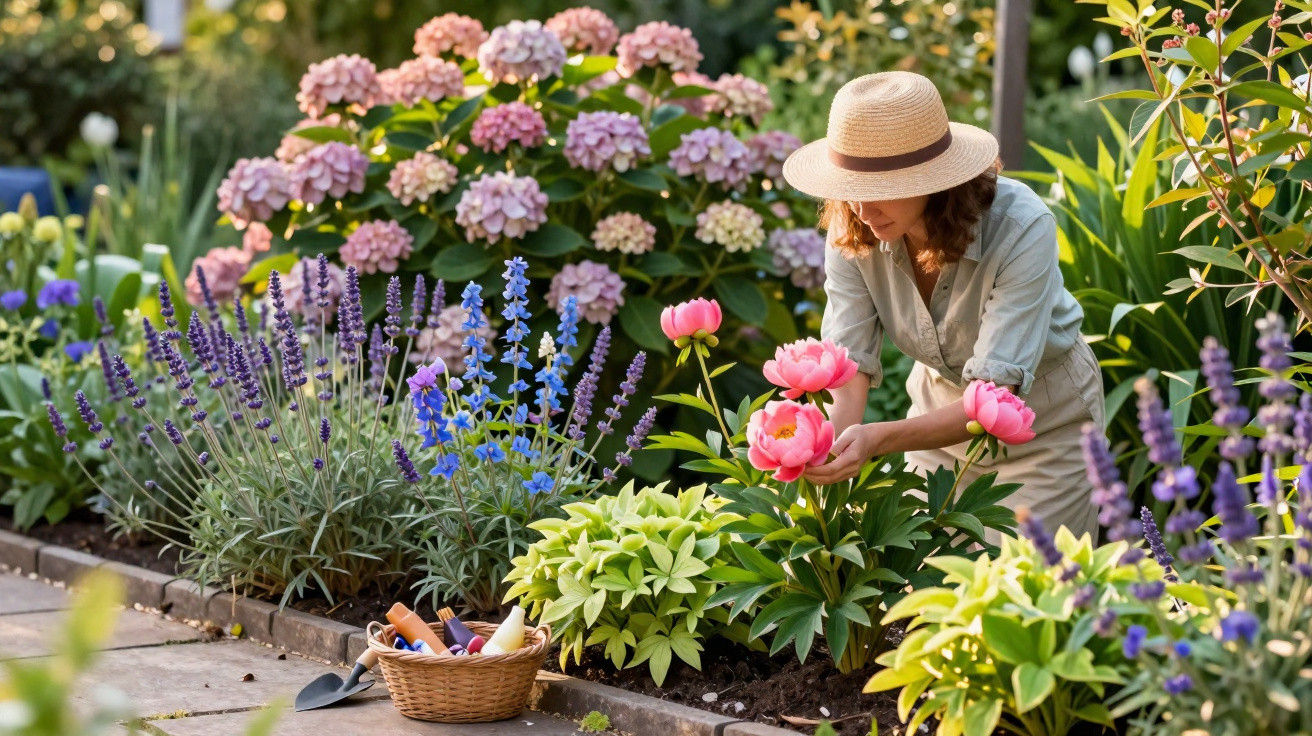
Many amateur gardeners plant peonies as standalone specimens in their borders, then wonder why the overall effect still feels rather tame. The secret rarely lies in the variety itself; it is almost always the design around it that matters. Position, spacing and, above all, carefully selected companion plants determine whether there are simply a few stems in a bed – or whether the garden resembles a painted bouquet throughout spring and summer.
What peonies really need before companion plants move in
Peonies are considered hardy, but they are quite particular about their basic growing conditions. Ignore these essentials and a large part of their flowering potential will be lost.
- Full or almost full sun (at least five to six hours a day)
- Deep, nutrient-rich, well-drained soil
- No persistent waterlogging during winter
- Enough air circulation between perennials so foliage dries quickly after rain
When perennials are planted too closely together, moisture remains on the leaves for too long. This creates ideal conditions for fungal diseases such as grey mould; in the worst case, an entire season's flowering can be lost. Competing roots, for instance those of vigorous shrubs, can also weaken plants over the long term.
“The more freely a peony can breathe, the more abundant and healthy its flowering will be.”
Before adding new neighbours to the bed, it is worth making a quick assessment: do the surrounding plants need the same light and soil conditions? Will they avoid crowding the peonies either above or below ground? If the answer to both questions is yes, the foundations are right.
Ideal partners: lady's mantle, bellflowers and hydrangeas
Lady's mantle provides a soft stage for large flowers
Lady's mantle (Alchemilla) is a genuine insider tip. This perennial forms a dense, low carpet of rounded, gently pleated leaves. In early summer, countless yellow-green clouds of flowers float above it, resembling a delicate mist.
This contrast is precisely what makes peonies stand out. The calm green surface highlights their lavish, often pastel-coloured flower heads. In a border, the effect is almost like a professionally arranged bouquet – and the pairing works equally well in a vase.
Bellflowers add lightness
Many low-growing and medium-height bellflower species are excellent companions for peonies. They carry their blooms in upright or trailing sprays while remaining relatively slender. This means:
- They do not take light or space away from the peonies.
- Their delicate flowers introduce movement and lightness between the substantial flower heads.
- They extend the border's flowering season well into summer.
There is one minor drawback: some bellflowers are more attractive to pests. Anyone planting them near peonies should therefore consider creating a “protective belt” of fragrant, repellent plants – more on that shortly.
Hydrangeas in the background create structure and depth
Anyone placing peonies in larger borders or in front of a house wall needs a clearly defined backdrop. This is where hydrangeas excel. Their large rounded flower heads or flat lacecap flowers echo the rounded forms of peony blooms, yet they are better suited to the rear of the border.
Spacing is important: if hydrangeas are positioned directly in front of or above the peonies, they deprive them of light and air. Leaving some distance creates an attractive layered arrangement: lady's mantle or low perennials at the front, peonies in the middle, and hydrangeas behind them as a calm, flower-filled backdrop.
“A layered border with clear differences in height makes peonies appear as though they are standing on a stage.”
How to stagger flowering times and colours effectively
Peonies shine mainly from late April to early June, depending on the region and variety. However, with well-chosen companions, the border can remain appealing for almost the entire season.
Bulbs and perennials that fill the gaps
Combinations in which plants flower before or after the peonies are particularly useful:
- Bearded iris: usually begin shortly before the peonies and provide strong colour accents.
- Alliums: produce striking globe-shaped flower heads that complement the rounded blooms of peonies beautifully.
- Daylilies (Hemerocallis): take over as peonies gradually fade and bring colour to the border until high summer.
This creates an almost seamless progression of colour, without obvious empty patches. The peony remains the leading feature, but it is never alone on the stage.
Lavender as a fragrant protective shield around peonies
Lavender is another star of the peony border. It thrives in sun and free-draining soil, exactly the conditions peonies favour. At the same time, it brings a strong fragrance that keeps many unwanted visitors at bay.
“Lavender acts like a natural security service in a perennial border: it smells pleasant to people, but bothers numerous pests.”
Typical visitors that lavender does not appeal to include:
- Mosquitoes
- Flies
- Fleas and moths
- Deer and other wildlife that feed on plants in rural gardens
Planting lavender along the edge of the border creates a fragrant barrier. Its colour – from cool violet to pale lilac – works especially well with white, pink or red peonies. Combined with alliums, it creates not only a protective frame but also one with strong visual interest.
Which plants should be kept at a distance
Although many combinations work harmoniously, some neighbouring plants are more likely to harm peonies than help them.
| Problematic plant | Reason |
|---|---|
| Very tall ornamental grasses | They block light, crowd the perennials and encourage dampness in the foliage. |
| Species for permanently wet soils | They keep the area too moist, allowing fungal diseases to spread more easily. |
| Shallow-rooted plants with dense root mats | They compete heavily for water and nutrients. |
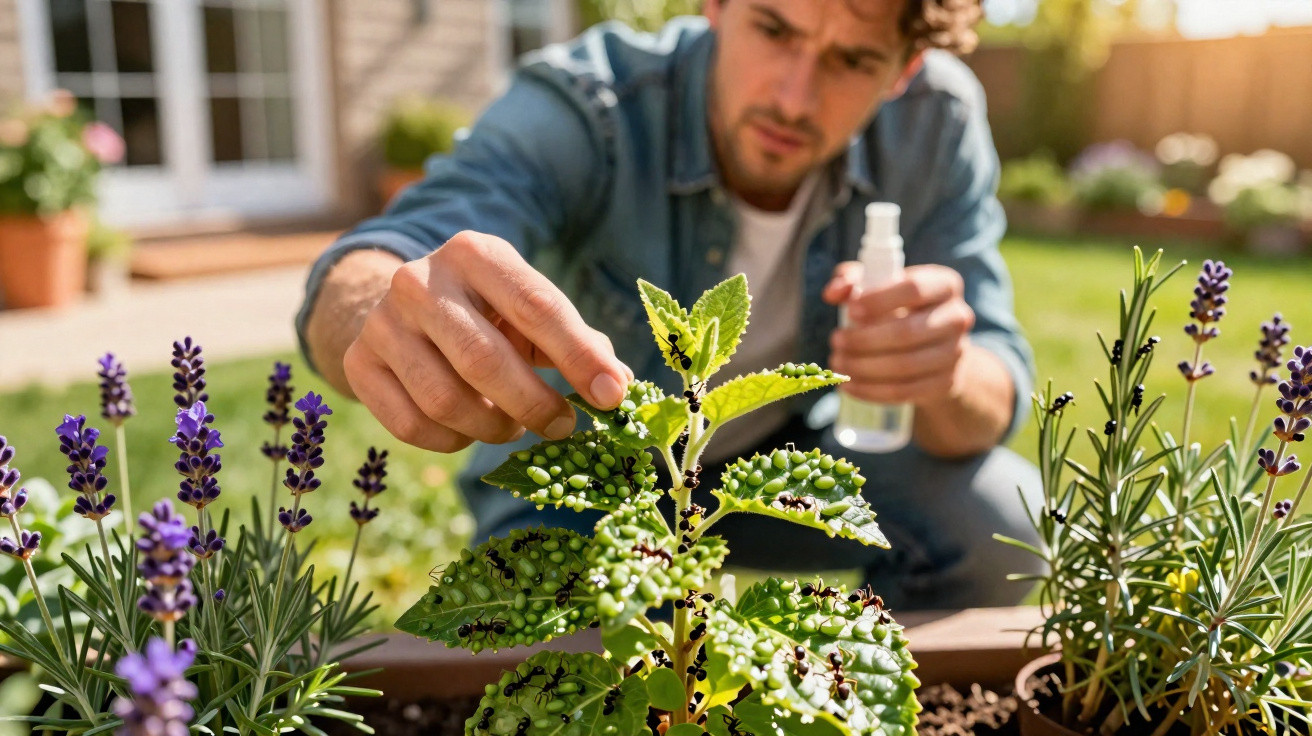
If you do not want to forgo bellflowers or other slightly more vulnerable perennials with drooping flowers, you can still plant them – but pair them with lavender or alliums, which deter pests. This keeps the combination decorative without allowing aphids and similar pests to spread unchecked.
Practical tips for planting the perfect garden border
Before putting spade to soil, a simple plan is helpful. Make a rough sketch of the bed and mark out:
- The peonies' positions as central focal points
- Low companion perennials, such as lady's mantle, in the foreground
- Medium-height perennials, such as bellflowers, between the peonies while leaving sufficient space
- Hydrangeas or other taller shrubs in the background
- A lavender or allium edge as a protective belt
It is important to allow for the eventual mature size of every plant. A young hydrangea may look harmless at planting time, yet within a few years it can shade out peonies. It is better to plan for a little more air from the start than to have to correct the situation with secateurs later.
Why this combination also offers long-term benefits
Thoughtfully planned plant neighbours do more than create attractive photographs for the next gardening season; they also improve the border's microclimate over time. Different rooting depths make better use of the soil, foliage casts light shade during hot periods and therefore helps prevent scorching, while fragrant plants deter pests.
Planning your plant selection in this way reduces the need for sprays and emergency measures. Peonies repay the effort with stable, increasingly lush clumps that flower more impressively year after year. This makes an enormous difference in smaller gardens in particular: rather than a row of individual plants, the result is a connected display that remains lively from spring into summer.
One final point, which is often underestimated: peonies do not like being moved repeatedly. If you plan them alongside suitable partners from the outset, there will be no need to transplant them later. The perennials can then establish themselves undisturbed and develop their full splendour – framed by neighbours that do not crowd them, but instead emphasise their strengths.












Comments
No comments yet. Be the first to comment!
Leave a Comment