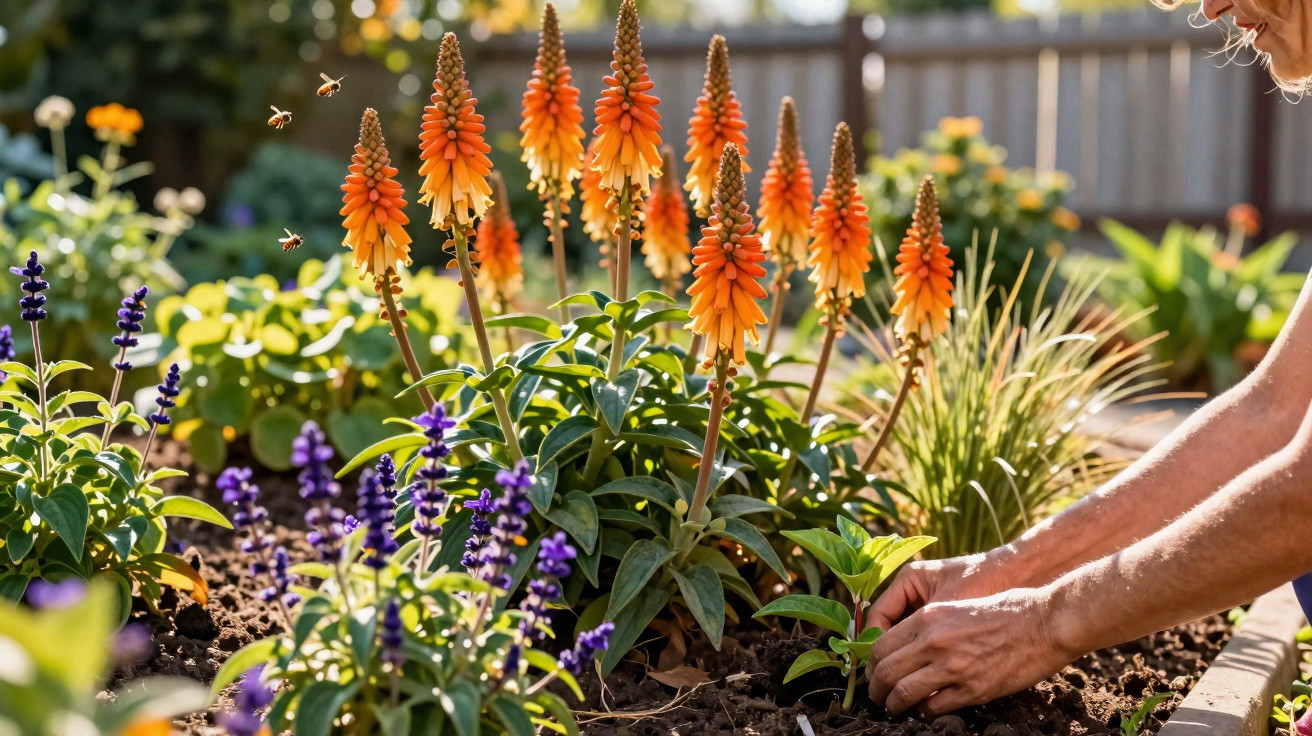
Many gardens look pleasant in high summer yet rather interchangeable: a little lavender, a few roses and plenty of green in between. This is where a plant that is still virtually unknown in central Europe, but transforms the whole look, comes in: Leonotis leonurus, also known as lion’s ear. Plant it now and, from summer onwards, you can enjoy a border that looks as though it has been designed by a landscape architect.
A firework display on stilts: what makes Leonotis so special
Originally from South Africa, Leonotis behaves in the garden like a confident leading lady. There is nothing retiring about this perennial. It grows upright and rigidly vertical, reaching around 1.80 metres, on sturdy erect stems.
Its foliage is narrow and elongated, with an almost graphic appearance. The real wow factor, however, comes from the flowers: small velvety tubular blooms are arranged in tiers around the stem in vivid orange. Each of these “crowns” resembles a glowing ring.
“Visually, Leonotis resembles a burning candelabrum – except that it is a living plant.”
During summer, the flower whorls gradually open from the bottom upwards. This creates a vertical firework effect that instantly catches the eye in a border. It gives the garden a structure otherwise achieved only with expensive designer planting schemes.
A magnet for bees, butterflies and more
Its striking appearance is not only appreciated by the gardener. Leonotis is a true insect buffet. Its tubular flowers provide abundant nectar, attracting bees, bumblebees and butterflies throughout the summer.
In warmer parts of the world, even hummingbirds are drawn to this plant; here, butterflies and solitary bees take on that role. Anyone seeking a lively, buzzing garden will gain a powerful pollinator magnet by planting Leonotis in their borders.
The perfect garden position: sun, sun, sun
Leonotis has essentially one uncompromising requirement: as much light as possible. Without a position in full sun, flowering will be sparse and the plant will quickly lose its appeal.
“At least six hours of direct sunlight a day is essential; more is even better.”
An ideal spot is:
- in an open, south-facing perennial border;
- against a warm house wall or garden wall;
- in a gravel or prairie-style border;
- in a large container on a sunny terrace.
The soil can be nutrient-rich, but above all it must drain water quickly. Leonotis copes far less well with waterlogging than it does with brief dry spells.
Soil, water and frost – just how undemanding is it?
Compared with many traditional flowering perennials, Leonotis proves remarkably tough:
| Aspect | Leonotis requirement |
|---|---|
| Light | Full sun, at least 6 hours of direct sunlight |
| Soil | Loose, humus-rich and well-drained; slightly dry is preferable to wet |
| Water | Moderate requirement; tolerates drought once established |
| Frost | Down to around -8 °C; safer with good winter protection |
| Longevity | Perennial, provided winters are not too wet or severe |
In areas with mild winters, Leonotis can be planted directly in the border. Where temperatures regularly fall well below -8 °C, or where the soil is particularly heavy, growing it in a container is a sensible option. In late autumn, simply move the pot against a sheltered house wall or place it in a frost-free garage.
The five most important planting steps
Planting Leonotis in spring lays the foundation for a spectacular summer display. These five points determine whether the plant reaches its full potential:
Choose an exceptionally sunny location
The more open and bright the site, the more vigorously this perennial will grow and the more intensely it will flower.Ensure the soil is free-draining
Improve heavy soil with sand or fine grit. During winter, water must not collect around the roots.Incorporate organic material
A layer of well-rotted compost or good-quality planting compost in the planting hole provides a strong start and a long flowering period.Water moderately after planting
Keep the soil evenly moist for the first few weeks, then gradually extend the intervals between watering. The plant tolerates short periods of drought well.Protect the base in winter
In the border, apply a thick mulch of leaves or bark chippings. For containers, wrap the pot and root area, or overwinter it somewhere frost-free.
Which plants work particularly well with Leonotis
The orange “firebrand” look positively calls for exciting companion planting. This perennial is especially valuable in contemporary borders with an open, natural character.
Leonotis looks particularly harmonious alongside:
- airy ornamental grasses, such as feather grass and fountain grass;
- blue or purple varieties of sage;
- bronze cannas and dark-leaved dahlias;
- other late-summer bloomers such as Echinacea, Rudbeckia or Verbena.
“Leonotis brings height and colour without visually overwhelming other perennials – it adds accents rather than dominating everything.”
In a naturalistic garden, this creates a scene reminiscent of a South African savannah: grasses sway in the wind, with flaming flower spikes rising between them. In urban front gardens, the perennial delivers a modern, almost architectural feel – a clear counterpoint to box, thuja and containers of geraniums.
Practical example: a 3-plant border with a big impact
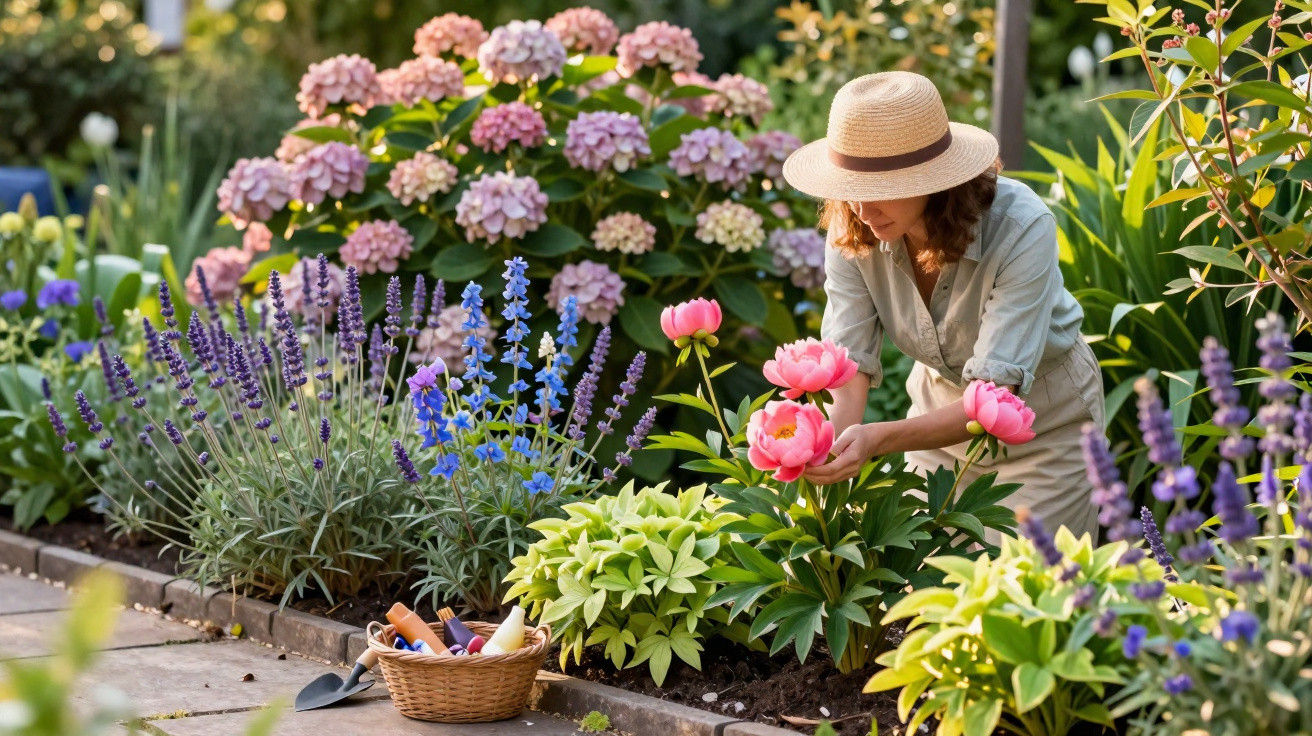
You do not need room for a large perennial bed to achieve a strong result: three plant types are enough. Here is a simple, effective formula:
- at the back: 3–5 Leonotis plants in a loose group;
- in front: a ribbon of blue steppe sage;
- right at the front: a low edging of silvery sea holly or lamb’s ear.
This miniature border suits the length of a driveway, a spot in front of a terrace or an area beside the front door – and from the second year onwards it looks like a deliberately planned scheme, rather than something simply “planted in”.
Year-round care: keeping this flame perennial in shape
Ongoing care is minimal. Follow a few straightforward principles and you can enjoy the plant for many years.
Summer: encouraging flowers and maintaining stability
In summer, it is generally enough to remove the faded tiers gradually if you find them unattractive. Many gardeners leave them in place, as even the dry whorls remain decorative.
If Leonotis is in a very exposed, windy position, a discreet support cane can be useful, especially for container-grown plants. In borders, neighbouring plants and grasses often provide sufficient support already.
Autumn and winter: pruning and protecting correctly
It is best to leave the stems standing at first in late autumn. They offer the heart of the plant some protection from cold and give the garden structure well into winter. Only in late winter or very early spring should the dry shoots be cut back just above ground level.
In areas with wet winters, the main threat is less likely to be frost than persistent damp. Raising the bed slightly, or creating a gravelly base in the planting area, reduces the risk of the root base rotting.
Important terms and useful extra information
Anyone who rarely works with perennials can easily come across unfamiliar specialist terms. Two expressions often used in relation to Leonotis are:
- Perennial: A plant whose above-ground growth often dies back, while its rootstock sends up new shoots year after year.
- Free-draining soil: Soil that allows water to run away readily, usually because of sand, gravel or a loose structure – essential for preventing waterlogging.
Another advantage is that Leonotis works well with a relatively restrained watering and feeding regime. If you are creating a drought-tolerant border with a Mediterranean character, this perennial introduces colour without increasing water consumption.
The plant is also appealing for anyone short on time who still wants a thoughtfully composed garden. With only a few striking focal perennials such as Leonotis, a border can quickly look as though a professional garden designer has been involved. So, if there is still a gap in a sunny spot in spring, this South African flame perennial can turn an ordinary border into a true summer work of art.













Comments
No comments yet. Be the first to comment!
Leave a Comment