If you treat your ZZ plant the same way in spring as you do in winter, you may be holding it back without realising. A few targeted changes to its position, watering routine and repotting can turn this undemanding houseplant into a strong, glossy indoor plant that continues producing fresh shoots well into autumn.
Why March is so important for the ZZ plant
Zamioculcas zamiifolia originates in East Africa, where it has adapted to dry spells and nutrient-poor soils. During winter in our homes, it enters a kind of resting phase, requiring little water and almost no fertiliser. As daylight hours increase, its metabolism starts up again, even if this is barely noticeable at first.
“In March, the ZZ plant switches internally to growth mode – and anyone who responds wisely now will be rewarded with denser, healthier foliage.”
This transitional period is when most care mistakes occur: moving the plant too abruptly, overwatering it, or repotting it with good intentions but poor timing. Pay attention to the following six points to get considerably more from your plant.
1. More light, without sun scorch
Perhaps the most persistent misconception is that the ZZ plant is solely a shade plant. Although it tolerates partial shade, it tends to grow slowly there, producing elongated stems. To develop sturdy, compact shoots, it needs bright but indirect light.
A spot near an east- or west-facing window is ideal in March, preferably behind a light curtain. If you are moving it from a dark corner of the room, do so gradually:
- Move the plant 20–30 cm closer to the window every two or three days.
- Watch the leaves: pale green colour and a gently glossy surface are positive signs.
- Brown patches or faded areas on the side facing the window indicate too much direct sunlight.
An unshielded south-facing window is too intense for Zamioculcas in spring and summer. Its leaves can quickly scorch, even if the rest of the plant still appears healthy.
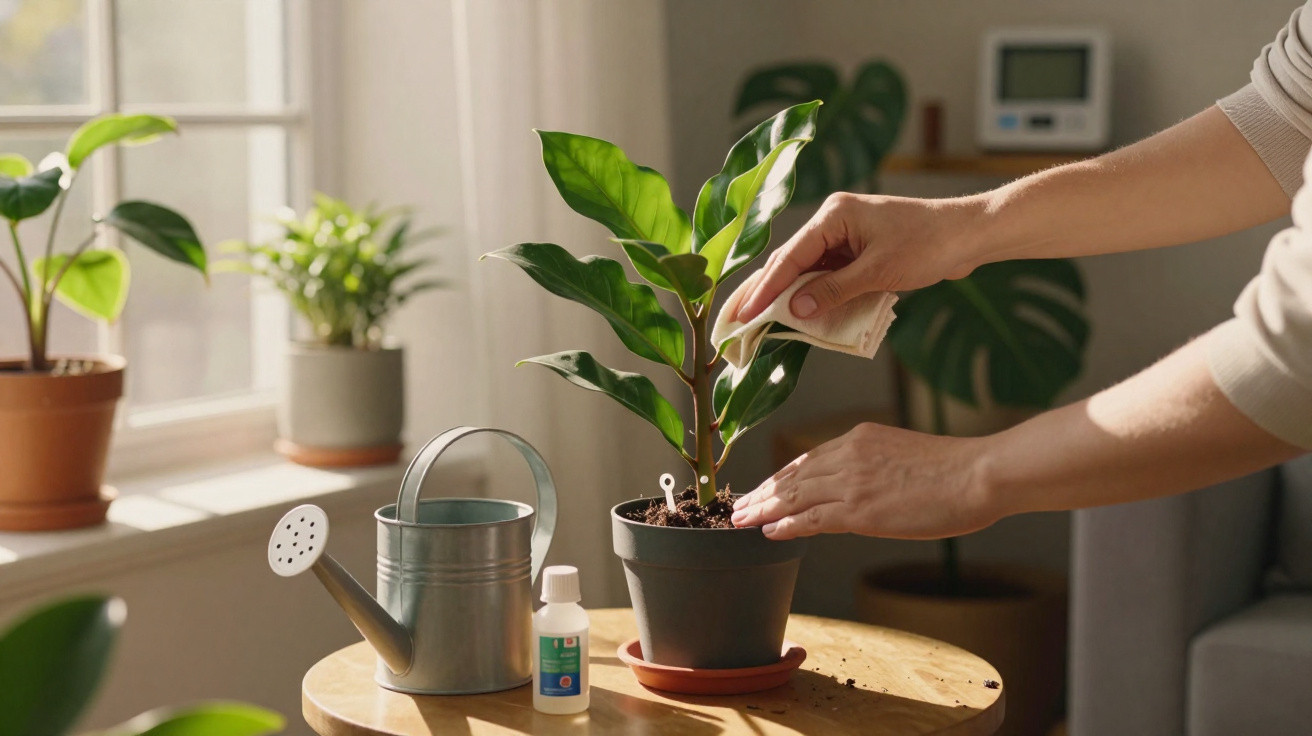
2. Clean the leaves instead of using leaf-shine spray
Over the winter months, a considerable amount of dust settles on the thick, leathery leaves in the home. As well as making them look dull, this dust restricts photosynthesis. The plant is then less able to make use of the light available.
March is a good time for a quick cleaning session:
- Wipe each leaf individually with a slightly damp microfibre cloth.
- Do not use harsh cleaning products.
- Check the undersides of the leaves too, but wipe them only very gently.
“Special ‘leaf-shine’ sprays may look appealing, but they leave a film on the surface that impairs the plant’s ability to breathe.”
A healthy ZZ plant naturally has a subtle, silky sheen. Removing dust regularly enhances this effect without the need for chemicals.
3. Watering: check more often, water less often
As temperatures rise, the surface of the compost dries more quickly. Many people then automatically reach for the watering can more frequently, but this is risky for Zamioculcas. Its thick rhizomes store water, and waterlogging can swiftly cause rot.
The rule for spring is: check more frequently, but still water sparingly.
How to check when it is time to water
- Push a finger or wooden stick 2–3 cm into the compost.
- If this layer still feels distinctly moist and cool, do not water.
- Water only once the upper layer is dry and slightly crumbly.
In normally heated rooms, watering once every 10–15 days is usually sufficient. Water thoroughly until a little water emerges from the bottom, then remove any excess water from the saucer after around 15 minutes.
4. Fertilise with a light touch
From March onwards, the plant begins forming new leaves and therefore uses more nutrients. However, Zamioculcas comes from sparse regions. Too much fertiliser produces long, soft shoots that bend over easily.
“Less is more with the ZZ plant – it is better to use small amounts regularly than to give one heavy feed infrequently.”
This is the safest approach:
- Use a liquid fertiliser for green houseplants.
- Mix it at only half the manufacturer’s recommended strength.
- Feed roughly every three to four weeks from March to October.
- Never fertilise completely dry compost: water lightly first, then apply the fertiliser.
If you did not fertilise at all over winter, begin in March with an especially mild feed and monitor the response. Slowly emerging new shoots mean the amount is suitable. If the stems become soft and excessively long, use less next time.
5. Repot only when the roots are pressing for space
Many plant enthusiasts set aside a major repotting day in spring. For Zamioculcas, this is rarely necessary and can often be disruptive. It prefers relatively snug pots, where its rhizomes sit close together.
When the ZZ plant genuinely needs more room
- The pot is visibly becoming distorted by pressure from the roots.
- The compost dries out completely within two to three days of watering.
- When lifted, thick, pale rhizomes are already protruding through the drainage holes.
In these cases, a modest move to a new pot is worthwhile:
- Carefully ease the plant out of its pot and inspect the root ball.
- Remove only rotten, mushy or completely dried-out sections.
- Choose a new pot that is no more than 2–3 cm wider than the old one.
- Add a drainage layer of expanded clay pellets or gravel.
- Use a loose, free-draining houseplant compost.
“A pot that is too large retains too much moisture – the roots then remain wet for a long time before the surface appears dry.”
6. Spring care: thin out rather than cutting back hard
The ZZ plant produces new shoots from its rhizomes, not from old stems. A hard prune therefore does little to encourage denser growth. In March, a gentle tidy-up is enough.
Suitable measures include:
- Cut yellow, limp or severely damaged stems off directly at the base.
- Work only with clean, sharp scissors or small secateurs.
- Turn the pot by a quarter once a month so that every side receives the same amount of light.
It is worth looking closely at the base of the pot: pale green, slightly translucent new shoots appearing there show that the plant is clearly happy. If no such growth appears by early summer and existing stems grow only towards the window, the usual issue is simply insufficient light.
What many people do not know: temperature, humidity and safety
Although Zamioculcas comes from warm regions, it does not appreciate sudden heat stress indoors. Temperatures should not remain below 16 °C for extended periods, while 18–24 °C is most comfortable in spring. Draughts directly beside a window can slow down new growth.
The plant copes better with dry central-heating air than many other houseplants. Occasional misting is more for appearance than a real necessity. If you do mist it, do so only in the morning so that the leaves can dry before evening.
There is also an important point for households with children or pets: all parts of the ZZ plant are regarded as mildly toxic, particularly if chewed. It should therefore not be kept within easy reach of cats, dogs or young children. Wearing gloves when repotting or pruning is also sensible, as the plant sap can irritate sensitive skin.
How to spot ZZ plant problems early
Taking a brief look at your plant once a week allows you to identify signs of stress in good time. Common symptoms and possible causes include:
| Symptom | Possible cause | Spring solution |
|---|---|---|
| Yellow, softening stems | Too much water, waterlogging | Water less, allow the compost to dry thoroughly, and check that the pot has drainage. |
| Long, thin shoots that topple over | Too little light, too much fertiliser | Move it to a brighter spot and reduce the amount of fertiliser. |
| Brown patches on the sun-facing side | Sun scorch | Choose a position with indirect light and use a curtain. |
| No new growth for months | Lack of light, lack of nutrients or old, compacted compost | Place it somewhere brighter, feed moderately, inspect the compost and replace some if needed. |
Following these guidelines means you will experience Zamioculcas not merely as a plant that survives, but as one that visibly grows. It responds particularly quickly in spring, showing whether its care routine is right or needs adjusting.
For new plant owners, the ZZ plant is a rewarding housemate: it forgives missed watering days more readily than excessive attention. A deliberate approach of “less, but targeted” is especially worthwhile in March, helping it remain deep green, sturdy and attractive into autumn.














Comments
No comments yet. Be the first to comment!
Leave a Comment