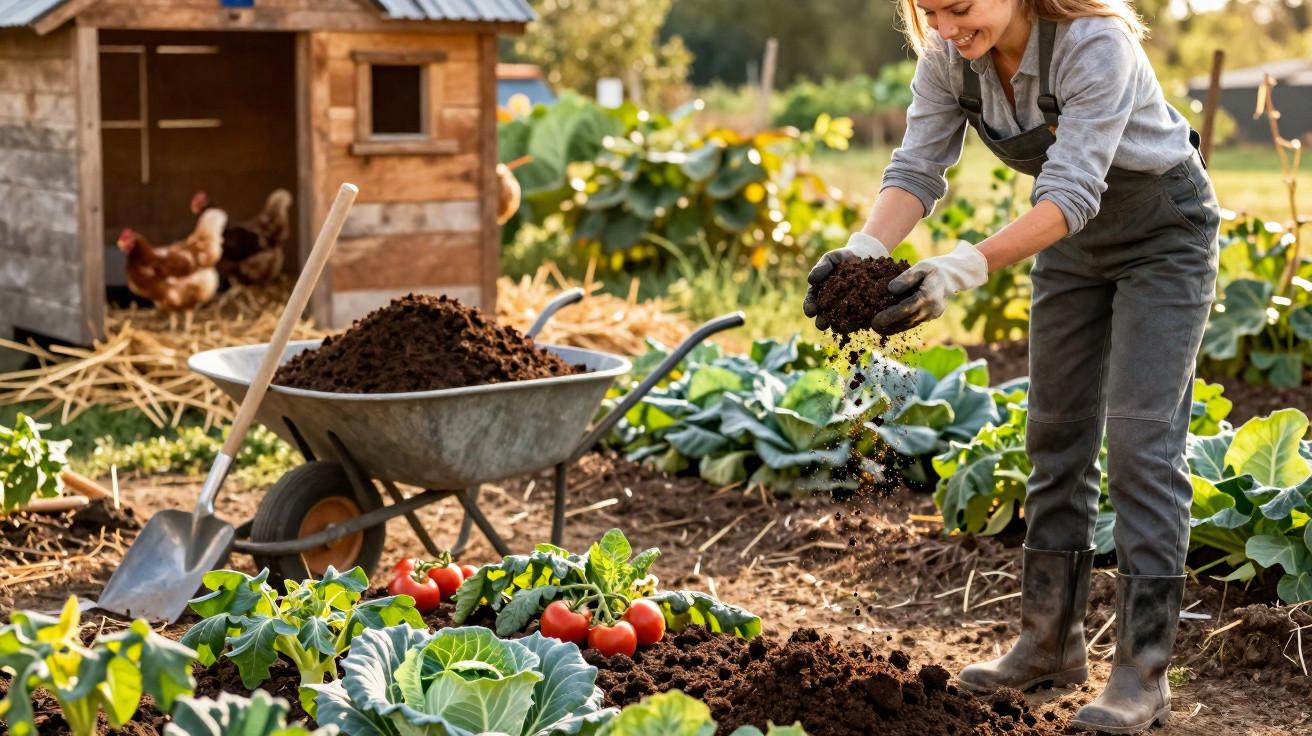
Keeping chickens gives you more than a supply of eggs. Their run and coop bedding accumulate a raw material that can make flower beds, fruit trees and vegetables thrive – provided it is handled properly. Chicken manure is extremely potent, but it can also be risky when applied straight to beds. Compost it correctly and it becomes a dark gold that clearly outperforms many shop-bought products.
Why chicken manure is such an outstanding fertiliser
A genuine nutrient booster from the chicken coop
Chicken droppings are among the most powerful natural fertiliser sources for the home garden. They contain particularly high levels of:
- Nitrogen – for vigorous leafy growth and rich green foliage
- Phosphorus – for flower production and strong roots
- Potassium – for sturdy plants, robust cells and good storage qualities
Compared with traditional cattle or horse manure, chicken manure is more concentrated. Even small quantities can give young plants a boost and feed hungry crops. Anyone who has previously bought expensive organic fertilisers from the garden centre can save on many of them if there is a chicken coop in the garden.
“Chicken manure is not waste, but a highly concentrated natural fertiliser – almost a biological turbocharger for the soil.”
Coop bedding and droppings: valuable raw material
The mixture of chicken manure and used bedding is especially valuable. Straw, hay, wood shavings or leaves supply carbon, which combines with the nitrogen-rich manure. This balance of “brown” and “green” material is precisely what microorganisms need to create stable, fertile compost.
While DIY shops promote bags of soil improver, horn meal and specialist fertilisers, soiled bedding often contains a product that is just as good or better – simply unwrapped and free. Regularly cleaning out the coop continually produces fresh material for an especially nutrient-rich compost heap.
Why fresh chicken manure can scorch plants
Straight from the coop onto the bed? A bad idea
However tempting it may seem, simply putting fresh chicken droppings beside tomatoes or lettuce is a reliable route to disappointment. Its high nitrogen content and ammonia levels attack and dry out roots, potentially ruining entire beds.
Typical consequences of applying it directly include:
- Scorched leaves and brown edges
- Young plants dying within a few days
- Strong odours and attracting flies
“Fresh chicken manure acts like concentrated liquid fertiliser without dilution – far too harsh for most crops.”
Six months of patience: turning the material into humus
Time is the key. Chicken manure must rot down thoroughly before it is added to beds. At least six months of maturing is a sensible minimum; nine months certainly does no harm.
This is how the material matures in the garden:
- Remove soiled bedding and droppings from the coop.
- Build them into a heap at the edge of the garden, keeping it loose rather than compacted.
- Choose a partly shaded spot so the heap does not dry out completely.
- Keep it slightly moist, but protect it from prolonged rain, for example with a board or a tarpaulin with ventilation holes.
Within the heap, bacteria, fungi and soil organisms gradually process the harsh components. The result is a crumbly, dark-brown humus that barely smells of the coop and feels like conventional compost.
Dose it properly: use only a thin layer on the soil
Less is more – the ideal application rate
Once the chicken compost has matured, it is ready to spread. Quantity matters greatly at this stage. A layer around two to no more than three centimetres deep on the soil surface is entirely sufficient. Using more brings no benefit and may even upset the soil’s balance.
The process for a bed is as follows:
- Remove old plant debris and lightly loosen the soil.
- Spread mature chicken compost evenly over the surface.
- Do not dig it in deeply; simply rake it in at the surface.
“A thin layer works like a long-term buffet for soil life – it gradually carries the nutrients into deeper layers.”
Where chicken manure works best
Nutrient-hungry vegetables respond especially well to this extra supply of nutrients. Typical candidates include:
- Tomatoes, peppers and chillies
- Squash, courgettes and cucumbers
- Cabbages such as savoy cabbage, red cabbage and broccoli
Fruit trees benefit too. Mature compost can be applied around the root area of apple, pear or cherry trees. The important point is not to place it directly against the trunk, but to spread it over the soil beneath the canopy. Berry bushes such as redcurrants and raspberries also respond well to chicken humus, as long as the dose remains moderate.
The crucial step: a mulch layer over chicken compost
Retaining moisture and stimulating soil life
Leaving mature chicken compost exposed wastes much of its potential. Sun and wind quickly dry the top layer, while nutrients may be washed away. Adding mulch on top changes everything.
Suitable materials include:
- Dried grass clippings
- Shredded autumn leaves
- Straw or chopped stems from the previous year
This covering keeps the soil moist, guards against erosion and provides worms with ideal working conditions. They draw the chicken compost into deeper layers, mix it with the soil and thereby improve pore structure and water-holding capacity.
“Chicken compost and mulch work together like a bioreactor in the bed – quiet, gradual and highly effective.”
Gradual release instead of a nutrient shock
Heavy rain or watering continuously washes small amounts of minerals from the mulch layer and the compost beneath it towards the root zone. Plants therefore receive no “nutrient blast”, but a consistent supply over weeks and months.
At the same time, the mulch cover suppresses germinating weeds and prevents the soil from overheating in summer. Particularly in dry years, it can noticeably extend the intervals between watering because moisture stays in the ground.
From coop to “black gold” in four steps
A practical schedule through the year
Anyone planning the chicken-keeping year carefully can have fertiliser ready at the ideal time. A typical cycle looks like this:
| Step | Period | Action |
|---|---|---|
| 1 | Autumn/winter | Clean out the coop, collect soiled bedding and create a compost heap |
| 2 | Winter/spring | Leave the heap to rest, keep it moist and protect it from prolonged rain |
| 3 | Early spring | Check maturity, inspect the crumbly texture and apply compost to beds |
| 4 | Spring/summer | Cover with mulch and observe plants as they grow |
Those who clean out the coop continuously can also create several smaller heaps at different stages of maturity, allowing them to use their own fertiliser for almost the whole year.
What gardeners should know about risks and finer points
Hygiene, odours and possible mistakes
As with any animal-based fertiliser, hygiene matters. Fresh chicken droppings can contain pathogens. Therefore, always wear gloves, clean tools after handling the material and do not place the heap directly beside a patio or children’s sandpit.
Allowing the compost to become too wet risks rot and strong odours. The heap should feel more like a squeezed sponge: moist but not dripping wet. If it smells rotten, mix in dry structural material such as woodchip or straw, then turn it over.
Crops for which chicken manure is less suitable
Some plants are sensitive to an excess of nutrients. This includes many herbs, especially Mediterranean varieties such as rosemary, thyme and lavender. They grow better in relatively poor soils. These areas need, at most, a very thin application of compost; in many cases it can be omitted altogether.
Root vegetables such as carrots, parsnips and salsify react sensitively to over-fertilised soil: they tend to fork and develop irregular shapes. Anyone aiming for perfectly straight roots should avoid chicken compost in these beds, or apply only a small amount well before sowing.
Long-term benefits for soil, your budget and the climate
Buy less and create a stronger garden cycle
Keeping chickens and making your own compost closes an almost perfect nutrient cycle: feed goes to the animal, manure goes onto the heap, humus goes into the bed, and vegetables return to the kitchen. Shop-bought fertilisers can be reduced substantially or eliminated completely, saving money and plastic packaging.
At the same time, the soil remains alive. Earthworms, springtails and microorganisms receive a constant food source, and soil structure improves for the long term. Where there was once heavy, hard ground, loose, crumbly layers gradually develop that take in water and air more effectively.
For many hobby gardeners, chicken manure has therefore changed from troublesome coop waste into the most important building block of a stable, productive garden. Once they have experienced its effects, they are usually already planning the next compost heap while cleaning out the coop – quietly pleased with every chicken that continues to “help fertilise”.














Comments
No comments yet. Be the first to comment!
Leave a Comment