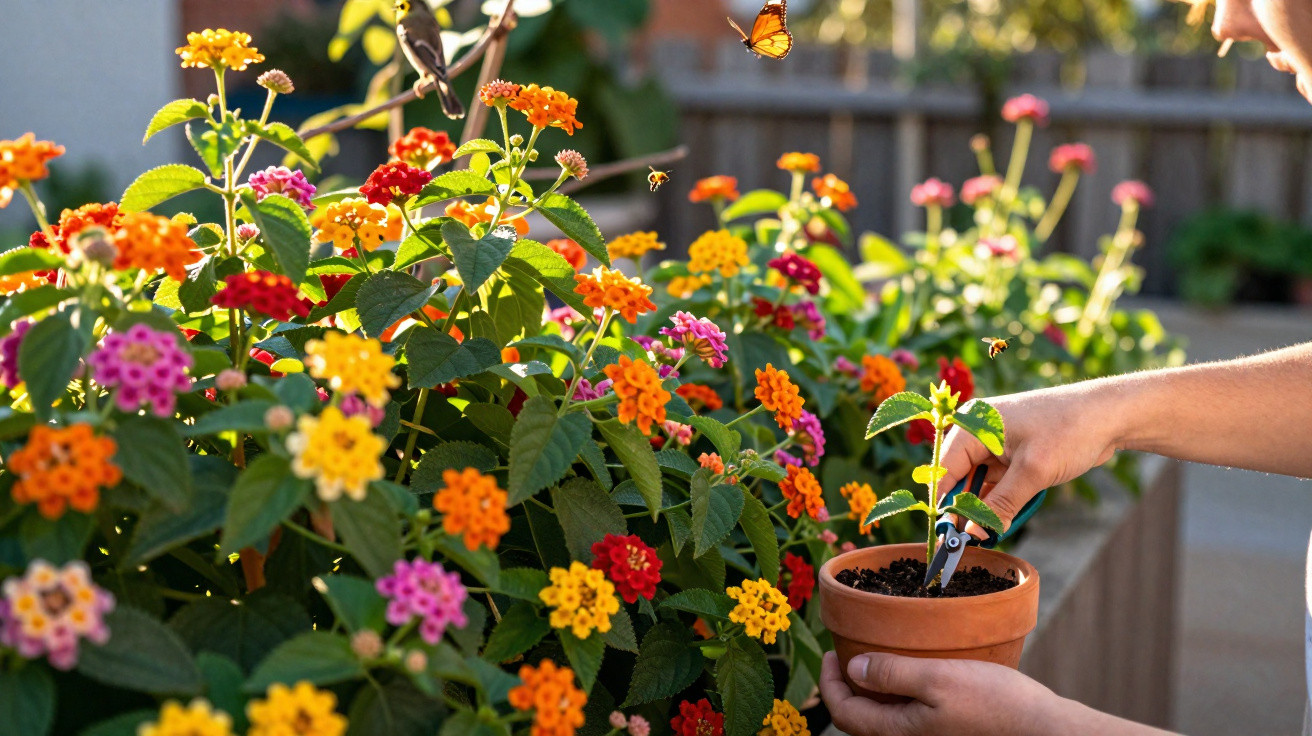
When planning a flower bed, most people think of roses, hydrangeas or lavender. Hardly anyone considers Lantana camara. Yet this shrub offers something many amateur gardeners dream of: brilliantly coloured flowers on virtually every day of the year.
A shrub that simply keeps flowering
Originally native to tropical parts of the Americas and Africa, Lantana camara can look slightly exotic in UK gardens. While many plants make the most of spring and summer before resting for the remainder of the year, lantana seems to carry on almost without interruption.
“Lantana continuously produces fresh flowers – without a conventional ‘flowering break’.”
Its flowers grow in rounded clusters, each made up of numerous tiny individual blooms that open in sequence. As older flowers gradually fade, new buds emerge immediately behind them. As a result, there is scarcely a time when the shrub appears bare.
Intense shades are characteristic, and several colours can appear on a single plant:
- rich yellow
- orange and apricot shades
- vivid pink
- reds through to purple
This blend of colours makes even small plants look like deliberately placed splashes of colour in a border. Many experienced gardeners are surprised by how long this display lasts, particularly once other perennials have long finished flowering.
Winter lull? Not with Lantana
The greatest contrast with typical ornamental shrubs may become clear during the colder months. When roses have been pruned and summer perennials have died back, lantana often continues flowering cheerfully through mild winters, or pauses only very briefly.
For anyone used to seeing their garden as a grey expanse in January, this shrub can be a game-changer. On a patio or balcony in particular, a continuously flowering container plant becomes a visual focal point while everything around it is bare.
Compared with early flowering plants such as snowdrops, lantana has another advantage: it gets going with virtually no lead-in period. While some bulb plants produce no flowers at all in their first year after planting, lantana starts flowering as soon as it has established itself.
Remarkably easy to care for
Despite its abundant flowers, lantana is among the less demanding garden plants. It does not need high-tech irrigation, specialist fertiliser or a complicated pruning regime.
“Maximum flower display with minimal effort – Lantana fits perfectly into the lives of busy garden owners.”
What Lantana actually needs
The basic requirements are easy to set out:
| Factor | Lantana requirement |
|---|---|
| Water | Water only during prolonged dry spells |
| Soil | Free-draining, with few other demands |
| Fertiliser | Occasionally useful, but not essential |
| Pruning | Cut back once or twice a year |
| Pests / diseases | Rarely an issue; naturally robust |
In areas with hot summers, lantana has a further benefit: it copes with drought far better than many traditional bedding plants. Anyone who does not want to reach for the watering can every day in summer will find it a reliable companion.
Position: more sun means more flowers
Light is the key consideration when choosing a location. Lantana performs at its best in full sun. Its colours become more vivid and the number of flowers rises noticeably. It will still flower in partly shaded spots, but the result is far less spectacular.
Suitable positions include:
- along sunny patio edges
- as a low hedge beside a path
- in containers on south-facing balconies
- in a border in front of taller shrubs that cast little shade
In areas where frost occurs, growing it in a container is advisable. The plant can then be moved easily to a bright, cool room during severe sub-zero temperatures. It only needs sparing watering there until conditions outdoors become warmer again.
A favourite plant for butterflies, bees and birds
Lantana is not merely decorative. The shrub acts like a small filling station for numerous animals. Since new flowers constantly appear, nectar is available throughout the year – an important advantage at a time when many gardens are still designed rather uniformly.
“Anyone who plants Lantana is very likely to attract more butterflies into the garden.”
Its most frequent visitors include:
- butterflies, which seem drawn directly to the colourful flowers
- wild bee species and honey bees
- in warm regions, nectar-feeders such as hummingbirds, although not generally in the UK; the principle remains the same
After flowering, lantana produces small dark berries. These provide food for many bird species. The shrub therefore combines ornamental value with a genuine contribution to biodiversity: nectar for insects and fruit for birds.
A versatile element in any garden design
Its shape and growth can be controlled effectively. Depending on pruning and planting distances, lantana can take on very different roles:
- as a spreading ground-cover solution in sunny borders
- as a low, colourful “flowering hedge” along a boundary
- as a specimen plant in a large container on the patio
- as a cushion of colour in a perennial border among calmer green foliage
Because the plants grow relatively quickly, gaps in a border soon fill in. Anyone who loses sight of this may occasionally be surprised: lantana can spread vigorously and crowd out weaker neighbouring plants. A decisive cut-back once or twice a year controls its growth while also encouraging fresh flower production.
Practical tips for everyday life with Lantana
Combinations in the border
Lantana is especially striking when paired with plants that flower at different times. This keeps the border visually lively throughout the season. Examples include:
- ornamental alliums and tulips for a strong start to spring
- daylilies or coneflowers, which take over at the height of summer
- evergreen shrubs that provide structure when lantana takes a short break
Anyone wishing to support insects specifically can combine lantana with native perennials such as knapweed, catmint or sage. This creates a flowering ribbon that supplies food for many species over long periods.
Risks and special considerations
Lantana is regarded as invasive in some tropical countries, where it spreads unchecked. In central European gardens, winter conditions mean this is largely irrelevant, and it is even less of a concern in a sheltered container. One point remains, however: in many parts of the world, plant parts are classified as mildly toxic, especially to grazing animals.
Anyone with young children or pets that like to nibble leaves should choose its position carefully – for example, in a raised bed or a container placed away from the play area.
Why this long-flowering plant is so underrated
In German garden centres, lantana often appears only on the margins, among summer bedding plants and impulse-buy containers. Many people regard it as a short-lived seasonal plant, much like geraniums. In reality, it offers more than that: with suitable winter protection, the same shrub can bring pleasure for years, becoming denser and more floriferous each time.
Those with no time for complicated plant care but who do not want to give up colour will find a practical middle ground in lantana. It forgives watering mistakes, does not require daily attention, and still repeatedly rewards the gardener with bright flower clusters.
Especially in small urban gardens or on balconies, where every container needs to earn its place, this unassuming candidate deserves a second look. At the end of the day, only one question often matters: what is actually flowering when you return home in the evening – in April, August and November? Lantana is one of the few plants able to answer that quite calmly with “almost always”.













Comments
No comments yet. Be the first to comment!
Leave a Comment