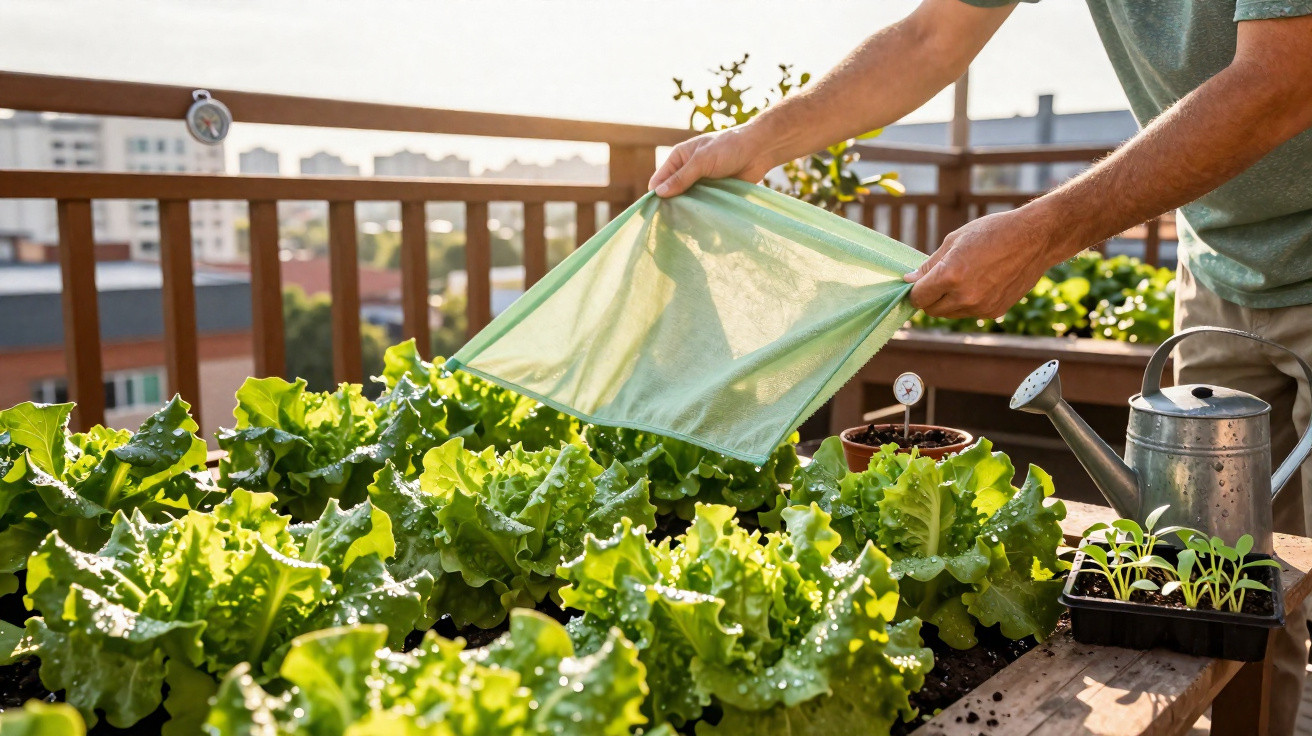
Many home gardeners plant Buttercrunch lettuce with high expectations, only to find themselves disappointed by limp or bitter leaves. The problem is often neither fertiliser nor watering, but light: too much, too little, or at the wrong time of day. Understanding how much sun this variety can genuinely handle will help you get far more from every bed, raised bed or balcony planter.
How much sun Buttercrunch lettuce ideally needs
Buttercrunch is one of those varieties that enjoys light but dislikes heat. As a rule of thumb, four to six hours of direct sunshine a day is ideal. That places this lettuce somewhere between a shade-loving plant and a full-sun vegetable.
The best combination is morning sun and afternoon shade – this keeps the leaves tender rather than bitter.
During cooler parts of the year, it can receive considerably more light. Provided temperatures remain low, Buttercrunch tolerates longer periods of sun and grows more vigorously:
| Season | Daily sunshine | Recommended position | Temperature range |
|---|---|---|---|
| Early spring | 6–8 hours | Full sun is possible | Approx. 7–18 °C |
| Late spring | 5–6 hours | Morning sun, light afternoon shade | Approx. 13–24 °C |
| Summer | 4–5 hours | Morning sun only | Above 24 °C |
| Autumn | 6–7 hours | Full sun is possible | Approx. 10–21 °C |
In cool spells of roughly 7 to 21 degrees, additional sun is generally beneficial: heads become firmer, growth is more compact and the flavour more pronounced. As temperatures move towards midsummer levels, however, the balance changes. At that point, protection from heat matters almost more than the number of sunlight hours alone.
When the light is wrong: warning signs in the bed
Typical signs of insufficient sun
Buttercrunch lettuce makes it quite clear when it lacks light. Common indications include:
- Long, thin stems: Plants visibly stretch towards the light source, while the rosette remains loose rather than compact.
- Pale green or yellowish leaves: Photosynthesis is operating at reduced capacity, so nutrients are used less efficiently.
- Slow growth: Heads remain small, and the yield per square metre drops noticeably.
- More fungal diseases: Plants have poor airflow, become soft and are more vulnerable to rot.
When Buttercrunch gets fewer than around four hours of direct sunshine per day, it will usually remain weak over time. Moving it from shady back-garden corners or spots behind dense hedges is well worthwhile.
How excess sun and heat show themselves
Conversely, Buttercrunch can quickly become overwhelmed during summer. The lettuce is particularly sensitive to intense midday sun:
- Dried leaf edges: Brown, papery tips are a typical sign of “tip burn” caused by heat stress.
- Rapid bolting: The lettuce “bolts”, producing a flowering stem and effectively stopping leaf production.
- Bitter flavour: Leaves become tough and lose their characteristic mild, buttery quality.
- Midday wilting despite moist soil: The roots can no longer keep pace with moisture loss through evaporation.
If Buttercrunch droops at midday but stands upright again in the evening, the plant is not crying out for water, but for shade.
When strong sunshine coincides with temperatures above roughly 27 degrees, the risk of bolting and bitterness rises significantly. This affects not only yield, but also the flavour on the plate.
The right garden position for Buttercrunch lettuce
An east-facing position: the sweet spot for many gardens
Beds that receive sun in the morning and fall into shade from early afternoon are ideal. A typical east-facing site offers exactly this: gentle rays before noon and protection during the hottest hours. Anyone planning a new bed should deliberately set aside this area of the garden for lettuce and similar crops.
North, south or balcony: what works and when?
In cooler areas, or during spring and autumn, Buttercrunch can grow successfully on the south side. It receives more light there, which is more helpful than harmful at lower temperatures. Sowing in several successive batches is then practical, ensuring fresh heads over a number of weeks.
During summer, a position on the north side of fences, walls or shrubs is worthwhile. These structures cast predictable shade while still allowing sufficient light through. This balance of brightness and protection is exactly what Buttercrunch likes.
On a balcony, mobility is the great advantage: planters and pots can simply be moved. Place them in the sun during the morning, then shift them into partial shade in the afternoon; done consistently, this can produce excellent Buttercrunch even on south-facing balconies.
Controlling light with simple methods
Shade netting and more: small aids, major results
If the ideal position is unavailable, practical solutions can help. The following have proved particularly effective:
- Shade netting: A net with 30–50% shading placed over the bed softens harsh sunshine without making conditions too dark.
- Simple frames: PVC pipes, wooden battens or bamboo canes are sufficient for creating a flexible cover.
- Horticultural fleece during heatwaves: Put up temporarily, it can protect plants against extreme conditions such as sudden spikes in heat.
These structures can be adjusted according to the season: perhaps not needed at all in spring, used fully during high summer, and required only when necessary in autumn.
Work with other vegetables rather than against them
A traditional technique used by experienced gardeners is to position Buttercrunch between taller crops. Beans, peas, sweetcorn, as well as tomatoes or cucumbers trained on supports, create precisely the partial shade this lettuce enjoys. Timing matters: the taller plants should be growing larger as temperatures begin to rise.
Ground-covering plants or layers of mulch can also keep the soil cool and reflect light. Light-coloured mulches, such as straw, cast diffused light onto the undersides of leaves and stabilise temperatures around the roots.
Light management: the key to flavour and texture
Gardeners who manage the light successfully will be rewarded at harvest time. In steady conditions with four to six hours of sunshine, Buttercrunch forms dense heads with buttery-soft centres and crisp outer leaves. Too little or too much light is immediately apparent on the plate: the leaves are overly limp, too tough or simply too bitter.
The best time to harvest is early in the morning – when the leaves are plump, cool and at their most flavoursome.
Plants recover from sun exposure overnight, and their cell structure replenishes with water. Cutting at this point brings more freshness into the kitchen and, as an added benefit, extends storage life in the fridge.
It pays to check the bed regularly: adjust the shade netting, move containers or trim back vigorously growing neighbouring crops slightly. Small interventions often make a major difference to light levels.
Practical advice for beginners and ambitious gardeners
Anyone just starting out with Buttercrunch can follow a few simple principles: choose morning sun over evening sun, opt for partly open rather than completely still positions, and acclimatise gradually instead of planting immediately in blazing southern exposure. Keeping a garden diary with notes on position and yield will help identify the perfect spot over the years.
Combining it with other crops is also worthwhile: early in the year, Buttercrunch fits well between slow-growing vegetables such as cabbage or celery. Once summer becomes hot, the lettuce will usually have completed its cycle already – or it will benefit from the shade that its neighbours now provide.
Once you understand the relationship between light, temperature and plant structure, you can apply it to other leafy lettuces too. Gradually, this creates a bed that not only looks attractive but also produces consistently crisp, flavoursome harvests – and that is ultimately the appeal of growing Buttercrunch in your own garden.












Comments
No comments yet. Be the first to comment!
Leave a Comment