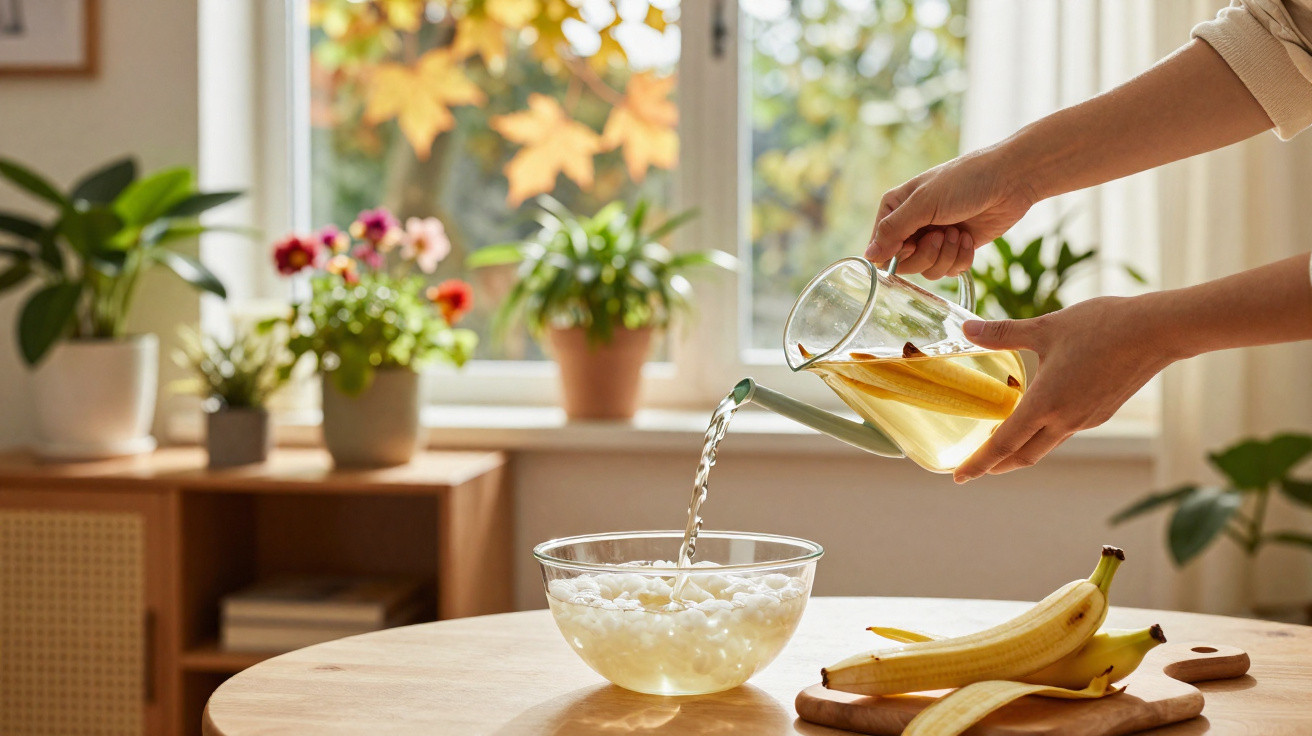
When central-heating air still seems trapped in the leaves and pots look tired, a remarkably simple two-ingredient household remedy may help.
After winter, many houseplants look noticeably drained: leaves droop, fresh shoots are scarce and flowers are slow to appear. At this point, some plant enthusiasts turn away from expensive specialist fertilisers and instead make a nutrient solution from kitchen waste. An English gardening journalist has relied for years on a mixture containing only water and banana peel – and says her plants repay it with fresh foliage and blooms that last well into the season.
Why houseplants need a boost after winter
The heating season, dry indoor air and reduced daylight make winter a demanding period for houseplants. Many varieties slow their growth, while some virtually go dormant. Watering is often done by instinct, sometimes too generously and sometimes too sparingly. Chemical liquid feeds may be sitting in the cupboard, but can easily be overapplied in small living-room pots.
As the days lengthen in March, most plants begin their new growing season. They produce new leaves, their roots become more active again and their need for water increases. This is the right time to begin gentle feeding, rather than trying to force growth during the depths of winter.
The ideal time is towards the end of March, when plants themselves show signs of renewed growth – young shoots, firmer leaves and the first buds.
Catching this moment means supporting the plant’s natural rhythm rather than feeding against it. The banana-water method is intended for exactly this stage.
The principle of banana water as a natural plant fertiliser
Banana peels would usually go into the food-waste bin. Yet many plant lovers now regard them as a free resource: the peel contains potassium as well as various trace elements, some of which can leach into water. The idea is not to pour a highly concentrated fertiliser into the watering can, but to prepare a mild nutrient solution that feeds houseplants gradually and gently.
A journalist who has turned her flat into a small jungle has used this approach for years on very different plants, including orchids, snake plants, peace lilies and spider plants. Despite their varying needs, she waters all of them sparingly with the same banana-water blend in spring, reporting vigorous leaves and dependable flowering through to autumn.
What potassium does for houseplants
Potassium is among the most important nutrients for plants. It:
- strengthens cell walls, making leaves more resilient;
- supports the plant’s water regulation;
- encourages bud formation and flowering;
- helps roots supply new shoots.
Container-grown plants can quickly reach nutrient limits in their restricted compost. A gentle potassium boost in spring can act like a training plan for the season ahead.
How to make the two-ingredient nutrient solution
The basic concept is straightforward, although it requires a little patience. For a small household, banana leftovers from one week are enough.
Step-by-step guide to banana water
- Prepare the banana peel: Eat one ripe organic banana and cut its peel into pieces. Organic fruit is worthwhile because there are fewer residues on the peel.
- Make the mixture: Put the peel pieces into a jar or bottle and add tap water until they are fully covered.
- Allow it to infuse: Leave the mixture at room temperature for two to four days. Rest the lid on loosely so that pressure cannot build up.
- Filter the liquid: Once the infusion time has passed, remove the peels and strain the water through a sieve or coffee filter.
- Dilute before watering: Never use the nutrient solution neat. A rough ratio is 1 part banana water to 3–4 parts clean water.
The mixture should resemble a weak tea, not a syrup. The darker and more concentrated the infusion becomes, the more heavily it should be diluted.
The journalist uses her banana water roughly once a month at the beginning of spring. Once summer begins in earnest and the plants are actively growing, she changes to a weekly application – but dilutes it much more strongly.
How often to water and when to take care
Even a natural fertiliser alters conditions in the pot. Plants also need periods when they receive plain water only. Watering too often risks waterlogging and root rot, whether banana water is used or not.
Practical rules for safe use
- Never fertilise wet compost: Water again only once the top layer of compost has dried out.
- Increase the amount gradually: In the first year, it is best to start cautiously and watch how the plants respond.
- Respect the dormant period: During the darker months, do not add extra nutrient solution; water only moderately.
- Watch for odours: If the mixture smells rotten, discard it and make a fresh batch.
Many readers worry that the banana’s sweet nature might attract small flies or other pests. Reports from users mention this problem surprisingly rarely. Anyone still concerned can shorten the infusion time, keep the mixture cool and maintain scrupulous cleanliness in the pot: remove dead leaves regularly and do not bury peel pieces in the compost.
A kitchen alternative: what rice water can do
Alongside banana peels, some plant enthusiasts also use water in which rice has been rinsed or cooked. Rinsing releases small quantities of starch and minerals, which can then end up in the watering can.
The principle is similar to banana water: lightly nutrient-enriched water rather than a concentrated fertiliser. Dilution is equally important here. Undiluted cooking water can turn quickly or develop an odour if left standing too long. Therefore:
- prepare only small amounts;
- use cooled water within a few days;
- mix it with fresh water at a ratio of at least 1:3.
Foliage plants in particular, which do not need to produce an exceptional display of flowers, often respond well to such mild additions.
Which houseplants benefit from the method
The routine described can work for familiar living-room plants such as orchids, peace lilies and spider plants. Other varieties may also be suitable, provided they generally appreciate nutrients and are not intended to be kept in extremely lean conditions.
| Plant | Suitability for banana water | Note |
|---|---|---|
| Orchid (Phalaenopsis) | suitable, in moderation | Use only very diluted; allow the growing medium to dry thoroughly |
| Peace lily (Spathiphyllum) | very suitable | Benefits from an additional potassium boost for flowering |
| Spider plant | uncomplicated | Forgives small mistakes and responds with denser foliage |
| Snake plant | only sparingly | Very undemanding; fertilise infrequently |
| Cacti and succulents | only rarely | Keep dry, provide few nutrients and assess only in high summer |
One point remains important: every plant has its own character. If in doubt, begin with one test plant, observe it for four to six weeks, then decide which of the remaining pots should follow.
Signs that your plants like the treatment
The best check is to look closely at the pot. Positive responses often become visible after just a few weeks:
- leaves look firmer and stronger;
- new shoots appear in places that had previously been inactive;
- flower stems form where there had been no activity before;
- leaf colour becomes rich green rather than pale yellow.
If brown leaf tips, limp shoots or a musty smell from the compost develop instead, excessive water is often the cause rather than too many nutrients. In that case, use only plain water for one or two watering cycles and extend the intervals between waterings.
Combining household remedies and conventional fertiliser sensibly
For heavily flowering balcony plants or demanding, hungry pot plants, banana water alone is not always sufficient. Many amateur gardeners use it as a basic feed and only occasionally turn to shop-bought fertilisers, for example during intense flowering or when leaves become yellow despite regular care.
Anyone also using liquid fertiliser should halve the dose and clearly separate watering sessions: banana water one week, a small amount of flower fertiliser the following week if needed, then one or two waterings with plain water in between. This keeps the nutrient mix manageable and significantly reduces the risk of overfeeding.
Above all, the method demonstrates that many kitchen leftovers can be useful resources when applied deliberately and in moderation. A single banana peel cannot replace a complete care routine, but in spring it can give houseplants precisely the lift they need after a long winter – without harsh chemicals and with remarkably little effort.













Comments
No comments yet. Be the first to comment!
Leave a Comment