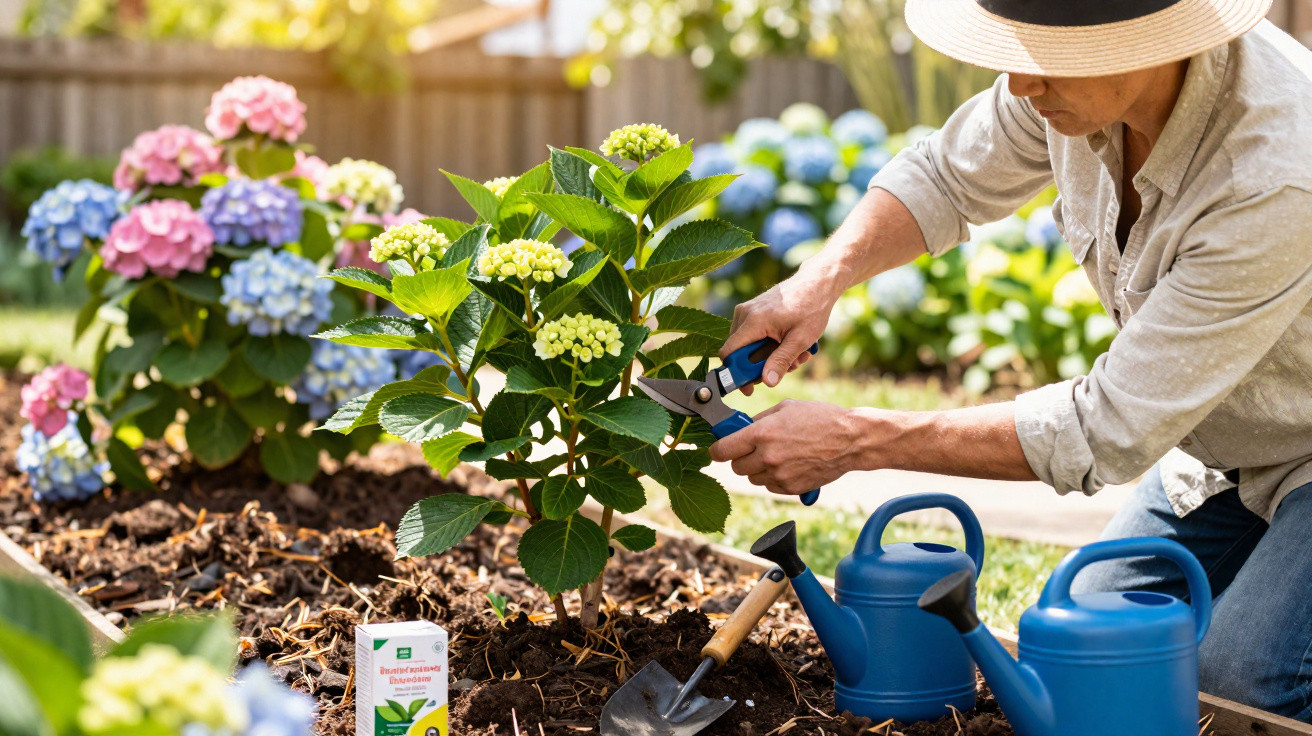
After a few years, the display of flowers in the garden often starts to fade, even when a hydrangea appears healthy. The cause is usually neither an exotic fungus nor simply the weather, but missing care in late winter and early spring. A few well-timed tasks during this period can restore large, richly coloured flower heads for a long time.
Why hydrangeas suddenly produce hardly any flowers
Hydrangeas may seem hardy, but they are sensitive to pruning mistakes and poor care in the very early spring. The plant forms much of its flowering growth before the garden has properly begun to turn green. If shoots are cut back too severely or at the wrong time, the flower buds quite literally end up in the pruning shears.
Nutrients and water supply are another important consideration. A shrub left entirely to its own devices after flowering will often produce plenty of leaves but only small blooms, or very few of them. Straightforward work in early spring can put this right.
The weeks between the end of severe frosts and the beginning of spring growth determine the abundance of flowers for the whole year.
The right time to prune hydrangeas
The ideal time for pruning is towards the end of winter, roughly from late February to early March. By then, severe frosts have generally passed, and the buds are visibly swelling but have not yet opened.
Pruning too early can expose fresh cuts to frost damage. Pruning too late drains the plant's energy and may remove flower buds that have already formed. It is best to leave the secateurs in the shed during autumn, as hard pruning before winter makes shoots more vulnerable to cold.
Know the variety before using the secateurs
The key question is which wood the hydrangea flowers on. This determines how boldly it can be pruned:
- Mophead hydrangeas (Hydrangea macrophylla), lacecap hydrangeas, oakleaf varieties and climbing forms set their flower buds on the previous year's wood.
- Panicle hydrangeas (Hydrangea paniculata) and the well-known variety Hydrangea arborescens ‘Annabelle’ bloom on wood produced in the same year.
For the first group, radical pruning can easily remove every flower for the coming season. For the second group, a hard cutback actually encourages growth and flowering.
Three simple pruning steps for mophead and lacecap hydrangeas
Hydrangeas with large rounded or flat flower heads respond well to gentle, considered pruning. Proceed as follows:
- Remove spent blooms: Cut away only the old flower heads, around 1 centimetre above a strong pair of buds. This preserves this year's developing flowers.
- Thin out weak wood: Remove thin, stunted or dead shoots completely. This allows the plant to direct more energy into strong, free-flowering branches.
- Rejuvenate old branches: Each spring, saw out one to three of the oldest woody stems at the base. This keeps the shrub youthful and continually produces vigorous new shoots.
These steps retain the familiar rounded shape without making the hydrangea look as though it has been shorn bare. Many amateur gardeners cut far too low, then wonder why there are no flowers for a year.
Anyone who never cuts mophead hydrangeas lower than the first strong pair of buds beneath the old flower head is on the safe side.
A bolder cut for panicle hydrangeas and ‘Annabelle’
Panicle hydrangeas grow vigorously and produce their flowers on the new shoots that emerge in spring. Here, the secateurs can remove considerably more.
How to shorten panicle hydrangeas correctly
Cut shoots back by around one-third to one-half. Make each cut just above an outward-facing bud. This creates a sturdy, outward-growing framework that can support the heavy flower panicles well.
Leaving fewer buds on a shoot produces fewer, but noticeably larger, flower panicles. More buds result in slightly smaller but more numerous blooms - it is purely a matter of preference.
How to treat the variety ‘Annabelle’
The popular snowball hydrangea ‘Annabelle’ tolerates very hard pruning. Many gardeners cut every shoot back in late winter to around 20 centimetres above ground level. The plant then sends up strong new shoots and rewards this treatment with large, rounded flower heads.
In windy positions, it is sensible to prune a little higher so that the stems do not bend under the weight of the flowers in summer. In storm-prone areas, a loose support made from bamboo canes or perennial plant rings is also worthwhile.
After pruning: soil care for long-lasting flower abundance
Pruning alone will not create lasting splendour. What happens in the soil immediately afterwards is just as important.
- Clear the soil: Remove old diseased leaves and dead plant material so that fungi and pests have nowhere to persist.
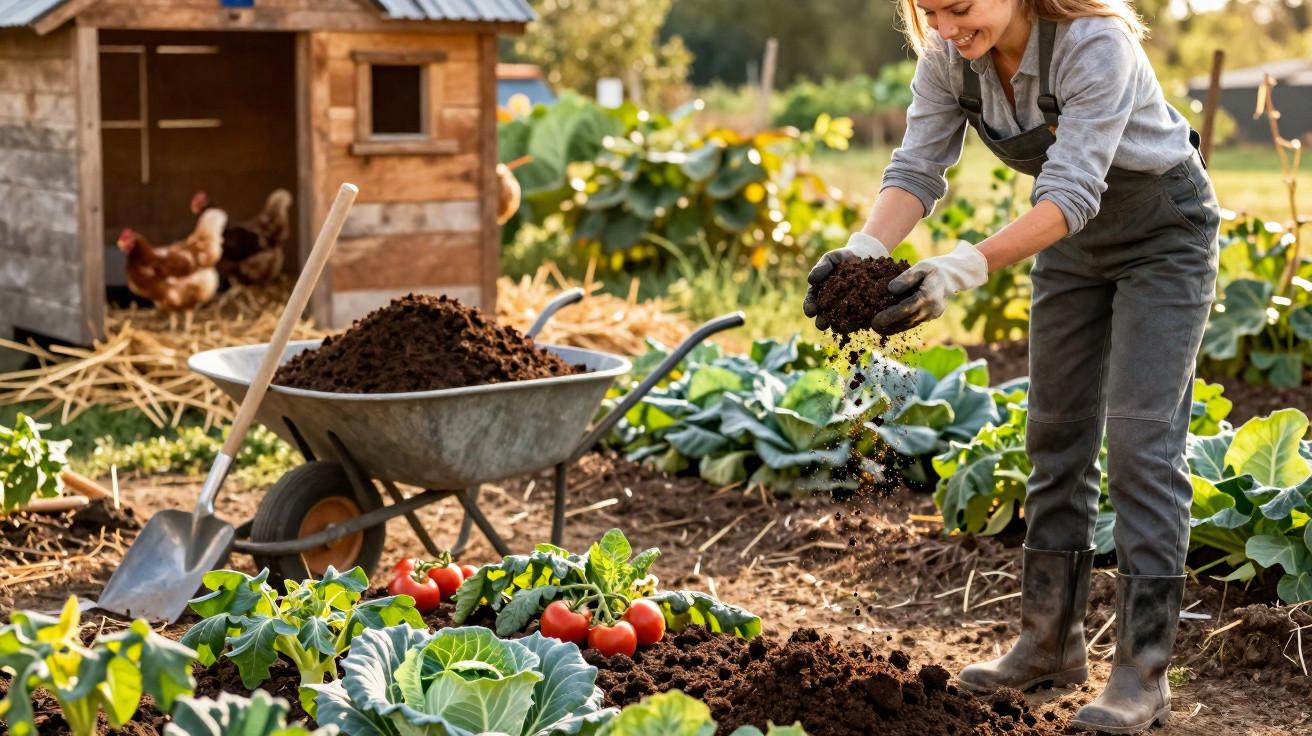
- Add nutrients: Apply a layer of mature compost or a specialist hydrangea fertiliser around the root area.
- Mulch: Cover the soil with bark mulch, leaves or shredded prunings to retain moisture and buffer temperature fluctuations.
A well-nourished, evenly moist root area is the foundation for strong shoots and intensely coloured flower heads over many years.
Water, protect and inspect: small routines with a major effect
Hydrangeas prefer consistently moist soil. Young plants and hydrangeas in containers in particular need deep, thorough watering in spring when dry conditions continue. Light, brief watering achieves very little because the water does not reach the deeper roots.
Late frosts can damage newly swollen buds. One simple solution is to place horticultural fleece, an old bedsheet or a light blanket over the shrub on cold nights. Remove it again in the morning so that moisture cannot build up underneath.
When walking around the garden, it is worth taking a quick look at the shoots: cut out blackened, soft or split wood without hesitation. This helps prevent rot and keeps the plant healthy.
Manage flower colour, choose the right position and avoid common mistakes
How flower colour can be influenced
Many varieties respond to the soil pH level. In acidic soil, using specialist hydrangea fertiliser and alum will maintain or emphasise blue flowers. In more neutral to slightly lime-rich soil, the colour more often shifts towards pink and red shades.
Anyone wishing to keep a particular colour should test the pH regularly and select fertiliser accordingly. A sudden change in colour is rarely caused by the “wrong” plant; it is almost always down to the soil.
The right location
Hydrangeas favour bright sites that are not fiercely sunny. Locations with morning or evening sun and some light shade at midday are ideal. In full midday heat, the plant suffers, leaves droop and flowers fade more quickly.
Strong, drying winds are unsuitable. If there is no sheltered corner available, shrubs, climbing plants or screening panels can provide some protection.
Common mistakes in spring
- Radical pruning of varieties that flower on the previous year's wood
- Pruning in autumn rather than late winter
- Too little water during dry spells after new growth begins
- Providing no nutrients even though the plant has been growing in the same place for several years
- Leaving soil permanently bare without a mulch layer
What keeps hydrangeas strong and long-lived
Replacing a few old shoots each year, monitoring nutrient supply and protecting against late frosts creates a stable foundation for flowering over the long term. The shrubs repay this with a notably longer life and dependable clouds of flowers - particularly in years when other plants suffer from erratic weather.
It is also helpful to consider neighbouring plants: shallow-rooted, nutrient-hungry trees or shrubs can compete with hydrangeas for water and nutrients. In such cases, a thicker mulch layer, occasional extra fertiliser or a slightly relocated planting position can help.
Anyone who deliberately makes time in late winter for pruning, soil care and protection will have far fewer worries in summer. The hydrangea will then develop the splendour remembered from earlier years on its own - and continue to do so for many years.













Comments
No comments yet. Be the first to comment!
Leave a Comment