The real key lies somewhere else.
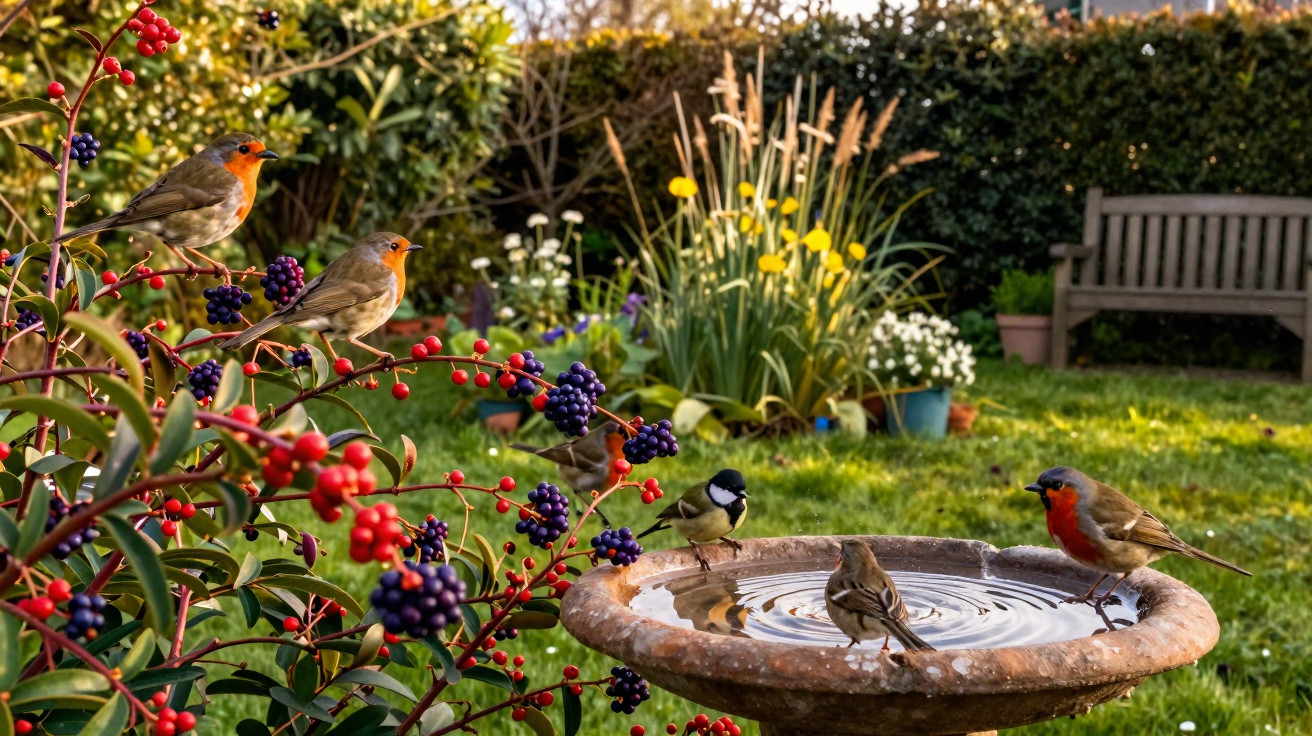
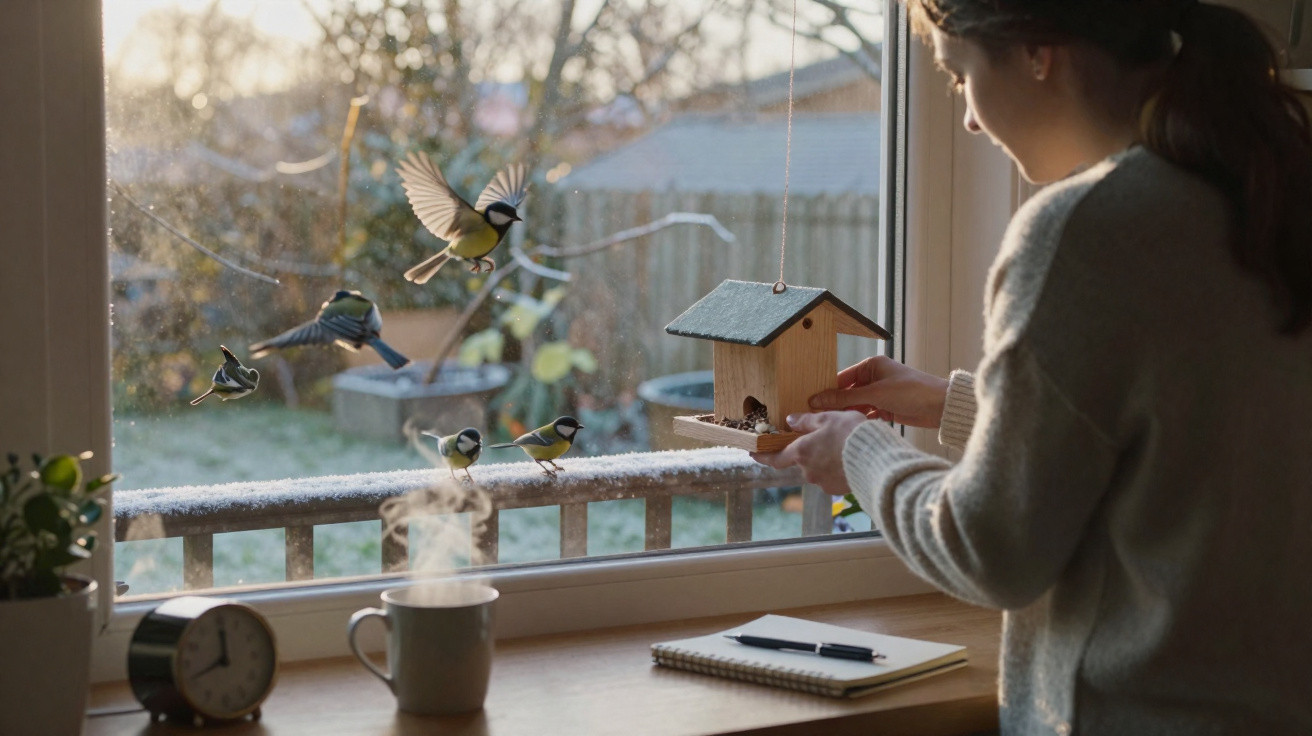
Anyone hoping to see more feathered visitors in the garden or yard will usually reach first for a bird feeder from the garden centre. This may work in the short term, bringing in a few tits or sparrows. But a steady stream of visitors is far more likely when the garden itself becomes a natural habitat: with food-bearing shrubs, secure cover and clean water. That is exactly what blackbirds, robins and their companions need – every day, throughout the year.
Why birds prefer to stay in a natural garden
A bird table is rather like a roadside snack stop: quick and convenient, but only one small part of the picture. Wild birds require more than a few sunflower seeds. They look for reliable structures, protected places to retreat to and a varied supply of food. A thoughtfully planned garden can provide all of this – without costly equipment.
“Those who see their garden as a living ecosystem attract birds for the long term – rather than only for a few minutes at the feeder in winter.”
Rather than continually putting out additional feeders, it is worth taking a step back: which plants are growing here? Are there thick hedges? Where can the animals find water? A few simple changes can turn even an ordinary garden into a small paradise for birds – while also benefiting insects and other wildlife.
Three berry shrubs that turn every garden into a buffet
Why berry shrubs offer more than any bird feeder
Berry-producing shrubs provide food for weeks, and sometimes months, in the form birds prefer: straight from the plant, easy to access and ripening repeatedly. At the same time, they offer cover, nesting sites and a rich supply of insects. This makes them more valuable than even the most elaborate feeding station.
Just three carefully selected shrubs can create a lasting basic food supply. Typical favourites in German-speaking regions include, for example:
- Rowan (mountain ash): Popular with thrushes, starlings and many other species.
- Elder: Produces abundant fruit and attracts insects.
- Dog rose or wild rose: Its rose hips provide food from autumn into winter.
The exact species should be chosen to suit the location, but the principle remains the same: different ripening periods, varied fruit types and, wherever possible, native plants. This gives tits, robins and finches something to eat from late summer through to winter.
How to position berry shrubs effectively
Where shrubs are placed determines whether birds feel at ease. Garden edges, transitions between lawns and flower beds, and corners that are rarely used are ideal. Shrubs should not be positioned directly beside heavily used paths.
Useful basic guidelines:
- A mix of heights: Plant taller shrubs at the back and lower ones at the front.
- Give preference to sunny spots: Fruit ripens more successfully there and is richer in energy.
- Avoid severe pruning in autumn: This leaves more berries available as a winter food reserve.
“Anyone who plants shrubs so that a small, lively expedition through the branches is needed is catering exactly to birds’ tastes. They want to search, peck and clamber about – not simply eat from a plastic opening.”
No bird can settle without safe shelter
Dense hedges: vital protection from cats and birds of prey
Food without cover is like a laid table on an open stage for wild birds. Birds of prey, cats and martens can easily take advantage. For that reason, dense, untidy hedges are quite literally essential for survival.
An area of impenetrable scrub provides:
- Hiding places for young birds during the breeding season
- Safe sleeping sites on stormy or cold nights
- Escape routes when danger suddenly appears
Native species such as blackthorn, hawthorn, privet and dogwood are especially suitable. Over time, they form a dense network of branches that predators cannot easily enter.
A small wild corner can make a huge difference
Many amateur gardeners trim hedges into rigid shapes. From a human viewpoint this looks tidy, but from a bird’s perspective it is rather bleak. It is better to deliberately allow at least one corner to grow freely. Branches can cross in all directions there, leaves may remain on the ground and dried stems can be left standing over winter.
“An ‘imperfect’ part of the garden with thickets and piles of leaves is often more valuable than any expensive nest box.”
Where space allows, a small deadwood pile can also be added. Insects shelter among the branches and twigs, and these in turn provide food. Birds use such areas as peaceful refuges – especially in autumn and winter, when open ground is bare and exposed to the wind.
No water, no visitors: the overlooked bird bath
A shallow water bowl instead of a risky pond
Drinking and feather care are vital for birds’ survival. During dry summers, water can become even more important than food. A simple shallow plate or bowl is entirely sufficient, provided it is positioned properly.
Key points for a safe water source:
- Shallow and non-slip: A depth of 3–5 centimetres is enough, with a slightly rough base.
- Clear surroundings: Shrubs should be nearby, but not directly above it, so cats cannot use them as cover.
- A stable base: The bowl must not wobble or tip, as this will frighten the birds.
A small stone in the water gives smaller birds extra footing. Some species prefer to bathe at the edge, while others venture into the middle. This helps all of them feel safer.
Simple care routines
A bird bath does not need to become an ongoing project. Regular small tasks are enough:
- Replace the water every day, and more often during hot weather.
- Clean the bowl with a brush or rough sponge, without harsh chemicals.
- During frosts, offer only lukewarm water; never use hot water or salt.
“Clean water protects wild birds from disease – whereas dirty bowls can quickly become breeding grounds for germs.”
When everything comes together: from productive garden to living habitat
How shrubs, hedges and water reinforce one another
The effect appears when several elements are present at once. A garden with berry shrubs, a dense hedge area and a dependable water source offers birds a complete package: food, protection and drinking water – all within a short flight.
A typical routine in the daily life of a garden bird:
- Leave the dense sleeping spot in the scrub in the morning.
- Feed nearby on berries or insects.
- Fly to the bird bath in between to clean its feathers and drink.
- Retreat straight back into the thicket if danger arises.
These short distances are exactly what determine whether a bird merely calls at a garden briefly – or adopts it as a permanent habitat.
A garden that largely looks after itself
Those who choose a more natural layout save work in the long run. Berry shrubs partly feed themselves through fallen leaves, hedges do not need constant shaping, and more birds also mean fewer pests in the vegetable patch because caterpillars and beetles are on the menu.
Many garden owners notice after only a few years that the wilder and more structurally varied the garden becomes, the less maintenance it needs. Instead of continual intervention, small adjustments are enough – such as thinning out a shrub or moving a water source.
Practical tips for starting a bird-friendly garden
What can be done in a single weekend
The transformation does not have to be perfectly planned. Several steps can be started quickly:
- Choose two or three native shrubs at a garden centre and plant them in a quiet corner.
- Designate an area that will no longer be cleared away radically.
- Use an old plate or terracotta bowl as the first water source, and test where it is used most readily.
Anyone unsure of what to choose can use regional planting lists from nature conservation organisations. These list species that genuinely suit the local area and offer birds plenty of value.
Risks many people overlook
A few mistakes occur time and again in gardens, but they are easy to avoid:
- Large unmarked glass surfaces: Birds can collide with the glass. Stickers or markings reduce the risk.
- Constant use of poisons: Insecticides and slug pellets remove birds’ food source and can harm them directly.
- Open water butts: Birds and small animals can fall in. A net or lid solves the problem.
Those who keep these pitfalls in mind and gradually provide more structure, more plants and clean water will usually notice the first changes after just one season. More song, more movement – and the sense that the garden is once again working with nature rather than against it.











Comments
No comments yet. Be the first to comment!
Leave a Comment