The balcony still held winter’s rather sorry leftovers: grey pots, dried-out stems and a watering can lined with algae. A male blackbird hopped between the planters and pulled a worm from the soil, as if to ask, “So, are you finally getting started?” With cold fingers, I stood there and felt that familiar blend of anticipation and quiet worry: what if nothing works again, just as the tomatoes failed last year? Yet there was also the feeling we all recognise when a new season begins: the private hope that this time something really will change. That every seed we sow is a small wager on our own happiness. Perhaps renewal sometimes starts in precisely this unremarkable moment above an old flowerpot.
Planting in March: why turning the soil can lift our mood
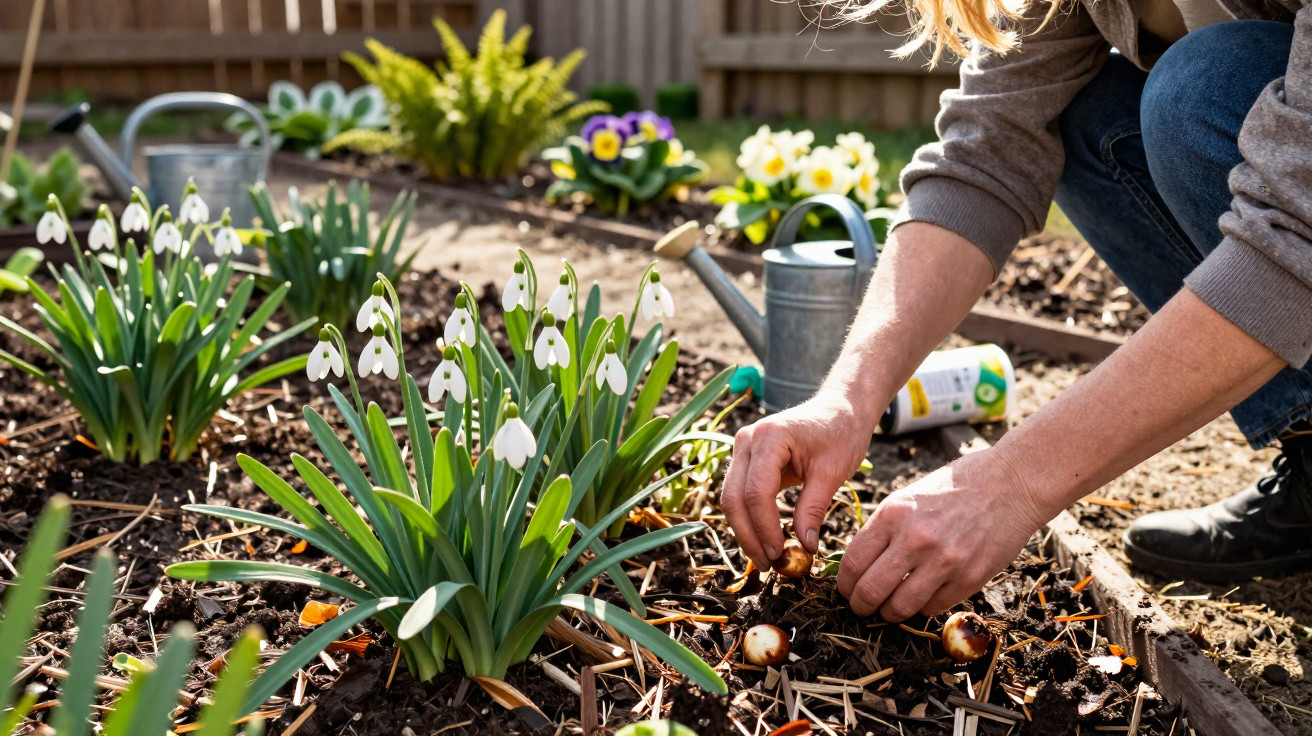
Anyone stepping into a garden or onto a balcony in March notices it straight away: the air has changed. It is no longer simply cold and empty; it carries a promise. The first crocuses push through soggy lawns, while tiny buds gleam on bare branches. This is where that quiet season begins, when people suddenly start sorting seed packets and making planting plans. Not because they have to, but because something inside them longs for a fresh start.
We rarely speak of “happiness” while soil is beneath our fingernails. Still, the two are connected in a curious way: March turns over more than beds; it often stirs our thoughts as well.
Recently, I was standing in an older neighbour’s back garden as she held a packet of radish seeds as though it were treasure. “Last year was hard,” she said, pointing at her vegetable bed, “but these always came up.” She explained that, after her husband’s funeral, she had begun spending a few minutes in the garden each morning in March. Just five minutes to see whether anything was happening. Five minutes became ten, and ten became twenty. When the first red radish tops appeared above the soil, she felt as though colour was returning to her own days, too.
Stories like this are surprisingly common. In surveys, many people say they feel noticeably better in spring when they garden outdoors, even in the smallest space. There are no miracle statistics or grand displays of science behind it. It is more a quiet, everyday kind of magic: you sow in a cold wind, then a few weeks later snap open the first pea pods straight from the plant. And you realise that hope can sometimes taste wonderfully down-to-earth.
Viewed practically, March simply makes sense. The soil remains cool, but it is no longer rock-hard. Day and night are beginning to balance out, and the light returns without yet becoming harsh. For many plants, this transitional period is ideal for putting down roots before summer heat arrives. We are not so different.
During winter, we retreat indoors, pile up to-do lists and put projects off. Then, in March, energy appears from nowhere. You could say that the body senses that everything is allowed to grow again long before the mind catches up. Planting in March lets you make use of nature’s hidden tailwind. Gardening becomes a kind of quiet agreement with life: I will do my part, and time will take care of the rest.
What you can plant in March – and how it can become a happiness ritual
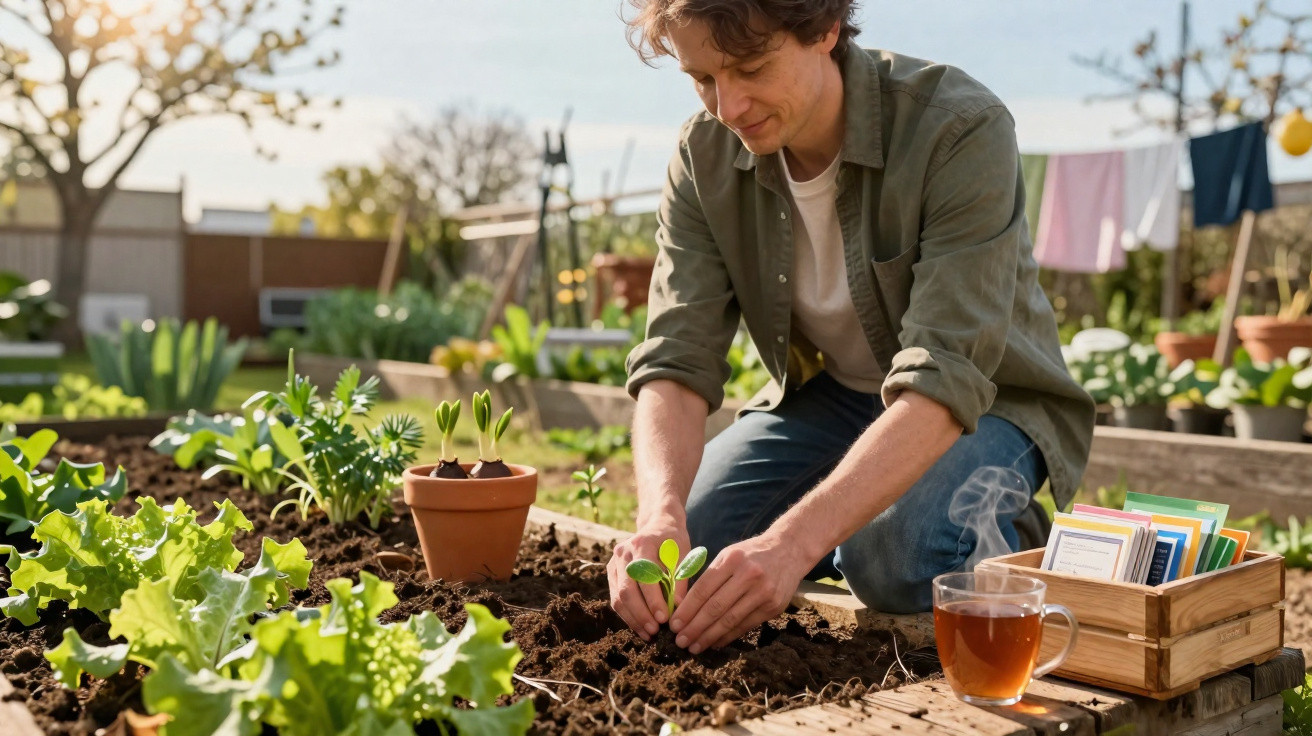
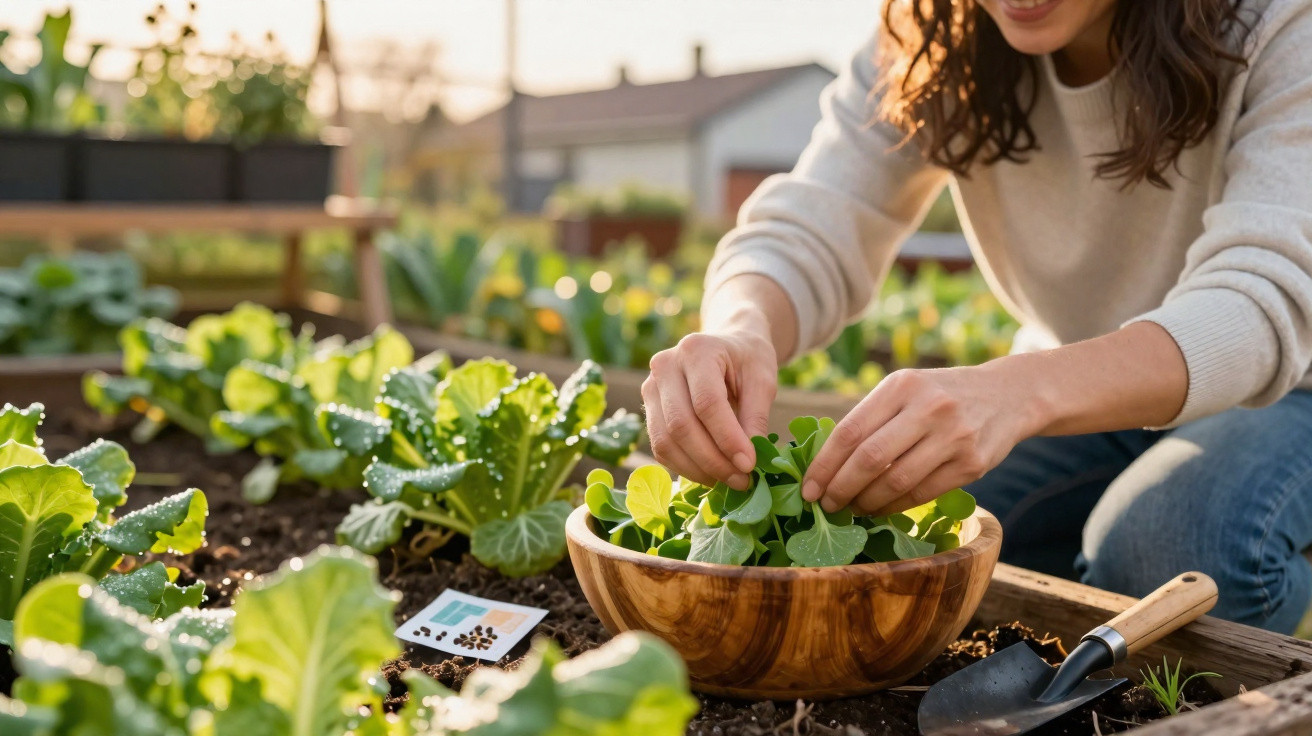
It becomes more practical when you think of March as a runway. Outdoors, sturdy varieties can already go into beds: spinach, lamb’s lettuce, radishes, early carrots, sugar snap peas and broad beans. Herbs such as parsley, chives and coriander work remarkably well in pots. Tomatoes, peppers and chillies can be started indoors on a windowsill. Choosing the perfect varieties matters less than making a simple start.
One small suggestion can make a surprising difference: set aside a “March moment”. Give it fifteen minutes at the same time each day. It does not need to be a major project or a flawless planting scheme. It is simply a regular moment to touch the soil, scatter seeds, turn pots or look for the first shoots. In this way, gardening becomes a quiet ritual that gives your day an anchor.
Let us be honest: nobody goes into the garden every day feeling perfectly Zen. Sometimes you simply do not feel like it, it is raining, or Netflix calls more loudly than the watering can. This is exactly when many of us judge ourselves harshly: “I cannot even manage to grow a few herbs.” That sentence consumes more motivation than any slug.
A kinder approach looks different: mistakes belong to planting season just as much as wet shoes belong to spring. You will sow something too early, water too much or forget a plant entirely. Even so, a delicate shoot will emerge somewhere and surprise you. Rather than berating yourself, tell yourself: “Okay, that was an experiment. The next pot gets a second chance.” Gardening in March also means becoming more forgiving towards yourself.
Many people who have been planting for years describe a repeating effect: with every spring, not only does the garden grow, but so does their trust in their own rhythm.
“I learned in the garden that nothing has to be perfect to be beautiful,” a young father who sows sunflowers with his son every March told me. “We lose half of them to slugs, some bend over, and some grow huge. And every time my son says, ‘Look, they made it.’”
If you would like to use that feeling for yourself, small and manageable steps can help. For example:
- Begin with no more than three different plants instead of taking on too much.
- Mark your “planting start” in the calendar as you would an appointment with yourself.
- Photograph your bed or balcony once a week to properly notice the growth.
- Create a “mistake box”: a pot where you can try anything without pressure to get a result.
- Talk to someone about your planting plans; ideas grow more easily together.
When soil becomes stories: what March quietly tells us
By the end of March, what remains is often more than a few green leaves. Those who plant at this time remember months later not only what grew in the bed, but also how their own spring felt. Some connect their March sowing with farewells, others with moving house, and still others with a very quiet new beginning after burnout. You stand there in a hoodie among half-frozen terracotta pots, with no idea that these meagre seeds will one day become an entire summer evening, with friends, tomato salad and a glass of wine.
Perhaps that is why planting in March appeals to us so strongly: it forgives us for not becoming new people on 1 January. It says: you can begin at any time. Not with a radical programme, but with a handful of seeds. March is quiet enough to listen to us and strong enough to set something in motion. Those who plant now sow not only for summer, but for a memory that lasts. And sometimes, when you walk barefoot through the grass in July, you suddenly realise: happiness began then, in the cold wind, on a day when you thought you were “just putting something in the soil for a moment”.
| Key point | Detail | Benefit for the reader |
|---|---|---|
| March as a starting signal | A transitional season with ideal conditions for many hardy crops | The reader understands why planting projects are more likely to succeed right now |
| Small rituals rather than perfection | A regular “March moment”, a limited selection of plants and photographic tracking | A practical, everyday plan for genuinely getting started |
| Gardening as an emotional anchor | Planting as a quiet ritual during difficult times and periods of new beginnings | The reader senses the emotional benefit and links gardening with self-care |












Comments
No comments yet. Be the first to comment!
Leave a Comment