For the third day running, I found myself standing in front of that pitiful tomato cane. On the left, my neighbour’s enormous trusses; on the right, my own meagre little crop. The compost was grey, the pot dry around its edges, and my neighbour gave me a sympathetic but politely unspoken look. I sniffed the soil as though it might whisper its secret to me. Nothing – just dust and a hint of autumn.
That evening, I scrolled through gardening forums: a world of half-anonymous usernames and wonky mobile-phone photos. Among all of it, the same claim kept appearing: one simple fertiliser recipe that supposedly makes everything grow. Balconies, beds, houseplants. It sounded far too good to be true.
After filling half a notebook, adding a measure of scepticism and giving in to curiosity, I crept out to the back yard with an old glass bottle. Looking back, what happened to my plants next seems almost like a tiny animated film – except it was real.
A quiet revolution in the watering can
We all know the feeling: you water your plants, glance at them as you pass, and honestly cannot spot any change. Everything remains just “so-so”. Neither dead nor properly alive. Simply greenish-beige. Eventually, you accept it in the same way you accept bad canteen food.
This one fertiliser recipe that so many people talk about changes precisely that feeling. Not with a dramatic overnight transformation. It is more like turning a dial down until, suddenly, the music in the room sounds right again. Leaves become rich rather than merely green. New shoots emerge faster than you expect. And you catch yourself lingering in front of your plants for longer.
Let’s be honest: in day-to-day life, hardly anyone mixes five different specialist fertilisers for individual plants. Few people keep fertilising calendars or calculate N-P-K ratios. Most of us pick up whatever happens to be on offer at the DIY shop. This recipe works because it turns chaos into a routine that still feels manageable on a tiring evening.
I first tried it on something I could afford to lose: a neglected supermarket basil pot. Its leaves drooped, its stems were half woody, and I had already mentally written it off. One final experiment before the food-waste bin. I mixed the liquid, poured a small amount around the roots, then returned the pot to its place on the kitchen windowsill.
For three days, it seemed as though nothing happened. Then, one morning, fresh glossy shoots suddenly pushed upwards between the old, tired leaves. The green looked almost cheeky. After ten days, I could harvest again. It was not as lush as it looks in adverts, but there was enough to finish a pasta dish and make me think: perhaps this is more than hocus-pocus.
Later, my tomatoes received the same mixture, as did the tired monstera in the living room and even the sad lavender on the balcony. Different plants, one formula. It is not a miracle potion that makes everything explode within two days. It is more like steady tailwind, gradually turning “barely alive” into “Wow, when did that happen?”
From a scientific perspective, there is nothing especially magical about it. Plants primarily need three major nutrients: nitrogen for leaf growth, phosphorus for roots and flowers, and potassium for resilience. Most hobby gardeners either supply too little or add nutrients in a random muddle. This recipe brings together the basics: organic materials that release nutrients gradually, combined with a little food that is more readily available.
The interesting part is that the mixture works with the soil rather than against it. Microorganisms receive food, the structure becomes looser, and water is retained more effectively. Your fertiliser suddenly becomes more than a quick burst of energy; it is a small ecosystem in a jar. That explains why the benefits are not limited to one plant, but can extend across your whole little balcony jungle.
The real trick is not one individual ingredient, but the combination and the regularity. It is a recipe simple enough to use consistently, yet complex enough to be more than sugar water for plants.
The fertiliser recipe: simple, inexpensive and suitable for almost everything
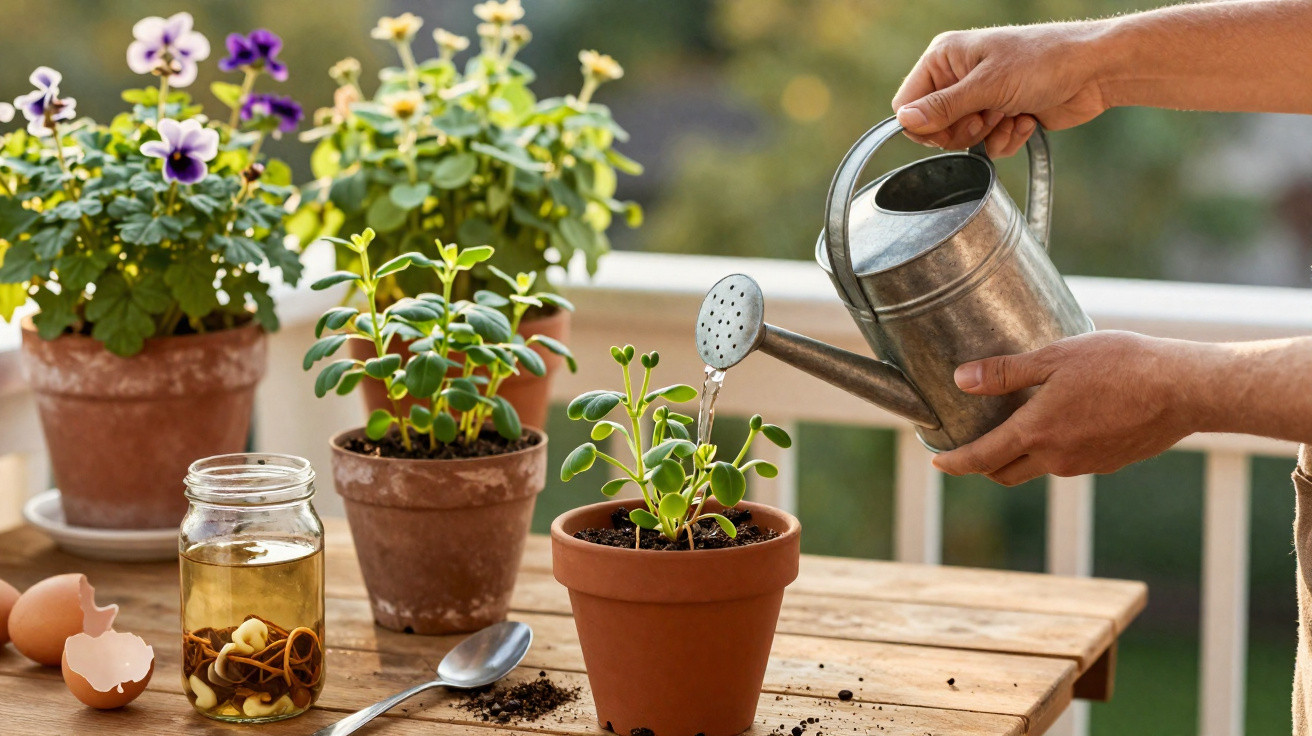
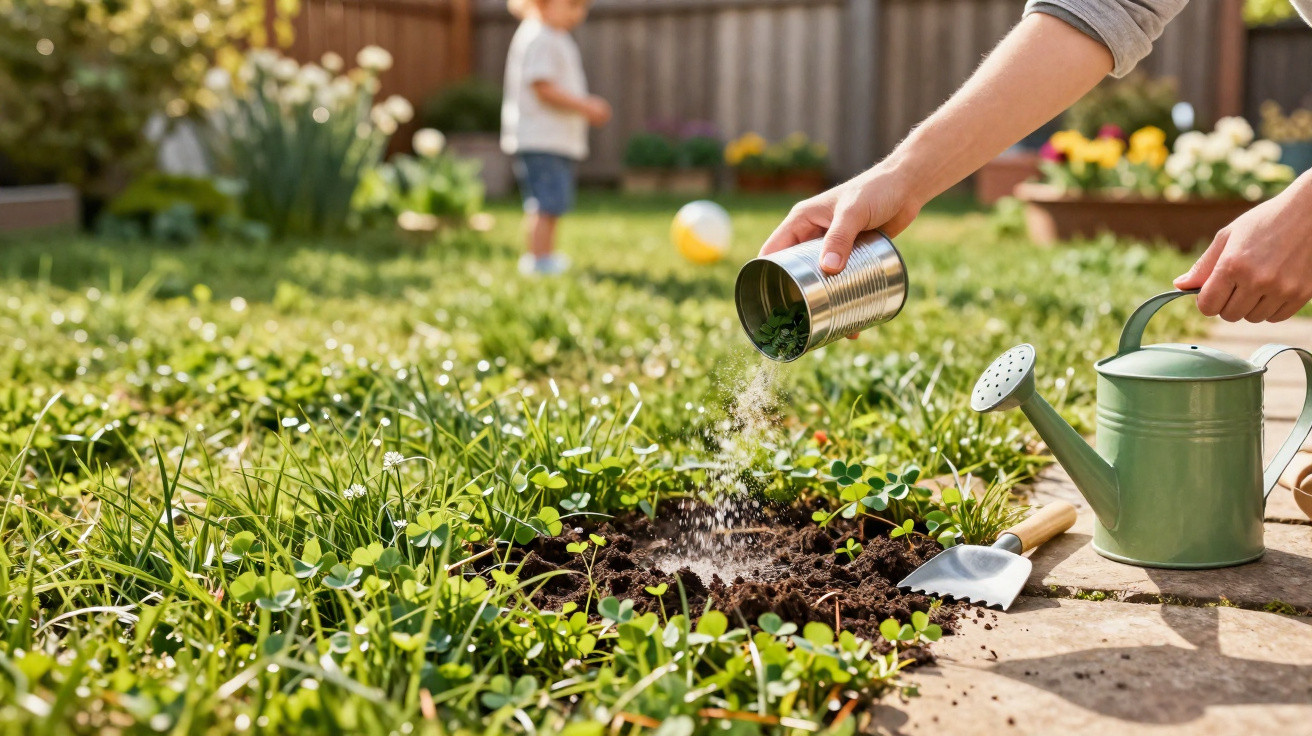
At its core, the basic recipe that repeatedly appears across so many forums looks something like this: you need coffee grounds, eggshells, banana peel and, if you wish, a little honey or molasses. They are all things that naturally arise in the household anyway. No laboratory and no specialist bottles – just a large jar or an old bottle with a lid.
Over one or two days, collect dry coffee grounds, crush one or two eggshells into small pieces, and cut a banana peel into strips. Put everything in the jar, top it up with lukewarm water, add a teaspoon of honey and put on the lid. Leave the mixture to steep at room temperature for at least 24 hours, though 48 hours is better.
One point matters: always shake it well before watering, then dilute the liquid with water at roughly 1:10. In other words, use one cup of the “brew” in a large watering can. Once a week is entirely sufficient for most plants. There is no daily ritual and no need for a doctorate. Pick a regular day, fill one watering can, and enjoy a brief moment of “I’m looking after you now”.
It is tempting to use plenty straight away: more coffee grounds, more shells, more brew, because “then it will work faster”. That is exactly where it often goes wrong. Fertiliser that is too concentrated stresses plants, especially those in pots. The compost becomes too acidic, mould thrives, and roots retreat rather than spreading.
Many people also make the mistake of scattering fresh, still-warm coffee grounds in clumps over the surface of the compost. It may look as if you are doing something useful, but it quickly forms a hard crust. It is better to let the grounds dry first, use them crumbly, or make the liquid fertiliser instead. And if a plant has just been repotted, allow it time to settle in before you begin fertilising.
Let’s be realistic: nobody truly measures out exactly one teaspoon every time or records when they last fertilised. If you notice yellowing leaves or a plant that looks limp, using less may be better over time. Fertiliser is support, not a cure-all for every aspect of care we have neglected.
A gardener I met at a small urban gardening festival said something that stayed with me:
“Most plants do not die because they receive too little – they die because, in our impatience, we give them too much.”
The strength of this recipe lies in that patient middle ground. Yes, you are working with kitchen scraps. But you treat them as something valuable rather than as waste. In doing so, you develop a sense of when your plants are genuinely “asking” for nourishment.
What has proved useful in practice:
- Start small: test it on one or two plants first, rather than your entire collection.
- Check the smell: if the brew smells strongly rotten, dispose of it and make a fresh batch.
- Do not water in direct sunshine; choose morning or evening instead.
- Watch the leaves: deeper green foliage and new shoots are positive signs.
- Refresh ordinary compost at least once a year – fertiliser does not replace changing the growing medium.
Why this “one recipe” is more than a trick
A few weeks after making my first brew, I noticed something odd: I no longer stopped briefly at the door with the watering can. I crouched down, looked more closely at the leaves and ran my hand over the compost as though it were a fabric I liked. This simple fertiliser recipe had made me spend regular but relaxed time with my plants.
Chemically, the blend of coffee grounds, peels, shells and water is not revolutionary. The real difference comes from how easy it makes it to keep going. There is no complicated schedule, no expensive bottles and no guilty feeling with every watering session. Plant care suddenly stops feeling like a chore and becomes a small recurring ritual.
Perhaps that is the hidden heart of this “one recipe that makes everything grow”: it does not only encourage leaves, roots and flowers to grow. It also grows our attention, our patience, and that quiet sense of wonder when an almost abandoned basil pot becomes something alive again, smelling of summer.
| Key point | Detail | Benefit for the reader |
|---|---|---|
| Simple universal recipe | Coffee grounds, eggshells, banana peel, water and a little honey/molasses | Make an effective fertiliser from household scraps without extra cost |
| Gentle application | Steep for 24–48 hours, dilute 1:10 and water once a week | Less risk of over-fertilising and easy to fit into everyday life |
| Observe rather than overdo it | Read plant responses, give less when plants are stressed, and support healthy soil life | Healthier plants over the long term and a better feel for your own “micro-garden” |













Comments
No comments yet. Be the first to comment!
Leave a Comment