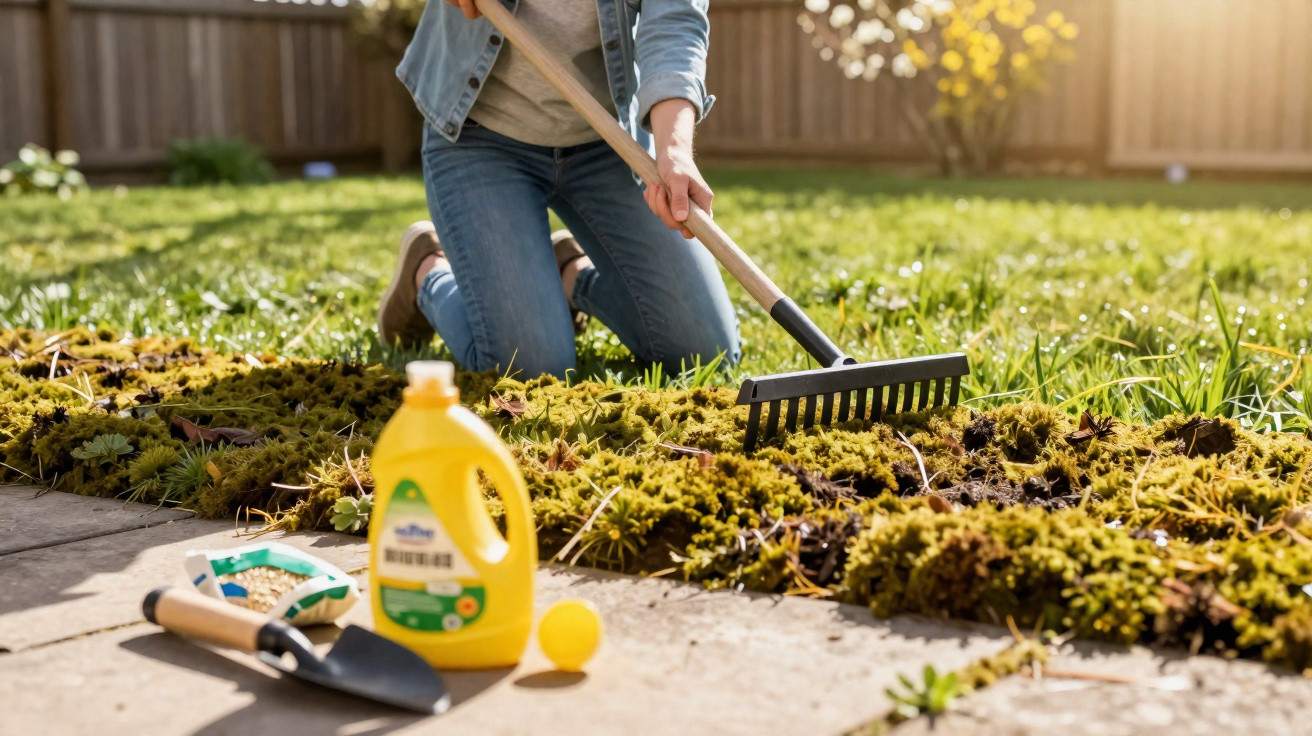
Many amateur gardeners reach for what seems to be a miracle solution from the kitchen cupboard. A squirt of washing-up liquid in the watering can, spread briefly over the lawn, and the moss problem is supposedly gone. However, specialists issue a clear warning: in the long run, this very approach damages the soil and weakens the lawn even further.
Moss in the lawn: why it appears everywhere after winter
The same scene plays out in countless gardens every year. As soon as the snow has disappeared, patchy dark-green cushions emerge among the grass. Shaded corners, damp hollows, and areas beneath trees or alongside dense hedges are particularly affected.
Lawns struggle over winter. Cold temperatures, waterlogging and limited light slow their growth. The grass becomes sparse and its roots weaken. Moss takes ruthless advantage of precisely these gaps. It requires fewer nutrients, copes with low light and thrives in damp soil.
Soil scientists and gardening experts also point to a second crucial issue: soil condition. Where ground is heavily compacted, whether from frequent foot traffic or heavy equipment, or has received little fertiliser for years, the lawn is at a disadvantage. Its roots penetrate only shallowly, the grass becomes thin and moss spreads.
“Moss is not a coincidence but a warning sign: there is something wrong with the soil, and the lawn is weakened.”
This is why moss can quickly develop from a harmless patch into a carpet covering the entire lawn, especially in poorly maintained gardens. Anyone who focuses solely on treating the symptom often makes the problem worse without realising it.
Why washing-up liquid does not belong on a lawn
The same advice has circulated in online forums for years: dilute washing-up liquid with water, spray it over the lawn and “burn” away the moss. It sounds tempting because the bottle is already in the house and takes little effort to use.
That is exactly where the issue lies. Washing-up liquid is designed for greasy plates, not living soil. Its surfactants dissolve grease and deposits, but they can also attack delicate structures within the soil. They disrupt the micro-organisms responsible for building healthy humus and may damage fine grass roots.
Environmental and landscape-management specialists warn of a whole range of consequences:
- Disruption to the soil microfauna, including bacteria, fungi and tiny organisms
- Weaker root development in grasses
- A slippery, unnatural surface soil structure
- Leaching of ingredients into deeper soil layers or groundwater
Using washing-up liquid across a large area changes the soil’s living ecosystem, and not in the lawn’s favour. Moss may temporarily recede or discolour, but in the long term it leaves behind a weak, patchy lawn where the next cushions of moss can establish themselves even more easily.
“Quick fixes using household products often work only on the surface – the real damage happens in the soil.”
The straightforward professional method: mechanical rather than chemical
The good news is that a lawn with little moss needs neither specialist chemicals nor dubious household remedies. Gardening professionals mainly rely on simple mechanical measures.
First step: mow correctly and rake vigorously
At the start of spring, mow the lawn slightly shorter than you would in summer. This lets more light reach the turf, reducing one of moss’s advantages. Follow this immediately with thorough raking using a sturdy lawn rake.
This combing-out process has several benefits at once: old clippings and matted plant material are removed, much of the moss is pulled out, and the surface is loosened. Many amateur gardeners are surprised by how much collects in the rake, often far more than they expected at first glance.
Scarifying: a brief alarming phase, then a denser lawn
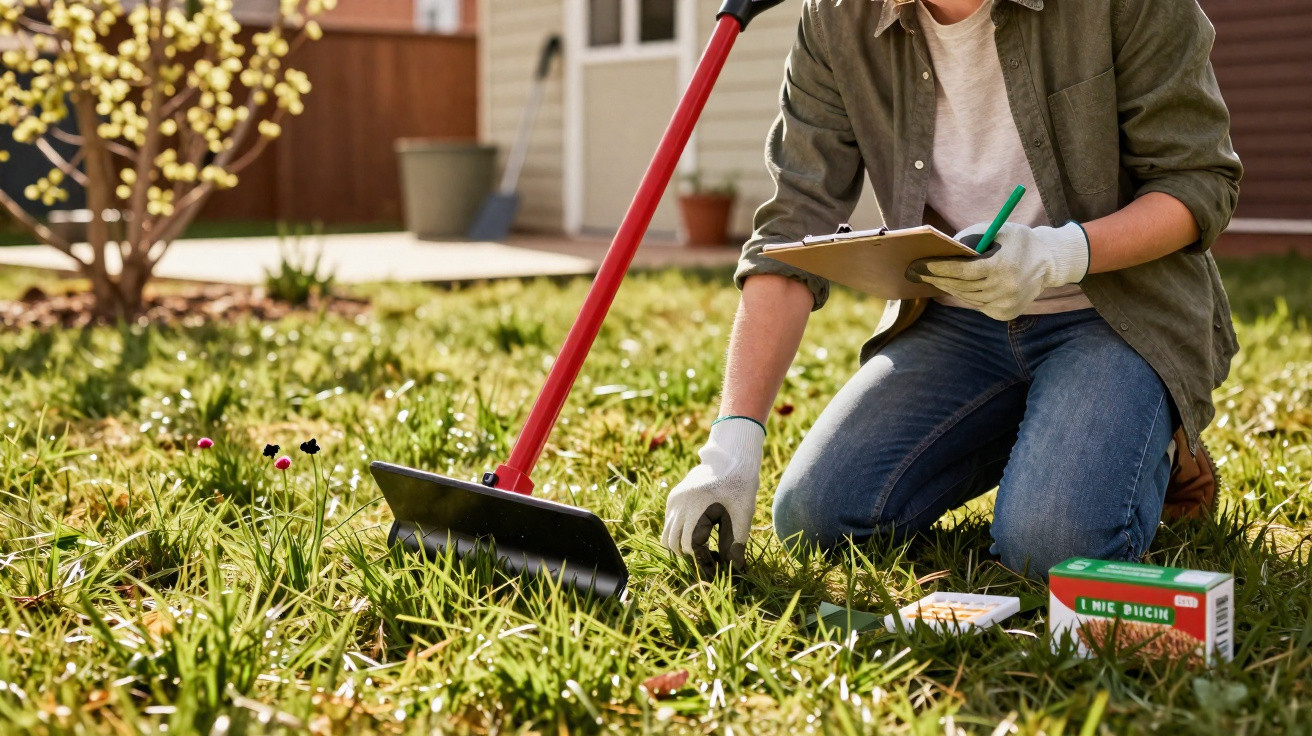
When moss and lawn thatch are already well established, raking alone is generally no longer enough. This is when a scarifier is needed. The machine cuts a few millimetres into the ground, brings moss and thatch to the surface, and allows more air to reach the roots.
The appearance immediately afterwards can be alarming: the lawn looks full of holes, brown and partly “scratched up”. Experienced gardeners know this moment and do not worry. Over the following weeks, the lawn recovers and often grows back denser than before, as water and nutrients can once again reach the roots more effectively.
“Those who are not put off by the briefly shocking appearance after scarifying are often rewarded with a much denser lawn.”
Filling gaps: overseed rather than simply hoping
Any bare patches created by scarifying or raking should be overseeded straight away. Special overseeding mixes germinate quickly and fill the gaps. This inhibits fresh moss growth, since moss loves exposed, uncovered areas of soil.
Gently rolling the area or pressing it down with the soles of your shoes improves seed-to-soil contact. During the first few weeks, these areas need consistent moisture, but must not become waterlogged.
When moss takes over: what else can be done
For severely matted areas, such as lawns neglected for years, some garden owners use moss treatments based on iron compounds. The active ingredient turns the moss black within a few days, after which it can be raked away.
Such products should be used with restraint. Although they remove the visible mass of moss, they do nothing to address the underlying causes, such as shade, compaction or nutrient deficiency. Without tackling these issues, the moss will soon return.
Alternative remedies such as wood ash or bicarbonate of soda are also frequently mentioned. Their effectiveness varies greatly because it depends on the soil type, pH value and moisture levels. In some gardens, they have hardly any effect; in others, they can cause unwanted changes to the soil.
Prevention is more effective than any emergency solution
Gardening experts broadly agree that the best protection against moss is a vigorous, dense lawn. Those who maintain it regularly rarely need harsh treatments. Three measures stand out in particular:
| Measure | Effect on the lawn | Benefit against moss |
|---|---|---|
| Soil aeration (scarifying, aerating) | Better root respiration, less waterlogging | Conditions less favourable for moisture-loving moss |
| Fertilising according to need | Strong growth, dense turf | Few exposed soil patches for moss |
| Moderate watering | Resilient, deep roots | Fewer permanently damp areas |
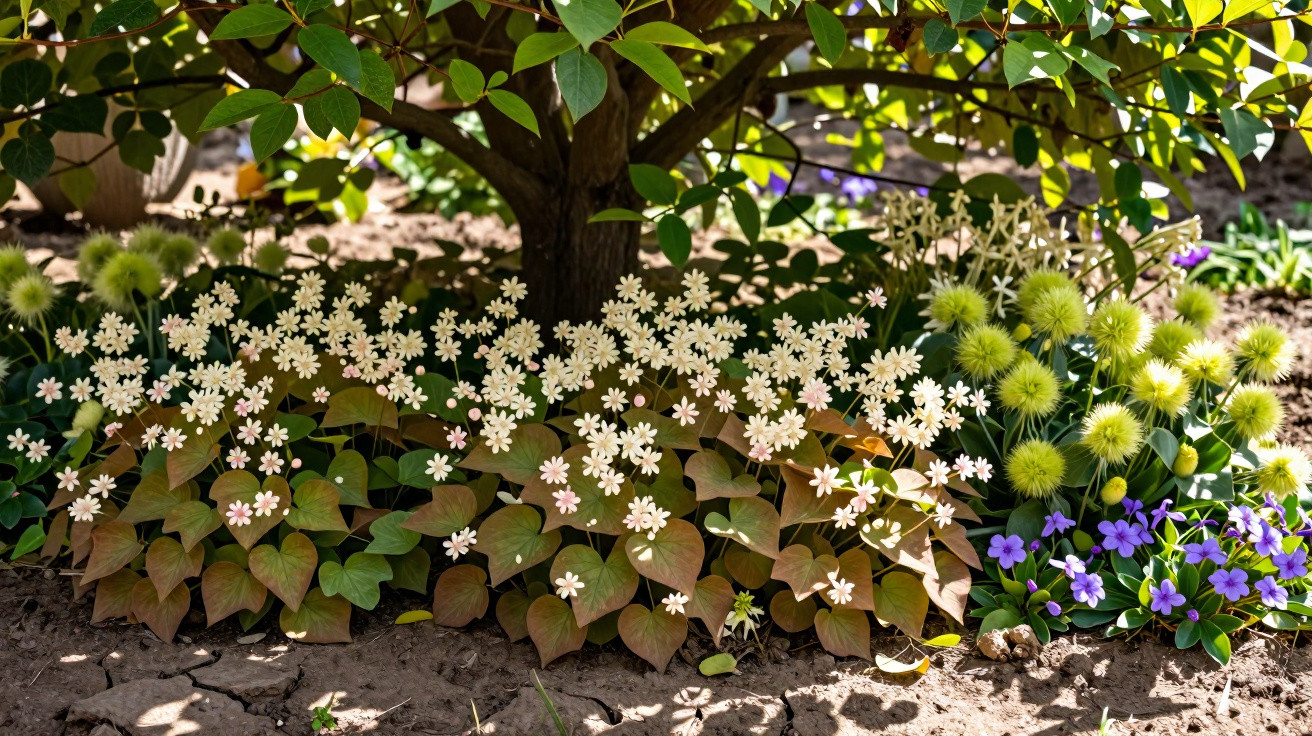
The site itself also matters greatly. Permanently deeply shaded spots beneath mature trees often cannot be turned into a perfect lawn. A change of approach may be sensible here: rather than repeatedly battling to repair the grass, consider shade-tolerant perennial ground cover or a planted bed.
Practical tips for next spring
Anyone wishing to avoid the next moss shock can start planning now. This simple checklist provides useful guidance:
- Inspect the lawn in late winter: where do puddles form, and where is there constant shade?
- In spring, mow first, then rake thoroughly or scarify.
- Overseed bare patches immediately and press the seed down lightly.
- Fertilise the lawn 2–3 times during the year, as needed.
- Keep footpaths as concentrated as possible so the soil does not become compacted everywhere.
- Consistently avoid washing-up liquid, vinegar, salt and similar “magic” remedies.
With this approach, there is no need to see moss as an enemy, but rather as an indicator: if it returns, something is still not right with the site, maintenance or soil. That is exactly when it is worth making adjustments.
Terms such as “scarifying” can sound daunting to beginners. In practice, the process is far less dramatic: a machine with rotating blades cuts fine slits into the soil, lifts moss and thatch, and leaves behind a “scratched” turf surface. This brief intervention restores air, water and nutrients to where the lawn needs them.
Anyone who views their garden as a long-term project can take a far more relaxed approach: it is better to carry out a few simple, recurring tasks every year than to panic in spring and burden the soil with washing-up liquid or other quick fixes. The lawn may not be as perfect as a golf course, but it will remain stable, walkable and, above all, considerably less mossy.














Comments
No comments yet. Be the first to comment!
Leave a Comment