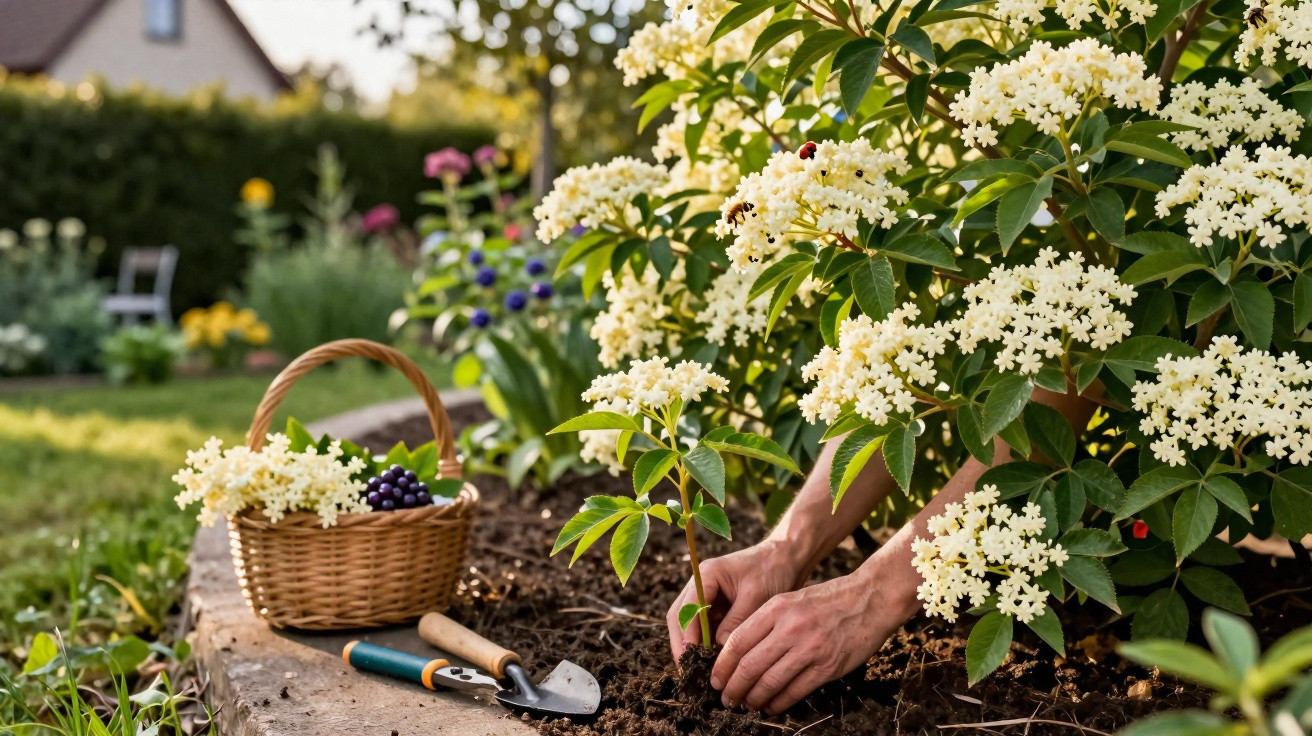
In winter, it is easy to miss when walking through the garden: bare, see-through and tucked away at the edge of a hedge. Yet as soon as temperatures rise, this native shrub becomes a pale cloud of blossom, turning a quiet garden into a lively meeting place for insects and birds. Plant it now and, before long, you can enjoy flowers, berries and remarkably little maintenance.
A native classic that many people no longer notice
This is the black elder, botanically known as Sambucus nigra. It occurs in almost every type of landscape, along field margins, verges and railway embankments. Its familiarity means that many gardeners simply overlook it – a mistake, because this shrub has a great deal to offer.
In late spring, it is covered in large, cream-coloured flower heads. Their fragrance is unmistakable: gently sweet and somewhat reminiscent of childhood memories of homemade cordial. The blooms are a real draw for insects, with bees, hoverflies and butterflies flocking to them.
“Black elder is one of the most rewarding native shrubs: hardy, ecologically valuable and also a culinary insider tip.”
By summer, the flowers develop into dense clusters of blackish-purple berries. They provide an important food source for blackbirds, thrushes and many other bird species. A single elder shrub can therefore turn a secluded garden corner into a small nature reserve.
At a glance: why black elder suits almost every garden
| Latin name | Sambucus nigra |
| English name | Black elder |
| Size | Around 3–6 m tall and 2–4 m wide |
| Position | Full sun to partial shade |
| Hardiness | Down to around –20 °C |
| Leaves | Deciduous |
This makes the shrub suitable for more than just large wildlife gardens. Black elder can also work well in an ordinary terraced-house garden, for example as screening towards the back of the plot or as the final element in a mixed hedge.
Why planting black elder now matters so much
The first weeks after planting establish the foundations for a healthy black elder. March and April are ideal, while the soil still holds sufficient moisture. At this time, the shrub can root quickly and is better prepared for its first summer.
Elder enjoys light but will also tolerate partial shade. Varieties with colourful foliage, such as purple or golden-yellow leaves, retain their strongest colouring when they receive enough sun.
How to plant black elder correctly
- Choose a bright site in full sun or partial shade.
- Dig a planting hole at least twice as wide as the root ball.
- Mix in well-rotted compost to give the plant a good start.
- Water generously after planting, until the soil is thoroughly soaked.
- Cover the ground around the shrub with mulch to retain moisture.
- Watch the young shoots during the first few weeks, especially in dry, windy positions.
Once established, black elder manages surprisingly well on its own. It copes with dry spells far better than many modern ornamental shrubs. Newly planted specimens are the one exception: during their first summer, they need a substantial watering from time to time if dry weather persists.
Easy to maintain, but not entirely without pruning
Elder grows fairly quickly and can become spreading over the years. A straightforward pruning routine helps it stay vigorous and prevents it from becoming overgrown and unproductive.
A light prune in spring is generally enough:
- Remove dead branches.
- Cut out shoots that cross one another or grow towards the centre.
- Remove root suckers if they become troublesome.
Every few years, the shrub will also cope with a harder prune, best carried out in late winter. Remove several of the oldest and thickest stems close to ground level. This encourages strong, young replacement growth. Those brave enough to prune heavily should expect fewer flowers the following year, but will be rewarded with a noticeably rejuvenated shrub.
Flowers and berries: straight from the garden to the table
Few other native shrubs combine a wildlife garden with the kitchen as gracefully as black elder. Pick the flowers as soon as they have freshly opened and smell fragrant, ideally on a dry morning.
“Flowers for cordial and berries for jelly: elder creates its own very distinctive world of flavour in the home.”
Typical uses for elderflowers
- Cordial: Infuse flower heads with water, sugar and lemon, leave for several days, strain, then boil down.
- Batter: Dip whole flower heads in a thin batter and fry them in hot fat – a classic country-kitchen treat.
- Aromatic vinegar: Steep several flower heads in mild vinegar for a delicate, floral flavour.
The berries follow in late summer and early autumn. Once cooked, they work well in jelly, juice or fruit purée. They should only be eaten in very small amounts when raw, however, as they can cause mild digestive upset. Cooked berries, by contrast, are perfectly useful and provide an intense dark colour.
Mistaken identity and safety: what gardeners should consider
For all the appeal of elder, one point remains important: not every species is equally harmless. In horticulture, it is primarily black elder that matters – a woody shrub or small tree that grows several metres high and has grey-brown bark.
It should be distinguished from the so-called dwarf elder, another species altogether. This plant looks more like a tall perennial, does not become properly woody and is considered more poisonous. Anyone wanting to bring elder in from the wild should, when in doubt, choose a young plant from a nursery rather than digging up a wild specimen.
Black elder as part of a lively hedge
Anyone planning a wildlife-friendly garden can deliberately incorporate black elder into a mixed hedge. It works especially well alongside:
- Hazel
- Blackthorn
- Hawthorn
- Wild roses
- Wild cherry
Combinations such as these provide nectar, pollen and fruit for many months, making front gardens and property boundaries far more interesting than a uniform row of thuja. At the same time, a diverse hedge improves the garden’s microclimate, offers shelter from the wind and creates refuges for hedgehogs, birds and beneficial insects.
Why planting now is worthwhile
Planting in early spring lays the foundation for a well-established ecosystem in your own garden. Black elder may produce its first flower heads in its first year, then really gets going in its second and third years. While other shrubs demand intensive care, this one usually needs little more than a quick check with the secateurs and the occasional watering can.
Anyone who wants more nature, more life and a little traditional cooking from the garden is unlikely to go wrong with this shrub. What looks like an unremarkable, bare framework in winter becomes, year after year, a bright gathering place for insects, birds and people at the garden table.












Comments
No comments yet. Be the first to comment!
Leave a Comment