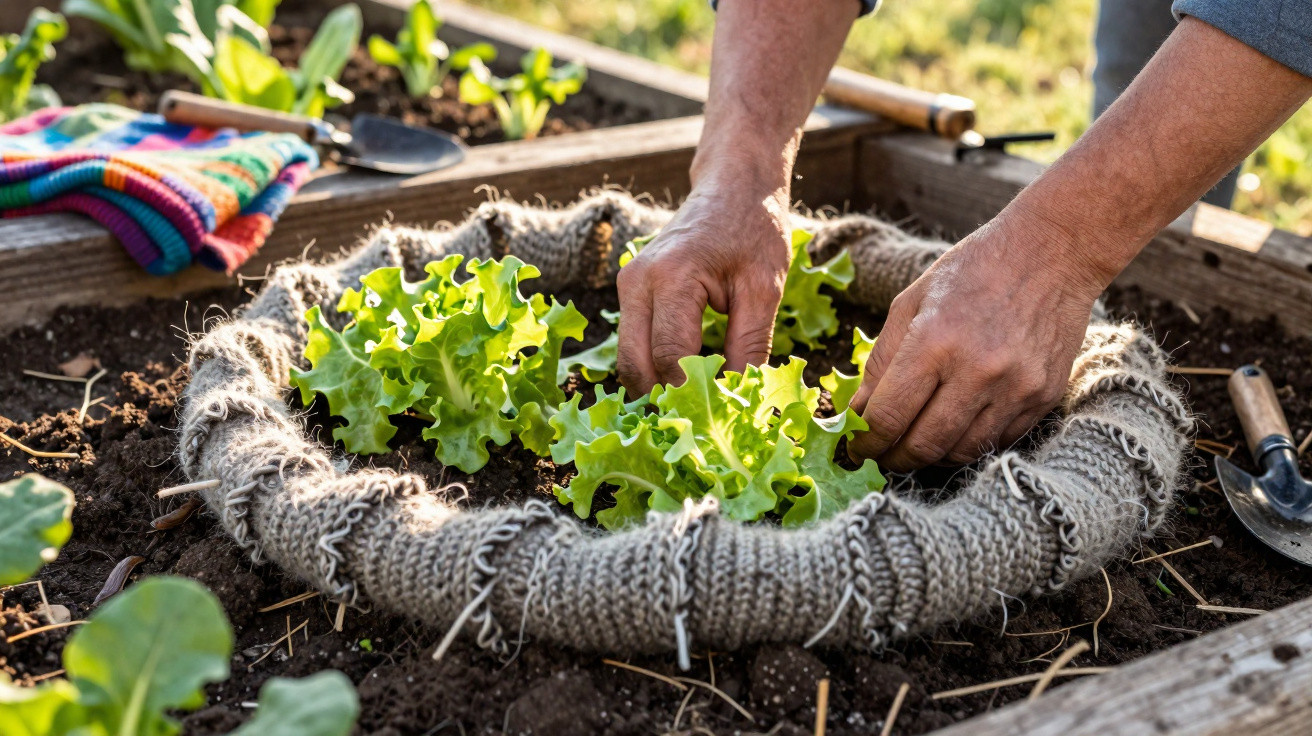
An overlooked everyday item from the wardrobe can become a surprisingly effective form of defence.
Anyone who has gone out to the vegetable patch in the morning only to find chewed remnants of lettuce will know the frustration. Many people then turn to beer traps, slug pellets or ever more garden netting. Yet the answer may already be sitting in a cupboard: old, felted wool jumpers that would otherwise have gone in the bin.
Slug alert in the vegetable patch: why conventional tricks are often frustrating
During mild, damp winters and wet springs, slugs are active almost continuously. They shelter beneath leaves, layers of mulch or boards, then emerge at night when conditions are cool and moist. Their particular favourites include:
- young lettuce plants
- spinach and chard
- tender cabbage plants
- dahlias, hostas and other perennials with soft foliage
Many amateur gardeners scatter wood ash around their plants. While the ash remains dry, it creates an unpleasant ring that slugs are reluctant to cross. However, the first shower washes away the effort: the ring disappears and the slugs carry on. Copper tape is often seen as an alternative, but it costs money and has to be laid very carefully so that no “bridges” are created.
“The most reliable way to protect a vegetable garden is still a clear, unbroken barrier around vulnerable plants – entirely without poison.”
Why wool stops slugs: the surprising effect
Wool works not because it is toxic, but because it creates physically unpleasant conditions. Wool fibres have microscopic scales, while genuine wool can absorb a great deal of moisture – around one third of its own weight.
A slug moves by producing slime. This creates a lubricating layer across which its body effectively “surfs”. When that slime meets wool, something uncomfortable happens: the fibres readily absorb the film. The surface stays rough and grippy, the slug’s body experiences greater friction, and moving across it becomes laborious and energy-intensive.
In the vegetable patch, the result is that the slug finds the wool surface unpleasant, turns back and looks for an easier route. There is no poison and no chemical involved, only a mechanical barrier that fits perfectly into an organic or permaculture garden.
“A wool barrier works like miniature barbed wire: unpleasant enough that slugs prefer to keep their distance.”
Using old wool jumpers as a barrier: the zero-waste solution
The clever part is that this type of slug protection does not require anyone to buy new products. Many households already have discarded jumpers that are too small, felted or out of fashion.
Choosing the right jumper
Only textiles with a high wool content are suitable for an effective barrier. Garments containing at least 80 per cent wool are ideal. These can include:
- traditional sheep’s wool
- cashmere, alpaca or merino
- thick Norwegian jumpers or cardigans
Synthetic fibres such as polyester or acrylic offer very little benefit. They have neither the characteristic scaled structure nor wool’s high moisture absorption.
One further tip is not to wash the jumper especially before cutting it up. Unwashed wool still contains lanolin, the natural wool grease. It has a faintly animal-like smell and may further increase the deterrent effect on slugs.
Step-by-step guide to a wool barrier
- Remove labels and plastic parts, and unpick thick seams if needed.
- Cut the jumper into strips roughly 10 to 15 centimetres wide.
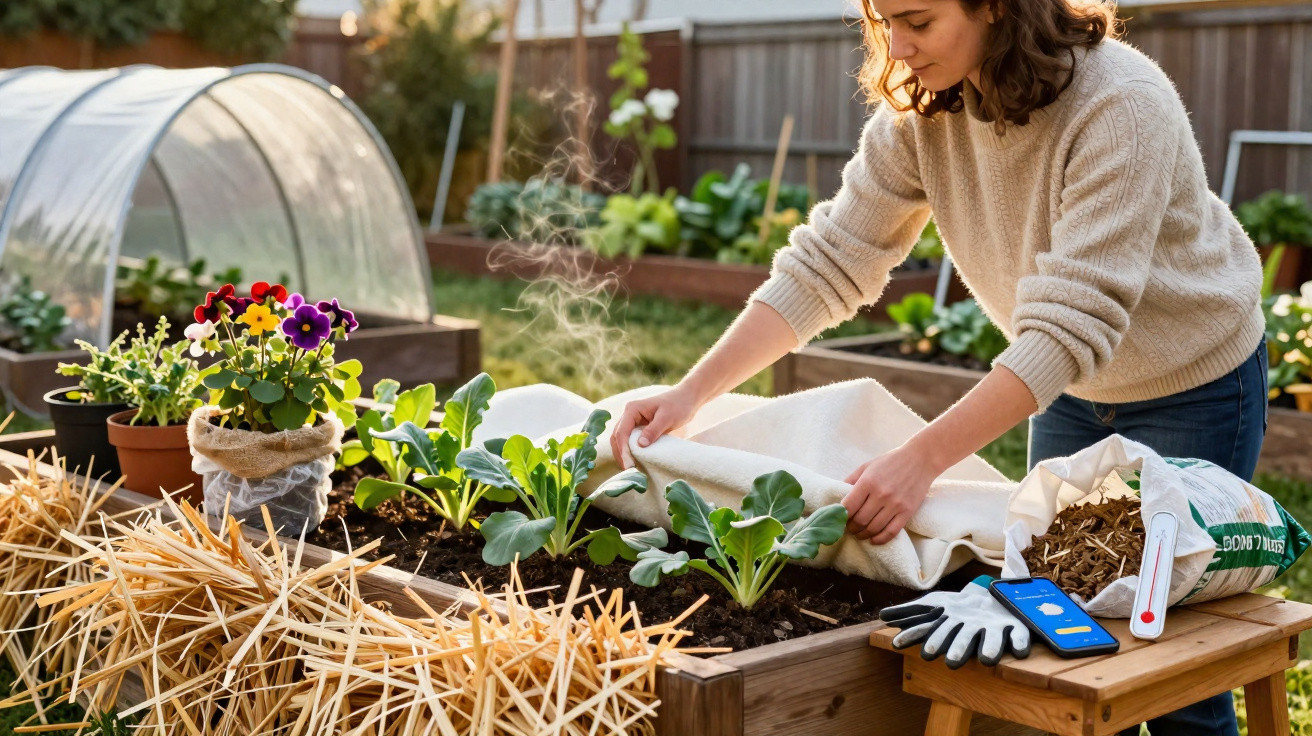
- Place each strip so that it forms a complete ring around the plant.
- Press the edges firmly against the soil so that no gaps remain.
- Secure it every 20 centimetres with wire pegs, stones or small wooden sticks.
Ideally, this creates a closed, close-fitting “wool collar” around courgettes, dahlias, lettuces or other slug favourites. A gap of just a few centimetres can be enough for the animals to wriggle through after all.
“The most important rule is this: the wool ring must not be broken anywhere – even the smallest breach becomes a slug motorway.”
How long does wool protection last in the garden?
Experience from organically managed gardens indicates that a wool ring laid once can last for an entire season. Around courgettes or pumpkins planted outdoors in mid-May, the protection often remains effective until autumn. Even heavy downpours make little difference, as the wool dries out and stays scratchy.
It is worth checking the barrier after more intensive work in the bed, such as weeding or moving plants. If the ring has shifted or become partly covered with soil, its protective effect may weaken. Small gaps can be quickly closed with an extra strip.
Over time, the wool starts to rot down. This happens slowly and eventually adds some organic material to the soil. Unlike plastic netting or synthetic fleece, it therefore leaves no lasting waste in the garden.
Chemical-free compared: ash, copper or wool?
Three methods come up repeatedly among amateur gardeners: ash, copper and now wool. Each option has its own characteristics.
| Method | Advantages | Disadvantages |
|---|---|---|
| Wood ash | Free, quick to scatter, effective in the short term | Ineffective after rain and must be renewed constantly |
| Copper tape | Long-lasting material, reasonably reliable when installed neatly | Purchase costs, time-consuming installation, not compostable |
| Wool strips | Recycling instead of waste, long-lasting protection, biodegradable | Requires genuine wool and some cutting and fixing work |
Anyone who already owns old wool clothing has an especially inexpensive and sustainable solution in a wool barrier. For larger beds, retailers also sell strips of pure wool fleece that can be laid like tape. The effect is similar to that of a self-cut jumper, but the material is more uniform and available in longer lengths.
Practical tips: where wool works especially well
A wool barrier is particularly suited to individual valuable plants or small groups. Typical uses include:
- beds of lettuce plants that have just been planted out
- courgettes, pumpkins and cucumbers at an early stage
- young perennials such as hostas that regularly fall victim to slugs
- raised beds where individual plants need extra protection
For gardeners wanting to protect many metres of bed edge, a combination is often more effective: wool around particularly vulnerable plants, supplemented with coarse mulch, tidy bed edges and occasional hand-picking in damp weather.
What else gardeners should consider
Slugs make use of every available shelter. Dense grassy edges, fallen boards, old pots or thick layers of mulch immediately beside a bed provide ideal hiding places. Anyone wanting to reduce pressure in the garden should minimise these refuges.
Another consideration is that many garden animals are natural slug predators, including hedgehogs, toads, shrews and some bird species. Those who avoid slug pellets and instead use wool barriers and other mechanical methods support these helpers. Poison-free gardens are generally more stable in the long term and require fewer interventions.
Some background knowledge about the different slug species is also useful. Not all of them cause serious damage. The Spanish slug feeds particularly aggressively, whereas many native species mainly consume dead plant matter. Looking closely allows gardeners to act more selectively, rather than having to fight every slug in the vegetable patch.
Ultimately, an old wool jumper can solve two problems at once: it avoids going into the bin while also saving the next lettuce crop. For many gardeners, this simple idea may become a regular routine when the first young plants are set out in the open ground in spring.












Comments
No comments yet. Be the first to comment!
Leave a Comment