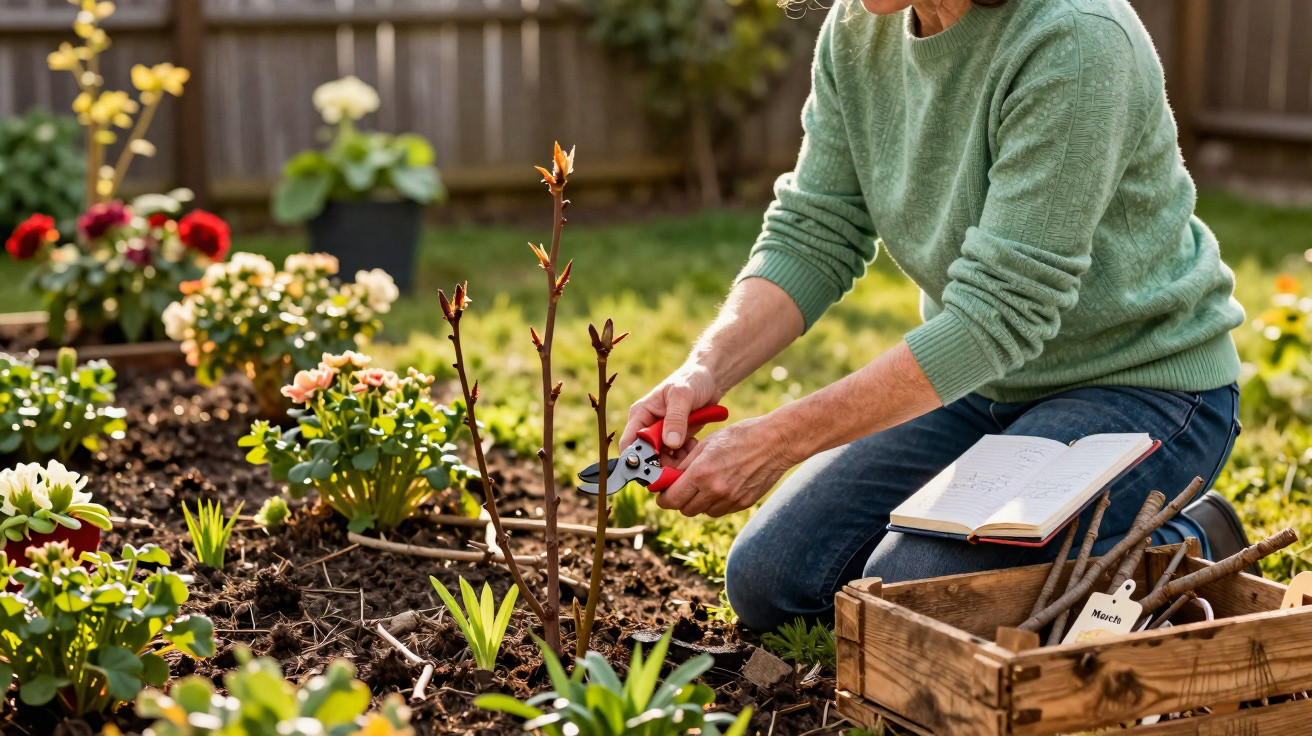
But anyone who prunes the right shrubs in March will reap the rewards in summer.
Between the first buds and the final night frosts, more is decided in the garden than you might expect. TV gardener Monty Don and other experts identify five specific plants for which pruning in March can mean the difference between abundant flowers and a disappointing season.
Why March pruning sets the stage for flowering
As daylight hours increase and temperatures gradually rise, many plants begin to restart their metabolism. This is precisely when woody plants respond especially well to careful pruning. They can direct their energy into vigorous young shoots – and these are where flowers will later form.
Start spring pruning by removing dead, diseased or damaged growth. Such stems drain energy and prevent light from reaching the centre of the plant. Taking them out allows more air and sunshine to reach the remaining branches. This reduces the risk of fungal diseases and encourages denser, healthier growth.
Pruning in March directs the plant’s energy specifically into young shoots – and therefore into more, and often larger, flowers.
Monty Don advises tackling this job during the first third of March, once new buds begin to appear. Shrubs that flower on new wood benefit particularly, including many roses, butterfly bush (Buddleja), certain clematis and some hydrangea varieties.
Monty Don’s simple pruning rule
For successful pruning, Monty Don points to one guiding principle: “Always cut to something.” This straightforward phrase contains an essential technique.
Every cut should finish just above a live bud or side shoot, rather than in the middle of dead wood. The plant will then send nutrients to that point and produce strong new growth there. Leaving a bare stub often causes it to dry out, creating an entry point for fungi and becoming an unhelpful obstruction within the shrub.
Gardeners in mild areas may be tempted to reach for the secateurs as early as February. Experts advise against this while severe frosts remain possible. Young shoots can turn black and die overnight. Waiting until March gives fresh growth a better chance of coming through unharmed.
Sharp bypass secateurs, which cut like scissors rather than crushing like pliers, are recommended for pruning. Clean blades make smooth wounds and reduce the likelihood of disease. Thin, soft shoots can be shortened using well-cleaned household scissors.
These 5 plants should be pruned in March
1. Roses – the spring-pruning classic
Roses appear at the top of almost every professional’s March list. According to plant specialists at British garden centres, this is the ideal time to act: the buds should be starting to swell, but not yet fully opened into growth.
- Cut back all dead, blackened or damaged stems to healthy wood.
- Remove inward-growing and crossing branches to keep the centre open and airy.
- Cut upright stems above an outward-facing bud so the rose grows away from, rather than into, its centre.
- Generally shorten bush roses by between one third and one half.
Climbing roses need slightly different treatment. Retain the main stems, but shorten the lateral flowering shoots to a few buds. This preserves the rose’s shape while prompting new growth in numerous places.
2. Late-flowering clematis – so flowers do not appear only at the top
Clematis that flower from summer into early autumn, often known as Group 3, produce blooms solely on new wood. If the long stems are left unpruned, flowers gather high up on the support, leaving little to see at eye level.
Experienced gardeners cut these clematis back firmly in March:
- Shorten every stem to strong buds low down on the plant.
- Remove all old, dried-out wood completely.
- Finally, leave behind an open but sturdy basic framework.
The reward is a plant that produces abundant growth from the base and distributes its flowers far more evenly later in the season.
3. Butterfly bush (Buddleja) – less wood, more flower clusters
Without pruning, butterfly bush quickly develops into a tangle of old wood with only a few flowers held high above the ground. As it blooms on new shoots, it can cope with fairly hard pruning.
In March, many professionals proceed as follows:
- Remove all old flowerheads completely.
- Cut every stem back to a low, sturdy framework – often to between knee and hip height.
- Take out weak or inward-growing branches altogether.
This compact base produces plenty of new spring shoots carrying dense, long flower panicles. It also keeps the shrub at a manageable size and makes it less likely to sprawl apart.
4. Tree mallows (Lavatera) and fuchsias – rejuvenation instead of woody growth
Lavatera grows vigorously, becomes woody quickly and then has a tendency to flop apart. Pruning hard in March keeps the shrub youthful:
- Reduce all shoots to a small number of strong main branches.
- Make cuts just above clearly visible buds.
- Remove very old, brittle branches entirely.
Fuchsias respond a little more sensitively. Many gardeners therefore wait until the first new shoots can be seen, as this reveals which parts are still alive.
The usual approach for hardy garden fuchsias is:
- Remove every fully brown, dry stem.
- Cut the remaining shoots back to around ten centimetres above ground level.
- Always prune directly above healthy buds.
This creates a fresh, dense structure that will produce noticeably more flower buds in high summer.
5. Certain hydrangeas – large flower heads from confident pruning
Two hydrangea groups also benefit from bold March pruning: panicle hydrangeas (Hydrangea paniculata) and smooth hydrangeas such as ‘Annabelle’ (Hydrangea arborescens). Both flower on new growth.
| Hydrangea type | March pruning | Result |
|---|---|---|
| Panicle hydrangea | Remove old flowerheads, then shorten every shoot tip to one pair of strong buds. | A well-shaped shrub with many sturdy panicles in late summer. |
| Smooth hydrangea | Cut back firmly to low, strong stubs, leaving only a few buds above the ground. | Vigorous new shoots with very large, rounded flowerheads. |
Those who prune too cautiously often end up with long, thin shoots and comparatively small flowers. A harder cut may initially seem drastic, but it produces sturdier branches capable of supporting the blooms.
How hard can you really prune?
Many amateur gardeners worry about cutting off “too much”. Looking at how the plant flowers provides the answer. If it blooms on new wood, hard pruning in March is almost always possible and is often beneficial. If it flowers on the previous year’s wood, however, prune very carefully or wait until after flowering.
A simple practical tip is to check which group your plant belongs to before making a cut. Small plant labels on the shrub, a note on your phone or an entry in a garden diary can prevent confusion the following spring.
Practical additions for a healthy start to spring
After pruning, it is worth checking the soil. A thin layer of compost around the root area supplies nutrients for new growth. In particularly heavy soils, adding some sand or fine grit can also help prevent waterlogging.
Carrying out too many pruning jobs at once can overwhelm shrubs. It is sensible to spread major tasks, such as rejuvenating neglected bushes, over two or three years. This leaves enough green foliage to support the roots and allows the plant to recover more reliably.
The same principles apply on a smaller scale in compact gardens or on balconies. Roses in containers, clematis in pots and compact hydrangeas on the patio will all appreciate considered pruning in March. With a few well-placed cuts, what appears to be a bare framework can become a dense, flower-filled focal point – often far more impressive than its late-winter appearance suggests.













Comments
No comments yet. Be the first to comment!
Leave a Comment