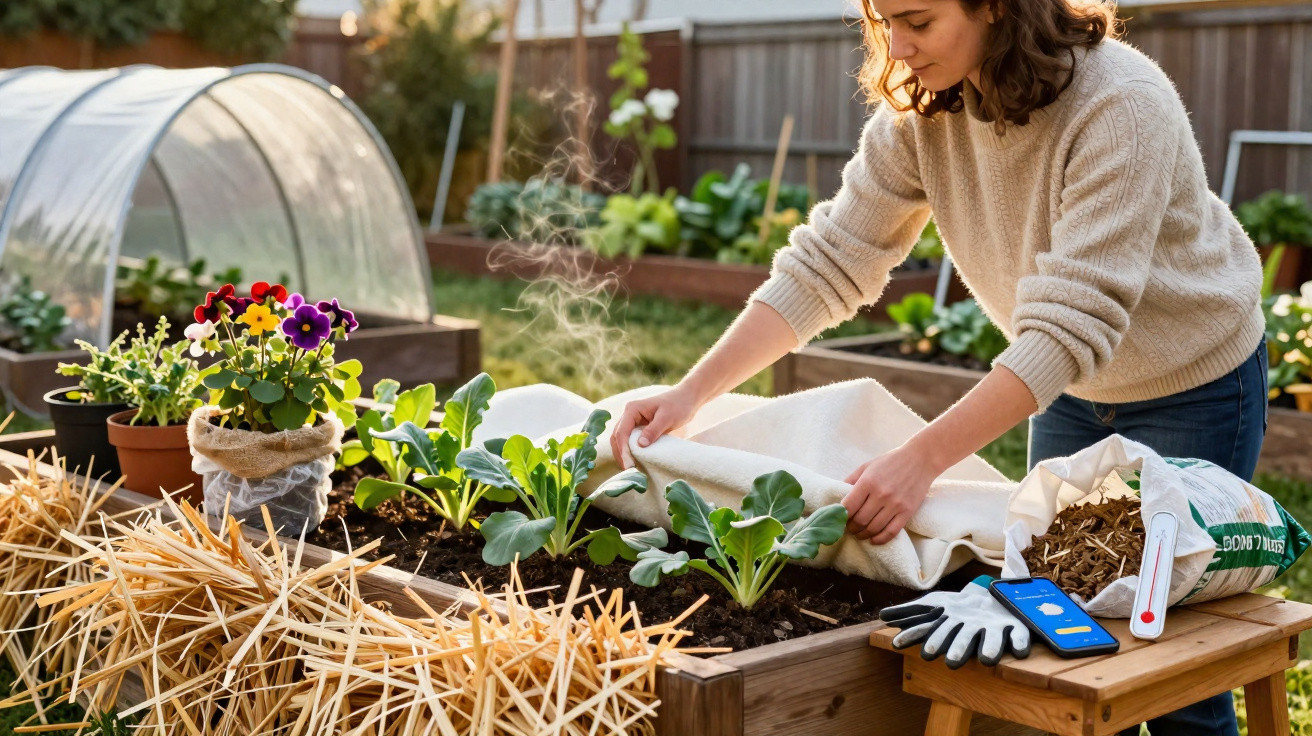
A mild spring, everything is putting on new growth – then, suddenly, temperatures plunge.
For young plants, that can prove disastrous.
Many amateur gardeners used the warm spell to prepare beds, plant up balcony boxes and put the winter fleece away. Now the forecast is once again showing overnight sub-zero temperatures, with severe ground frost in some areas. Anyone who does not protect their perennials, container plants and young vegetable plants could, in the worst case, lose everything in the garden.
Why late frost is so dangerous in the garden
After an unusually mild winter, plants often begin their growing season weeks earlier than usual. Buds swell, delicate shoots emerge and fruit trees start flowering. That is precisely what leaves them exceptionally vulnerable.
“Early warmth encourages plants to put on growth, but a return of cold hits unprotected shoots like a shock frost.”
It is not only very low sub-zero temperatures that are hazardous. Even a light frost around freezing can be enough when:
- flower buds have already opened or are about to open
- vegetables such as tomatoes, courgettes or cucumbers are already outside
- container plants have been brought out of their winter quarters
- the soil is very wet, allowing cold to penetrate more deeply
The results can include soft, blackened leaves, dead shoot tips and crop losses in fruit and vegetables. The period up to the so-called Ice Saints in mid-May is particularly critical, as many areas can experience another sharp drop in temperature then.
These plants are especially sensitive
Plants do not all suffer to the same extent. To protect a garden effectively, it helps to identify and prioritise the highest-risk candidates.
| Risk group | Typical examples | Particular issue |
|---|---|---|
| Early-flowering fruit trees | Apricot, peach, cherry, pear | Flowers freeze and the harvest drops sharply |
| Summer vegetables | Tomatoes, peppers, cucumbers, squash, courgettes | Even a light frost destroys the plant tissue |
| Mediterranean container plants | Olive tree, oleander, citrus, bougainvillea | Not very frost-hardy, especially in pots |
| Newly planted perennials | Lavender, delphinium, coneflower and others | Roots are still shallow and have few reserves |
Act now: immediate measures before cold nights
Once meteorologists issue a warning, do not leave preparations until the final moment. A few straightforward measures can make a substantial difference.
Move portable plants to safety
Anything that can be carried or wheeled has a clear advantage. For the next few days, put pots and tubs somewhere sheltered:
- against the house wall, preferably on the south or west side
- under a roof, on a covered patio or in a carport
- in a garage, shed or unheated stairwell
Important: in enclosed spaces, make sure plants receive light and fresh air again during the day so that they do not become leggy or remain too damp.
Fleece, blankets and cardboard: protection for beds and balcony boxes
If beds have already been planted or balcony boxes cannot be moved, use a cover. The following options are particularly reliable:
- horticultural fleece from a DIY store
- old fabric bed sheets or tablecloths
- hessian sacks, blankets or thick towels for particularly delicate plants
- cardboard boxes or upturned crates as miniature covers
Lay the cover loosely over the plants rather than pressing everything flat. If using fleece, weigh down its edges with stones. This keeps air moving underneath while still allowing the plants to receive some oxygen.
“Household items such as old sheets, towels or cardboard save the first vegetable crop in many gardens year after year.”
Warmth for the roots: why mulch is invaluable now
The soil is a key part of frost protection. When roots stay warm, many plants cope better with short cold snaps. A thick insulating layer can help:
- straw or hay
- wood chips or bark mulch
- shredded leaves or grass clippings that have been allowed to dry slightly
The layer around plants can easily be several centimetres deep. It works as natural insulation. First remove wet, rotting leaves lying densely on the ground, however, so the soil does not become starved of air and fungal diseases are not given an opportunity to take hold.
Wrapping pots correctly: frost protection for the root ball
Plants in pots freeze through from the sides faster than plants growing in beds. They therefore benefit from extra protection:
- wrap the pot with bubble wrap, hessian or old camping mats
- stand it on a wooden board, a piece of polystyrene or old bricks
- group pots as closely together as possible and place them against the house wall
If specialist materials are unavailable, put several pots into a large box and fill the gaps with leaves or straw. The main thing is to stop wind reaching the root area unhindered.
Temporary shelters: small polytunnels and improvised cold frames
For low beds, a simple mini tunnel is worthwhile. It does not need to look professional; stability is what matters:
- push hoops or arches made from wire, wooden battens or old pipes over the bed
- drape clear plastic sheeting or fleece over them
- weigh down the edges with stones, boards or soil
On sunny days it can become very warm underneath. Open the cover or roll it up at the sides to prevent a build-up of heat and humidity, otherwise mould and fungal problems may follow.
How often to ventilate – and when to remove protection again
Many gardeners cover plants carefully, then leave them under their covers for days. That can backfire.
“Protection at night, air and light by day – this balance gives plants the best chance of staying healthy.”
A sensible routine is as follows:
- cover plants in the evening before temperatures fall
- open the covering again in the morning once it is clearly above freezing
- close it temporarily during the day if there are strong winds or showers of graupel
Frost protection can usually be removed permanently after the Ice Saints. In higher locations or known frost pockets, continue checking the forecast.
Watering when frost is forecast: yes or no?
Many people are unsure whether to reach for the watering can before a cold night. The rule of thumb is that moderately moist soil is preferable to bone-dry soil, but waterlogging is harmful.
- Water in the morning where possible, so plants have time to dry off.
- Do not soak everything in the evening immediately before a frosty night.
- With container plants, ensure excess water can drain away.
Slightly damp soil stores warmth during the day and releases it gradually overnight. Overwatering, by contrast, can create frozen pockets of water right around the roots.
Common mistakes many gardeners make now
People who care for their plants often try too hard – and that is exactly where problems arise. Frequent pitfalls include:
- planting summer vegetables outdoors far too early
- leaving covers on continuously without ventilation, which encourages fungal disease
- applying too thin a mulch layer or providing no soil protection at all
- leaving potted plants exposed directly to the wind
- choosing shaded, damp corners where plants cannot dry out for days
Keeping these points in mind avoids frustration – and often prevents having to start the whole vegetable bed again.
What to do if frost has already struck
The morning after a frosty night can be alarming: limp leaves, glassy shoots and drooping flowers. Yet not everything that looks badly affected is beyond saving.
- Leave plants alone at first; do not cut everything back immediately.
- Wait a few days to see whether the shoots recover and stand upright again.
- Only then remove parts that are clearly dead.
Some perennials will grow again from lower-lying buds, even if their upper growth has frozen. Fruit trees can partly compensate for a weaker main flowering period with so-called secondary blossoms – the harvest will be smaller, but it is not always lost completely.
Why weather trends are essential reading for gardeners
Recent years have repeatedly brought the same pattern: very mild winters, very early growth, followed by a sudden return of sharp cold. Anyone with a garden benefits greatly from following local weather reports and longer-range forecasts.
A warning just two or three days ahead is enough time to buy fleece, spread mulch or raise portable pots off the ground. This vigilance is especially worthwhile in frost-prone dips, close to rivers or on slopes where cold air drains downwards.
Gardening therefore remains, to some extent, a race against the weather. With a few simple materials, some forward planning and an eye on the thermometer, the damage caused by late frost can be reduced considerably – and spring in your own garden need not be a gamble.












Comments
No comments yet. Be the first to comment!
Leave a Comment